Editorial: MendocinoCoast.news endorses Patrick Pekin in the June 2 Superior Court election

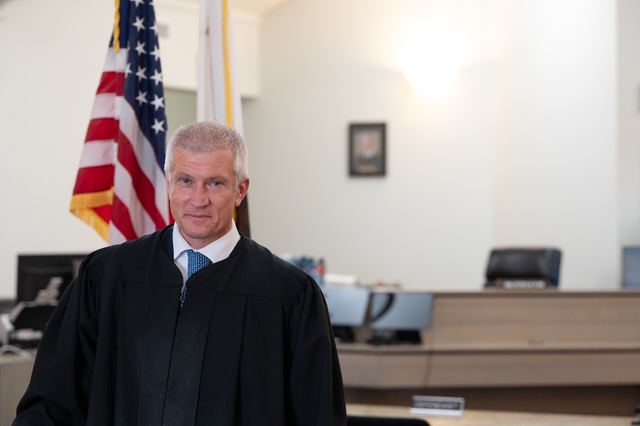
We dug deep and found the real reason this race is happening — read our exclusive below.
Challenger Colby Friend told the small audience at the recent Mendocino Women’s Political Coalition judicial debate that this was the most important race on the ballot, arguing that the courtroom is where people can lose their rights or prevail against what he described as abusive, powerful corporations.
The editorial board agrees it is that important, and believes the implications for the Coast extend even further.
Rejecting the sitting Fort Bragg judge would have immediate and far‑reaching consequences for people who rely on the Coast Court, as well as those who use the behavioral health courts in both Ukiah and Fort Bragg. A victory by Friend would leave all eight Mendocino County judges living inland, with none residing on the Coast. It would also force the state–county judicial system to start over in trying to place a judge in Fort Bragg — at the very moment when court administrators have spent the first part of this year quietly cutting services at the Coast courthouse. That administration has a long and continuing history of seeking to close the Fort Bragg courthouse outright, or at minimum to remove meaningful functions such as jury trials and require Coast residents to travel to Ukiah for nearly everything.
Judge Patrick Pekin was part of the Coast effort to save the Fort Bragg courthouse when he was a local attorney and has gone through years of work and trainng to qualify him for most of the work here. Removing him now would be a major disruption for the courts and an even larger disruption for anyone on the Coast who finds themselves in the justice system — including police, defense attorneys, and residents called for jury service.
Everything would shift even more sharply toward Ukiah under a Friend victory during the period when he would be away attending the mandatory judicial training program run by the California Judicial Council.
We would need a VERY strong reason to choose Friend in this election. So what did he offer when given the chance to explain why voters should upend the Coast Court and add another inexperienced judge to a county–state system that already includes two brand‑new members?
He not only gave us no reason to choose him over Pekin in the public debate or in the written questions we provided, but his responses showed Pekin was more prepared and more thoughtful in his answers.
At the same time, it is not entirely fair to hold Judge Pekin and attorney Friend to the same standard across the board. The sitting judge has a tremendous advantage by virtue of being inside a necessarily complex legal system — one shaped by layers of procedure, tradition, and even remnants of common law that reach back to the Middle Ages and still manifest in modern courts.
On the other hand, Friend could have better answered the questions he surely knew were coming at the debate. Taken as a whole, his responses underscored the opposite contrast: Pekin appeared prepared and thoughtful, while Friend came across as not yet ready to serve as a judge.
We assumed there had to be more to this story, so we dug deeply into both men. Again, the sitting judge has an inherent advantage: law‑enforcement personnel are rightly excluded from background‑check databases, including those that reveal home addresses. Fortunately, we had already backgrounded Patrick Pekin before he became a judge, and that review revealed nothing worth reporting. We spent substantial time looking into Friend as well. He was high‑spirited in college — fine, many people are — and he had a few scrapes with the law that may well have made him a better attorney, able to understand the other side. Some of what we found gave us pause for a moment, but ultimately we found nothing that would disqualify Friend from serving as a judge in Mendocino County. People shared stories about both men that they believed were important, describing attorneys who went the extra mile for their clients. We view that as a positive, not a negative. Both men are more scrappers than saints, to be clear.
After all that work, we were left with nothing in either man’s background that should drive a vote one way or the other. Which brings us to the real question: why is this contested election even happening?
Friend made a clear case that no judge should ever run uncontested in a democratic republic. Good. But taking him at his word, the more logical target would have been FredRicco McCarty, a brand‑new judge running unopposed for a six‑year term. The debate we watched made that mismatch obvious: Pekin was knowledgeable, while Friend was not as well prepared to answer those questions. A debate between McCurry and Friend — two judicial newcomers answering the same questions we present below — would have been far more illuminating. And electing Friend over McCurry would have produced far less disruption. By all accounts, McCurry has been working hard and presenting well, but he is not yet the structural pillar of the courthouse that Pekin has become. McCurry has one advantage over Friend, in that he was vetted by the state bar and a commission of the California Judicial Council. All appointed judges are supposed to be vetted by these groups before the governor makes an appointment. We do not know how rigorous that process is, as everything they do is kept secret, and critics argue that secrecy serves the governor more than the public.
So we resorted to something reporters routinely did in 1986 but rarely do in 2026: we asked Friend the blunt, unavoidable WTF question.
He rightly told us that it is unethical for judicial candidates to engage in anything resembling negative campaigning, and both men have adhered to that standard throughout the race. He provided us with the following answer. We are presenting it exactly as he sent it, saving our thoughts for the end.
“I will provide an example of something that happened in the Mendocino Superior Court that inspired me to run. It’s my own case that I filed pro se and so I can talk about it without violating any lawyer/client privilege,” Friend said.
“In 2022 I filed a claim against a UnitedHealth Group subsidiary for failing to pay on an insurance coverage that I had. I had paid premiums for 5 years. When I contracted cancer in 2020 I made a claim against the coverage. The insurance company denied the coverage saying I wasn’t qualified for that type of policy. Of course, my question was, then why did your agent sell it to me, and why did you collect premiums from me for 5 years? They returned the usual form letter, “you’re disqualified, no refunds due.” Rather than get a lawyer who will take 33% or more of the $110,000 I was due, since I am a lawyer, I felt confident I could take this on myself. I figured this case was open and shut – easy understandable fact pattern for bad faith breach of contract and fraud, among other causes of action. UnitedHealth Group contracted a big, high-powered SF law firm to represent them.
They offered a pittance, I think 15k or 25k, to settle. I refused. They filed the usual demurrers, trying to dismiss the case – the usual deny, defend, depose playbook. From the start Judge Nadel seemed intent on gutting my case, and did in fact gut the Bad Faith cause of action on demurrer. A demurrer just tests the sufficiency of the pleading; in other words, if the facts as I describe them could mount to a bad faith breach. I think this should be obvious to anyone that an insurance company failing to pay a claim after the insured pays premiums for 5 years at which point the insurance company then informs them that he is unqualified for that policy COULD amount to bad faith. Still got to run it by the jury of course, but “could it” is the question. So Nadel threw out that cause of action I believe in error. With part of my case already gutted we proceeded further. Nadel retired and Jude (Ann) Moorman took over. UHG filed for summary judgment. To win summary judgment. There claim was that it was all just a big mistake, that UGH didn’t know that they had entered into a contract with an insured who was unqualified for the policy, and if they had known, they would not have. Facts: The agent definitely knew of all of my qualifications. He filled out my application. UGH “auto-approved” it. They never got one signature from me that would indicate I was aware of any policy exclusions; everything was done over the phone and auto draft. After they found out about my claim, they did not try to give the premiums back, they tried to abscond with the money. Get this, this company, the UGH subsidiary, had been sued by the Massachusetts Attorney General, now governor, Maura Healy, for committing exactly this type of fraud on over 15k residents of Mass for over $45 million in profits. They were sued twice! The first time they were banned from practicing in Mass for 5 years. The 2nd time, they were banned forever. Anyway, I said to myself, if I lose this case, I’m going to run for judge because this would be an egregiously bad judgment. To win they would have to prove that there are no disputed facts that could be found to indicate anything other than their “big mistake” theory. Sure enough, they were granted summary judgment on all counts. About two weeks later, the CEO of UHG was shot in Manhattan.”
End of Friend’s legal origin story.
We, too, think insurance companies exert enormous and onerous influence over the political system, from the presidency to the courts. But we have seen no evidence that Pekin is aligned with that moneyed power; if anything, what we have observed is a judge who works to explain the courts to the people caught inside them. The arguments Friend raises here are not issues a county judge with a packed calendar can meaningfully fix. The reality is harsher: there is devastating family violence; there are hundreds of people unraveling their lives, their families, and their communities through alcohol, meth, or fentanyl; there are people trapped in a broken mental‑health system; there are violent, hateful, monstrous individuals; there are predators in both the corporate and human worlds; and there are people with only a limited grasp that life is a story of consequences. I have personally been preyed upon by insurance companies, credit‑card companies, banks, and employers in the media world (not the Advocate or the Mendocino Voice). These entities used their positions to rob me, harass me, and break contracts — all with the cover of the system.
But none of that can be fixed by a county judge who holds a grudge.
There is no realistic path for a county judge to make laws or fix the very real systemic problems Friend raises. We would encourage Friend to continue being an activist and to keep doing what he has been doing — helping people caught in the legal system. But a judge must be extremely knowledgeable to navigate a super‑aggravating legal system, even without the corrosive billions that Citizens United has allowed to flow through our politics, running downhill like acid rain all the way to local courts. Friend did not show himself ready for that core task at this point.
We do need judges who are cognizant of the systemic problems Friend laid out. But this is not the moment, nor is he the candidate, to take on any of that. We asked Friend why he didn’t challenge the brand‑new Judge McCurry instead.
“On McCurry I’ve dealt with a few times since he took the bench, and I find him very thoughtful in my limited experience. I liked his demeanor. He doesn’t rush, he doesn’t get impatient, and so far he seems to make good decisions. I have not had very good experiences with Patrick Pekin.”
Attorney Friend said he didn’t want to engage in negative campaigning for ethical reasons but he offered us his assessment, noting that he was not asking us to print it or not print it.
“My observation of him (Pekin), and my interactions with him in the courtroom, I have not found him to be patient or attentive, or to even consider matters fully. I think this is unacceptable. I want to do better.”
Words are cheap. If you, the reader, think this is something worth weighing, then hold off on casting your ballot and go watch Judge Pekin run a calendar in the Coast Court. We have done that, and we do not come to the same conclusion — though we acknowledge we have not observed a large volume of his courtroom work.
We would also encourage you to watch the debate and come to your own conclusions. We thought Pekin came across as almost the opposite of how Friend characterized him during that debate. You will need Facebook to watch it.
https://www.facebook.com/61566533933252/videos/1986541271968726/?mibextid=wwXIfr
We told Friend we agreed with him when he criticized Citizens United. That decision was a turning point in American politics. . The ruling, authored by Justice Samuel Alito, effectively treated corporations as rights‑bearing speakers and swept away long‑standing limits on money in politics — a shift that Congress, not the courts, would ordinarily be expected to make. The result has been a flood of political spending that has shaped much of the landscape we see today.
Justice Alito has more allegiance to an old‑boys‑club than the law. Numerous times, he has been quoted at private country club type dinners bragging about what he has done for wealth and power and against the rest of us.
Justice Alito sits within a right‑wing majority that reliably joins him in lawmaking from the bench and have been sweeping away precedent. He is a political actor in robes, empowered by a majority that rarely checks him. He simply made up Citizens United as the law of the land giving human rights to corporations.
Friend cannot make laws from the trial‑court level that would counteract the kind of sweeping decisions critics associate with Justice Alito. Any attempt to do so would be struck down from above and not just by right wing justices.. His job would be to enforce the law as written and to apply it fairly and consistently.
I also asked whether his broad criticism of corporations could come back to haunt him if he later found a corporation responsible for the kinds of misconduct they routinely commit.
“With regard to a corporation being a defendant in litigation, and that hurting my ability to adjudicate the case, I don’t think so. I know I mentioned corporations over and over, but that is because corporations are the ones who manipulate the legislature with campaign donations (a la Citizens United) and then use those captured legislatures to enact laws in their favor. Anybody who wrongs somebody else should be accountable. My point was that corporations have been able to get away with it, in this court, seemingly a lot of the time.”
But what does that have to do with Pekin?
Pekin does not handle civil court at this point, and the judge with whom Friend had his worst experience is now retired. The county and state courts are certainly worthy of criticism, and in our own observation, they often do favor the powerful in civil matters.
We can say we know Friend’s politics. And we can say that after digging into both candidates — and after many conversations with Pekin in person and by email — we do not know Pekin’s politics. And although editor Frank may share some of Friend’s views and some of Pekin’s, we think it is better not to know a judge’s politics.
After all of that — and after conducting and publishing our Q&A interviews and watching the debate — we unequivocally endorse Judge Patrick Pekin for reelection. The debate may have been sparsely attended, but on this point we agree with Friend: no race on the June 2 ballot carries more long‑term consequence, and the community should be paying attention.
Even setting aside the inherent advantage of incumbency, Pekin came to the debate well prepared. Friend offered a different perspective, but his answers often reflected a lack of preparation on the issues.
Our previous coverage of the judicial race can be found here:
Friend did not give us a compelling reason to choose him over Pekin, and his debate performance suggested he would face a steep learning curve if elected. The community needs a judge who can step in immediately and serve the Coast with competence and steadiness. Patrick Pekin has shown himself to be that smart, prepared, and hard‑working candidate.
The problems with our local courts run deep, but neither of these men is the problem.
The two men also noted that the last two judges have not formally designated a Coast judge, and neither candidate could say when — or whether — that might change. That uncertainty isn’t surprising. The judiciary here has long struggled with basic communication on matters like this, and at times has chosen selective media channels to shape how news is presented.
I’m left calling both foul and huh? — and worrying about how far off course things have drifted with the court. When basic communication breaks down and no one can say who will serve the Coast or when that decision will be made, it raises real questions about transparency and accountability in a system that should be neither mysterious nor selective in how it shares information.
And that’s another reason we don’t need someone new and too raw for this job. Pekin has a working relationship with the court leadership here — a leadership that is often too silent and sometimes inappropriate — from the District Attorney to the presiding judges. He was endorsed by almost everyone in the court system. Friend made a fair point that it can look unseemly for a sitting judge to solicit endorsements, although we don’t know whether Pekin asked for them or simply received them. But even if he did, it’s not as if the District Attorney would endorse him just because he asked. Those endorsements reflect genuine support, as do those from defense attorneys and fellow judges. And it’s worth remembering that the DA himself once engaged in an out‑of‑bounds campaign to push out Clay Brennan, the last judge.
The whole business of running for judge as a politiican is somewhat unseemly for the position. If you’re going to run for office, you have to run hard and run to win — and both men are doing that. Friend talks about corporate power, which is on the same scale as a judge’s politics. I’m glad he raised it, and he’s right that the courts are often the only place people can get justice when facing the power of big insurance.
But I’ve watched Pekin in court and throughout this campaign, and nothing I’ve seen suggests he would lean toward a big corporation or be pre‑inclined that way. Every time I’ve watched him on the bench, he has been fair, focused on applying the law, and working hard with the rest of the court officers to get through very busy calendars complicated by logistics — from malfunctioning computers and Zoom screens to scarce translators and unavailable witnesses.
Here are some moments from the debate
Talking about experience and how many jury trials each had done, Friend mentioned two criminal law jury trials he had handled.
“It’s not just about trial. It’s not just about jury trials, about evidentiary hearings and so forth. So presenting evidence. I had to jump in the trial the other day. I had one day notice, and we came to a verdict there.”
Pekin responded:
“Regarding trials, there is a difference between an evidentiary hearing and a jury trial, and it’s important to know if a judge has done jury trials. Regarding jury trials, I’ve done four homicide jury trials. And I don’t know how many felony jury trials, probably 30. And that’s not only in this county, but Lake County, Monterey County and San Benito County. So attorneys are expected to do evidentiary hearings all the time. They happen in family court constantly. As a judge, I sat through I don’t know how many non jury trials, but there’s a difference between picking a jury and not it’s one of the principal things that a judge is expected to do. It’s one of the procedures that a judge is expected to be aware of that is to ensure due process for all litigants. You have to know how to do these things.”
The county began removing functions of the Coast Courthouse in 2025, without ever giving any notice, and startling attorneys and courtroom folks alike. This has the appearance, in our view, that the county is slowly phasing out the Coast Court.
The moderator said “the next question is about 10 Mile courthouse. The 10 Mile courthouse seat is currently unassigned following judge Brennan’s retirement, what is your position on ensuring that Fort Bragg has a regularly assigned judge, and what do you think the court should do to fill that gap? We’ll start with Patrick Pekin.”
“Back in 2011 and 2012 California was experiencing a major budget crisis that resulted in a variety of changes to criminal law and criminal procedure, but also it impacted the courts pretty deeply as part of the budget cuts occurring to that time it was on the books to close the Fort Bragg courthouse as a budget saving measure. I was part of the save our coast Court program. We ran a campaign. We saved the coast courthouse. I have never lost faith in keeping the coast courthouse, and I’m currently the coast court judge. I believe in access to justice, and I recognize the sheer size of this county and the difficult of the commute, and so my, one of my primary goals is to maintain the coast and the coast courthouse and access to justice for the people living there.”
Friend said:
“This is a place where we’ll have common ground. I mean, I want to keep the coast courthouse open as well. In fact, I think it would be amazing if we had more courthouses open. Willits had built a beautiful courthouse, and it’s now shut down. I had heard that there was a courthouse in laytonville and that shut down. It’s hard to get anywhere in this county. It’s hard for people from kovalead to get to Ukiah, from coin arena to get to Ukiah or leg it, you know, it’s a big County, so every courthouse is valuable, and I’m absolutely for keeping the coast courthouse going that serves a large population on the coast and should keep going Justice (Clay) Brennan left some big shoes to fill.”
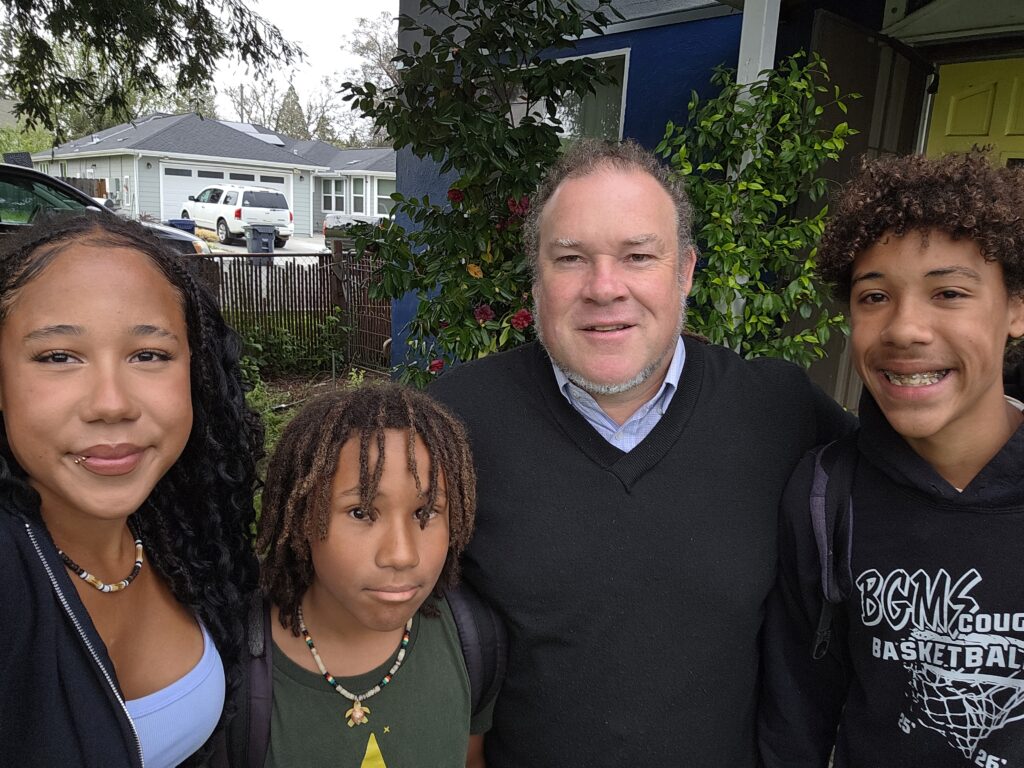
The candidates were asked about how well he knew Coast issues. Seven of the eight judges now live inland, with Pekin being the exception.
Friend:
“II’m gonna go where the presiding judge asked me to go, and so if they want me to go to the court the coast, I’m in Willits, I’m not far from the coast. I love going to the coast, and I’m happy to go out to the coast and provide adjudication from the coast. And as I’ve already said, I mean, I absolutely believe in keeping that court open, and the more cases that can be heard there, the better. And I mean of all types. So at this moment, I’m not sure if they if all types of cases are heard in the courthouse, Judge Pekin would know better than I and if they aren’t, they all should be.”
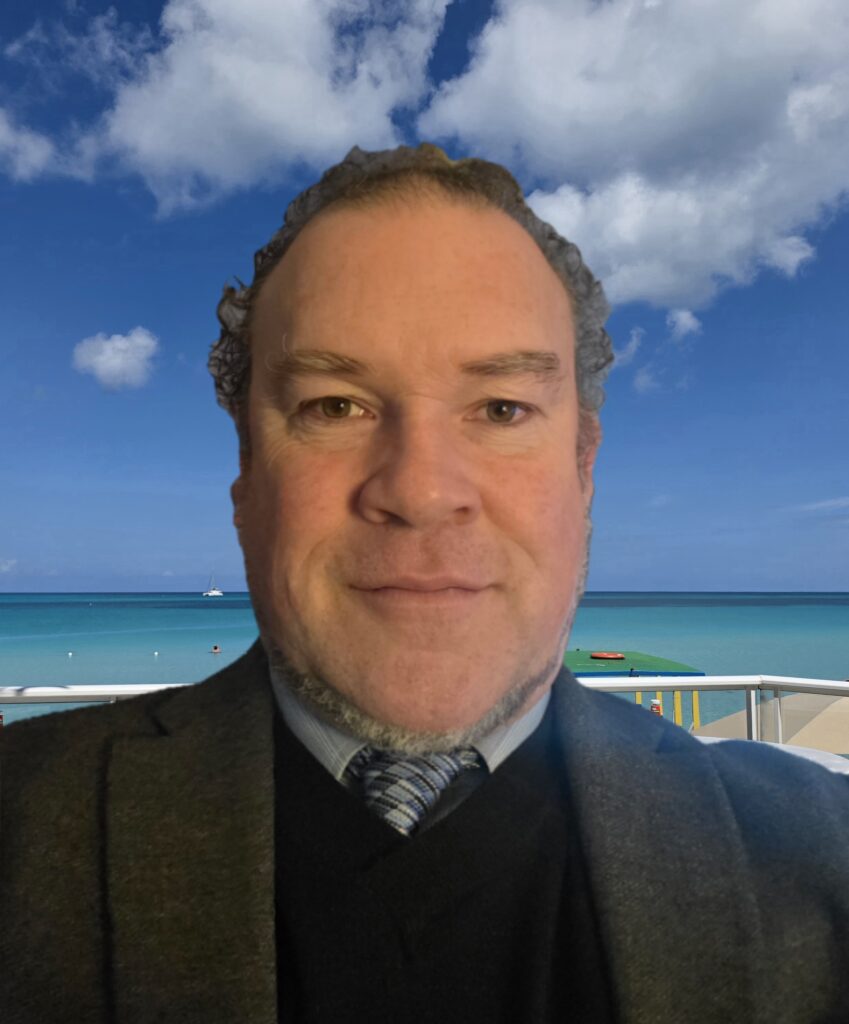
Pekin:
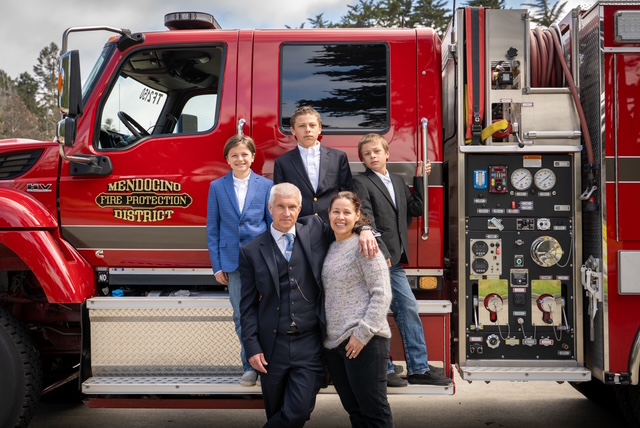
“I live on the coast, and I have the entire time I’ve been in Mendocino since 2009 my children were born in the Coast hospital. They go to a Coast school, and I’m a member of the volunteer fire department Mendocino on the coast, so I’m very much invested in keeping the coast court open, because, well, in part, I live there, but I shouldn’t discount the fact that for the past five years, I did commute to Ukiah every single day, Monday through Friday for five years, and I wasn’t late a single day, arriving in Ukiah at 730 every single day.”
Next came the courts and mental health:
Friend:
“Well, mental health is obviously a serious issue in our society, and everybody deserves advocacy and a fair hearing in court. I am in agreement that the behavioral health court is a very huge benefit to our society because it helps people who who can’t help themselves mentally, and provides an avenue for them to be either rehabilitated or treated with the type of respect or the type of sentence that they deserve, rather than just strictly incarceration. So absolutely, we have to keep the behavioral health court going. We have to keep the drug court going to help people that have these type of behavioral issues, deal with whatever problems they’ve come into.”
Pekin
“I handle this every single week because I run the behavioral health court in Ukiah also now, since judge Brennan retired, I also run the behavioral health court on the coast. I run it virtually from Ukiah, so I’m in Ukiah, and then folks on the coast appear virtually from the court in Fort Bragg, I work with the public defender’s office. They are fantastic. The District Attorney’s Office helps a great deal in adult drug court, we handle behavioral health, course, health cases every single week. I work with social workers, psychiatrists and psychologists, and the way it’s handled is again dictated by the legislature. So the legislature has created new laws called Mental Health diversion, veterans diversion, those kinds of things that deal with these issues. And the concept is that for certain persons who have a qualifying mental illness, they are moved to treatment as opposed to incarceration, so long as it’s not a danger to the public.
On the new courthouse:
Friend
“The new courthouse, I hope it has a big, luxurious space for the jurors. I don’t, I don’t know what’s going on in that in that courthouse, it’s shrouded in plastic. But, you know, the courthouse, I don’t think the courthouse has really ever been the problem the courthouse is that we have is historic. It’s beautiful and it’s sufficed so far. The new the new courthouse should be absolutely accessible. You know, I keep coming back to this theme that when you you know, have somebody that does you wrong, and so many times it’s like, you know, corporations ripped you off, insurance company didn’t pay you, you need to be able to get your comeuppance in court, and if you don’t, I mean, you’re not going to get it anywhere. That’s the thing that’s r eally going to change the behavior of people that do wrong things— it is in the court system.”
Pekin
“I’ll remind everyone, is that my intention is to keep the coast court open and keep it with as many services are possible. That would include family law, which went away after judge Brennan retired, regarding the new courthouse in Ukiah. I was not part of the design process. I understand that there are some criticisms regarding the design as well as the location, and I furthermore understand that there may be some growing pains with respect to its location, to the public defender’s offices, get an office in the court, in the new courthouse? Does the D A’S office get an office there? I realize that there’s going to be some moving parts which I will not have control over. So it My understanding is California has a system with building new courthouses. We are part of that system. They built it. We’re going to have to live with it and make the best of it. I think it’ll be fine in the long run.”
We need to pause here to address the question of the Coast Court having a judge. It may sound a bit prejudicial, but it is also true: if Pekin were to lose, the county would be starting over on placing a judge in Fort Bragg. We simply cannot afford that, especially since we have been given no reason he should not continue. There is no evidence that, if Friend were to win, he would be assigned to the Coast Courthouse. In fact, in an interview with court executive Kim Turner last year, she noted that the person serving that court needs the full range of judicial skills. And each judicial assignment requires training. There is a judge’s school for criminal court and another for civil court, along with additional programs run by the California Judicial Council. (The Judicial Council has sharply restricted public access to court files in recent years, a stance critics argue conflicts with the principle that justice should operate in the open.)
In these difficult times for maintaining a functioning Coast court, we endorse Pekin for what he knows about keeping this courthouse operating and for what he has already done.
We endorse him for his demeanor, his preparation, and his command of the issues. We admit it’s hard to compete with a sitting judge.
Our county Board of Supervisors, especially on the Coast, is composed of a Republican and a Libertarian. To their credit, they represent liberal interests because they are pragmatic and because they believe in representing the people who elected them. Whatever their flaws — which we can explore in other articles — both have spent a great deal of time listening and continue to do so. And although the Coast leans liberal, there are many conservatives here as well.
So what about the judge’s race?
The State Bar and Judicial Council make no effort to help us determine whether our judges are qualified, nor to ensure any openness in the courts, and they have greatly restricted access to court files since the days of paper records. And yet they want us to trust them and believe these are our courts? Our local state–county court system is a mess, and not only because it has yielded to Judicial Council pressure and now denies public access to all criminal court files — a shift that makes it far more likely that abuses already happening will grow unchecked, with no way for the public to pull cases and look for patterns. We hope Judge Pekin can continue advocating for the Coast Courthouse to retain jury trials and, however improbably, for a return to paper files or some other system that restores open records. Hope matters, and it’s all we have at this low point in public access to what the court is doing.
And in this race, hope means choosing the person who can keep the Coast’s court functioning. That’s why we endorse Patrick Pekin. The Coast has fought too long to keep its courthouse alive to hand it over to uncertainty now; choosing stability is how we keep the doors open, the lights on, and justice within reach. A judge who knows its people matters here — in a community where access to the courts is already fragile and where every disruption lands hardest on those with the least power. Continuity is not a luxury — it is the last safeguard we have.