Hurrrrah! Coast Guard Crew Cheers Noyo Buoy Fix — Check Out the Video; Pay Concerns Linger Amid DHS Shutdown
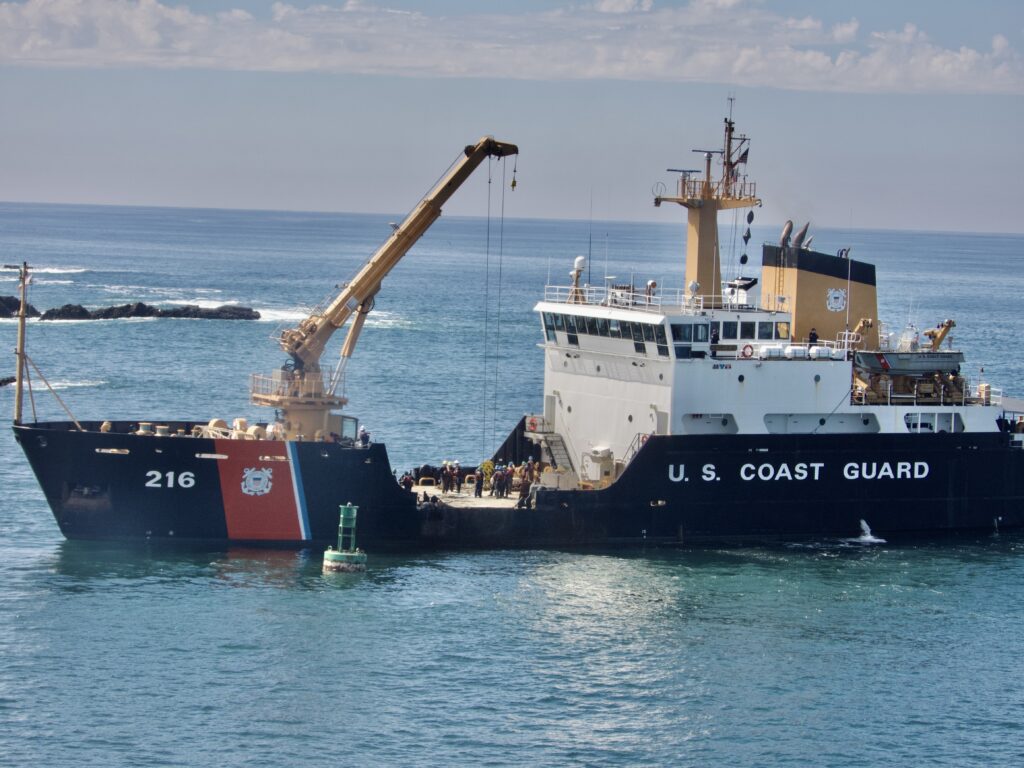
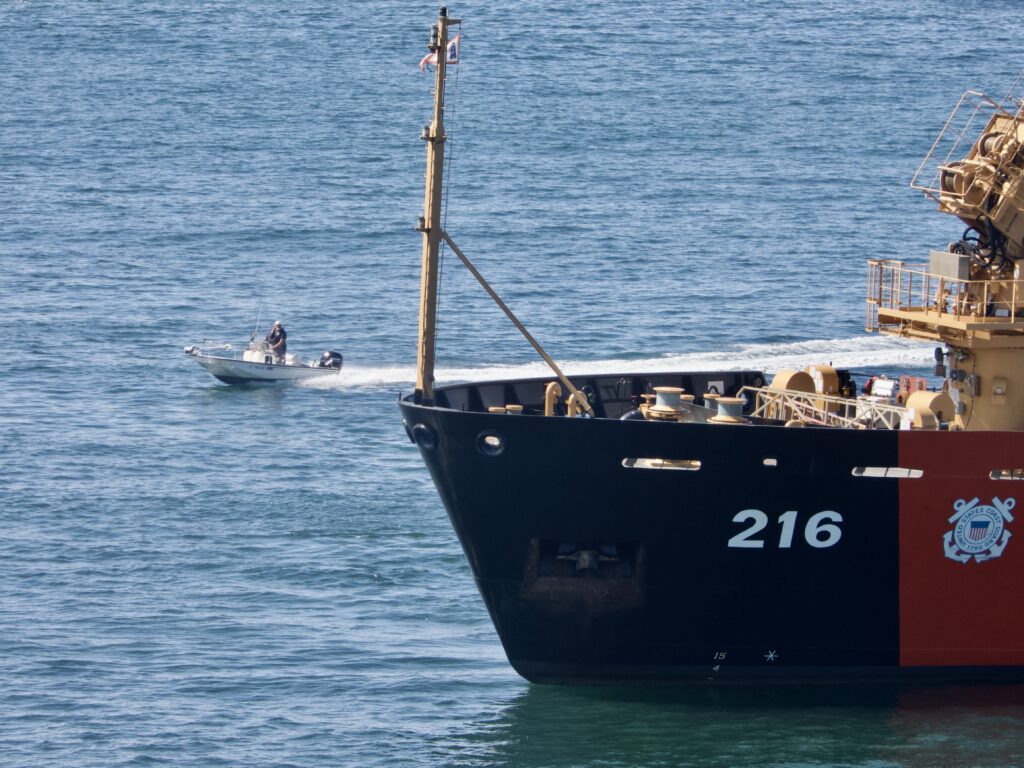
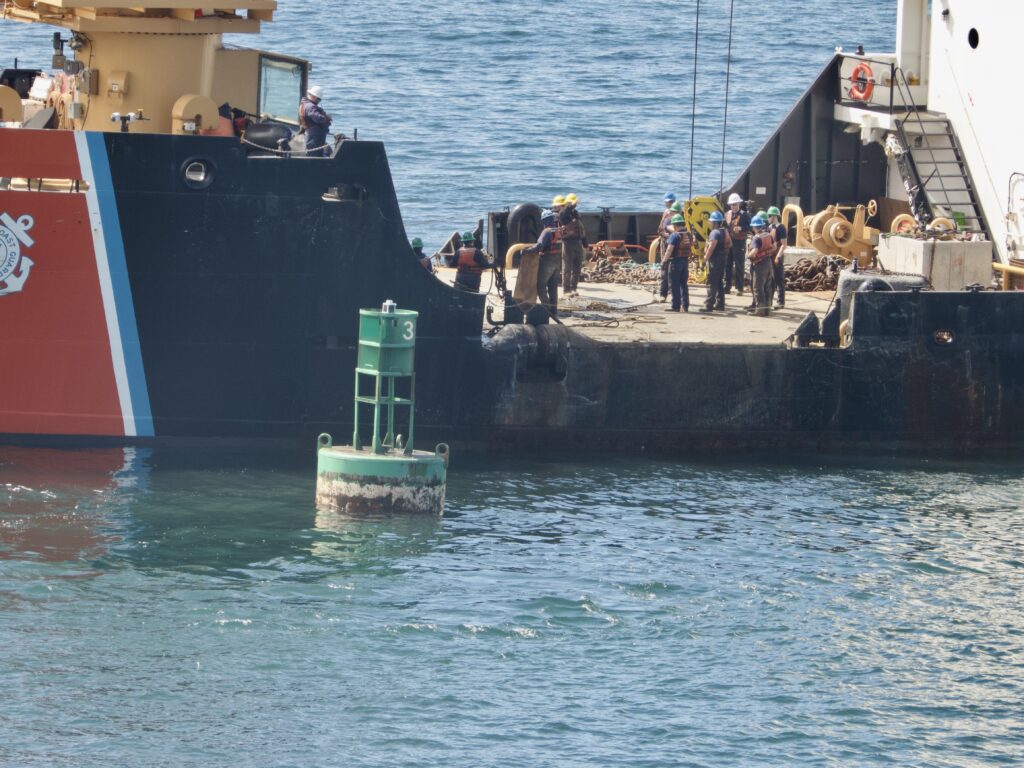
The 225‑foot Coast Guard Cutter Alder was stationed at the mouth of Noyo Harbor today, working on all three navigation buoys that keep boats from drifting too close to the big underwater rocks lurking just offshore — some rising to within 100 feet of the bluffs.
Any harbor boater knows exactly what those buoys mean: stay left. One commercial fishing boat learned that the hard way last year when it strayed outside the line and was destroyed.
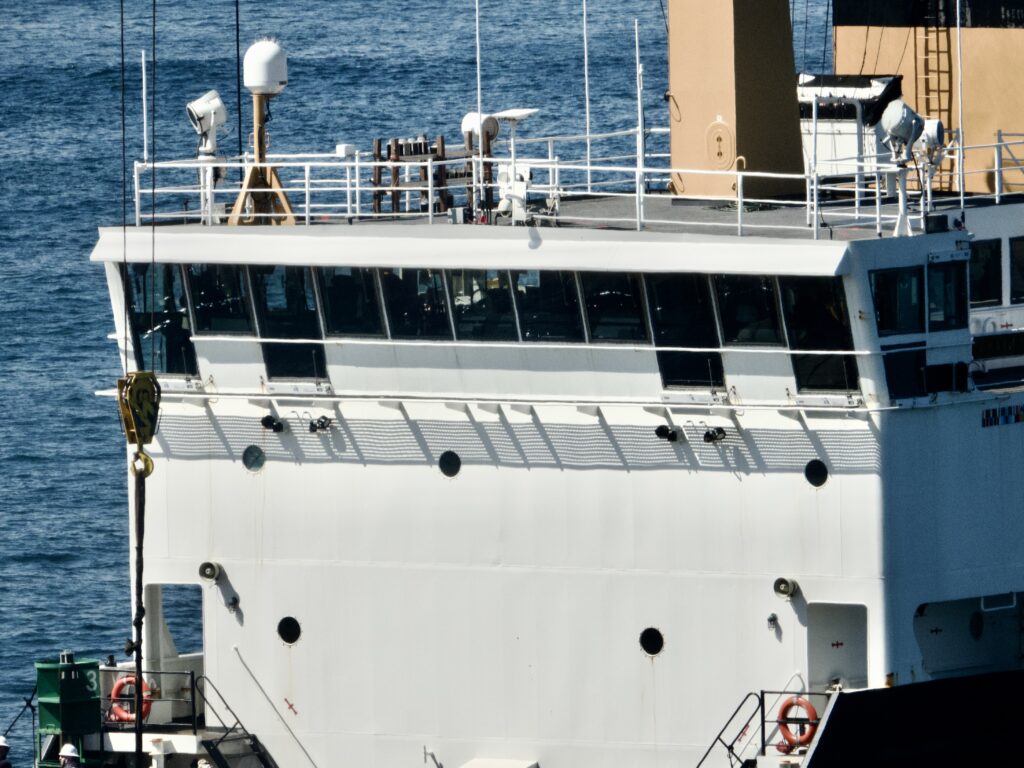
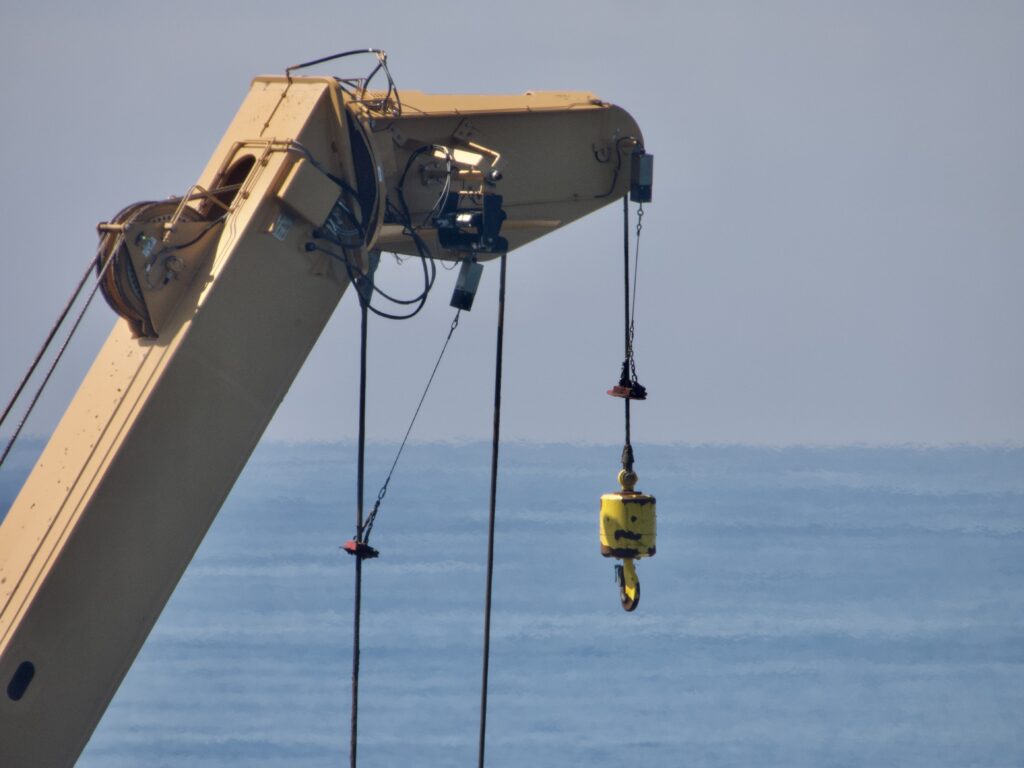
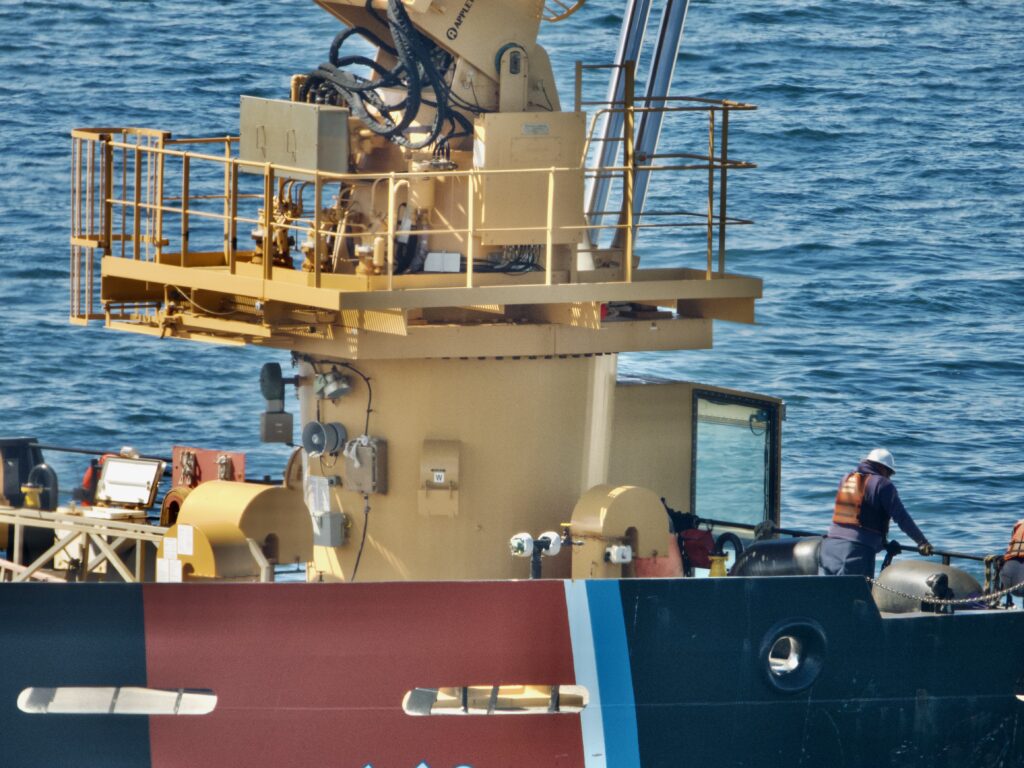
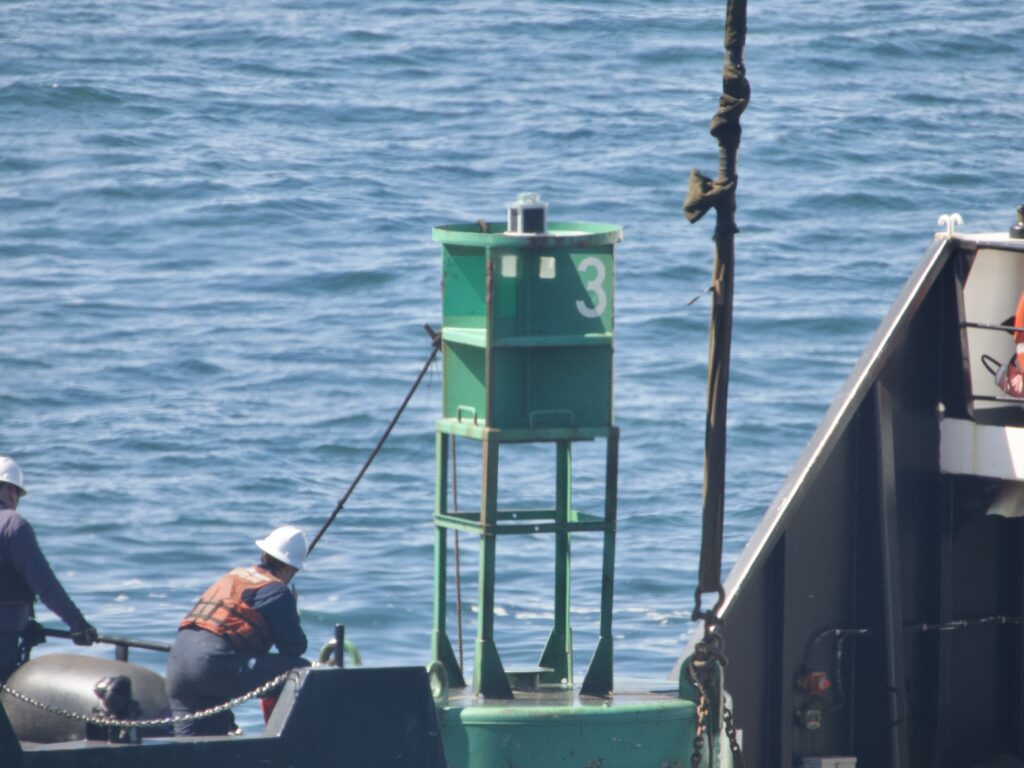
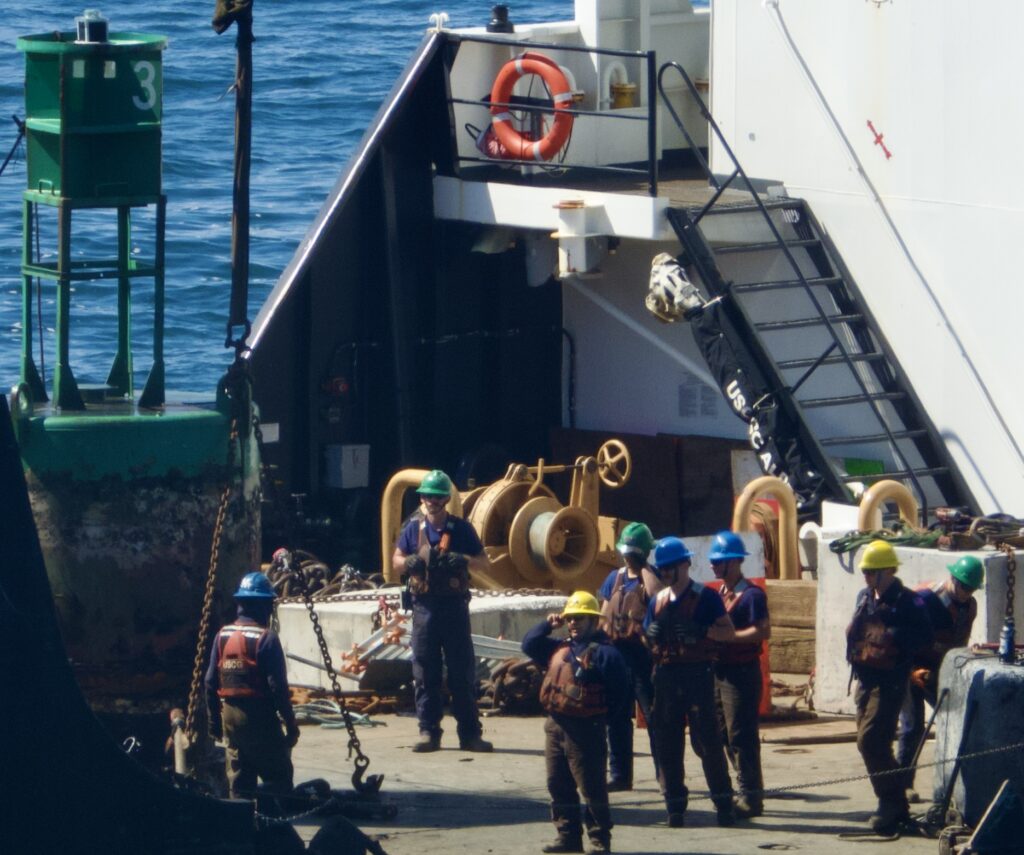
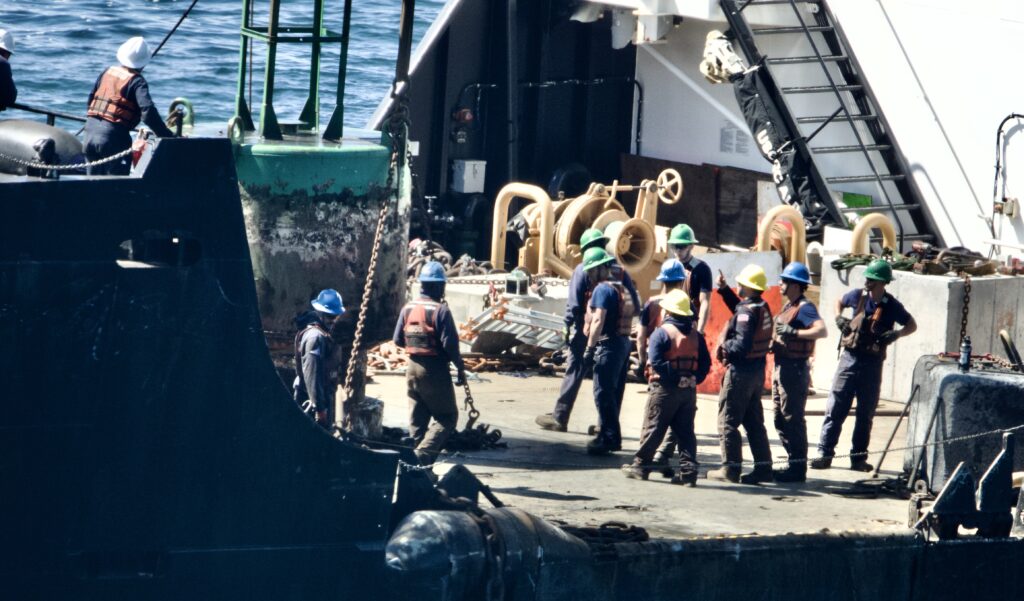
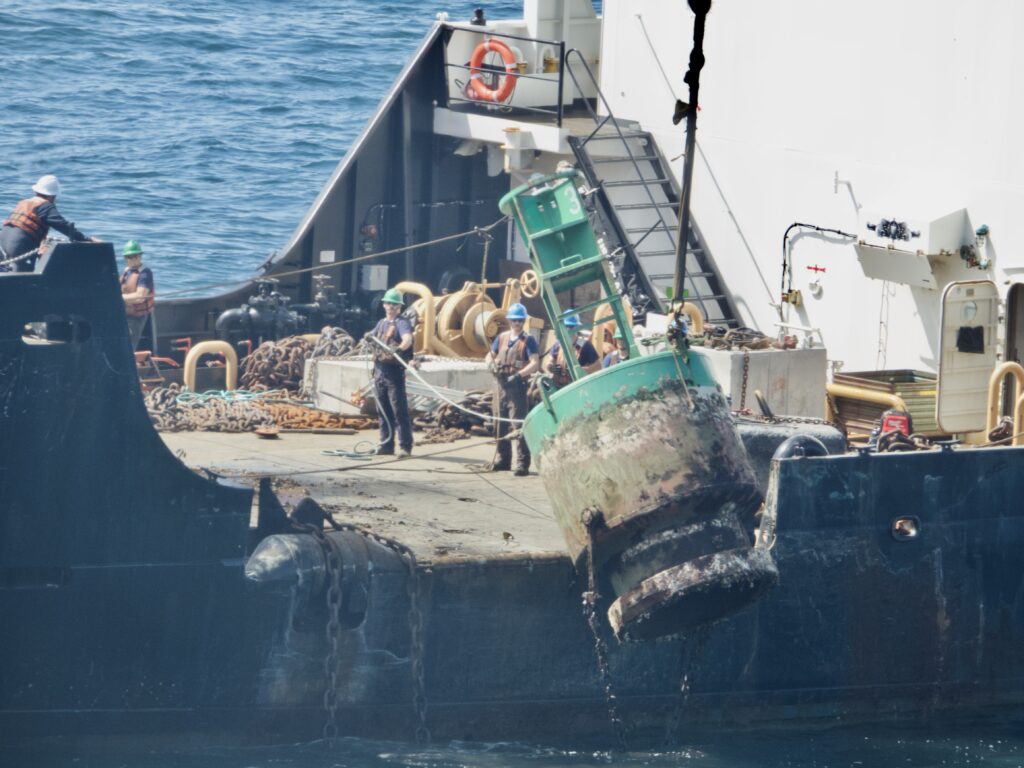
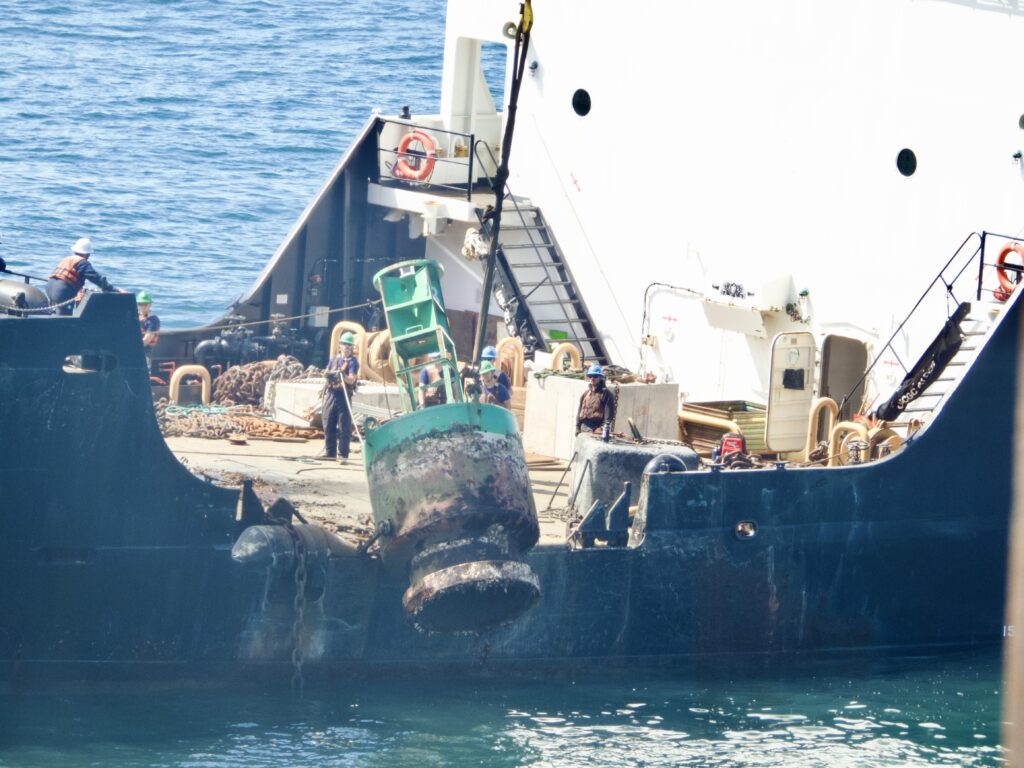
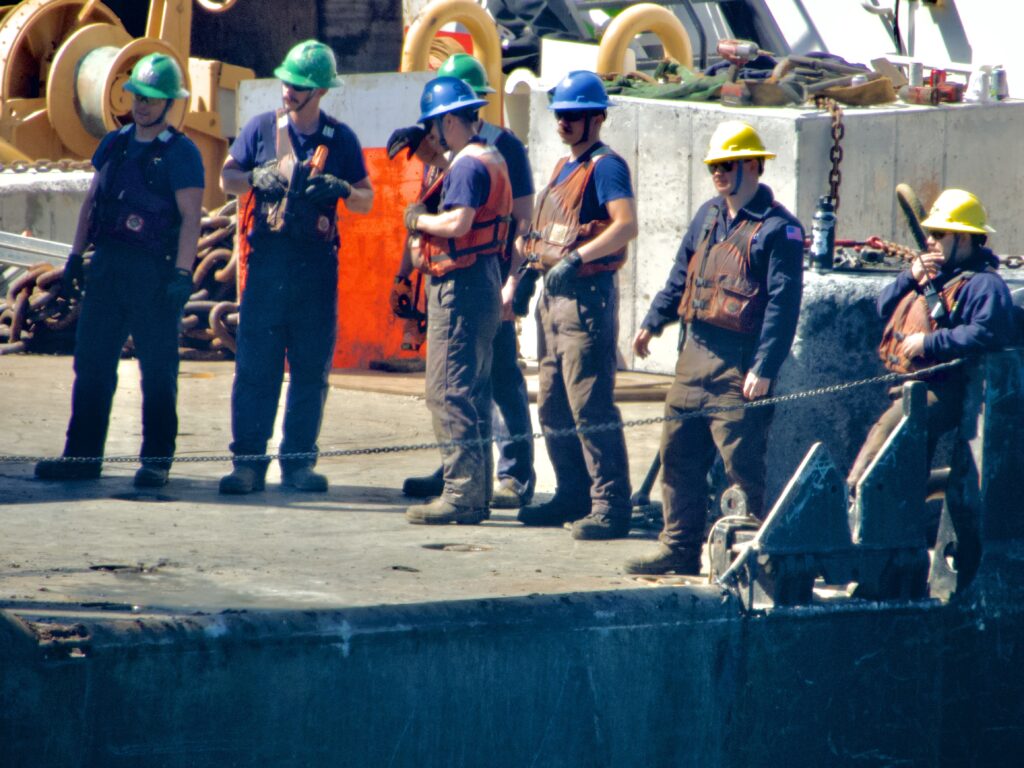
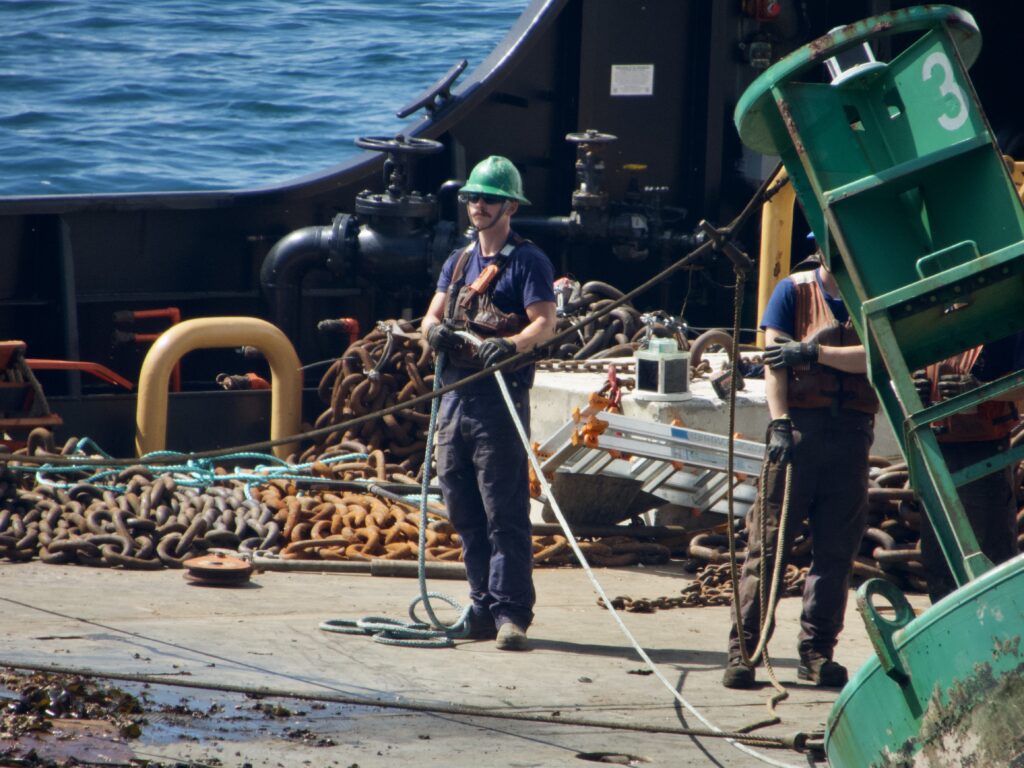
Despite the bright, glaring sun and deep shadows, we managed to capture some strong images of the crew at work.
More important than the photography, the Coast Guard remains critical to the survival of our Coast. As the Department of Homeland Security shutdown stretched on last month, many here grew concerned about whether Coast Guard members would continue receiving pay. So far they have — but during a previous shutdown, they did not.
Back in 2019, the Mendocino Coast community rallied through Annie Liner and the Mendocino Children’s Fund, raising more than $10,000 to help young Coast Guard families facing high rents and living paycheck to paycheck. We have not been asked to do that again yet, but the community should be ready to support its heroes if needed.
Retired Air Force veteran Stan Anderson recently checked in with the Children’s Fund, and they are prepared to step in immediately should Coast Guard families require help. So far, assistance has not been needed. The Children’s Fund has confirmed they will host donations again if the situation changes.
The Homeland Security shutdown has now stretched past 50 days, though news reports on Wednesday suggested an end may finally be near. Here on the Mendocino Coast, the mission of our local Coast Guard crews remains unchanged: they save boats, protect lives, and keep our harbors and navigation safe. And while they are often the forgotten branch of the service, they are also on the front lines in the current conflict.
And while they are often the forgotten branch of the service, Coast Guard members are also deployed far from home. The USCGC Maui and USCGC Adak, home‑based in Bahrain, are now protecting U.S. Navy ships in the current conflict.
The Coast Guard was busy with dangerous work in the Persian Gulf even before the war.
“The U.S. Coast Guard (USCG) plays a critical role in the Persian Gulf, with Patrol Forces Southwest Asia (PATFORSWA) providing forward-deployed cutters that often face tense encounters with Iranian forces. USCGC vessels have performed boardings, intercepted illegal Iranian weapons shipments, and suffered harassment from Iranian boats, including the 2016 detention of sailors and 2021 swarming incidents,” from Wikipedia.
But what exactly was the Coast Guard doing in Noyo Harbor on Wednesday? The USCGC Alder’s primary mission out of San Francisco is buoy maintenance, repair, and replacement. None of the three Noyo Harbor buoys were replaced during this visit, and the buoy at Shelter Cove was not replaced during Tuesday’s stop either. Instead, the crew was performing routine service: removing barnacles, checking the moorings, and replacing or upgrading the electronic components that keep the buoys functioning.
The Alder was launched in 2004 in Minnesota, where it performed the same buoy‑tending work on Lake Superior, along with other mission tasks such as icebreaking to keep navigation routes open.
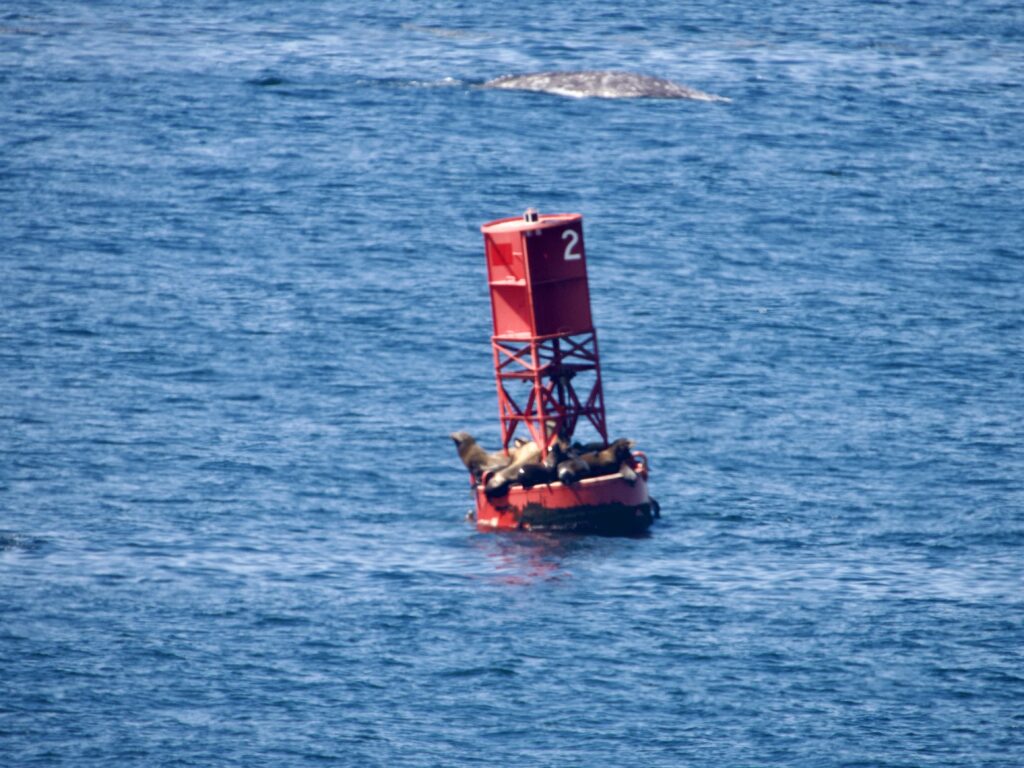
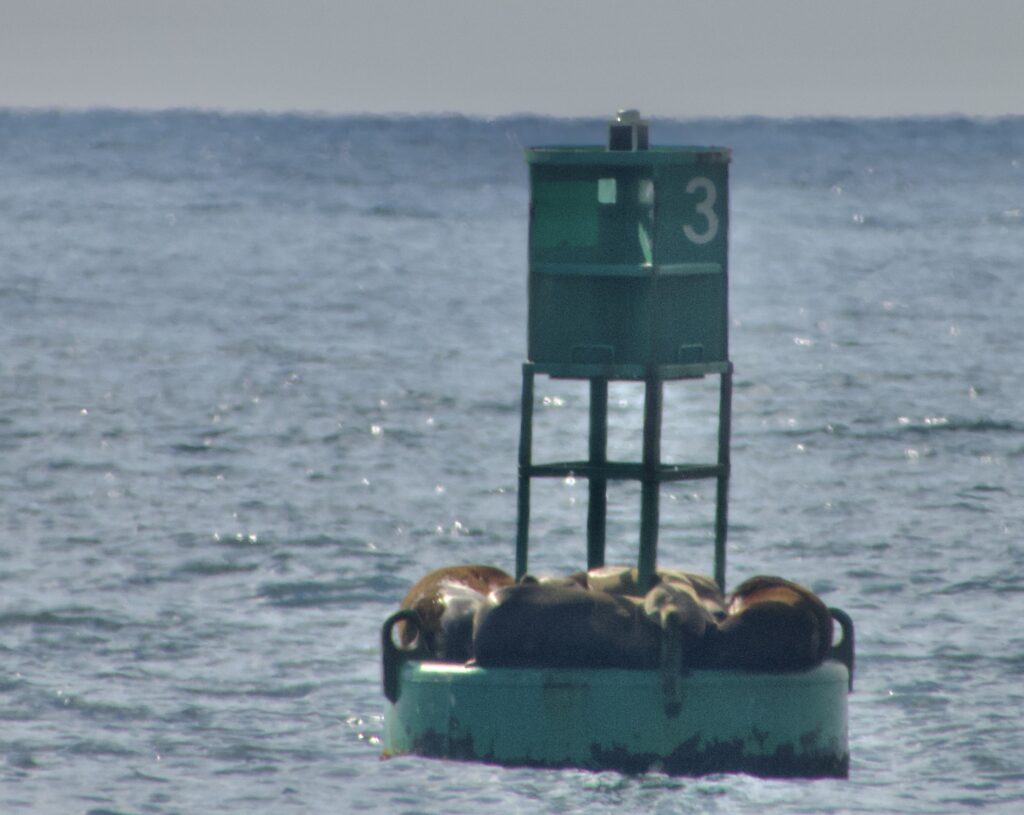
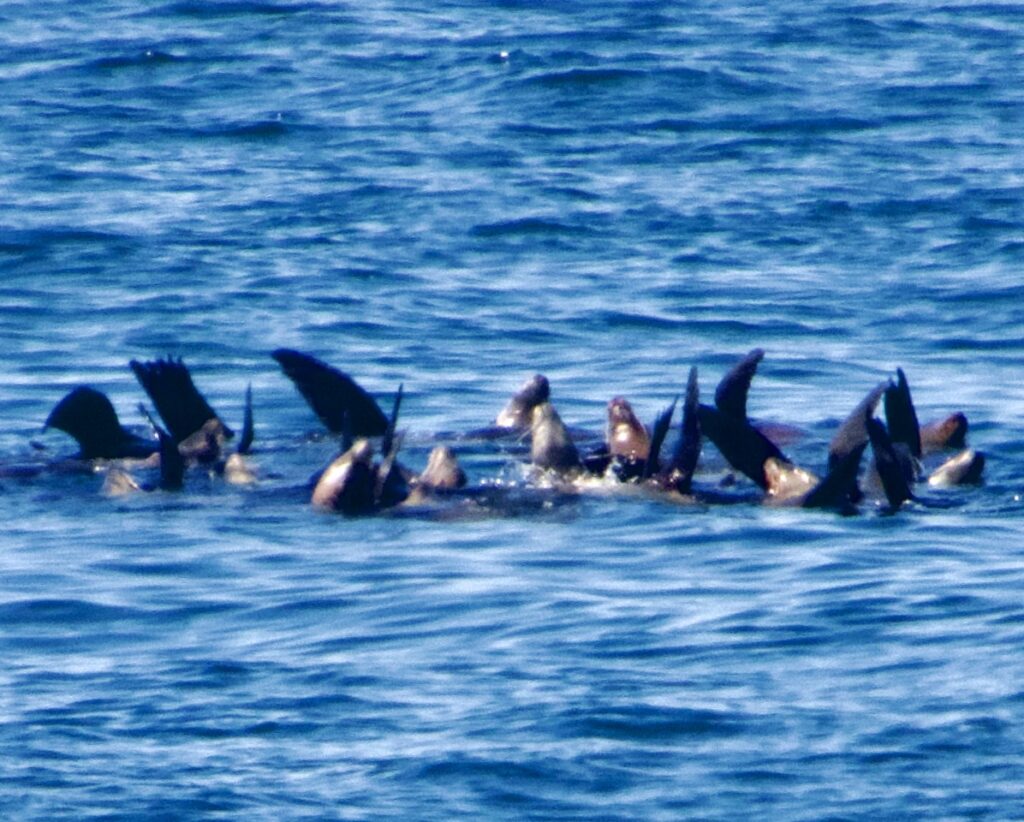
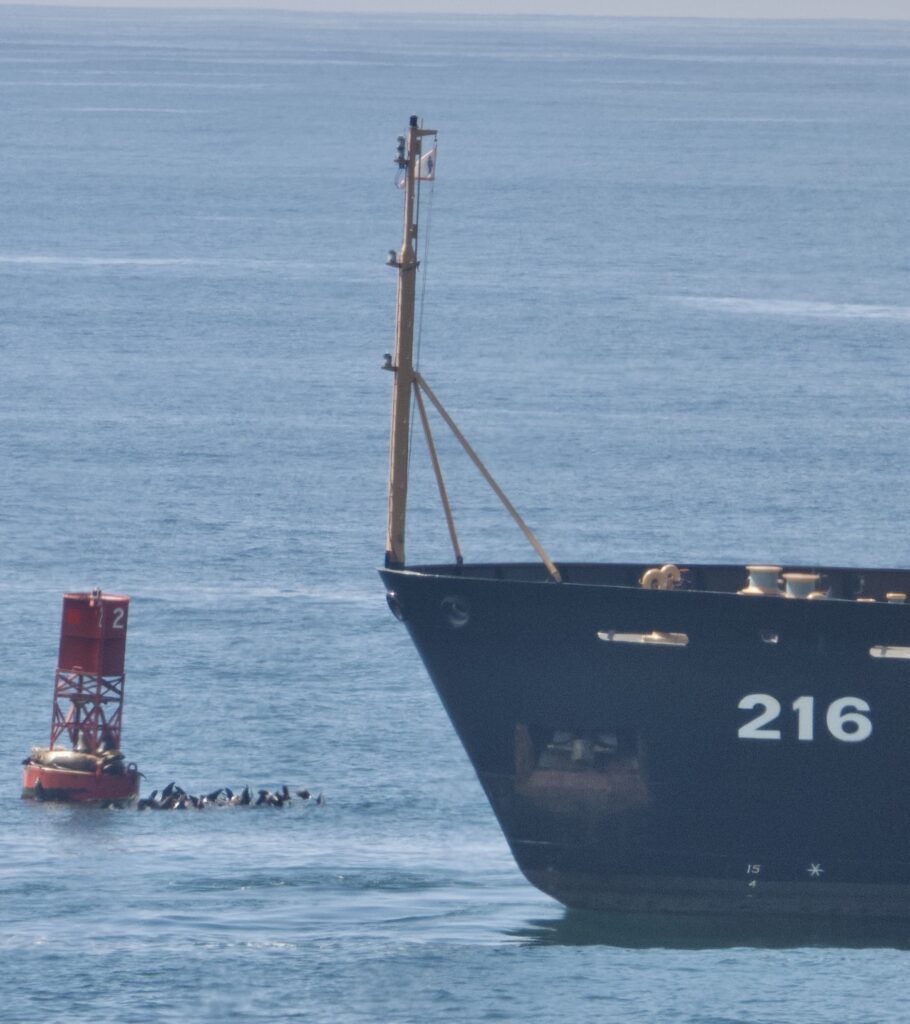
The seals and sea lions had to evacuate the green bouy and watched from the red one. You can see the whale surfacing just above the buoy, while the sea lions seem to be looking at the ship.
After its years on Lake Superior, the Alder later worked out of Baltimore in 2021 while undergoing upgrades, before transferring to San Francisco in 2022. Each move has placed the Alder into progressively larger and more challenging bodies of water.
The current commanding officer of the vessel, according to Coast Guard records, is LCDR Drew M. Stafford.
The Coast Guard maintains a detailed page for the Alder, including its mission profile, specifications, and deployment history.
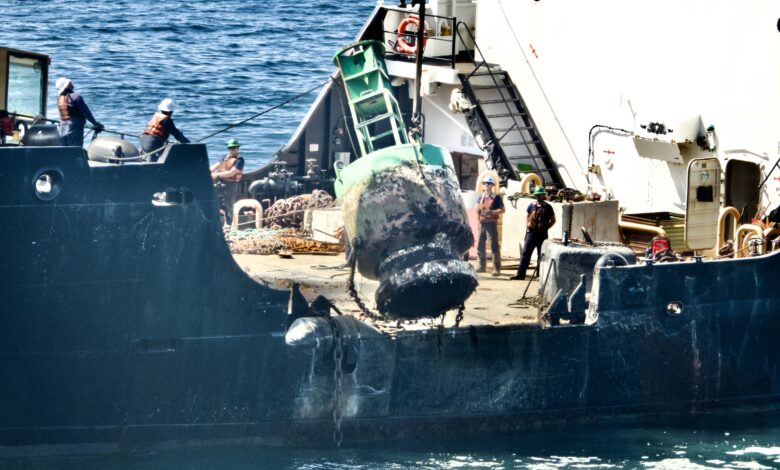
The Alder removed the buoy closest to shore, hoisted it aboard, and scraped away the barnacles and other marine growth before setting it back in place. The crew also appeared to carry out a repair operation, and at one point they let out a cheer that was clearly audible from shore — as the video shows.
The buoys off Noyo Harbor were installed primarily to keep mariners off the rocks, but each one also carries additional duties. Many navigation buoys collect ocean data such as temperature, wave height, and current information. Some buoys along the coast carry even more complex instruments for agencies like NOAA and research institutions such as Scripps.
NOAA lists 61 ocean‑monitoring buoys off the Northern California coast on its public map. Most of them appear to be offline at the moment, and none of the three buoys off Noyo Harbor are included in that system. Of the 61 NOAA buoys, only one could possibly correspond to the seven buoys visible from the Mendocino Coast — a station labeled “North Jetty” — but NOAA provides no specific location for it, and it does not appear to match any of the Noyo Harbor markers.
Northern California Buoy Stations – Live Wave Data & Surf Conditions
Usually, there would be detailed information online. However, the Coast Guard stopped updating its website with current mission and status reports because of the federal shutdown tied to the stalemate over the Department of Homeland Security, the agency under which the Coast Guard operates.
The Coast Guard Station in Noyo Harbor has so far been able to continue paying its enlisted members and officers, but civilian employees attached to the Coast Guard have experienced interruptions in pay.
There is another buoy of local interest — a research buoy the Noyo Center for Marine Science is involved with. This buoy serves a very different purpose from the navigation markers at the harbor entrance, collecting scientific data rather than guiding vessels.
Aqualink Smart Buoy at Albion Cove
We phoned the ship using the number listed online, left a message, and will update if we hear back about exactly what Wednesday’s mission entailed. In the meantime, here are a few photos of the buoy traveling across the deck — a rare look at work most of us only glimpse from shore.
Out on the water, it was just another day for the crew of the Alder. For the rest of us, it was a reminder of how much quiet, unseen labor keeps this coast alive: the buoys tended, the rocks avoided, the rescues answered, the cheers carried on the wind. Even in a shutdown, even with uncertainty hanging over their paychecks, the Coast Guard shows up. And on Wednesday, Noyo Harbor got to watch them do it.
Here is what NOAA says the Buoys help with:
Surfers: Track swell height, period, and direction to time sessions and compare nearby breaks.Mariners: Monitor sea state and wave energy for safer transits and offshore operations.Weather forecasters: Analyze storm-driven waves and ocean-atmosphere interactions for regional forecasts.Researchers: Study long-term wave climate trends, coastal erosion, and renewable energy potential.