In Their Own Words: Candidates Tell Their Stories — and Why They Want to Be Your Judge in a Rare Contested Race


We asked them both the same questions. Read their answers.
Side-by-Side Comparison
To give Mendocino County voters a clear look at the candidates seeking to serve as Superior Court Judge, MendocinoCoast.news sent the same set of written questions to both campaigns. The questionnaire focuses on judicial experience, approach to the work of the court, and the responsibilities of the bench. Judge Patrick M. Pekin returned his answers by the initial deadline. Attorney Colby J. Friend requested a short extension while on vacation and submitted his responses soon after.
SIDE‑BY‑SIDE BIOGRAPHICAL COMPARISON
| Category | Judge Patrick M. Pekin — Sitting Judge | Attorney Colby J. Friend — Challenger |
| Age | 51 | 52 |
| Residence | Mendocino | Willits |
| Law School | UC Law San Francisco | University of Iowa College of Law |
| Years in Practice | Since 2003 | Since 2004 |
| Judicial Experience | Elected 2020; presides over criminal, civil, family, Behavioral Health Court, Adult Drug Court | No judicial experience; practicing attorney |
| Legal Background | Criminal defense, civil litigation, extensive trial work | Family law, civil rights–oriented practice, broad life‑experience background |
| Community Involvement | Volunteer firefighter, ocean rescue team, Behavioral Health Advisory Board, Save Our Coast Court, Mock Trial coach | Youth sports coach, community garden, theater, school PTOs, radio host, pro bono legal work |
| Who endorses you? | Numerous endorsements from judges, attorneys, law enforcement, county officials | Declines endorsements from attorneys/judges; seeks community‑based endorsements |
| Campaign Spending (to date) | ~$3,000 | See his answer |
What follows are each candidate’s full, unedited answers, presented exactly as they were submitted. These responses appear alongside an explainer on what a Mendocino County Superior Court Judge actually does, as well as a side‑by‑side biographical comparison designed to help voters understand both the role and the people seeking to fill it. The goal is straightforward: clear, accessible information for Mendocino County residents preparing to vote in this rare contested judicial race.
(Answers inserted exactly as written)
THE QUESTIONS & ANSWERS
QUESTION 1: BACKGROUND, EXPERIENCE & MOTIVATION
Can you share your age, the city where you currently reside, where you attended law school, and how long you have been practicing law? What experience do you have within the judiciary, and what motivated you to pursue a judgeship?
Judge Patrick M. Pekin — Sitting Judge
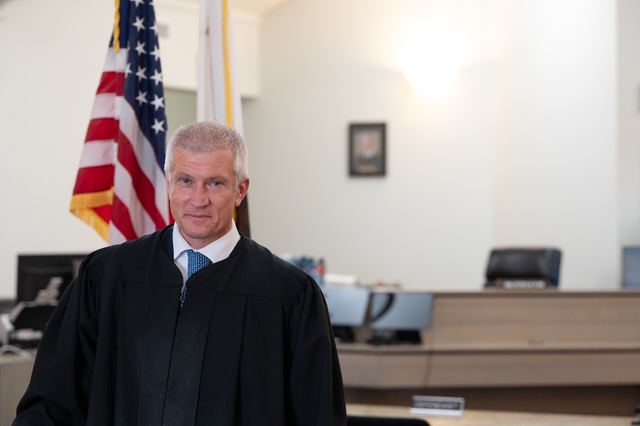
I am 51 years old and I live with my family in Mendocino. I attended law school at UC Law San Francisco, graduating in 2003. I took and passed the California Bar exam and was admitted to practice law in California in 2003. I also took and passed the New York Bar Exam and was admitted to practice there in 2007, though I never have. After graduation, I practiced civil law at the firm of Gordon & Rees in San Francisco. I did not enjoy “big law” and began work in criminal defense in Salinas, handling both street crime and in-prison crime at the Salinas Valley and Soledad State Prisons. In 2008, my wife, Amanda, and I moved to Mendocino County. We opened our own practice in 2009. Our office handled every variety of criminal case, from DUI to homicide, in both Mendocino and Lake Counties.
I was elected to the bench in 2020. All of the people who endorsed me for that election are also endorsing me now. After my election, I was assigned to Ukiah full- time, where I remained assigned until October 2025. I heard criminal cases of all varieties, civil matters, and was in charge of family court for about 3 years. I am particularly proud of my work in Behavioral Health Court and Adult Drug Court, which I expanded over these past several years. Currently, I am assigned to the Ten Mile Court, in Fort Bragg, Monday through Wednesday. I commute to Ukiah for civil matters on Thursdays and Behavioral and Drug court on Fridays.
As a lawyer practicing throughout California, I was always impressed by the role of judges as a steadying force. Not all judges are perfect, but many that I have worked with as an attorney and all that I serve with as a judge are devoted to ensuring a predictable and fair application of the law, with an eye towards the protection of the public. I always wanted to contribute to that effort, and I feel that I have.
Attorney Colby J. Friend — Challenger
I live in Willits with my three children—a 16-year-old daughter and two sons, ages 14 and 12. I also have twin daughters, age 28, who live in Sweden and between Malta and Los Angeles. I earned my undergraduate degree from the University of Virginia and my J.D. from the University of Iowa College of Law. From the start of law school, I recall an emphasis on the idea that our legal career starts on that first day of law school. I suppose this marks the beginning of my legal career at the turn of the millennium. That perspective inspires me as I identify as a forward-thinking creative lawyer, and motivates the progressive-minded judge I aspire to be.

I was admitted to the California and Vermont Bar Associations in 2004 and began my practice in family law in Vermont before returning to California. My motivation to serve as a judge stems from a concern that the court system too often prioritizes process over truth, and expediency over meaningful outcomes. I believe litigants deserve to be heard, and that every case—because of its impact on the lives for those involved—should be handled with care, attention, and a commitment to reaching just and truthful results.
QUESTION 2: THE COUNTY’S JUROR SHORTAGE
Mendocino County is facing a significant juror shortage. From your perspective, what can the courts do to improve juror turnout and strengthen participation in the jury system?
Judge Patrick M. Pekin — Sitting Judge
Mendocino County holds a great many jury trials for a county its size. Virtually every week there is at least one, if not two, jury trials. For a significant felony trial, about 300 jurors are called to appear in order to secure 12 jurors, plus 2 alternates. This is because many summoned jurors are unable to serve for a variety of valid reasons, such as work or childcare. Unfortunately, when most people talk about getting a juror summons, their first thought is how to avoid it. However, most people who have served on a jury find it to be a very rewarding experience.
It is understandable that potential jurors are frustrated with being called to serve on a jury far from their homes. Mendocino County is, as we all know, very large, geographically (larger than the State of Delaware) with its population centers spread throughout the county. It creates substantial strain on people from Gualala, for example, to be asked to travel to Ukiah, or someone from Covelo to be summoned to Fort Bragg. By contrast, California Governmental Code Section 69640 permits the County of Los Angeles to create superior court districts, but does not extend that same authority to any other county. It would be helpful to have judicial districts in Mendocino County, but that is a question for the California Legislature.
I understand why many in the public are frustrated with government, generally; there are many things going on in our world today that are stressful and can make us lose faith in our systems. However, these systems, as imperfect as they are, stand as the People’s best means to keep government functioning honestly and efficiently. Low juror response is similar to low voter turnout, unwillingness to serve your community as a volunteer and just generally neglecting to participate in society. I would remind everyone that serving as a juror is not just an obligation, but an opportunity, like voting, to participate in the system and make a difference.
Attorney Colby J. Friend — Challenger
I would need to conduct further research to provide a comprehensive response. It is self-evident that the primary deterrent to jury service is the time commitment of being a juror relative to the minimal compensation – a pittance in reality, particularly given the impact on an individual’s ability to work. Strengthening legal protections against employer retaliation for jury service may help, though such measures would offer limited relief to self-employed individuals or those individuals in essential cannot-miss-work roles. Increasing juror participation likely requires expanding the juror pool. It would also increase participation if the experience was more efficient, more comfortable, and more financially rewarding. One potential creative approach is to create a voluntary recall list of individuals willing to serve as jurors.
QUESTION 3: THE FUTURE OF THE FORT BRAGG COAST COURTHOUSE
The Fort Bragg Coast Courthouse is essential for North Coast residents. What is your relationship to the Coast community? Given the travel burden, what steps should the court take to keep jury trials on the Coast? What should the modern version of satellite courts look like?
Judge Patrick M. Pekin — Sitting Judge
I have a deep relationship with the Coast Community. My wife and I have been here for nearly 20 years. Our children were born at the Coast hospital, when it still had a maternity ward, which has since closed. Despite my years-long assignment to the Ukiah Courthouse, I never contemplated relocating from the Coast. From 2020-2023, I rented an apartment in Ukiah during the week for work, due to the length of the commute. From 2023-2025, I made the commute to Ukiah 5 days a week—rain, sleet, or snow. I still drive to Ukiah twice a week. I completely understand the difficulty Coast residents face in having to travel to Ukiah.
The California Courts are facing several important shortages that affect all courts, but especially satellite courts. First, there is a statewide shortage of certified interpreters, which are required for court proceedings. Interpreters in Mendocino County are currently shared between multiple courtrooms in a single day. Second, California has a critical shortage of court reporters. California Government Code Section 69957 places several limits on the Court’s use of an electronic recording system to only a select few types of cases, so a shortage of court reporters impacts satellite courts more heavily than central locations.
Every court participant is entitled to a clear record of court proceedings. California initiated a pilot program to allow court reporters to appear by Zoom. That pilot program is set to expire in June, 2026. I believe that technology, if properly instituted, can be used to make satellite courts more robust. Allowing interpreters, court reporters, witnesses and litigants to appear remotely relieves enormous pressure on court participants. We need to lean on the technology.
Attorney Colby J. Friend — Challenger
I would love to establish satellite courts in every district, particularly in Fort Bragg, which serves a substantial coastal population. I think all Mendocino County residents would appreciate satellite courts. Residents from Round Valley to Leggett to Point Arena face similar access challenges. Mendocino County is geographically vast. It’s about the same size as the whole country of Jamaica, or the big island of Hawaii. It’s three times the size of the state of Rhode Island and nearly twice the size of Delaware. I guarantee there’s more than one Courthouse in Delaware. It is reasonable and wise for a county of this scale to have multiple, accessible court locations. Ultimately, as so many issues often do, this issue comes down to funding. Satellite courthouse funding should be available. It once was, what has happened?
Of course, when we see the way that the United States government wastes money on war, we realize that important benefits to citizens such as satellite courthouses, schools, healthcare etc. often get left behind. Satellite courthouses are ideal to ensure meaningful access to justice, especially in rural and geographically dispersed communities. Investing in such infrastructure should be a priority, as it directly impacts the public’s ability to participate in and rely on the judicial system.
QUESTION 4: ENDORSEMENTS & QUALIFICATIONS
What endorsements have you received in this race? What qualities or experience set you apart as a candidate, and how would your service on the bench benefit residents of the Mendocino Coast?
Judge Patrick M. Pekin — Sitting Judge
I am endorsed by sitting Judges Moorman, Faulder, Dolan, Scott, McCurry and Shanahan. I am endorsed by retired Judges Behnke, Henderson, Brennan, Luther, Lehan, Nadel, Labowitz. I am endorsed by every sitting Mendocino County Judge and every retired Mendocino County Judge from the last 15 years. I am endorsed by the District Attorney, the Public Defender, the Alternate Public Defender and virtually every attorney on the Coast and Inland. I am endorsed by four county Supervisors. I am endorsed by the current Sheriff, the former Sheriff, the Fort Bragg Police Association and the Fire Chiefs of Mendocino, Willits, Fort Bragg, Hopland, Westport, Gualala, as well as two Battalion Fire Chiefs from Ukiah. Beyond that, I’m endorsed by many other people from all around the county. Many of my endorsers are listed on my website: Patrick Pekin for Mendocino County Judge
As a lawyer, I have significant experience in dealing with extraordinarily difficult criminal cases, including gang homicide. I have jury trial experience in homicide in the counties of Monterey, Lake and Mendocino. My work in Salinas dealing with crimes occurring within prisons provides me with a unique perspective. Before moving to Mendocino County, I represented clients in the counties of Santa Cruz, Monterey, San Benito, San Mateo, San Francisco and Santa Clara. After I moved to Mendocino, I represented clients in Mendocino, Lake, Sonoma and Alameda Counties. Generally, I have practiced throughout the State.
As a Superior Court Judge, I have presided over every type of case that can be heard in the Superior Court. I have heard everything from small claims to appellate cases. Often, I hear many types of case each week—family law, criminal, civil—and I end each week with Behavioral Health and Adult Drug Court.
My 23 years of legal experience have taught me the importance of patience, while at the same time reinforcing the need to be firm when it is required. Being a Judge is a tough job, you have to listen and weigh what you hear. Above all, you must be decisive.
Attorney Colby J. Friend — Challenger
Endorsements present a delicate issue in a judicial campaign, as a judge must remain impartial and avoid any appearance of obligation to those who offer support. I am not seeking endorsements from attorneys, judges, prosecutors, district attorneys, or government counsel who may often appear before the court. I have declined to promote the endorsements offered to me from attorneys. I question the ethics of recruiting endorsements from attorneys who will eventually practice law in the courtroom before the judge for whom they have given their endorsement or declined to do so.
Instead, I welcome endorsements from the press and from community-based organizations that reflect the voices of everyday residents of Mendocino County. These groups provide a broader public perspective while preserving the independence and neutrality essential to the judiciary.
QUESTION 5: PUBLIC ACCESS TO COURT RECORDS
Given this situation, what should be done long-term to restore real public access to criminal court records? How should the court balance confidentiality with the public’s right to review the justice system, and what reforms would you support to ensure transparency for the press and the community?
Judge Patrick M. Pekin — Sitting Judge
The Judicial Council of California drafts the California Rules of Court. California Rule of Court 2.503 governs electronic access to court files. Specifically, rule 2.503(c) restricts access to various records, such as records in a criminal proceeding or juvenile proceeding. The rule requires that interested persons must come to the courthouse to review files, even if those files are maintained by the Court in an electronic format.
All California courts have moved to an electronic system and Mendocino is no different, having adopted the Odyssey system. Like most software, Odyssey was released with problems. Currently, the Odyssey access system has improved from initial rollout, but there will certainly be more problems to come, because after all, it’s software.
Our Court must follow the California Rules of Court. The rule is drafted to balance some confidentiality with allowing a public right of access. As it stands, the current rule is that persons must come to the court to access certain court files, this includes electronic files. Interested parties are encouraged to come to court, as they did when all files were paper, and work with our very helpful clerks.
Attorney Colby J. Friend — Challenger
I strongly support greater transparency in the judiciary. It is often difficult even to locate the record of a presiding judge, and that should not be the case. I, myself have been frustrated with the unwieldly nature of the Mendocino County Superior Court Portal. Judicial records should be readily accessible to the public. Charging for digital copies undermines the very purpose of digitization, which is to make information easily and broadly available.
Court portals should be more user-friendly and searchable, allowing the public to efficiently locate records involving attorneys, judges, and litigants. At the same time, transparency must be balanced with existing laws that protect victims, children, families, and whistleblowers. Those protections should remain firmly in place.
QUESTION 6: PERSONAL MOTIVATION & FAVORITE TV LAWYER
On a more personal level, what first motivated you to pursue a career in law — was there a moment, influence, or experience that set you on this path? And, just for fun, who is your favorite TV lawyer and what about that character resonates with you?
Judge Patrick M. Pekin — Sitting Judge
I went to college in Eugene, Oregon in the ‘90s and my plan was to be an English professor. After college, I travelled by working in various places. I worked on a small cruise ship in Alaska and Puget Sound, a yacht in Mexico, a “research vessel” (which really sat in San Diego for months being painted by me, although it did go to the Guadalupe Islands, briefly), and two tug boats outside of New Orleans. I taught English in Ankara, Turkey and Belo Horizonte, Brazil.
After three years of travel/work I was pretty tired and decided to grow up. I had always admired my dad. He is an attorney, one of the best attorneys I have ever known. When I was young, he had been a DA, and then became a defense attorney. He would always come home with the wildest stories about his day and I decided that I wanted to do what he did. I started studying for the LSAT while in Brazil.
My favorite lawyer from film is Mickey Haller, the Lincoln Lawyer, played by Matthew McConaghey. I thought it was the most realistic portrayal of a lawyer traveling from court to court in California I have ever seen.
Attorney Colby J. Friend — Challenger
My interest in the law began with an early awareness of civil rights issues, shaped in part by events like the Rodney King incident. I felt that it was wrong that when a prson is pulled alongside a police officer at a traffic light, it is common to feel less safe and more threatened. I was drawn to the idea of becoming a civil rights attorney, someone who could stand up for individuals whose rights were oppressed. My own experiences reinforced that goal: seemingly unwarranted stops or fines from law enforcement, disputes with landlords, I believe the straw was when the dogcatcher attempted to kidnap my dog. In short, there were everyday situations common to many Americans where I felt at a disadvantage without legal knowledge. I chose to attend law school so I could understand the system, speak its language, and advocate effectively for people.
With regard to popular culture lawyer shows, I have always enjoyed them. There are too many to name, LA Law was a good one. My Cousin Vinny was a terrific movie although quite unrealistic. Erin Brockovich and The People Versus Larry Flint were both fascinating true legal story movies. John Grisham books are captivating reads. I liked and recommend the true story novel, A Civil Action. Going way back as a kid, my favorite show was the western called Big Valley, some out there will remember. I always identified with Jarrod, the oldest brother who was an attorney who would solve the ranch problems diplomatically, rather than the younger brothers, Nick and Heath, who were hot-tempered and quick with their guns.
QUESTION 7: QUALITIES OF A JUDGE
In your view, what are the most important qualities and responsibilities of a judge? What skills, experience, or personal strengths do you bring that make you well-suited for this beknighted occupation and the demands of serving on the Mendocino County bench?
Judge Patrick M. Pekin — Sitting Judge
I do not think a Superior Court Judge is a “knighted” position, certainly I hope it isn’t a “benighted” position. It is a position that is earned through good judgment and experience. It isn’t given to you by a lord or a king, but by the public, and the role cannot be inherited. The office carries no absolute power—a judge must follow the law and the facts. Ultimately, a judge is a public servant. That concept, public servant, is deceptively simple—a public servant serves the public, as a whole.
As a judge, you simply cannot make everyone happy—that is the nature of the court system. Moreover, some people are, by nature, unreasonable. When you follow the law and fairly apply it to the facts, some court participants will be unhappy with the outcome. A judge cannot alter the rules to get a desired result. A judge cannot rule for, or against, someone based upon personal belief. Sometimes, an unlikeable person will win. A judge must accept that hard reality and be prepared to render judgement, nonetheless.
As an attorney representing prisoners who had attacked other prisoners or guards, I learned a great deal about listening. My experiences representing the mentally ill, gang members, and those addicted to drugs allowed me to learn and practice tolerance and understanding of the human experience. But I have also learned that sometimes the answer is simply “no.” Presiding in family court or behavioral health court presents similar challenges—Judges often see people when they are going through the hardest of times. It is important to practice empathy, but empathy cannot supplant the fair and equal application of the law.
Attorney Colby J. Friend — Challenger
The most important qualities of a judge are sound judgment, empathy, attentiveness, and a commitment to treating all people with fairness and respect. A judge must be willing to put in the work necessary to truly understand the individuals and circumstances before the court. Without the ability to relate to those who appear in the courtroom, it is difficult to fully appreciate the realities of their situations.
My perspective is shaped by a wide range of life and professional experiences. I have worked in construction, restaurants, farming, casinos, retail, and many more. I have been a business owner, a manager, an employee. I have experienced both financial stability and hardship. I have been a tenant and a landlord, a father, a coach, an actor, a volunteer, and a cancer survivor. I have experienced the traditional nuclear family and the modern family that can look and be quite different. These experiences allow me to approach each case with a broader understanding of the people involved in it. Above all, I recognize that every case is deeply important to the individuals involved. I am committed to ensuring that each person is heard and that every matter is handled with care, diligence, and fairness.
QUESTION 8: CAMPAIGN SPENDING
How much have you spent on your campaign so far, including any major expenses such as advertising, signage, or outreach? Looking ahead, what is your anticipated total budget for this election cycle, and how do you plan to allocate those funds?
Judge Patrick M. Pekin — Sitting Judge
I have spent $3,000 on the campaign so far. I hope to not spend much more. At the moment, the expenditures were for a campaign manager, photographer and website.
Attorney Colby J. Friend — Challenger
I have spent less than $1,000 on my campaign to date and anticipate a total budget of up to $10,000. These funds will be used primarily for basic outreach, including signage and small promotional items to increase the Friend name recognition with signs and little giveaways like buttons, pens and guitar picks. I think a grave Injustice to the voters is being done by holding this election on June 2nd rather than in November in the general election. This limits voters’ ability to make a fully informed decision. With only a four months between the February declaration of candidacy and the election, judicial candidates have limited time to engage with the public, particularly in judicial races, where candidates are not widely known. We could have used the additional five months until November to give people an informed choice. This unnecessarily early vote shows a lack of insight and poor judgment on the part of the elections division of the Secretary of State in California. This is again more bad judgment from government officials.
QUESTION 9: PUBLIC TRUST & TRANSPARENCY
Public trust in the justice system depends on transparency, consistency, and clear communication. What steps would you take — inside or outside the courtroom — to strengthen public confidence in the court’s work and ensure that the community understands how decisions are made?
Judge Patrick M. Pekin — Sitting Judge
The best way to strengthen public confidence in a decision is to take the time to clearly explain your reasons for the decision. When I am presiding over cases, particularly family and civil cases where litigants don’t have counsel, I ask questions so that the issues can be clearly laid out for each party to see and understand. I think the participants appreciate understanding where a judge is coming from, and if a case has a particular deficiency, I find it very helpful to the litigants to simply ask questions to address the issue. In such cases, the litigants feel more engaged in the system and are more comfortable with the decision, even if they do not ultimately prevail. When people have the opportunity to meaningfully participate in the legal system, they have more confidence in that system.
One consistent issue that the public has with the judicial system is that, sometimes, it can seem that a secret language is being used. For example, some Supreme Court decisions are as long as novels. When people cannot understand the language of a system that is meant to serve them, it can be frustrating. Speaking in plain language, getting to the point and telling people what you, as a judge, are having a problem with does a great deal in clarifying the system.
In the end, most solutions are practical in nature. A person either did, or did not, do an important thing. A person did, or did not, say something, and in those circumstances, the law requires a particular result. The judge’s job is to explain those points in language everyone can understand.
Attorney Colby J. Friend — Challenger
Transparency in the judiciary, and in government more broadly, is essential to an informed electorate. While most court hearings are open to the public, written decisions should also be readily accessible. The Mendocino County Superior Court portal should provide public access to judgments at no cost, consistent with the purpose of digital records. I would be a judge who will happily support public attendance at all hearings that do not compromise the privacy of minors or victims. A judge should be accountable for their rulings and be willing to stand behind them.
I’ll take this moment here to make the point that I do not support the dress code in the Courts. Many Supreme Court cases have determined that a person’s choice in clothing may be considered speech. The First Amendment protects our right to free speech. As of now the First Amendment is still intact, though it is seems to be threatened daily. It is a shame that the Court system demands from citizens for whom it is their right to access the Court, to dress in a particular manner, such as a ban on hats, shorts or sandals. These are presumptuous, discriminatory, and arbitrary rules propagated by the Court system that is there to serve the public not make unnecessary and capricious demands. A judge is tasked with judging the merits of the case, not the fashion sense of the participants. I once had a bald head, very little hair at all save a few eye lashes, due to a chemotherapy regimen. At that time I was more comfortable wearing a hat. I imagine others might feel the same. Requiring a woman or man in that position to remove a hat in court would be wholly inappropriate and inconsistent with the judiciary’s responsibility to treat all individuals with respect and humanity.
QUESTION 10: JUDICIAL TEMPERAMENT
Judges often face high-stress situations, emotional litigants, and difficult decisions with no perfect outcome. What practices or principles help you maintain judicial temperament and fairness under pressure, and how do you stay grounded in moments when the courtroom is at its most challenging?
Judge Patrick M. Pekin — Sitting Judge
Some of my answers above cover this question, but it is worthwhile to expand on the issue. Yes, we live in an imperfect world, populated with imperfect people and governed by an imperfect system. We do the best that we can. It is important to remember that most people, no matter how troubled, are actually doing the best that they can. That doesn’t mean that everyone has a license to do as they please, such as not paying rent, or breaking the law, or hurting others. But, it is helpful to remember that most people are not out to make other people’s lives miserable.
I am not perfect at this, but I find that speaking slowly and with a low voice is often the most effective. Repeating back what people have said is also very helpful. It helps a judge take the time to form their thoughts and it helps participants understand that they are being heard. It really is true that when things are at their most stressful, taking a deep breath and waiting to speak is often the best solution, and sometimes it even encourages others to do the same.
Attorney Colby J. Friend — Challenger
Cases are often deeply emotional. I cannot stress enough that judges must recognize the high stakes involved for those who appear before them. Understanding this is essential for judges to empathize. Litigants need to be heard and feel heard, and judicial decisions should be explained clearly so they are understood.
My background supports this approach. I have studied psychology, raised five children, and spent years as an umpire, referee, and coach. I have worked with people from many walks of life, developing a temperament that is patient, approachable, and grounded in fairness. I am a Libra, and while I do not place significant weight on astrology, I find I have always naturally valued balance and fairness as guiding principles in my life and my work.
QUESTION 11: COMMUNITY INVOLVEMENT
What volunteer work, pro bono work and other community involvement do you have? How much time do you spend on your community? How do we know you know your community and that you are committed to it long term?
Judge Patrick M. Pekin — Sitting Judge
When my wife and I moved to Mendocino County, we began coaching the Fort Bragg High School Mock Trial program. Our students were, and are, amazing people, smart, funny and compassionate. Working with those kids actually encouraged us to have children of our own. We coached Mock Trial for about 5 years, and our team often made it to the State competition. Occasionally, we run into some of our old students and are still, and always, so proud to know them.
I am also very proud of my work with Save Our Coast Court. In 2011, during the California Budget Crisis, the closure of the Ten Mile Court was imminent. I worked with retired judges Luther and Lehan and attorneys Steve Antler, Maggie O’Rourke, Carter Sears and Ryan Perkins to change that outcome. I was committed then, as now, to keeping the Coast Court open.
I served on the Mendocino County Behavioral Health Advisory Board for two years. The Board would convene at locations around the county every month in an effort to address mental health and related services in the county. As mentioned, I currently preside over the Mendocino County Behavioral Health Court and Adult Drug Court, so these connections have been very helpful. As has been expressed by many of my endorsers, including former Sheriff Tom Allman, mental health is a great concern in this county.
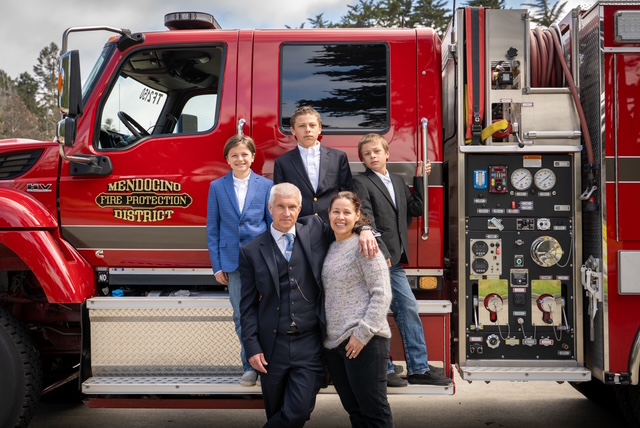
Finally, I am a badged member of the Mendocino Volunteer Fire Department since 2015. I am on the ocean rescue team and have responded to countless high-risk emergencies. I actually shattered my knee during training some years ago, but I went right back to it. I was also on the Strike Team, and have been on crews sent to assist with several major fires around California, such as the Redwood Complex, August Complex and Glass Fire. I train weekly and respond to medical calls, traffic accidents, residential fires and, sometimes, just helping people who have mobility issues.
Attorney Colby J. Friend — Challenger
My commitment to community involvement spans many years in Willits. Since 2005, I have coached youth sports including baseball, softball, soccer, and basketball, and it is a great joy to see former or current players growing up throughout the community. I served as Umpire-in-Chief for Willits Redwood Little League, where we successfully revived girls’ softball, and I continue to serve on its board.
Beyond athletics, I have been active in the arts and local initiatives, including helping to start the community garden, performing in Willits Community Theatre productions, and contributing to the founding of both the Blosser Lane Middle School PTO and Willits Charter Elementary School. I have also volunteered for Sober Grad events for many years. I host a community radio program on KLLG called the Freetruth to raise awareness of current issues because I cannot keep silent about the atrocities we are witnessing in the world.
In my legal practice, I have regularly provided pro bono and low-cost services to indigent clients, sometimes accepting whatever compensation they could offer. I’ve literally performed legal services for figs, for fish, for books, for tacos, for paddleboard lessons. Having raised five children in Mendocino County schools, owned property, and built businesses here, I am as invested as anybody can be in the uplifting of Mendocino County in all respects.
END OF WRITTEN REPLIES
Pekin has been a judge in Mendocino County since 2020 He was narrowly defeated in his first run for judge in 2016 by Keith Faulder, who was presiding judge of the Mendocino County Superior Courts in 2025. Friend is facing voters for the first time.
From the 2016 election:
| Keith Faulder | 50.13% | 12,408 |
| Patrick Pekin | 49.51% | 12,254 |
The Mendocino County Superior Court is part of the state judicial branch, not county government. Judges do not represent districts; all eight judges are elected countywide. When a seat becomes vacant mid‑term, the governor appoints someone to serve out the remainder of that term.
Although there is a position historically known as the Ten Mile Court Judge in Fort Bragg, the court administration has been steadily shifting operations away from the Coast for years. Judge Patrick Pekin has been serving in the Ten Mile Court, but not as the officially designated Ten Mile Judge — a title the Ukiah‑based administration has declined to fill since Judge Clayton Brennan’s abrupt departure.
Pekin was elected in 2020, running unopposed for the seat vacated by retiring Judge John A. Behnke. At that time, Brennan was the assigned Fort Bragg courthouse judge, and Pekin served in Ukiah alongside the rest of the bench. Pekin began covering Coast calendars even before Brennan suddenly retired without public explanation in October 2025. By then, the court administration had already been moving jury trials and civil matters inland, later citing Brennan’s retirement as justification for further consolidation.
Two Superior Court judges appeared on Mendocino County’s June 2, 2026 ballot: newly appointed Judge FredRicco McCurry and Judge Patrick Pekin. Each of the county’s eight judges holds a numbered department seat, from Departments 1 through 8. Attorney Colby J. Friend filed to run against Pekin for Department 3.
If Friend were to win that seat, all eight judges would reside inland, leaving the county with no Coast‑based judge. Pekin is currently the only member of the bench who lives on the Coast. A Friend victory would also require the court administrator to select a new judge to cover calendars at the Ten Mile Courthouse in Fort Bragg.
Both candidates are family men who graduated high school in the early 1990s, at the end of the Reagan–Bush era and the beginning of the Clinton years. Their paths diverged sharply after that. Friend grew up in Massachusetts and moved west over many years, living in Florida, Virginia, Colorado, Iowa, New Mexico, Nevada, and Kings Beach, California as he pursued his education and worked a wide range of jobs, including running his own moving company.
A background check shows several traffic‑related violations for Friend across multiple states — mostly speeding, along with citations for driving without a seatbelt, missing registration stickers, or lacking proof of insurance. These are minor matters but appear with some frequency in the records available to us.
We found no comparable records for Pekin. However, background searches on sitting judges are restricted by the commercial databases we use, so the absence of records should be understood in that context.
Mendocino County deserves a judge who is fair, hardworking, and impartial — someone committed to serving the public with integrity. We reviewed available records for both candidates and found nothing indicating that either man is unable to meet those expectations. Neither candidate has any record of discipline in his State Bar file.
Both campaigns report that they expect to spend relatively little on this race, each staying under $10,000. At this point, campaign spending does not appear to be a significant factor in the contest.
We reviewed the March 3 “Statement of Economic Interests” filings submitted to the Fair Political Practices Commission. Judge Patrick Pekin reported owning a rental property in Monterey County and disclosed his wife Amanda’s partnership in Hogan, Stickel & Pekin, a Fort Bragg law firm. He also listed three investments in publicly traded stocks, each valued at under $10,000. In 2021, Pekin reported earning more than $10,000 for work performed as part of a state firefighting strike team, separate from his volunteer service with the Mendocino Volunteer Fire Department.
The disclosure requirement applies to sitting judges, so no comparable filing appears to have been required from Colby Friend. A search of county property records shows Friend owns two residential properties in Willits. A review of the Secretary of State’s campaign‑finance database returned no filings for either candidate at this time. Additional filings may appear later in the election season, and we will report on any significant campaign spending or contributions if they occur.
Searching court records for attorneys or judges is limited in usefulness, as their names appear on every case in which they served as counsel or presided. One case of note involved Friend suing Sun Country Airlines in small claims court; Judge Pekin heard the matter and awarded Friend $1,689. Friend is also a party in an active family‑law case in Mendocino County. Family‑law files are confidential under current rules, and the case documents do not specify whether it is a divorce or another type of dispute. The file indicates that Judge McCurry is assigned to the matter.
WHAT A MENDOCINO COUNTY SUPERIOR COURT JUDGE ACTUALLY DOES
A Mendocino County Superior Court Judge handles a full range of cases: criminal, civil, family law, probate, juvenile matters, restraining orders, small claims, and the county’s treatment‑focused courts. Larger counties allow specialization; Mendocino generally does not. Seven judges sit in Ukiah and one historically covers Fort Bragg, though assignments are made by the presiding judge.
Core responsibilities include:
- Applying state law consistently and impartially
- Managing crowded calendars with limited staff
- Ensuring unrepresented litigants understand the process
- Maintaining courtroom safety and decorum
- Issuing written rulings and creating a clear record
- Protecting the rights of victims, defendants, families, and the public
- Overseeing jury trials, hearings, and settlement conferences
- Coordinating with county agencies and law enforcement
- Upholding public access within the limits of state law and Judicial Council rules
In a rural county, the job also includes something harder to quantify: understanding the realities of distance, poverty, mental health needs, and the strain placed on families and communities when justice is delayed or inaccessible. A Mendocino County judge must be both legally precise and practically grounded — someone who can interpret the law while recognizing the lived experience of the people standing before them.
Superior Court Judges in California earn about $240,000 in their first year, with annual increases and additional pay for serving as presiding judge or taking on other administrative roles. To qualify for the office, a candidate must have been admitted to practice law in California for at least ten years or have served as a judge in the state for the same period.
Prospective judicial appointees are reviewed by the State Bar’s Commission on Judicial Nominees Evaluation, which examines their background and qualifications. The criteria, findings, and details of that process are confidential under state rules. We found no public record of the Commission rating any candidate as unqualified. Some states make judicial evaluations public; California does not.
We filed formal requests for any available information on both candidates with the State Bar and the Fair Political Practices Commission. Based on the rules governing these agencies, we do not expect additional disclosures, as few public filings are required for judicial candidates. A State Bar spokesperson confirmed that all aspects of the evaluation process for potential gubernatorial appointees are confidential. Neither Pekin nor Friend underwent that review, as both sought election rather than appointment.
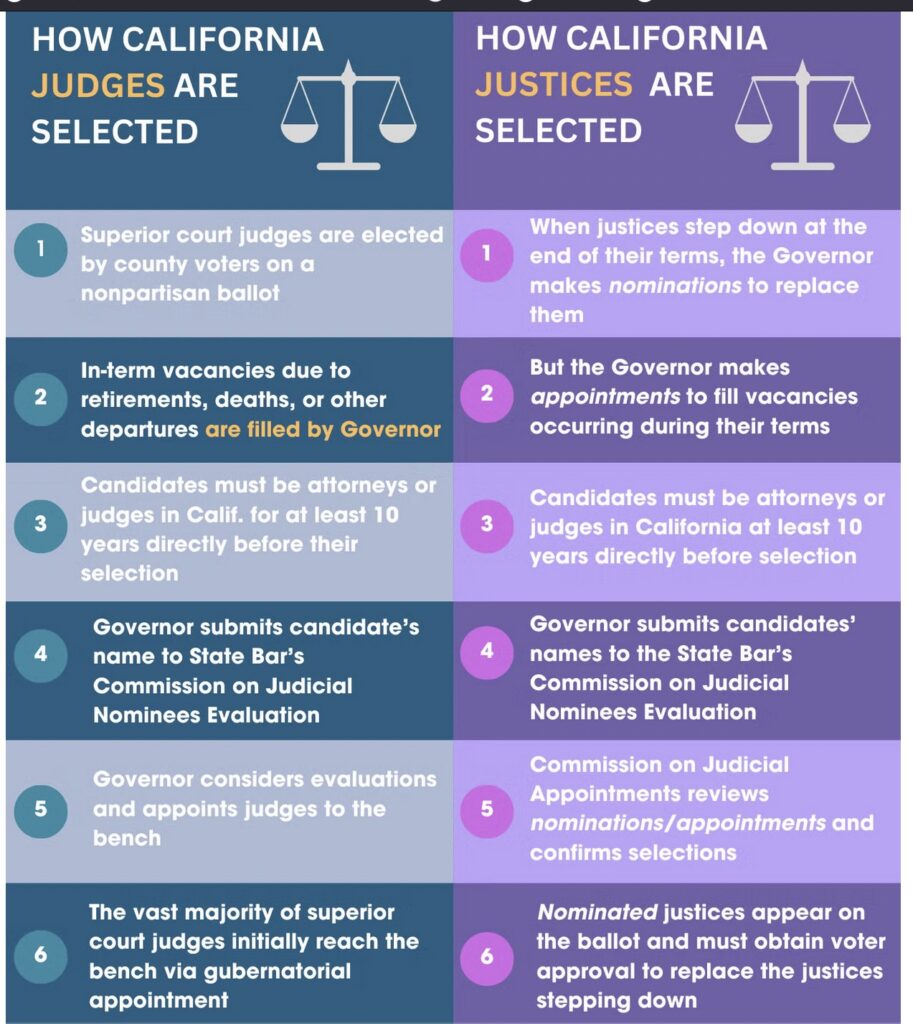
The election has been low‑key, with no negative campaigning from either candidate that we have heard. We will let you know if any comes forth. That was also the case in the earlier Pekin–Faulder race. Superior Court judges serve six‑year terms and are elected on a nonpartisan countywide ballot during even‑numbered years. Vacancies that occur mid‑term are filled by appointment from the Governor, which is how most Superior Court judges in California first reach the bench. If re‑elected, Pekin’s seat would next appear on the ballot in 2032.
This race is one of the few contested judicial elections in recent county history. The newly appointed judge in the other department is not facing a challenge this cycle, and judicial elections often proceed without opposition.
California Superior Court judges serve a single, countywide court rather than regional districts, and since 1998 each county’s superior court has operated as a unified system even when it maintains multiple courthouse locations. Statewide administrative rules and funding are set by the California Judicial Council, which also establishes the policies governing public access to court records; under current rules, courts must provide access when it is deemed feasible, and practices vary by county. Judicial candidates face few public‑disclosure requirements, and evaluations conducted by the State Bar for potential gubernatorial appointees are confidential. Because neither candidate in this race sought appointment, neither underwent that review, and we have requested any additional available information from the State Bar and the Fair Political Practices Commission.
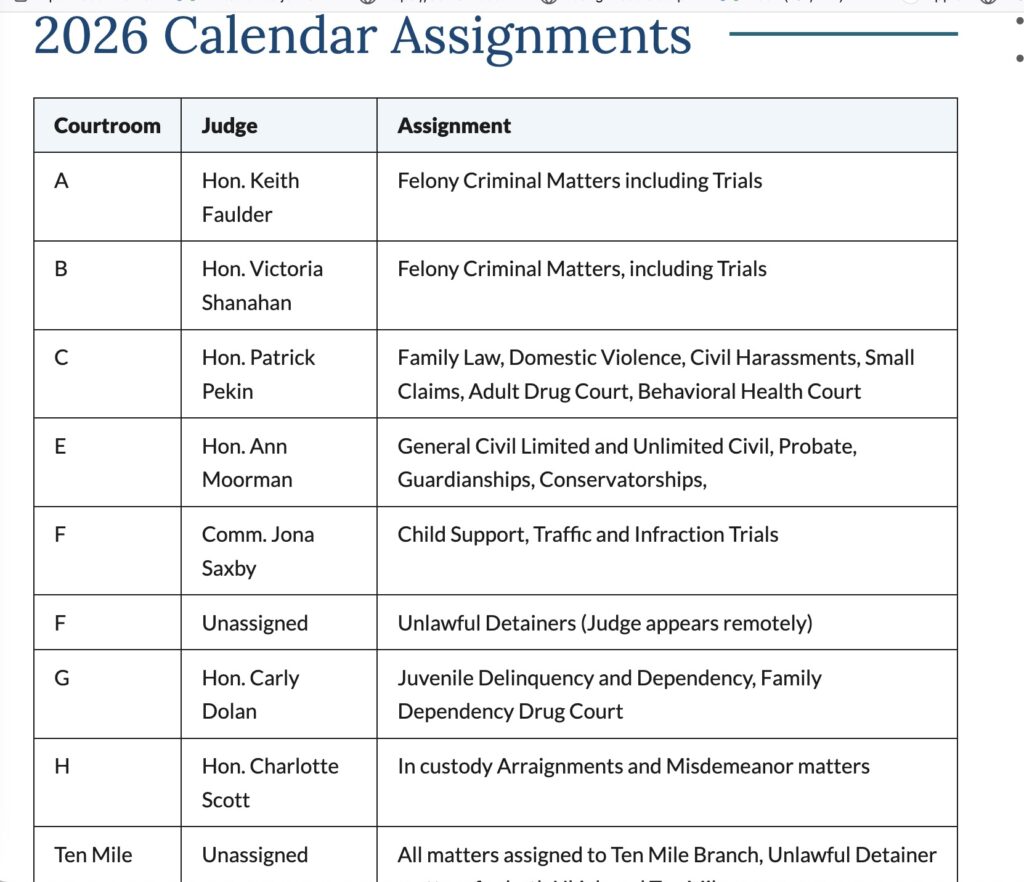
The court has not announced whether it plans to restore a dedicated Coast judge.

The court has not issued a public statement on how jury service or access will be handled once the new courthouse opens.
We searched for past news coverage on both men and found very little.
Here is an interview of Pekin in the Anderson Valley Advertiser:
Judicial elections rarely draw attention, but their impact is lasting. The judge elected on June 2 will guide cases, calendars, and community expectations well into 2032. For a county that depends on its courts to function fairly and consistently, the importance of that choice speaks for itself.