How much would Measure A cost? For me, about $61 a year — and here’s why the numbers are confusing and why we recommend “yes”

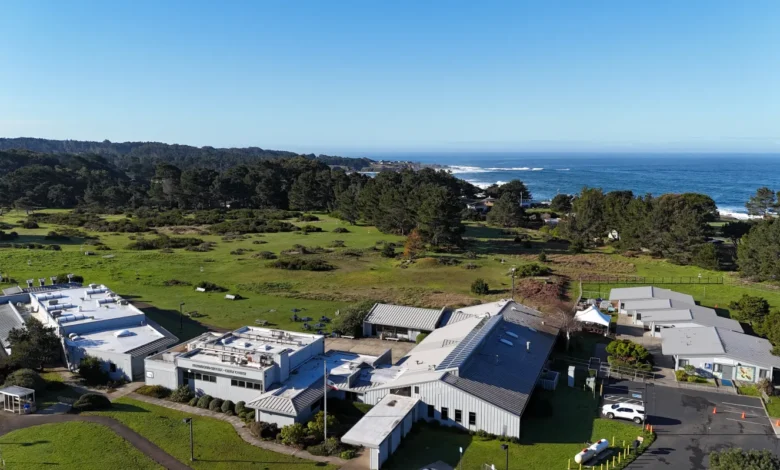
Bond would create new Woodworking School home, support ongoing work toward Coast Ocean Sciences Training Center
Where there is no vision, the people perish
Proverbs 29:18
Others have urged you to picture the problems. We’re asking you to put on our imagination goggles and picture what’s possible.
Take a trip and vision with us, either back in time or forward in time. Forward in time, we stand at the peak of Fort Bragg’s tallest hill west of Highway 1.
Looking west, we see the ocean in the distance. In the foreground is a world-class oceanography center. To the southwest is the new permanent home of the Krenov Woodworking School.
Standing there in the future, you will smile and think:
“They finally realized that Fort Bragg would be a great place to train local students who used to have to leave town. Now they can help understand the ocean and get started in careers studying at the new Mendocino College Coast Campus. What great vision voters had on June 3, 2026!
Of course, it didn’t take much vision to see that the Krenov Woodworking School would be an even more valuable community asset if they weren’t headquartered in a recycled house on the other end of town!
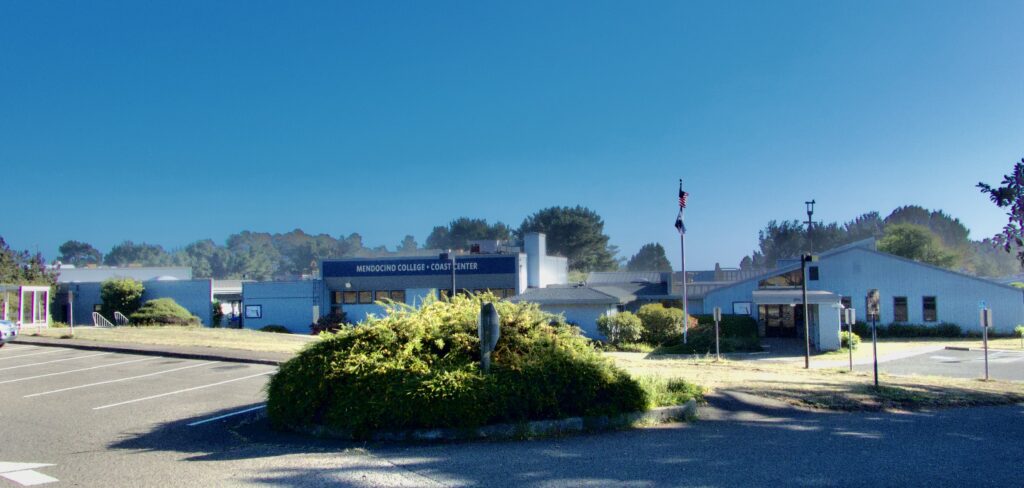
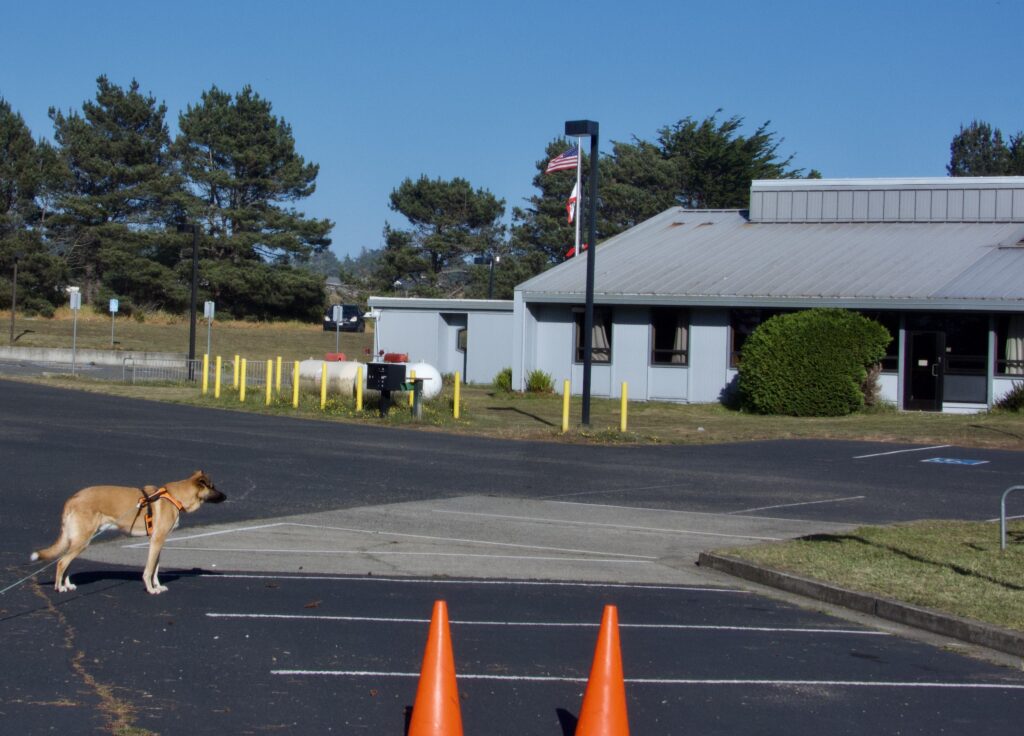

The peak of the hill is an unused grassy field in 2026.
Take a trip with us into the future. The top of the hill is now a park, and around it are mixed greenspace, small businesses, and housing the community came together to build back in 2027. Beyond that sits the highway, with Harvest Market and the Boatyard still working as a local engine of progress. Look straight south and you’ll see a Native American and archaeology study center. We’re glad the community recognized how well that would fit when they made the decision in 2028.
If this future vision sounds far‑fetched, it’s time to fly the other way through time and look at the visions our community has already had. Look to the north. In that earlier moment, there were plans for new sidewalks, a rebuilt Noyo Bridge, and an apartment complex rising along the corridor.
But the past still is the heart of the vision and the hope.
Keep looking north and the 19th‑century Guest House comes into view, still anchoring the landscape. Below it is the train yard that kept going long enough for people to realize the environment now demands we use trains again. Making the line electric turned out to be a smart move, and so did building the tunnel everyone once said couldn’t be done.
Also visible far in the distance is the Grey Whale Inn, a reminder of the community vision that took shape in the early 1900s, when neighbors came together to build a scientific hospital with Union Lumber leading the way. Today it stands remade as a welcoming local lodging house, carrying that history forward in a quieter form.
Our community still owns our hospital — something that isn’t true in many other places — and that ownership keeps possibilities open for the future. Drive past Fort Bragg High School and you’ll see a new campus rising where the old one had been pushed far past its limits. I worked there as a substitute teacher and saw firsthand how they were squeezing the last pennies out of buildings constructed decades ago. The maintenance crew kept things going with Rube Goldberg‑style fixes, including wired‑together ventilation and heating systems. All of that is finally being replaced because the community had a vision — and because, just barely, we passed the last bond. The new school is taking shape in 2026. Drive by and take a look.
We’re writing this story late because the naysayers have taken over the debate on this new social‑media monstrosity, a place that seems to draw out anger and criticism but rarely vision.
Can we repay bonds? Yes — if the community grows. Yes — if we bring in more people by doing things like this campus expansion. If the expansion becomes a first step in pulling the community out of the death throes we’re in now. If we can capture the spirit of our foreparents. If we can find the fortitude to bank and shop locally and to come together for business, for education, and for caring for the sick and the homeless. But if we sit still, feel defeated, and decide nothing can be done, that becomes a self‑fulfilling prophecy.
This bond could be one of the most important moments in Fort Bragg’s future. It also arrives at a low point in the history of modern media, when the loudest voices often drown out the thoughtful ones.
We are getting zero information of value from the sources that should be informing us, such as the Advocate News and Mendocino Beacon and Ukiah Daily Journal; they have completely failed us. The largest online media, the Mendocino Voice, also totally failed us. The UDJ did a story quoting Dennis Miller but not going into the nuts and bolts of anything or getting the other side of the story. No real effort of any kind was made by any of these.
We have a critical perspective offered in a publication called Mendocino Local as the only serious story on this bond. And we at mendocinocoast.news seek to offer new facts and a broader vision.
We as a community can rise up. Look back in time and look at the things we’ve created. The school district has had some strong visions over the years, and they pushed through opposition to build quality buildings. The last bond passed by the narrowest of margins. Go see what they’ve done with that money. Drive by the high school.
We as a community have risen before. Property taxes and bond expenditures were frightening to people in those earlier eras, but the projects moved forward because community visionaries made the case. We want to stand in that same tradition. We’ve read everything available now, and nothing in the proposal looks anything but promising — if our community is ready to stop declining and start growing toward the future. We should do this, and then we should take the rest of that field across from Harvest — the one once slated for dreadful strip malls — and turn it into housing, into something beautiful. Let’s create a Native American studies and archaeology program, and a place to learn Native wisdom about fire and oceans.
Standing on the peak of that hill, looking out over the panoramic ocean and the handsome town below, it’s astonishing how easily we forget what we have here.
Standing atop that hill, looking out over the panoramic ocean and the handsome town below, it’s astonishing how easily we forget what we have here. Just feel the mild weather, just look at the ocean. We’re not Ukiah, we’re not Willits — we’re Fort Bragg. We have the Coast. We have scenery that rivals the Grand Canyon in its ability to outlast us, day after day. And we forget that this beauty, this place, can be the foundation for a community that thrives.
Linda always says that most people in America dream of coming to a place like Fort Bragg in Mendocino County for a week of vacation — two weeks is a dream come true — and we get to be here every day. We have the opportunity to build ourselves into a first‑rate coastal paradise.
Let’s live it. Let’s let it blossom. Every new house and every new business would help us repay this bond and grow into something that can only happen with courage and investment.
Ok one more vision
I think they ought to bring the Albion Bridge up in pieces and reconstruct it on that site, maybe even carrying it across the highway to the Boatyard. That bridge is one of the most remarkable man‑made structures in the United States. In almost any other country, it would be saved without question. Here, we’re likely to tear it down — or let it fall down eventually.
You will find in this story far more detailed local specifics — from the college president and from other sources — than you will find anywhere else about what is happening and where. The criticism is real: the bond is dense. It probably should have been structured as a parcel tax, but that won’t work. And if we wait for parcel taxes to be changed to a simple majority, as they should be, the town could be dead before that happens.
It’s hard to read this bond. The language is opaque, but it conceals nothing harmful. Everything in it is solid, practical, and — to us — genuinely exciting. And we can afford it.
We have to overcome fear and accept growth and change.
The old country song says
“There’s only one thing that stays the same, and that’s that everything changes.”

Let’s have some old Fort Bragg–style vision — local power, local imagination, and the kind of homegrown magic that once drew the whole world here to see and to live alongside.
What is Measure A and what are the criticisms?

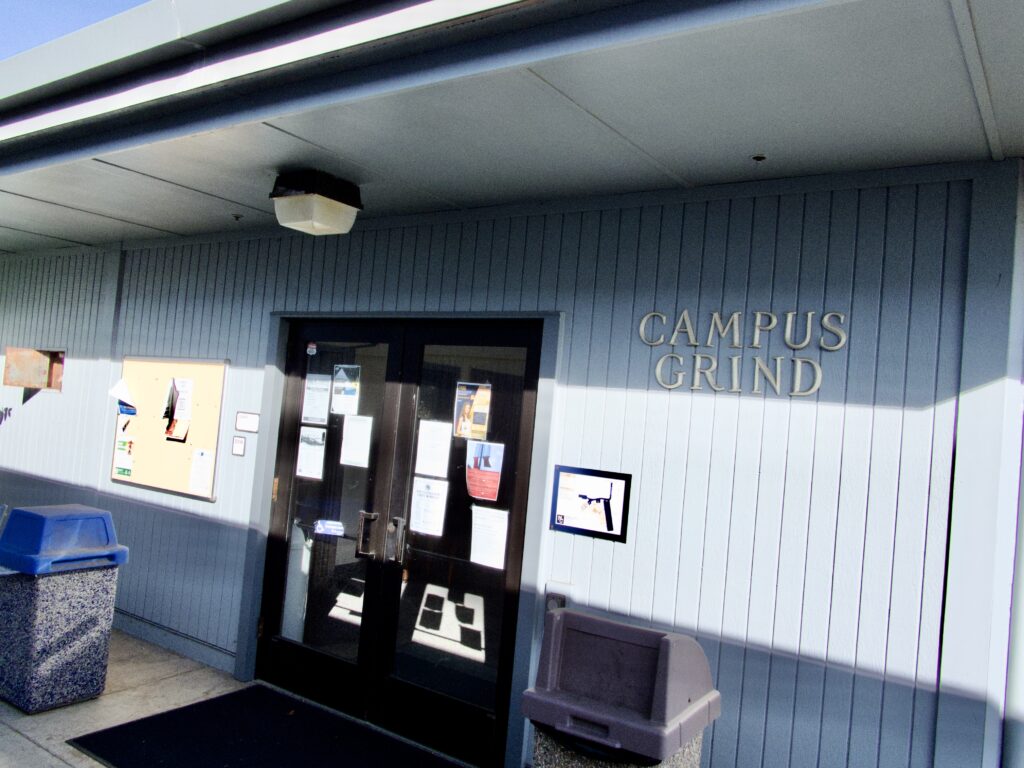
Measure A seeks to completely redo the aging Mendocino College campuses in Ukiah, Fort Bragg, and Willits, while rebuilding the college as a center for workforce training — and still keeping it a place where people can pursue lifelong learning in art, photography, and technology.
But is it worth the money we, as property owners, will pay? Should everyone pay the same? As property owners ourselves, it will cost us about $60 per year, and we voted for it. What distressed us were two things: the lack of a solid educational effort by an educational institution explaining why each investment was needed, and the sheer volume of misinformation and disinformation circulating on social media. Before the Fort Bragg Advocate–Ukiah Daily Journal–Mendocino Beacon fired almost their entire staff and closed their buildings, they would have taken the time to walk readers through this. They are out of the picture now. More modern institutions like the Mendocino Voice also didn’t step in. This $98 million bond will set the course for higher education in Mendocino and Lake counties for the next 20 years and beyond. If it fails, the other plans for more vocational efforts here will be in a tailspin.
The district says Measure A will issue bonds “to raise funds for basic repairs on deteriorating educational facilities and provide updated classroom and lab training facilities for the skilled trade and emergency responder careers on which our communities rely.” That’s the core promise: repairing what’s worn out and modernizing the spaces where people train for the jobs that keep Mendocino and Lake counties functioning.
The district covers 3,200 square miles and serves nearly 120,000 residents and thousands of businesses, with campuses in Lakeport, Fort Bragg, Ukiah, and Willits. That’s the scale of the system Measure A is meant to support — a far‑flung region, a large population, and facilities that anchor education and workforce training.
But stories like that don’t get clicks in the modern media age, and so they’re skipped. This one needs extra attention.
So far, the only real look at this has come from Elise Cox in Mendocino Local. She lays out the big picture and quotes the president of the college and several people opposed to the bond. But no students, no employers, and no one from Adventist Health were quoted — all groups that would be directly affected. No mayors, chamber‑of‑commerce voices, or supporters of vocational education were included either.
We don’t knock Elise for that — this should have been rounded up by the district. There should have been more ads with the faces of the people who would be affected. The media and local employers should have been given tours of what is coming.
But with an information and perspective vacuum, some wrong information has filled the space, and the loudest voices have been those who simply don’t like paying taxes. Frank has been covering tax votes since the 1980s. Every time, there is a contingent that fiercely and publicly attacks each and every bond, parcel tax, or any plan that seeks to raise money for the public good — or the public bad, depending on their view.
Some of the time, the critics are right — and they do have some good points here. But there is much more to the story.
Cox took a strongly critical approach, with at least a measure of anti‑tax perspective, as this next sentence she wrote shows.
“The full text of Measure A, as it appears in the voter guide, reads less like a mindful plan to steward public monies for the greatest impact and more like a laundry list of projects drafted by a committee determined to spend tens of millions of dollars because they can,” the article says.
That’s a fair perspective and a negative one. Also fair, and positive, is that the list is like that to allow flexibility. There really isn’t an explanation as to why this isn’t all better explained and easier for the busy voter to navigate through.
We are adding our own perspective, spun to the positive said — since there are only going to be two sources of articles on this subject, both very late, and ours the latest. What this article does show, ultimately, are some of the reasons why the list was made the way it was.
But with the district and foundation’s communication falling short, many readers never got an explanation they could truly grasp — at least judging from our conversations with people across the Coast and the social‑media threads we’ve followed. In an information vacuum, confusion fills the space. And maybe this is the deeper problem: perhaps it’s nearly impossible to communicate anything complex in an age of short attention spans and social‑media churn.
One issue Mendo Local has been raising is the long‑term cost of the bonds the Mendocino–Lake Community College District still carries from 2006. They discuss that at length here: Mendolocal looks at long term cost
However, one omission in that story is that Coast voters — and those in the northern end of the county — aren’t paying those 2006 Mendocino College bond costs. In 2006, we all lived in the territory of College of the Redwoods, and we still pay for the bond they passed that year. The cost of that bond is lower than the remaining cost of the 2006 Mendocino College bond. I pay nothing now to Mendocino College.
Here, the headline below is what started us on this story, because it’s incomplete enough to edge into misinformation — but readers should look at the story themselves before drawing conclusions.
Measure A Flyers Suggest Bond Would Fund Fire Academy Already Paid for by State
The headline was disturbing to me, as were several aspects of the story itself.
Matching funds from the district are part of this fire academy, and the district itself arranged for the state funding referenced in its published — if somewhat opaque — master plan. The notion of deception suggested here is off base, as is the idea that the bond is unnecessary to fund the envisioned fire academy.
I spoke by email to Barbara Rice, a long-time trustee at Mendocino College.
“Marine science technology is slated for our campus, along with repairing or replacing our structures. Also improved access to training programs by placing them in Willits, such as construction technology, solar, and emergency medical training. The building in Willits requires a match of 25%, which will come from Measure A funds along with any amounts above the $20 million we have.”
A key point raised by opponents — and in the Mendo Local story — is that the bond is unfair because people who have lived here longer end up paying less.
True. A parcel tax would be more equitable. And dollars go much further with a parcel tax: the overhead of setting up and selling bonds, along with the interest paid to bondholders, consumes roughly half of what I would pay over the lifetime of the bond.
But a parcel tax requires a 66.6 percent vote. These two‑thirds requirements are essentially unattainable now, and in our view — and in the view of many constitutional scholars — they’re unconstitutional. The founders never anticipated supermajorities for routine local funding. Proposition 13 emboldened this structure. For years, these 67‑percent thresholds killed almost everything in California until compromise measures were crafted for the state budget and other types of funding. Bond funding and grant funding have become the only viable paths for most public projects because of the unfair setup created by Prop 13 and these supermajority requirements.
A big piece of misinformation circulating is the claim that the bond favors Ukiah and Willits over the Coast. That idea has come from social‑media chatter, not from any actual news reporting. In fact, Cox’s article clearly states that the bond would completely revamp the Coast Campus. We can add a bit of broader context — news about the cooperative funding, the partnership with Adventist Health, and the larger mutual‑aid type effort that underpins the plan.
Cox’s articles are correct this bond is dense and impossible to pin down. But part of that may be to retain flexibility. Make a bond too specific and you might be stuck doing something that requires outdated technology or fails to grasp a trend.
We got the following information in an interview on Saturday with Mendocino College President Timothy Karas. Our reporting focused only on Mendocino County. There are also developments underway at the Lake Campus, but we did not discuss those.
‘The facilities bond has three signature projects, which are outlined in the 2025-2035 Facilities Master Plan https://www.mendocino.edu/about/mlccd/administrative-services/facilities. One of which is dedicated to the Coast Center. The plan is to invest about $30M in Coast Center Facilities. Beyond the current level of courses, the reimagined center would have new science laboratories to offer core pre-requisite courses for the allied health/STEM fields. Additionally, there would be spaces designed to support marine science and ocean restoration program. The college has a sub-award through The Nature Conservancy to develop applied science curriculum for a marine restoration/science certificate program. The program will be a model for the State. College faculty are completing the curriculum and will be submitting it to the State for approvals Fall 2026. Having spaces to teach these emerging workforce sectors is critical to our coastal communities.”
The Coast Center was built in 1987 with buildings added until 1996. We wish we had been given a tour of what the buildings look like and why we can’t reuse them in some way.

portables with a modern medical‑training facility.
Adventist Health facilities across the region serve as clinical training sites and regularly hire nurses trained at Mendocino College.
I don’t love printing this kind of personal information, but I’ve always believed that a journalist who digs into the financial details of others when it’s newsworthy should be willing to share their own when it helps the public understand an issue. And in this case, I couldn’t think of a clearer way to show what a tax actually costs property owners.
| County | 10001-AD Valorem Tax | 1.000% | $3654.44 |
| Fort Bragg Unified School District | B00FD-Fort Bragg Unified Bond | 0.137% | $480.12 |
| Mendocino Coast Hospital | B00MH-Mendocino Coast Hospital BIR | 0.011% | $39.54 |
| College of the Redwoods Junior College District | B00RD-Mendo College/Rdwd JC Bond | 0.009% | $31.22 |
| Fort Bragg Rural Fire Assessment | D0011-Fort Bragg Rural Fire SA | Parcel Tax | $50.00 |
| Mendocino Coast Hospital Assessment | D0058-Mendocino Coast Hospital Measure C | Parcel Tax | $288.00 |
Measure A would add $61 to my annual bill. Yes, I benefit from Proposition 13 and from the fact that my parents bought here in the 1980s. The reality that so many of us have stayed in this community for decades — or far longer — is bittersweet for schools and fire districts, which across California depend on property‑tax assessments for their funding. Bittersweet because in places like my birthplace in Contra Costa County, almost all the old‑timers left years ago. What remains are homes valued in the high six figures or seven figures, all reassessed at modern market levels — and the schools in those areas are funded accordingly.
Prop. 13 means the Coast gets less taxing bang for the buck. It froze assessed values in 1978, and counties have been limited ever since — able to raise property taxes only 1 percent per year, which does add up over decades. But there’s a big but: a whole new taxable value is created the moment a home sells to someone who isn’t a parent or child. That reassessment resets the property to modern market value, and that’s where the real revenue comes from. And any new construction is taxed at current value.
If we pass this bond, it will increase our tax base, especially if we accompany it with housing construction around the college. It will lift all boats.
Measure A, if passed, would bring my total taxes to roughly what I already pay to the Fort Bragg Fire Department/District — but still far less than what I pay to the hospital district and the K–12 school system. The fire tax was a parcel tax, as was the largest of the hospital assessments that appear on my property‑tax bill.
After explaining the planned upgrades for the Fort Bragg campus, Karas described the work proposed for the Ukiah campus, where the college’s flourishing nursing program is still housed in portable classrooms installed during the Nixon administration. I didnt ask for information on the Lake County campus.
“The signature facilities project in Ukiah is a $35M allied health building. This building would replace portables purchased in 1973 that currently house the RN program. It would leverage the three allied health programs: nursing, physical therapy assistant, and licensed vocational nursing where spaces could be shared for greater efficiency and program development. Due to lack of space, the PTA courses are in the PE building and LVN is off campus. Culinary art would move from its portable into this building too. There is synergy between nutrition and health. Our local health systems are critical to all of the allied health programs. These programs could not exist sites for students to complete their clinical rotations. All of the Adventist sites (Coast, Howard, Ukiah) and Sutter in Lakeport provide access to our students.

The third signature program is the North County Phase II building, which will be the hub for the fire academy, construction trade, and emergency services. The college has been successful grant opportunities that require local matching funds. In total these grants amount to about $20M for of a $26M total project. The bond would cover the $6M match. Since the $20M on reimbursement, we cover the upfront cost. The fire academy and construction trades require very specific training spaces. We would continue to offer specific entry level courses at other locations. For the district geography, Willits is a great hub location.”
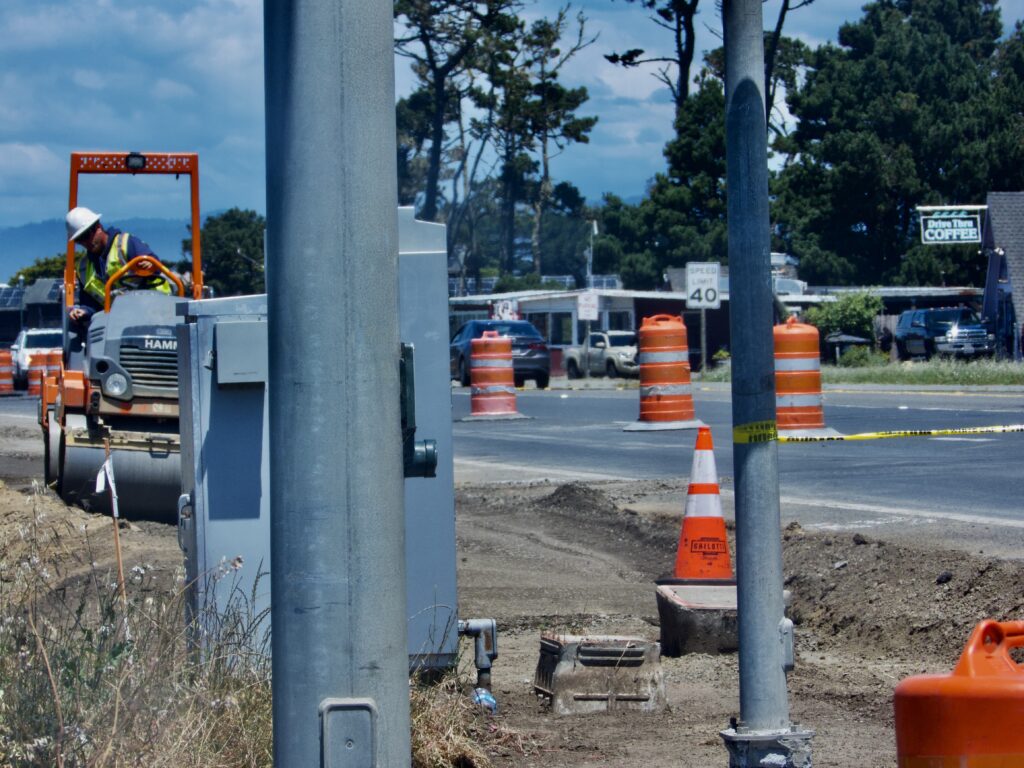
Karas came to Mendocino College from the Bay Area, where he was noted in news coverage for successfully advancing career education and expanding training in the trades.
“Workforce and career education programs have been central to my 25+ years working in community college. Community colleges are economic and cultural drivers for our community. Students have the opportunity to be in living-wage professionals, many with career ladders that are in high demand. I am fortunate to be able to participate on many local and regional workforce organization, such as being on the board of West Development Center, Lake County Economic Development Corp, Sonoma-Mendocino Economic Development District, Noyo Ocean Collective, and the Ukiah Valley Hospital Community Board.
I learned a lot during my time As College of Alameda President. We leveled facilities bonds for a grant to replace two building for a single Advanced Transportation Building (Automotive Mechanics, Autobody and Paint, and Diesel Mechanics; leverage facility bonds for federal grant match to modernize the aviation mechanics training facility adjacent to the Oakland Airport; and replace our main education building supporting programs from Apparel Design to mathematics.”
The North County Center is a recipient of the State and Federal matching grants that the Aviation and Transportation buildings separately received in Alameda.
Community College are based on community support. The State is not our savior. I believe being a small rural-serving community college is a strength. We come together to get thing accomplished.”
Karas provided us some information by email on Saturday that gives a more complete view and corrects some of the misinformation
“Measure A is on the June 2, 2026, ballot. If approved by voters, it would provide local bond funding to repair and update Mendocino College facilities and build training spaces for programs our region needs.
Errors are being circulated about the District’s fiscal health. The district budget is not in the red; it does not deficit spend; the budget is balanced; the district contributes to a reverse fund each year.
Factual information is publicly available on the college website, including:
- Measure A: http://www.mendocin.edu/measurea
- Facilities Master Plan: https://www.mendocino.edu/about/mlccd/administrative-services/facilities
- Fiscal/Budget: https://www.mendocino.edu/about/mlccd/administrative-services/business-services
In Ukiah, one of the signature projects is the proposed Allied Health building. This building would support training for nursing, paramedics, physical therapy assistants, and other healthcare fields.
It could mean more students training for healthcare careers without leaving the area. It could mean stronger pathways from local high schools to Mendocino College and then into local clinics, hospitals, ambulance services, and care settings. It could mean someone who grew up here can train here and serve here.
Measure A would also support other needed projects across the district. It would help build the North County expansion for fire training and sustainable construction. It would help reconstruct the Fort Bragg campus so students on the Coast can continue to access college closer to home. It would also repair aging classrooms, labs, roofs, electrical systems, and other infrastructure, and update training facilities for programs such as nursing, EMT, firefighting, and skilled trades.
These are practical needs. Career training programs need spaces that match the jobs students are preparing to do. Facilities bonds are the established method for local school districts to build/remodel facilities. The California Constitution (Article XIII A, Section 1 and Article XVI, Section 18 ) regulates community college bond measures through specific authorization and accountability requirements, which includes the formation of a citizen oversight board. The law forbids funds being used for administrative salaries and operational. “
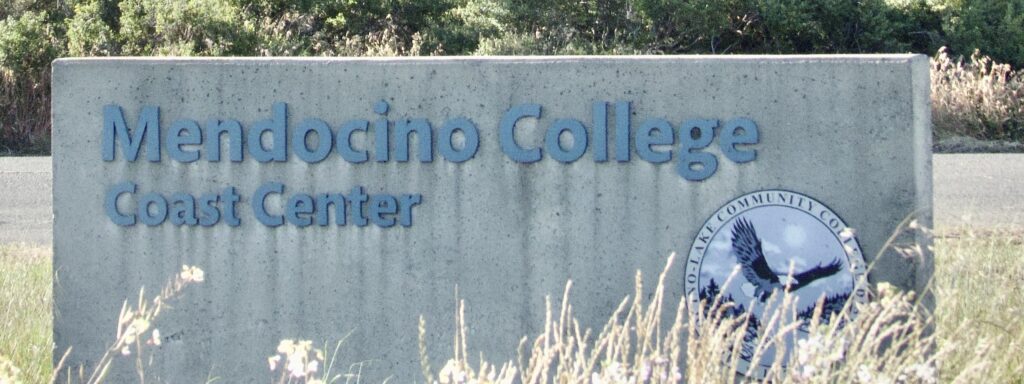
From the ballot:
“Mendocino College Career Training/ Affordable Education Measure. To repair classrooms/ labs, leaky roofs, electrical; maintain clean drinking water, remove mold, asbestos, lead paint; to train students for careers in trades, construction, wildland firefighting, healthcare/ nursing/ EMT; construct, acquire, repair facilities/ sites/ equipment; shall Mendocino Lake Community College District’s measure authorizing $98,000,000 in bonds at legal rates be adopted, levying $24 per $100,000 of assessed valuation ($6,100,000 annually, while bonds are outstanding) with public spending disclosure, oversight, audits, no state takeaways”
After reading as much as we could and spending real time studying the details, we can endorse voting yes on this bond. The record is clear enough for us to take a position, and readers should confirm the information with trusted sources. In an age when the dangers of a shrinking higher‑education system — and of shrinking public thinking — are visible everywhere, it’s hard to imagine choosing “no.” A community that wants a future invests in its young people, its workers, its firefighters, its nurses, and its trades.
This bond is not a theory. It is a choice about whether the Coast and the inland communities will have the tools to train the next generation or whether we will watch those opportunities drift away to places that made different decisions. Our parents and grandparents built the institutions we rely on today. They did it in harder times, with fewer resources, and with a clearer sense that the future only arrives if you build it.
We stand at that same kind of moment now. A yes vote is not just a vote for buildings or classrooms. It is a vote for the Coast’s ability to keep its young people here, to train its workforce here, and to meet its own needs with its own hands. It is a vote for a community that still believes in itself.
Don’t punish the district because the communication about the ballot measure was hard to understand. We spent the time and feel this will be great. The district actually is legally constrained from “selling” the plan.
And above all, go vote. In a small county like ours, nothing matters more than showing up and choosing the future you want to live in.