Your Wednesday 7/15 Paper — T‑Mobile store powers off + Vague ICE report issued + Philo Fire + Last gas! + Frank the salmon whisperer + Noyo Ice (NOT ICE) House ammonia blues + Land sales in Usal, Willits are hermits’ delights

SUDDEN CLOSURE OF U.S. CELLULAR–T‑MOBILE STORE STUNS COAST CUSTOMERS
The U.S. Cellular–T‑Mobile store closed suddenly recently, catching employees and customers off guard. Many customers have plenty to say about what they describe as worsening reception problems — complaints we’ve been hearing for more than a year. Some first responders say the issues worry them.
T‑MOBILE STORE CLOSURE — T‑Mobile closed 80 stores beginning July 1, according to information we were able to verify, though the total number may be higher. We still don’t know which day the Fort Bragg store shut down — only that at least one customer went in, did business, and returned a couple of days later to find the place empty, cleaned out, and with no prior indication that a closure was coming. An ex‑employee told us the shutdown was sudden for staff as well, though severance pay was provided.
CPUC SERVICE‑QUALITY HEARINGS — The California Public Utilities Commission has opened the Order Instituting Rulemaking Proceeding to Consider Service Quality Rules for Wireless Carriers (R.26‑02‑017). For firefighters and others concerned about tower losses and the quality of service now being offered by T‑Mobile, the CPUC will hold virtual public‑participation hearings in July. This is the moment to enter public input about any service‑quality issues you’re experiencing.
WHEN :
July 15, 2026 — 2 p.m. and 6 p.m. (virtual only)
July 23, 2026 — 2 p.m. and 6 p.m. (virtual only)
All the details can be found in the following link.
T‑MOBILE MERGER IMPACT — T‑Mobile first bought U.S. Cellular’s contracts, then the entire business, in a merger that consumer advocates publicly protested. According to federal records, the Trump Administration approved the deal in February. The former U.S. Cellular store in the Boatyard Center was still open last week; this week it was closed, with no notice and no explanation. The timing took everyone by surprise and, for many customers, felt like one more insult on top of injury.
We don’t use that service ourselves, but the people who do are telling us the problems are real — and getting harder to ignore.
ICE ALLEGED TO BE IN THE COUNTY — MAYBE INLAND? BAGGED ICE? COUNTY REFRIGERATION INSPECTORS?
There was an ICE alert issued by a secretive group that appears to monitor this federal agency. We have no location, no timeline, no description of what led up to it, and no confirmation of who may have been detained, contacted, or cited. We also have no clarity on whether this involved Border Patrol, FBI, or something far more routine. At this point, it’s simply an alert with no supporting facts.
ICE ALERT SCRUTINY — This group, whose mission is to look out for ICE on behalf of communities scared of them, is — in our view — scaring people even more. The alerts hint at mysterious and possibly close ICE arrests, but provide zero facts: no town, no age, sex, or race of the person involved, no indication of whether someone was contacted at work or at home, and no explanation for why no names are provided. The intent is good, but the effect is that ICE is being enabled by warnings so vague they can’t be verified. We need enough detail to track what is happening to our fellow county residents. Could this be a passport mix‑up or something equally mundane? A person from LA being pursued over a criminal matter? Without facts, no one can tell. If my French gardner disappeared, I might think she was the one they were talking. If my doctor, born in Mexico and who went to Harvard was no longer around, I might wonder, did ICE get her too? Seriously, this group has assigned itself to being the one who watches ICE. I think ICE is pretty safe in that case to do what they want. We shall pursue them ourselves from now on, not seek to cooperate on rumors. Honestly we have gotten numerous ICE tips and checked them all out on our own anyway (and they all turned out to be false) I knew this was how this was and I am as distressed by this direction as by everything else. If we are not all in it together, we are lost. Trump has made everything into us versus them. We must make it us again. If you hear about ICE, the first thing to do is call the local law enforcement; they are not cooperating with ICE and might be able to rescue someone being arrested by these secret police. I don’t really want to chase any more mistaken reports, but I will keep doing it. If I find someone has been arrested by ICE, Ill blow it up or Ill keep quiet. Issuing vague reports creates fear in everybody. Its what THEY do.
It seems to have been something inland, but not enough to support a legitimate news story. And this is where accountability matters. When information is this thin, responsible outlets wait for verifiable details. Others will not. Some will rush to publish whatever they can cobble together, because speed now outranks accuracy in much of modern coverage.
The alert went out Tuesday night. We’ll report when there’s evidence — not just noise.
TUESDAY AFTERNOON FIRE HELD TO 1 ACRE — WATCH DUTY REPORTS QUICK STOP
A fire was reported on Highway 128 late Friday afternoon, with evacuation warnings issued around 5:30 p.m. It appeared on the Watch Duty app under the name “Gowan Fire,” though other apps used different identifiers. Scanner traffic placed it east of 128 in the general vicinity of Don Gowan’s orchards and shop — but not on his property. Gowan is a longtime firefighter himself.
Details were thin and the naming inconsistent across platforms, but the warnings were real and briefly active before conditions stabilized.
We don’t rely on wildfire apps alone, and it’s not because we “don’t trust technology.” It’s because these platforms have known limitations. Watch Duty, PulsePoint, and similar apps pull from scanner traffic, volunteer monitors, and agency feeds — which means the information can be fast, but not always complete, confirmed, or consistent. Names change across apps. Locations shift as reports come in. Early details are often fragmentary.
That’s why we cross‑check everything with scanner traffic, agency releases, and direct field reports.
PHILO FIRE ACCOUNTS — We now have two accounts, telling two different parts of the story, and both are probably correct. Stacie Imerone Lynch posted photos on social media showing flames and a hard fight by firefighters who were stopping the fire from spreading to nearby homes.
“Thank you, CAL FIRE!!!! That was way too close to structures and businesses. Apparently the PG&E contract workers were cutting a bolt and the sparks caused the fire. This was right across from Gowans Cider.”
Marco McClean also gave an on‑the‑ground account on the MCN Listserve
“Marco here. I drove past on my way back to Albion. Some firetrucks rested up the hill on the right just before the Elk road (I think), and some men stood around up there, discussing, but I saw nothing burned and there was no smoke nor even the smell of fire. I sneezed twice.”
FIELD VERIFICATION — Apps are useful tools, but they’re not authoritative sources. They’re early signals — not final answers. Our job is to separate the signal from the noise. To that end, we plan to stop by this spot on our way back from Linda’s doctor visit in Ukiah on Wednesday, take photos, and talk to a couple more people.
GOING TO HUMBOLDT FROM FORT BRAGG? BETTER GAS UP!
LAST GAS — CLEONE GROCERY AND CAMPGROUND

This sign could be up at Cleone Store, which is last gas now until Garberville. And in Cleone they have hot coffee and “clean” restrooms!
CLEONE STORE — Of course we love Roger, the owner of Cleone Grocery and Campground, where Linda works two days a week — her “happy happy retirement job.” So know that — and know this: the Cleone Store is the last gas for anyone heading north on Highway 1 until Garberville. There is no longer fuel in Westport or Leggett. That’s 63 miles, or about two hours of driving for most of us who drive the coast.
CLEONE MARKET — The market, as locals call it, also happens to be the best little grocery north of Fort Bragg — the kind of place that carries a bit of everything for locals and travelers alike. Roger takes pride in running a great store, one his family bought in 1968, and it shows in the shelves, the service, and the steady stream of people who rely on it.
If you’re going to Laytonville via Branscomb Road (not advised by us), it’s roughly 40 miles and more than an hour. These steep, winding roads burn more fuel than flat highway, and it’s not a place to break down and discover your cell phone doesn’t work out there.
And here’s the part travelers forget: running out of fuel on that stretch isn’t just inconvenient — it’s dangerous. There’s no shoulder, no lighting, no cell service in key sections, and no quick way to get help. Tow trucks take a long time to reach that corridor, and stranded vehicles on blind curves create hazards for everyone else on the road. A simple “low tank” mistake can turn into a multi‑hour wait in an area where you can’t call out, can’t walk out safely, and can’t count on passing traffic.
FRANK AND THE PENGUINS PREDICT SALMON FISHING — CHANGE MY MIND
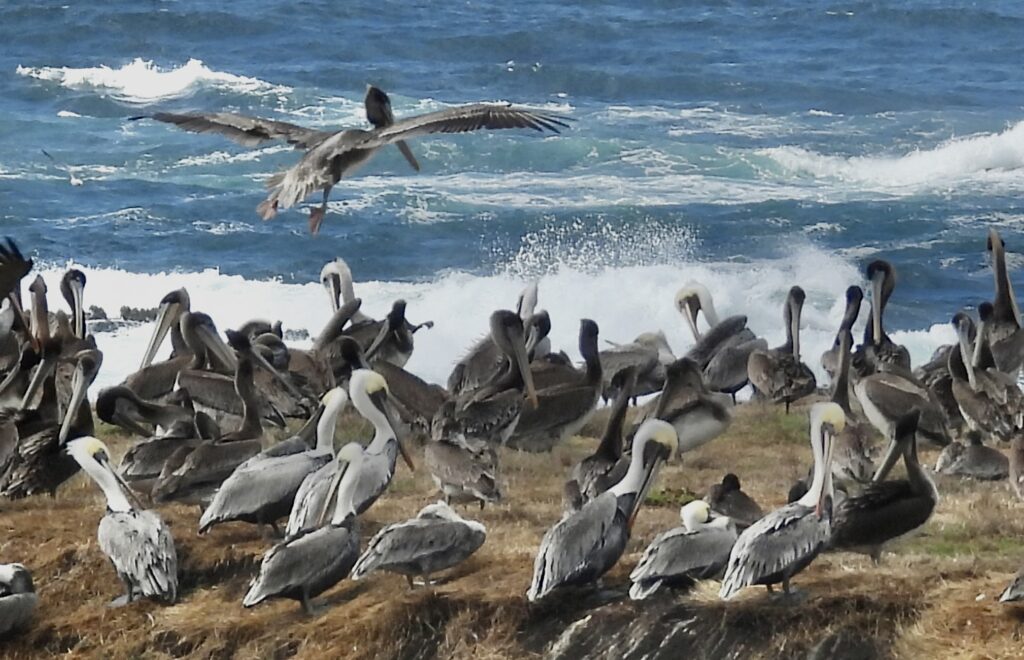
Frank’s favorite bird is the pelican; he loves those big‑mouthed, calm giants that can fly thousands of miles with bodies as big as turkeys. He’s followed pelicans for years, but only recently saw a pattern often enough to believe it: when the pelicans arrive in big numbers, salmon and tuna usually follow. They’re all chasing the same forage — sardines, anchovies, and smelt.
Two weeks ago, we watched the pelicans leave, just ten birds left on the big rock off Mendocino where nearly a thousand had been. Then on Saturday, they started coming back south by the hundreds and filled the rock again. And WHAM — the slow salmon fishing turned red hot. But by Monday, the pelicans were gone again. We’ll check to see if the fishing matches the flight pattern.
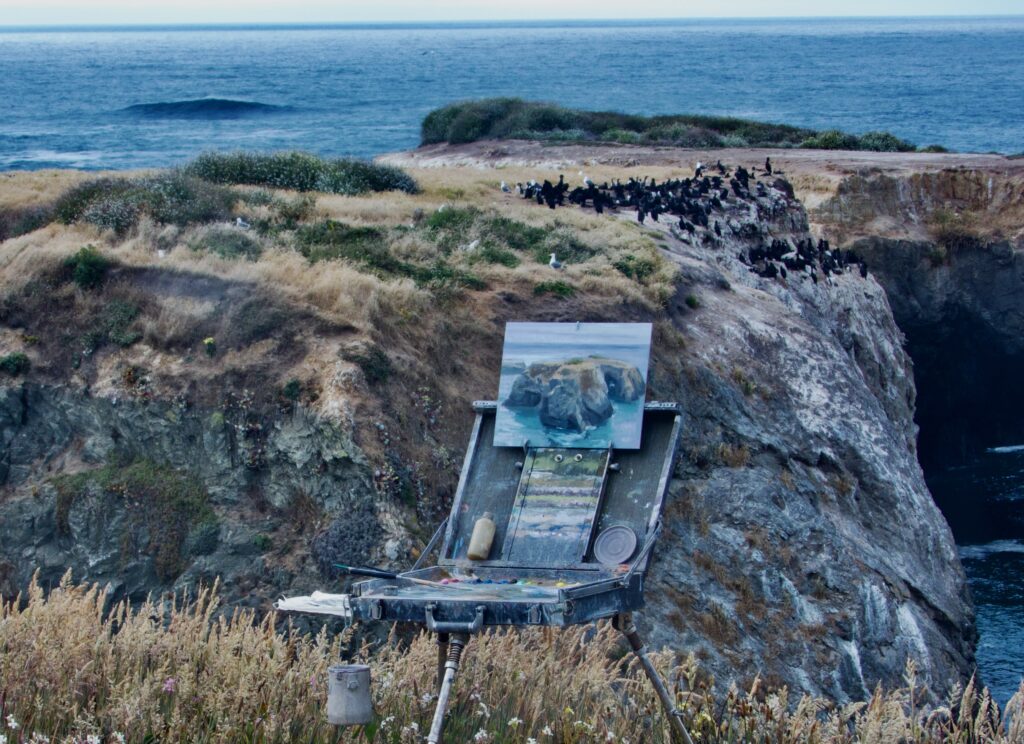
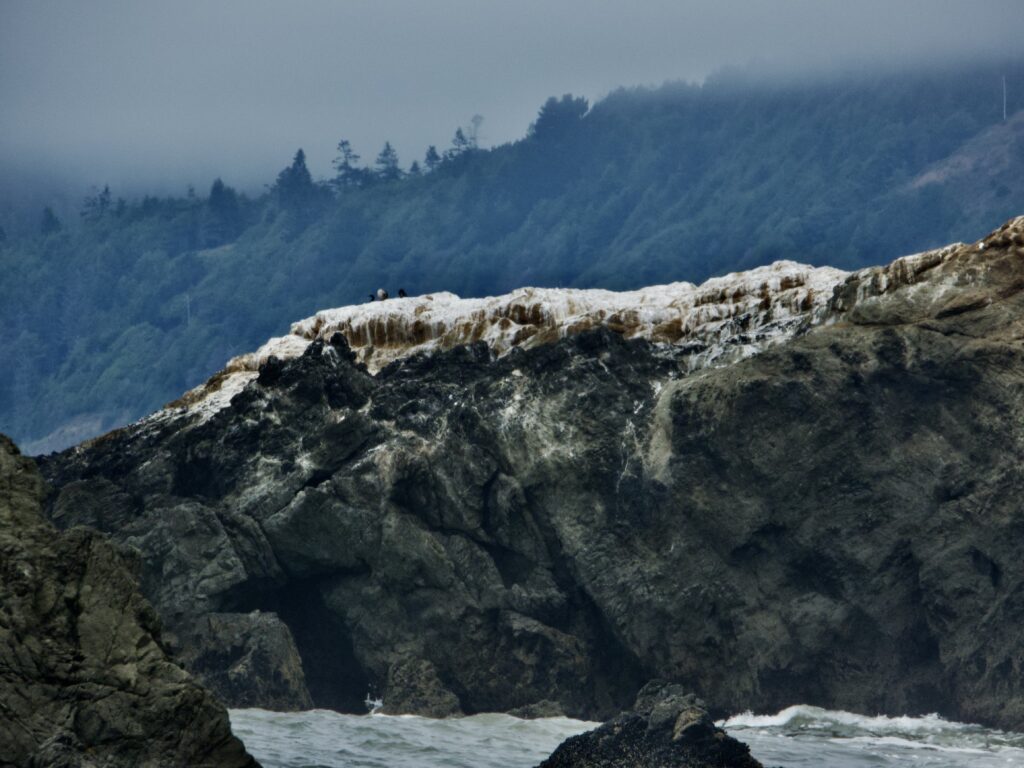
The pelicans had flown north just as the salmon bite crashed.




EIGHTY ACRES IN A VERY COOL, UNSEEN PART OF WILLITS SELLS FOR $795,000
EAST SIDE MAP VIEW — About 80 acres east of Willits have sold for $795,000, a parcel tucked directly against a large block of federal and state lands. The property sits off Eastside Road, bordered by a 162‑acre federal holding, nearby state parcels, and a striking Scout map that shows how the acreage fits into a wide sweep of pasture and public land. East Side Properties LLC sold the tract to Ashley and Sheldon Smith and related trusts.
SOUTH NOYO HARBOR ICE HOUSE STILL WAITING FOR PERMITS
ICE HOUSE UPDATE — Harbormaster Anna Neumann, who began her tenure in September 2021, is back at work after leave and hopes the South Noyo Harbor ice house will be operating by the time fishermen head out for tuna in August. Once running, the ice house will be open to all, offering 5‑pound and 20‑pound bags of ice along with shaved ice. Pricing has not yet been set.
The ice house is one of several upgrades Neumann has brought to the harbor during her tenure. The Harbor District oversees the mooring basin, the marina, and the mud underlying commercial establishments, renting slips to both transient and long‑term boats. Alongside keeping those facilities in working condition, Neumann sees her role as understanding how the harbor can change and develop as new industries emerge there — a modernization effort that has included dock improvements, planning for a new fuel dock, and broader infrastructure work tied to the Community Sustainability Plan.
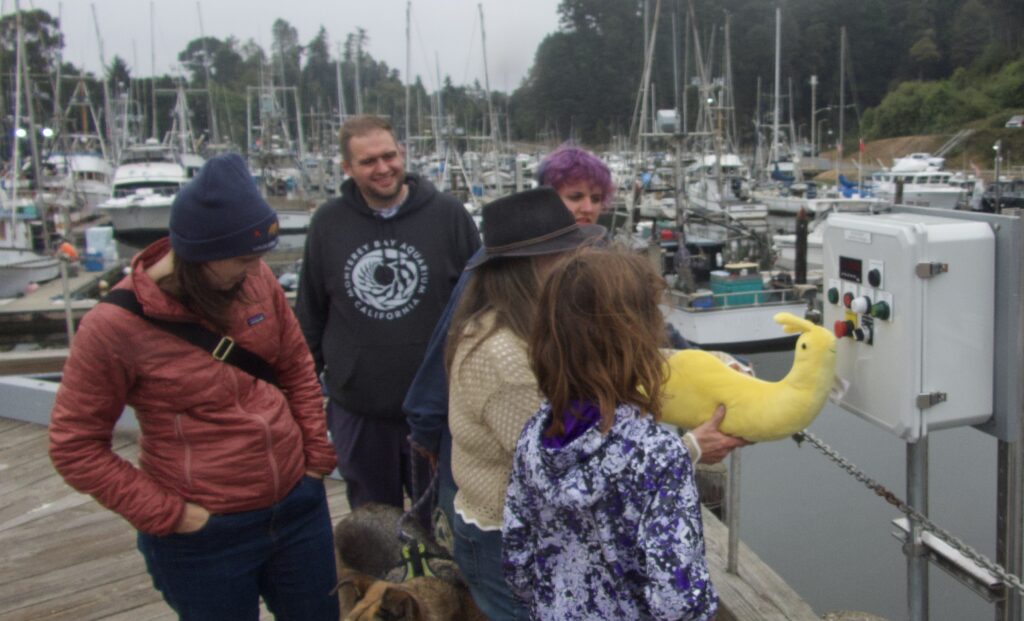
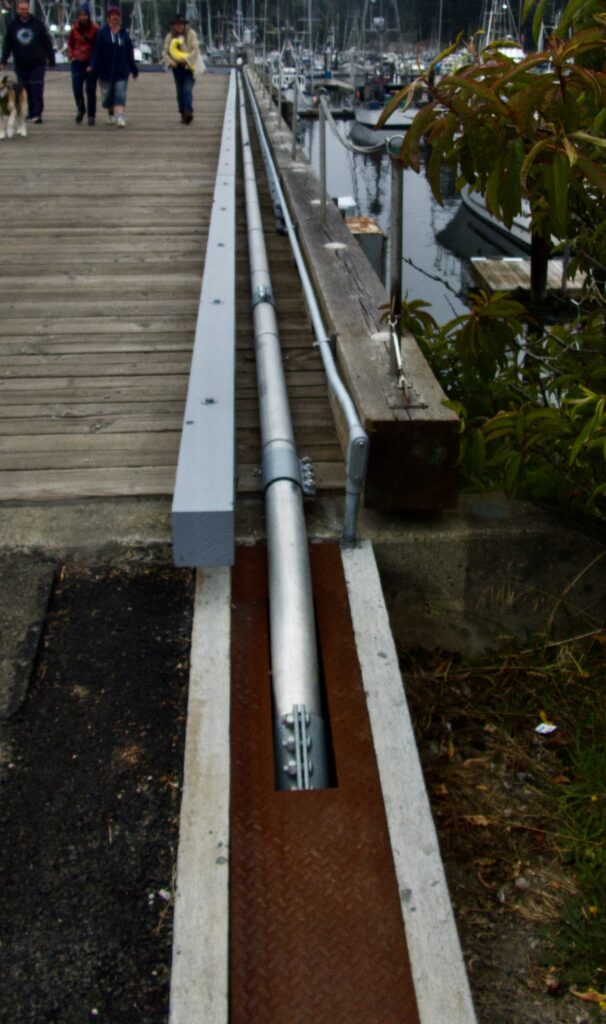
where it will drop directly into boat holds.
ICE HOUSE PERMITTING — The permitting process for the Noyo Harbor ice house has been long, largely because ammonia — used in most commercial refrigeration — requires navigating a tangle of state and county regulations. The ice house will make 22 tons of commercial flake ice and can put out about a ton an hour. It’s three stories tall, with ice produced above and dropping through a steel mouth into boat holds below. What was new to us is the large pipe that carries ice out to the delivery chute so boats can load directly. Electrical permits and the control system are all approved, but ammonia permits continue to hold things up.
Ammonia is tricky material. It evaporates quickly and wants to shift into a solid, but humans keep it in liquid or gas form for industrial use. As a solid, it becomes nitrogen — a nontoxic fertilizer. As a gas, including gas escaping from the liquid form, it’s highly toxic and can kill a person or destroy their lungs. That’s why it’s so tightly regulated.
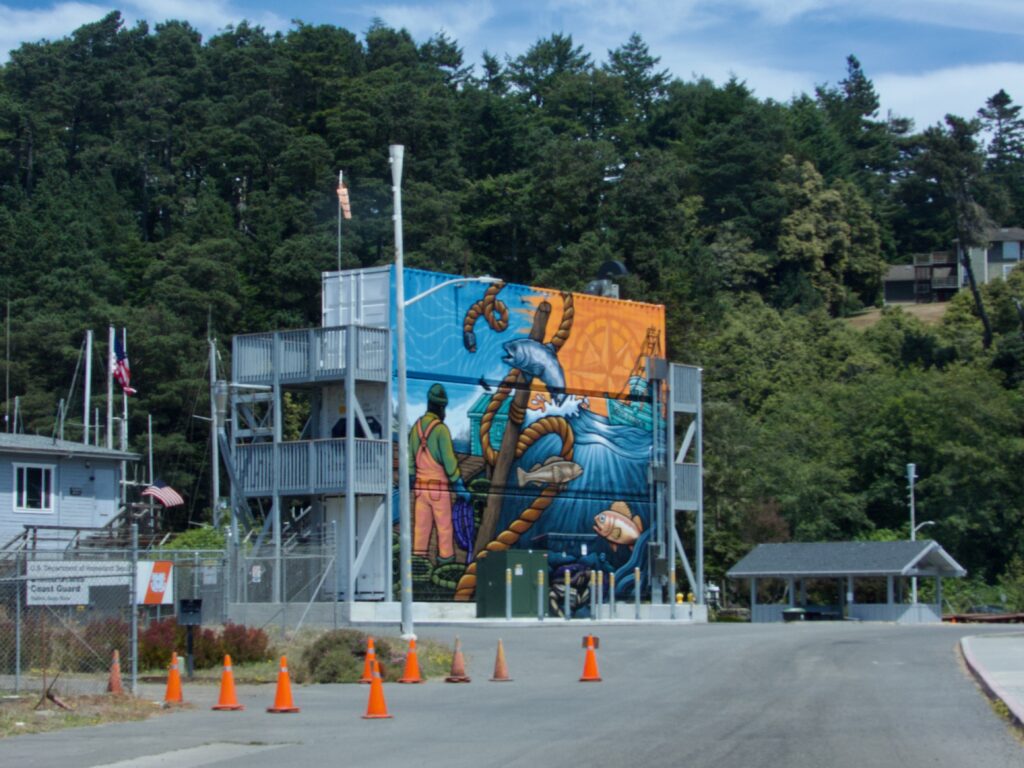
carries a colorful mural across its exterior, courtesy of artist Vinnie Schraner.
FRANK, AMMONIA BATTLE HUBEARTO THE BEAR

HUMBEARTO SAGA — We don’t have any permits, but ammonia is the only thing that works to deter the Ward Avenue bear, Humbearto (yes, we named him), who tossed our trash more than a dozen times and dragged it into the yard of the neighbors across the street — the ones with bear cans. They’re very nice people, but even they were getting tired of it. Bungee cords didn’t help; Humbearto wedged his head into the huge recycling can and got it stuck, Winnie‑the‑Pooh on steroids.
Ammonia had worked before, but it evaporates fast, and if we put it in a dish, he’d knock the dish away and continue. Last night we tried soda cans. They tip over and slowly dribble out the ammonia. He hates that. He knocked the cans around but finally left the trash alone.
We quit using rat traps as noise‑scaring devices after Facebook yelled at us. And I once squirted a bear chasing our chickens and bees with ammonia‑laced water from a Super Soaker — don’t do this. The bear ran off, suddenly fearful of his own stinky butt, but some leaked and could have blinded me and briefly choked me. We were both casualties of chemical warfare, and we recovered, but we’re even more careful with ammonia now.
SAN DIEGO DUO BUYS COOL USAL PROPERTY
USAL ROAD SALE — A Humboldt County partnership called Valley of the Wind has sold 13 acres at 77320 Usal Road to Connor R. and Nicole Kovacs of San Diego for $350,000. The property sits in Whitethorn — more of an area than a town — just inland of the Lost Coast. The early‑20th‑century settlement is mostly gone now, but roughly 800 people live in the Whitethorn ZIP code across both Mendocino and Humboldt counties.
Google Earth shows a small orchard on the parcel, surrounded by the big forest that defines the region. It’s the kind of place where owning land would be fun — remote, quiet, and tucked into one of the last truly undeveloped stretches of coastline in California.
Valley of the Wind’s owners also appear in records for a parcel at Alderpoint, where a related LLC carries the name Kill Hill — a nod, perhaps, to the “Murder Mountain” lore that clings to that part of Humboldt.
WHITETHORN LOTS — There are residential lots in Whitethorn and the Usal area that list today for around $20,000, but we don’t advise them for anyone desperate to get land. It’s definitely wild country — second‑house, cabin‑building, manifesto‑writing territory — beautiful, remote, and not for people who need services, neighbors, or quick access to anything.
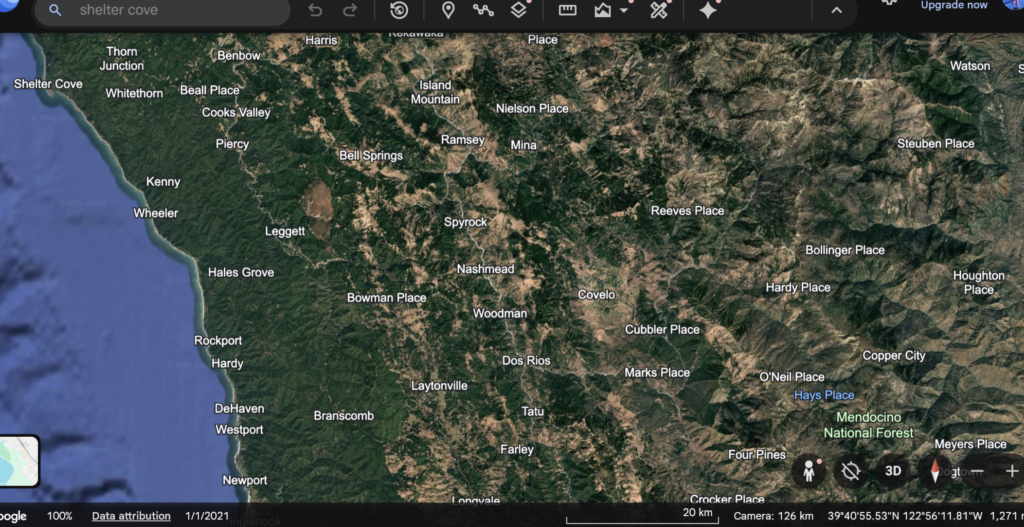
and northern Humboldt County.
ALLIANCE FOR A BETTER FOR BRAGG TO HOLD MEETING WEDNESDAY
AFABFB MEETING — We found this announcement from Chris Hart of the company that owns the Skunk Train: an open invitation to come discuss significant issues and topics facing Fort Bragg now and in the future. Anyone is welcome.
WHERE: 151 W. Alder St., Fort Bragg WHEN: Wednesday, July 15 at 5:15 p.m.
Hart also wished everyone a great Fourth, whether you were at the salmon festival or the fireworks show.
We’ll be coming back from Ukiah that afternoon — half cooked — we sure will try and make it

It’s funny how the coast ties itself together. Down at Noyo, the ice house waits on ammonia permits while banana slugs inspect the control panel and fishermen count the weeks until tuna. Up on Ward Avenue, Humbearto (yes, we named him) finally leaves the trash alone thanks to soda cans dribbling out the same chemical the harbor can’t yet get cleared. And farther north, Whitethorn and Usal keep selling pieces of their wildness — orchards glimpsed from Google Earth, forest‑wrapped acres where cabins and manifestos compete for space. The Lost Coast stays quiet through all of it, reminding us that whether it’s harbors modernizing, bears negotiating, or land changing hands, this place still runs on its own rules, and we’re just lucky to write them down.
Thank you for another terrific collection of local news items! Frank, you might be referring to the Mendocino County Rapid Response Network in your comments about ICE. If you get a chance to look at their Facebook page they have descriptions of two vehicles and a photo of one that are suspected ICE vehicles in Fort Bragg today along with the report of another arrest today, Wednesday, in Cleone. As you say, there’s no name or description, just the info that no warrant was presented at the time of arrest. Perhaps they might give you more if you contacted them. Do they perhaps have a reason for their reticence? I can imagine that’s possible. Hard to do proper journalism with the threats growing daily to journalists. Thanks for keeping the flame burning!