Your daily newspaper for 8/26/26 Bluefin tuna caught off Fort Bragg thrills one person, dozens fill their boats with albacore,+Iceberg wave energy station about to launch abbreviated mission via the massive Merlin+ blogger does Great white shark survivor video!

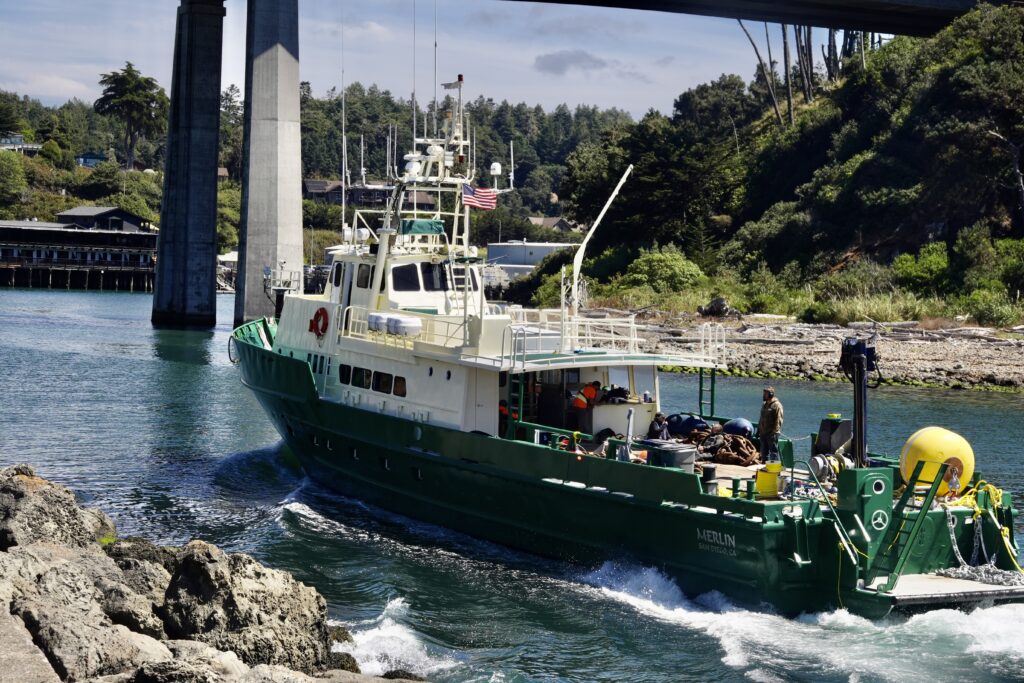
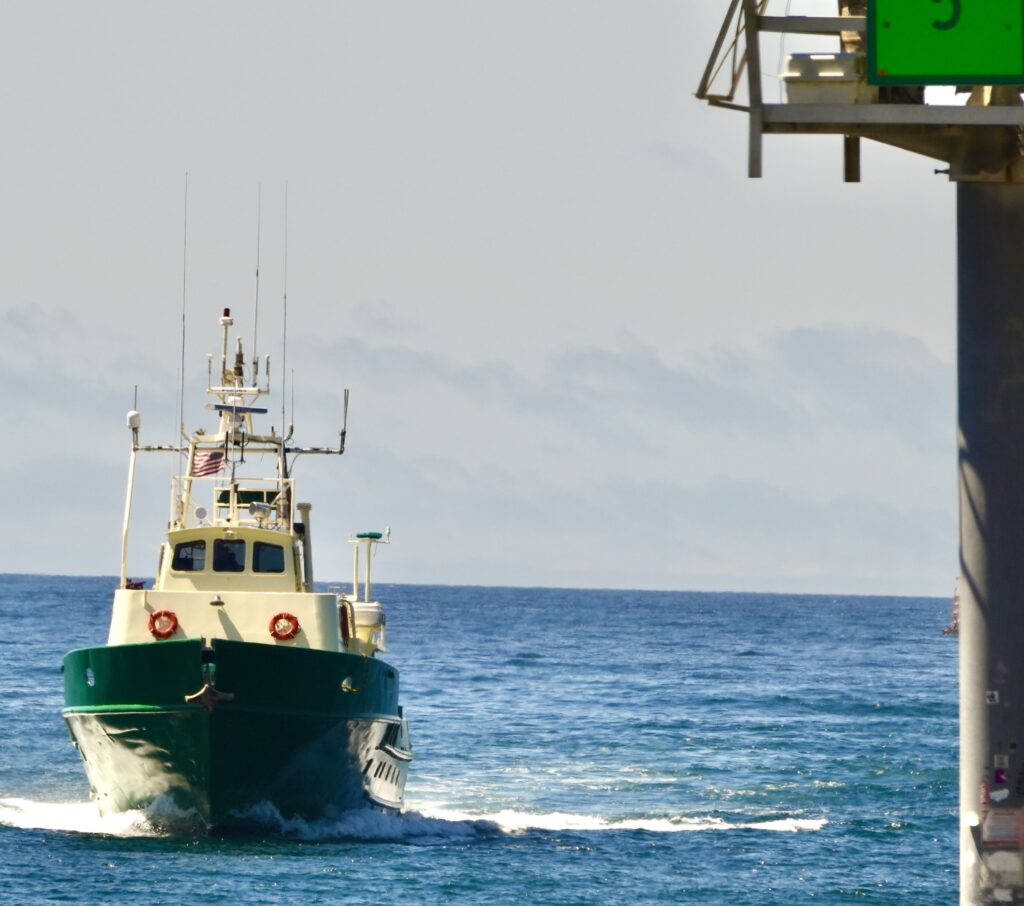
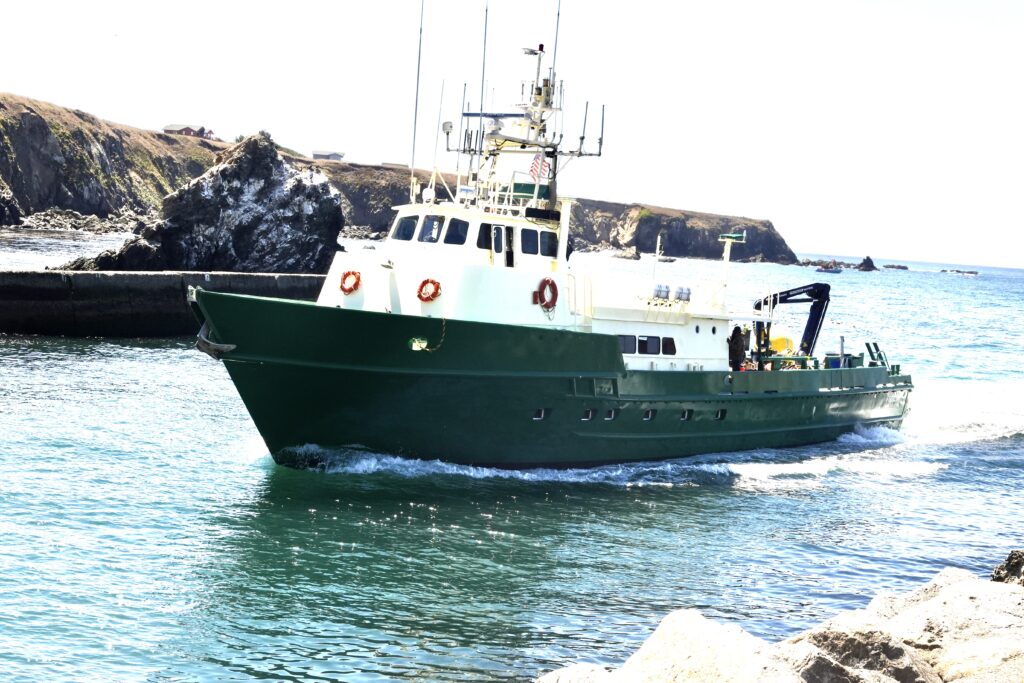
A 100lb bluefin tuna and the biggest boat of the year to arrive in Noyo Harbor both came in through the jetty on Tuesday.
These are both big changes. The Iceberg wave energy-desalination station has abandoned original plans to install a pipe delivering drinking water to the city of Fort Bragg. And the device will now only stay at sea until October, then be returned to Noyo Harbor and parked till next summer.
Bluefin tuna out of Noyo is also something new.
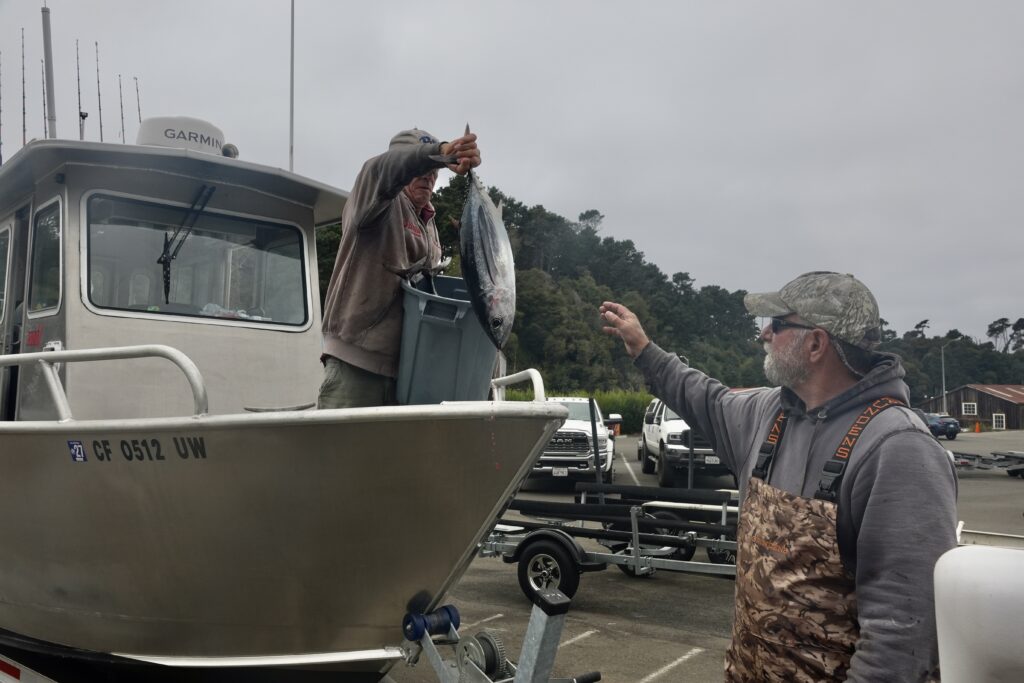
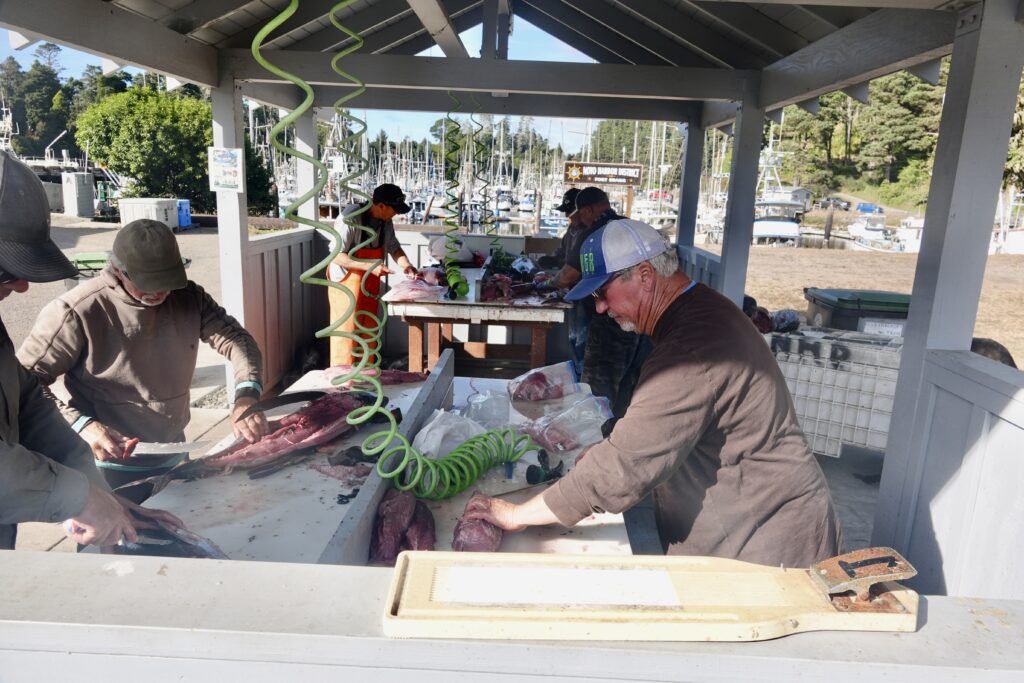
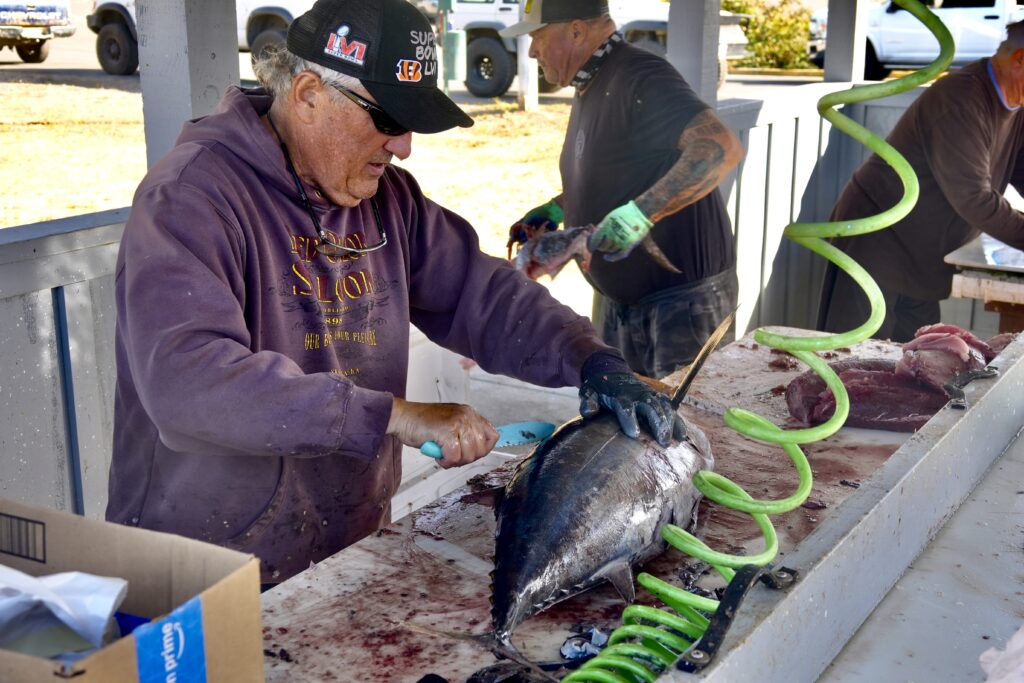
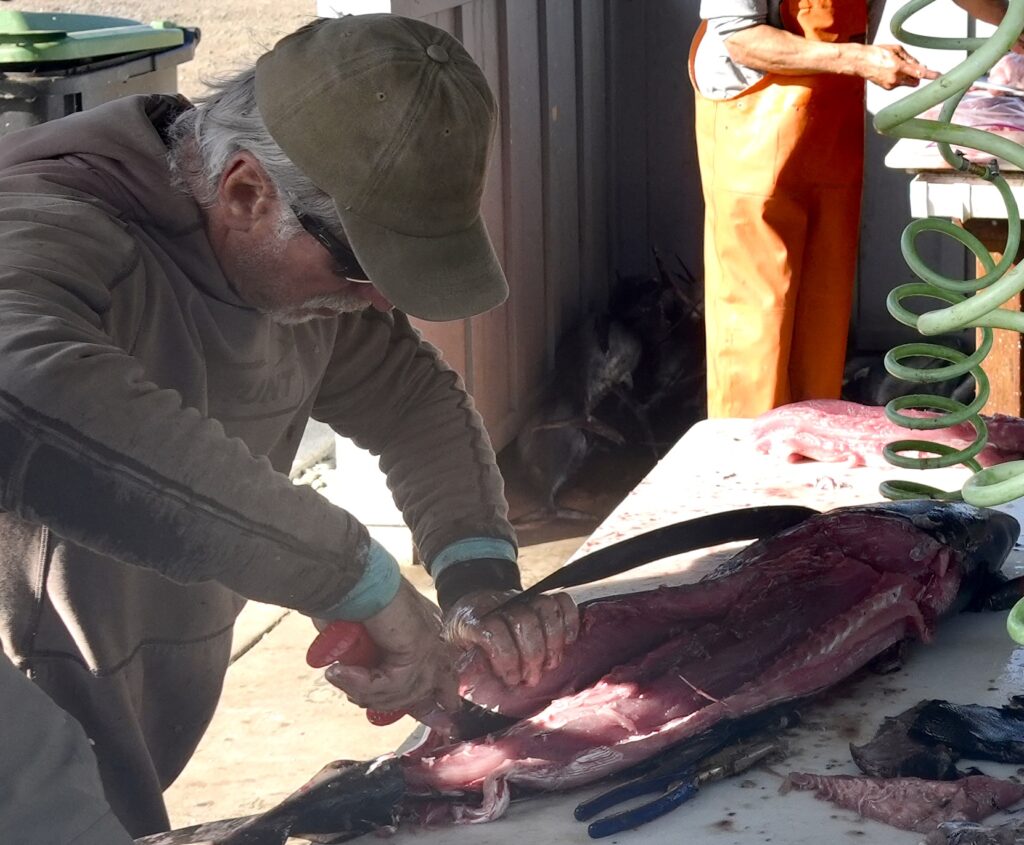
Noyo Harbor was jammed with fishermen seeking and catching boatloads of albacore on Tuesday. The new Noyo Harbor fish cleaning station was packed shoulder to shoulder wiith fishermen (and a couple of fisherwomen and fisherkids too) all day. The limit on albacore is 25 fish each but one needs to take the boat out 20-40 miles offshore.The harbor was a buzz with talk about the 100 pounder, which was caught on the newly famous “Mad Max” lure.. We confirmed the story with the Department of Fish and Game.
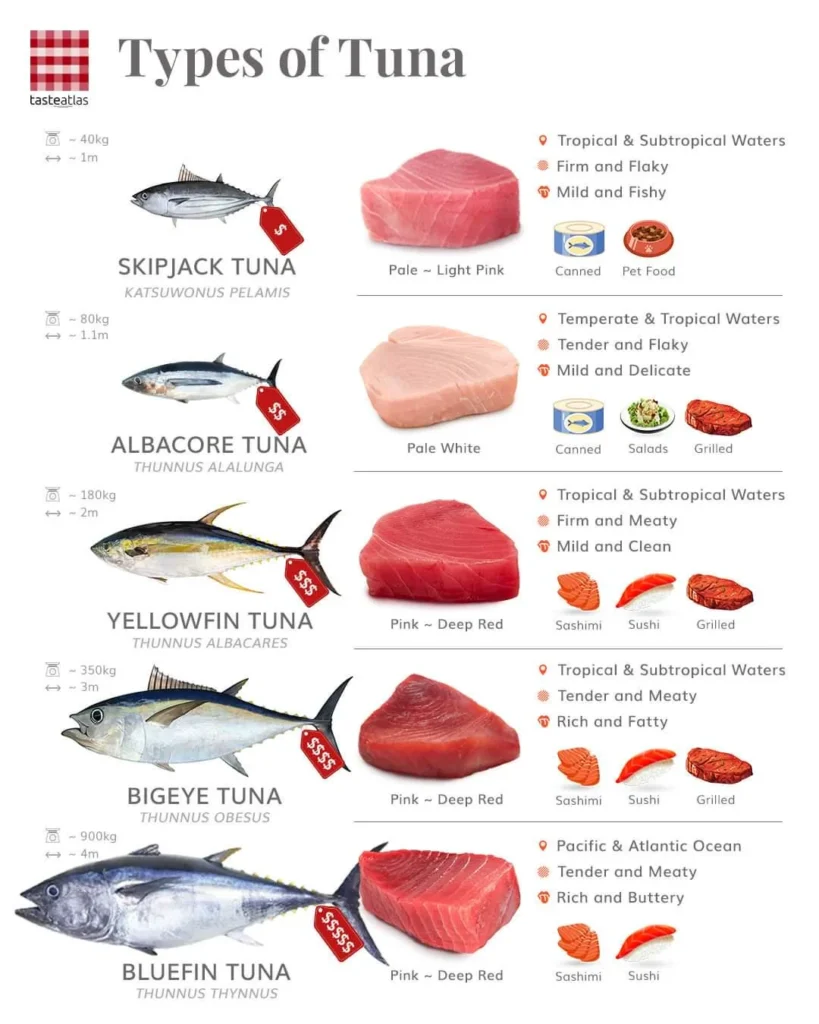
Why the fuss? A 100lb bluefin isn’t even fully mature and they get 10x that big!
Bluefin tuna caught off Fort Bragg are a new phenomenon for this century, as they have ranged further north each year. Nobody is sure why. Some say climate change and that the tuna prefer cooler waters. Bluefin and albacore tuna are actually rare warm blooded fishes that can swim through sub arctic waters happily. This is why the bluefin are here, the waters to the south have gotten too warm for him. A
The 100 pound bluefin was caught a mere 4 miles offshore. Fishermen said the albacore won’t come into the murkier nearshore waters and one has to go at least 15 miles out to hit the albacore.
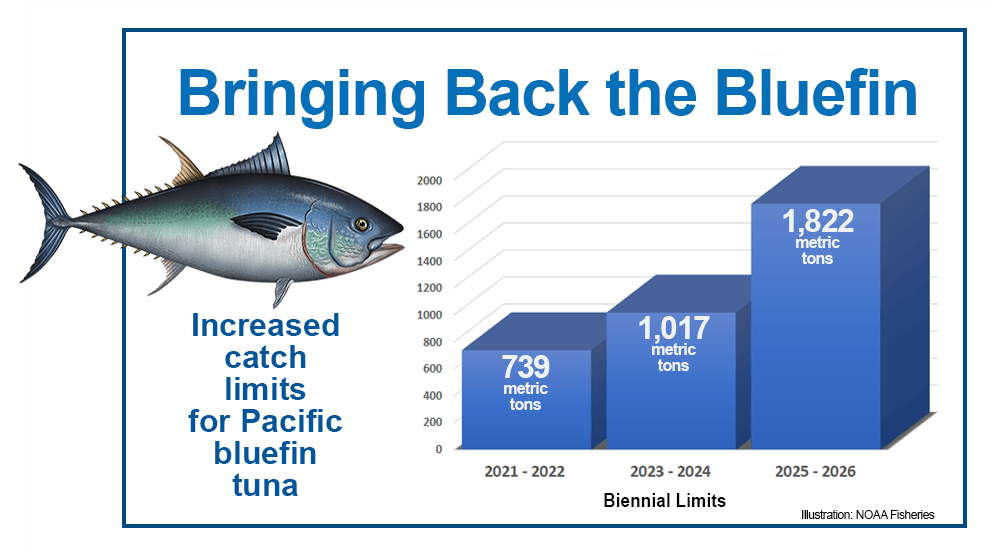
In 2016, the Pacific Bluefin tuna population, once one of the most prevalent fish in the world was considered critically imperiled for the first time. Just 2.6 percent of the historic population remained at that time. Overfishing, mostly in Asia, has drastically reduced bluefin numbers. There were 10x more bluefin in the 1950s, when counts began; still that was only 25 percent of the levels in the Pacific Ocean that were enjoyed before the 20th century. The international community agreed to set limits on bluefin, with 2 of the big fish allowed per day in California. Since that low, the population has rebounded and the target of returning to 20 percent of the historic base by 2034 is on target for now. The anchovies are more plentiful this year htan at any time since 2023, fishermen say. And 2023 had HUGE anchovy, pelican populations and albacore catches and it was the first year a lot of bluefin tuna came in over the course of the summer. Albacore fishing is open all year round bu t the fishmove out when summer is over, supposedly due to warmer offshore water in winter but likely also due to the departure of the anchovies.
The Great Pacific Migration of Bluefin Tuna | Smithsonian Ocean
The bluefin caught off Fort Bragg was likely a young one, as they migrate from Asia then live off the West Coast of North America until breeding age, which might be four years and the fish weighs 200 lbs. Then they return to Asia, where they are sought as the ultimate sushi fish, with single specimens being purchased for more than $1 million in frenetic auction bidding by Japanese chefs. Conservation groups ask fishermen to choose albacore instead of bluefin, but this is a voluntary self-regulation that the unknown fishermen with his “Mad Max” may not have heard of! At one time, bluefin were a Southern California phenomenon.
Madmacs Chaos – A Tuna Lure that Changed the Game – Nomad Tackle
https://www.sfgate.com/bayarea/article/northern-california-bluefin-tuna-22396655.php
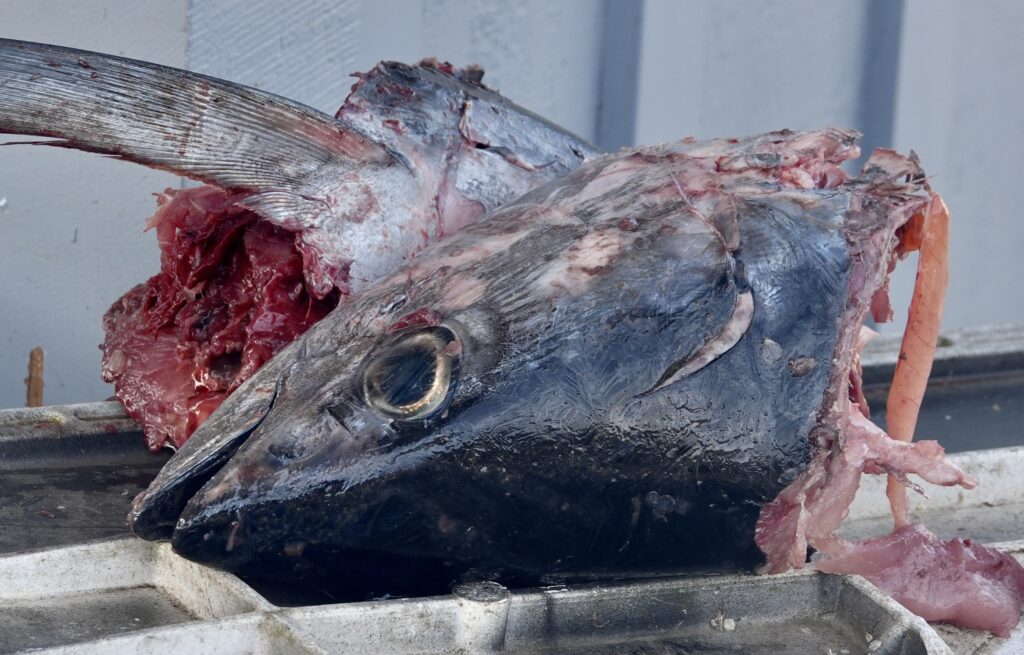
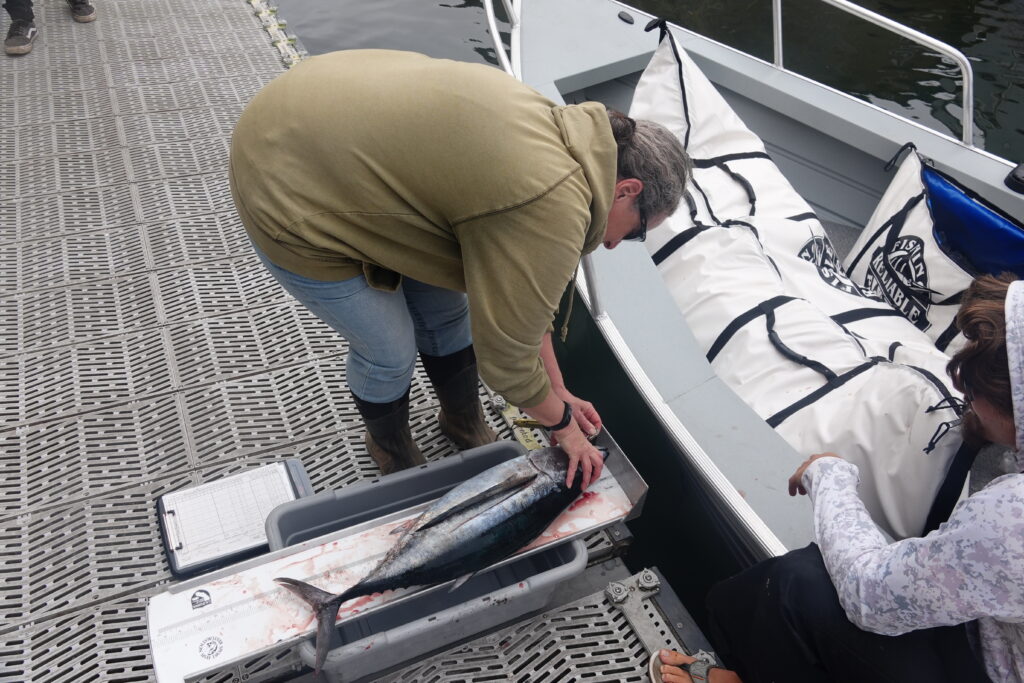
In any case, hundreds of albacore were caught out of Noyo Harbor on Tuesday, the best fishing day as far as the ocean conditions so far. Albacore are only caught in the summer months on the West Coast. All the fish in our photos are albacore.
City of Fort Bragg steps onto world stage as it tests wave energy/desalinization device but the mission has now shrunk
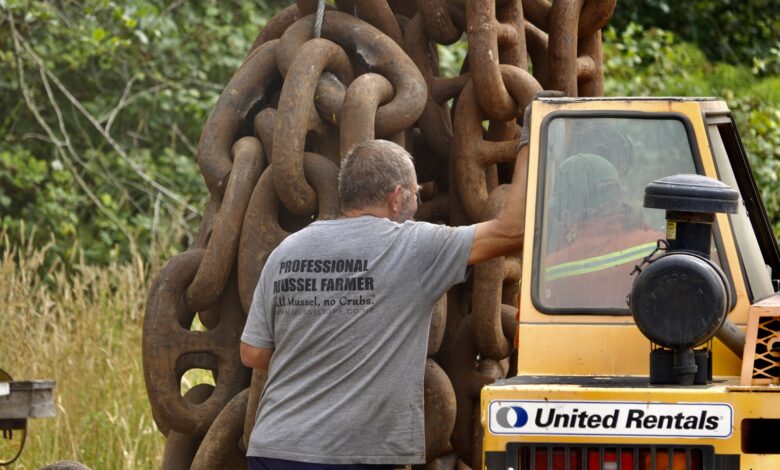
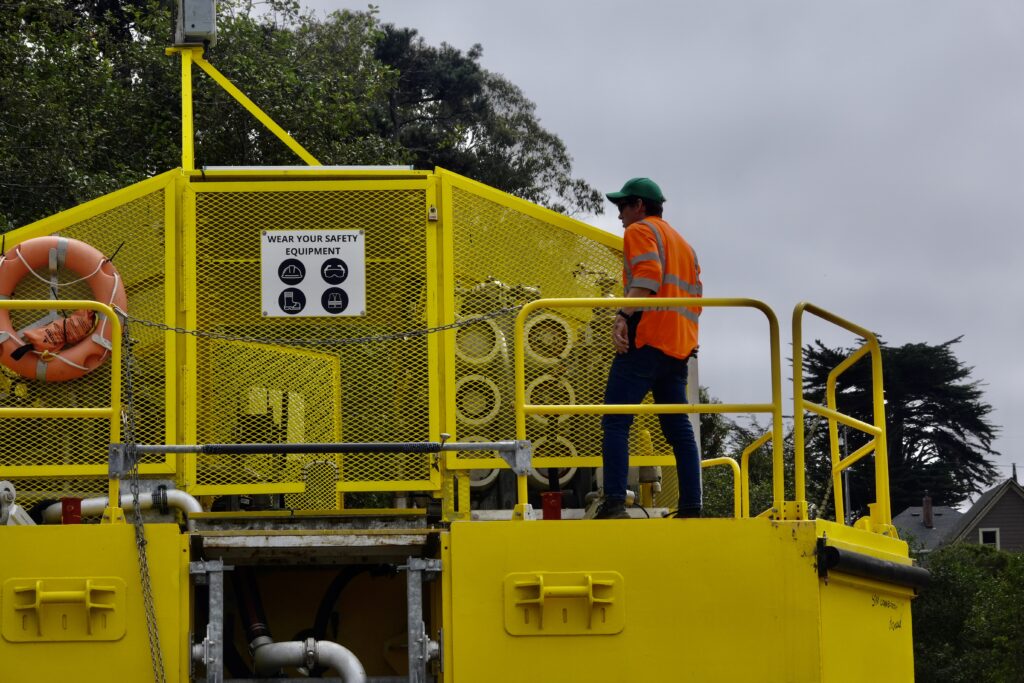
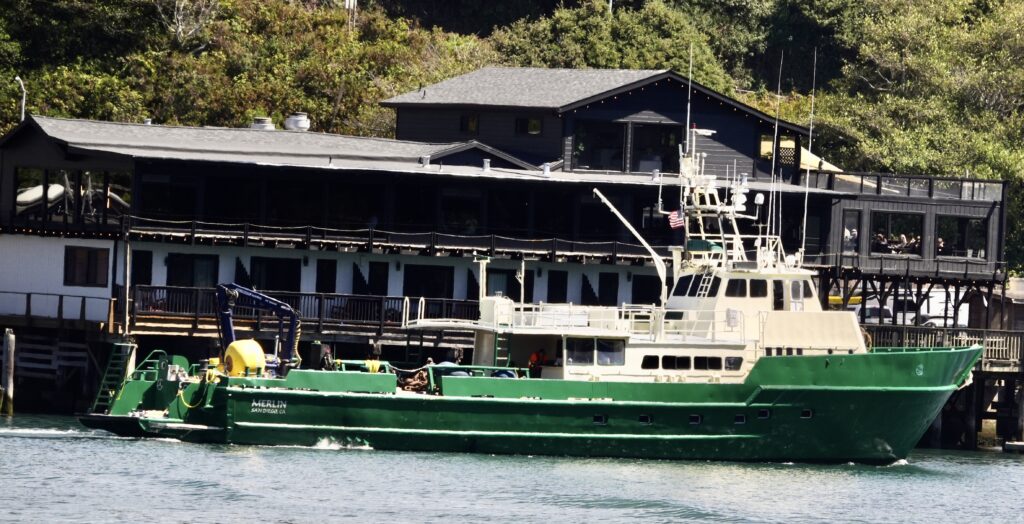
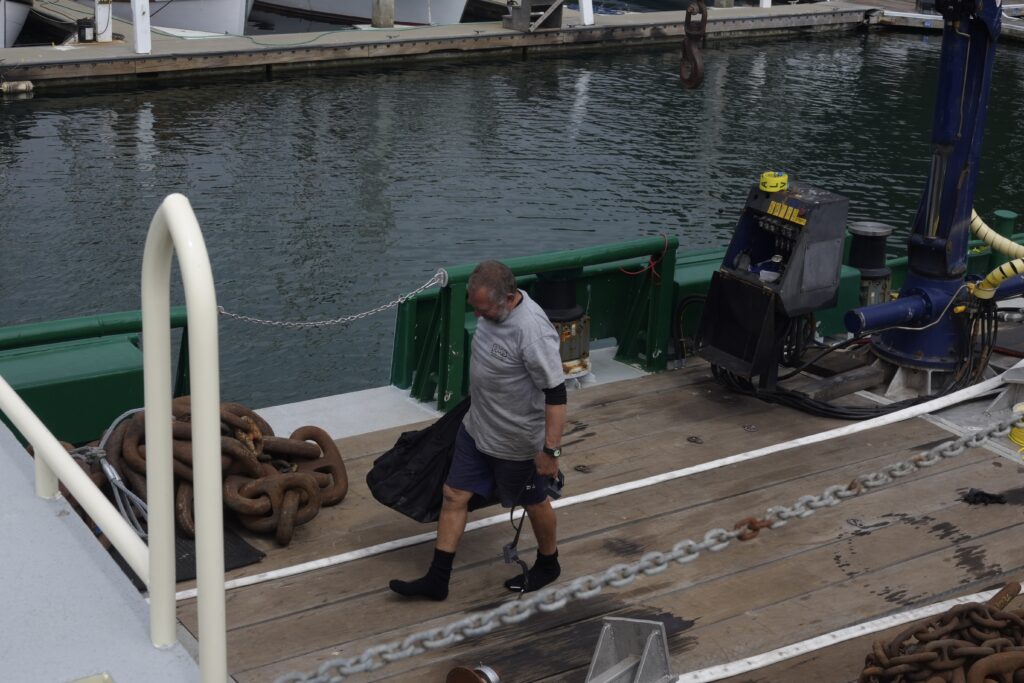
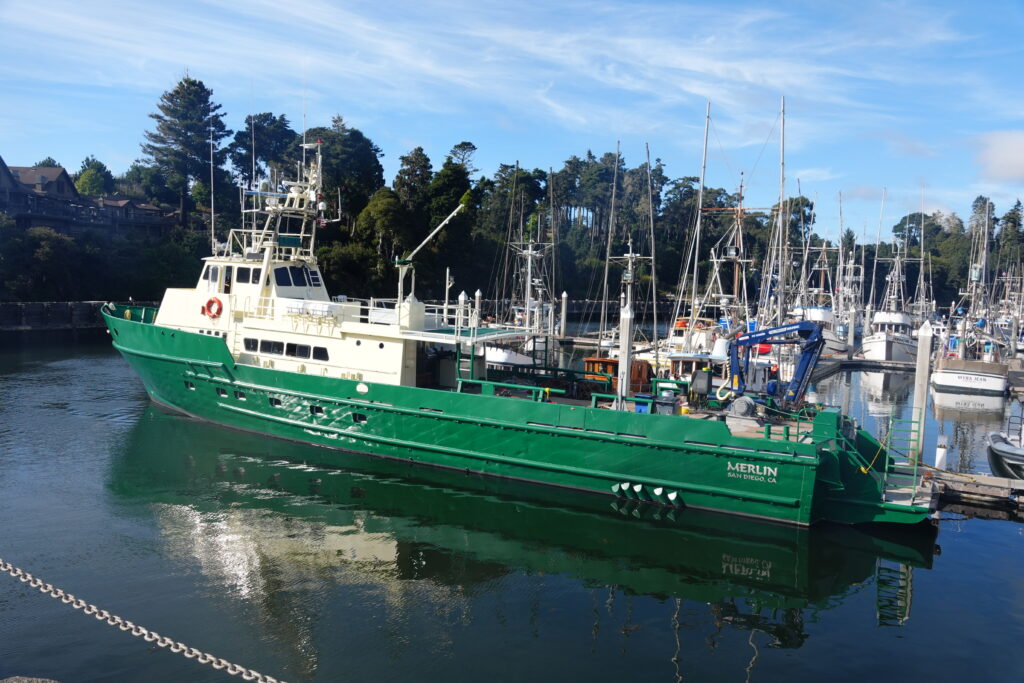
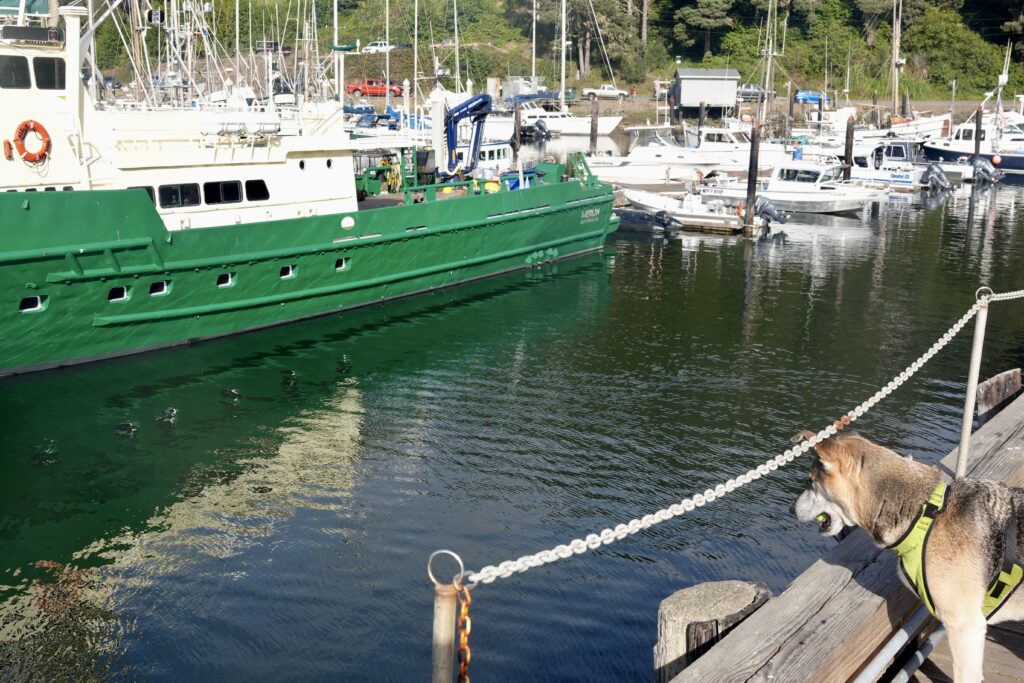
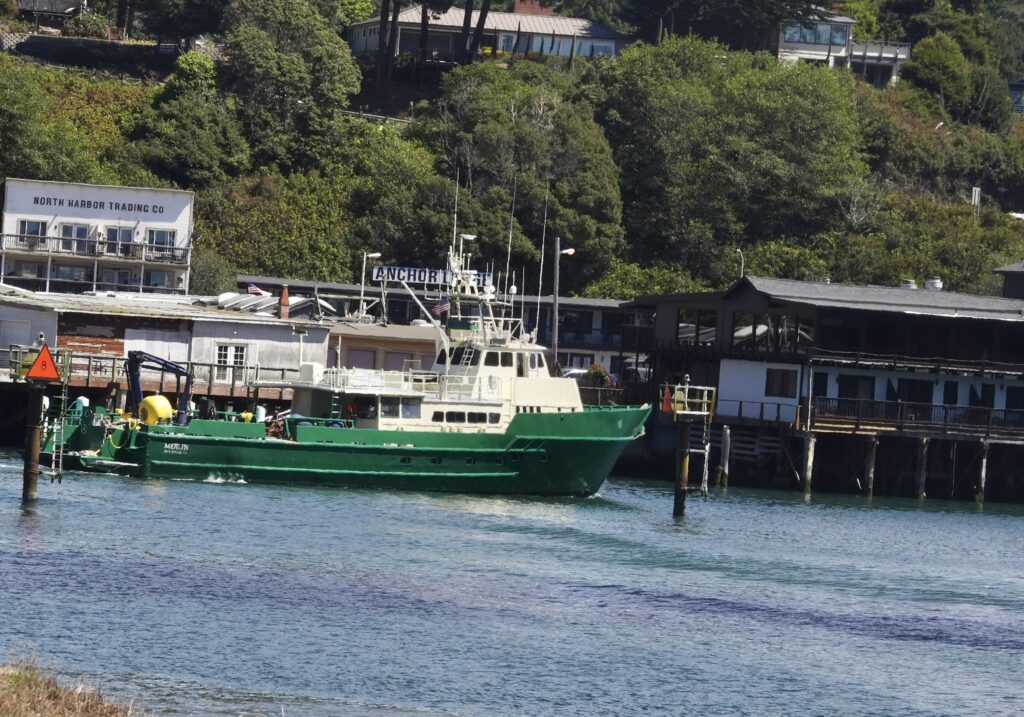
The 110-foot Merlin is in town to place the Oneka wave energy-desalination device into service. This boat is a steel tank, that literally carries tanks out to sea in its other life and loads them onto aircraft carriers. The crew is wary of photographs because news media photos of the boat are NOT allowed during most of its life in San Diego. The Merlin and its crew do ocean acrobatics for huge Navy ships leaving or about to arrive in San Diego. Some cargo is too awkward or maybe secret??to unload in port. The Merlin is used primarily for servicing Navy ships. The Merlin has been chugging in and out of Noyo Harbor for more than a week. Its first trip was to drop down a sea floor steel box that will help anchor the wave energy station. Then it took out chains, one of which weighed 5 tons as the machine is anchored about a mile offshore in water about 150 feet deep.
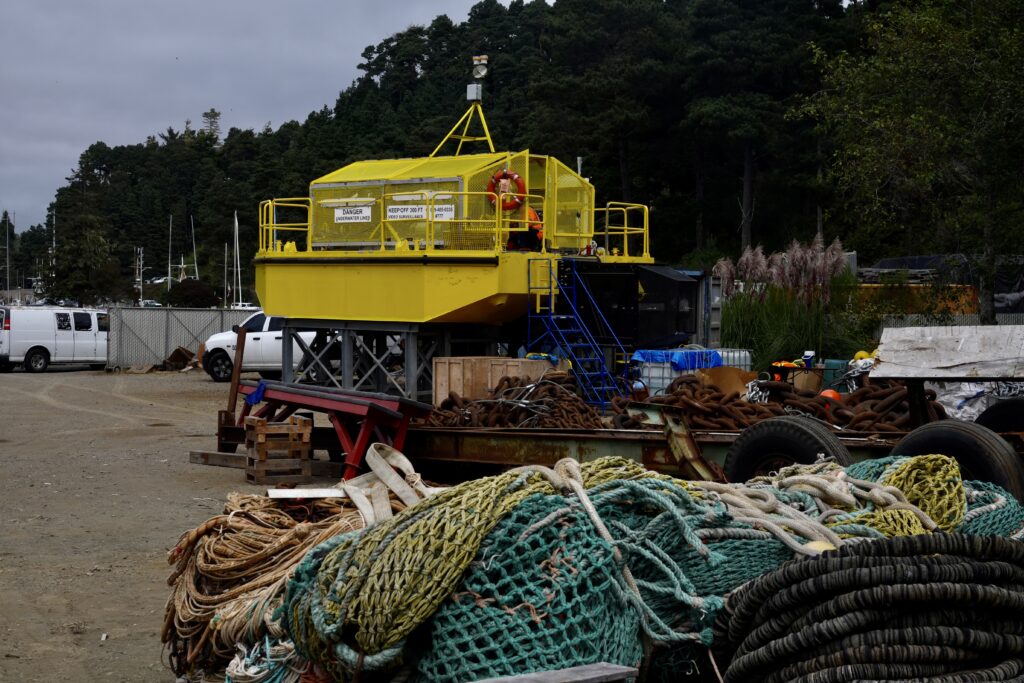
When all that is done, the Merlin will tow the Iceberg research station to sea anchor her in place then head back to San Diego. The plans for the station have changed. No water will be provided to the city of Fort Bragg in a two year pilot period.
Last fall, Oneka CEO Dragan Tutuic and his full team christened the vessel and he drank a glass of former sweater the station produced. That could still be possible, but only on board the Iceberg, where the wave energy device will be tested with constant shore monitoring for energy production and survival of ocean conditions.
We talked to a person in government worried about the Iceberg. They said that the swells here might be too big for the device and left everything up from the sea floor and move it to parts unknown or even sink it, especially in a Super El Nino year. The Coast Guard regularly has to move the harbor buoys back when swells are so big they go above the reach of its chain. At this point, the literal mountain of ocean water will lift anything up and bounce it along the bottom.
We shall see! That’s what experiments are for!
Punching a great white shark in the nose?
On a new blog, the local teacher bitten by a great white shark at Big River tells his story. Check it out!