Letter to Editor- Del Potter gives solutions to senior housing crisis

(Del Potter is a local commentor on the MCN Listserve, where we corresponded with him about this commentary. Del’s letter was prompted by Elise Cox’s story on the senior housing crisis. We have more about that in our Thursday edition)
We also advise reading the following from Cal Matters:
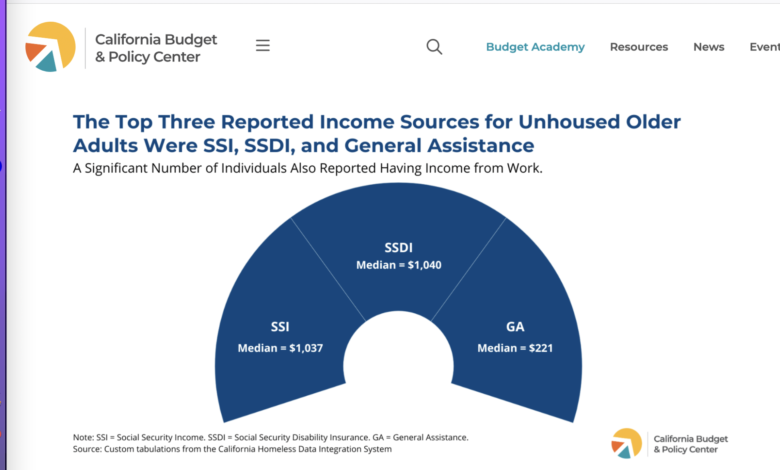
The fastest-growing homeless population? Seniors
And from the California Budget and Policy Center this story:
The Rise of Homelessness Among California’s Older Adults
Dear Editor:
Jeannie Storm’s belongings are stacked in boxes by the door of a leaking trailer on Franklin Road. She is 81 years old. She has Stage 4 breast cancer, a $300 monthly housing budget, and until July 1 she had a place to live. Her eviction arrived on an answering machine: “Just giving you a heads-up.”
An answering machine message is not an eviction notice. In Mendocino County, it works like one.
Storm has now been dispossessed twice in three years. The first time came three days after her partner Wayne died on Christmas Day 2023. For twenty years they had lived in the foreman’s house on a ranch out on Ten Mile, housing that came with Wayne’s labor and vanished with it. The English had a name for this arrangement: the tied cottage. The agricultural worker lived at the pleasure of the estate, and when his work ended, by age, injury, or death, so did his family’s shelter. It was a scandal of the nineteenth century. It is a working fact of the twenty-first, on the Mendocino Coast, and nobody thought to call it anything at all.
The second dispossession is the one Elise Cox chronicled this month in MendoLocal.News. A trailer with a roof that leaks in almost every room. Rats through the cupboard. Black mold blooming on a bedroom ceiling. No lease, because rural tenancy still runs on handshake and grievance, which means the tenant holds nothing and the owner holds everything. And a landlord who, asked about the 81-year-old cancer patient she is putting out, gave the newspaper the most clarifying quote of the year: “It’s my two houses, my two acres. She can find another place to live.”
She cannot, of course. That is the point. Storm has applications in at every senior complex on the coast: Duncan Place, Cypress Ridge, Plateau, Moura. The waiting lists run for years. A friend of hers just got into Cypress Ridge after waiting six. Storm worked at Cypress for years, caring for its residents. Now she must outlive a six-year queue to be allowed to join them.
2002, when the Mendocino Institute’s Cal Winslow surveyed the coast’s housing emergency, the average wait for affordable senior housing was 1.7 years. A generation of workshops, housing elements, task forces and conferences later, the wait has more than tripled. The county’s over-85 population is projected to more than triple again by 2040. The queue is a mortuary list, not a housing program.
What Marx would recognize
There is a name for what is happening to Jeannie Storm, and it is older than she is. Marx put it at the center of Capital: the “so-called primitive accumulation,” the long violence by which people were separated from the land and shelter they held by custom so that both could be converted into property that earns. Between 1750 and 1850, Parliament passed some four thousand acts of enclosure, privatizing nearly seven million acres of English common land. The commoners had no deeds. They had use: the grazed cow, the gathered wood, the cottage held by memory and mutual understanding. The law they were expelled under was written by the men who expelled them, and it was all perfectly legal, which is what the law was for.
Enclosure never ended. On the Mendocino Coast the commons being enclosed is the informal housing stock that actually sheltered the rural poor and the rural old: the trailers, the outbuildings, the foreman’s houses, the funky cabins, the $300 arrangements without leases. That stock is being cleared, parcel by parcel, not by parliamentary act but by the quiet arithmetic of the amenity economy. A trailer that shelters a dying caregiver for $300 a month is a liability. The same structure, repaired and photographed, is a vacation rental grossing that much in a weekend. Winslow found real estate agents in 2002 estimating that as much as 30 percent of coastal housing stock was already in vacation rental use, over 50 percent on some streets, with more than a third of the homes in Mendocino and Caspar owned by absentee landlords. The census data since has only confirmed the pattern: nearly one in five housing units in the Mendocino-Caspar area stands vacant, most of that seasonal, second homes dark eleven months of the year while the people who cook the food and change the beds and empty the bedpans of the visitor economy drive in from Willits, or sleep in their cars, or wait.
This is the part the housing debate keeps missing when it talks about supply. Mendocino does not lack roofs. It lacks roofs that people who work here, or who worked here for fifty years, are permitted to live under. Housing has been enclosed: withdrawn from use and converted to asset, its price set not by local wages but by Bay Area money looking for a view. Marx called that ground rent, the tribute the landless pay for permission to exist on the earth. Gittings said it plainer: my two houses, my two acres.
And the county? When MendoLocal.News asked what help existed for a woman with a 60-day deadline, the Social Services deputy director explained that the standard response is an interview, a risk assessment, and a service plan, completed within 90 days. The math is not hard. The eviction outruns the assessment by a month. A social worker visited Storm once. “One lady came by but nothing happened,” Storm said. The department, to be fair, took a moment to recognize the incredible work of its team.
What a county can actually do
The temptation in a rural county is to plead poverty and point at Sacramento. But enclosure was carried out locally, parcel by parcel, and it can be contested locally, ordinance by ordinance. None of what follows requires a new state law. It requires three votes on the Board of Supervisors.
First, close the eviction gap. State just-cause protection is a sieve: it exempts most single-family homes and does little for the no-lease, informal tenancies that dominate rural housing. Counties can adopt their own just-cause ordinances covering the unincorporated areas, with mandatory relocation assistance when a landlord displaces a tenant who is elderly, disabled, or long-tenured, scaled steep enough that clearing out an 81-year-old costs the owner something real. Pair it with county-funded eviction defense. A tenant with a lawyer is a tenant with time, and time is what the waiting list demands.
Second, make the enclosed stock pay for what it displaced. The county already taxes tourists who sleep in short-term rentals; it should tax the conversion itself. A meaningful annual fee on every whole-home short-term rental, and a voter-approved vacancy assessment on homes left empty most of the year, would do two things at once: slow the bleeding of housing stock into the visitor economy, and fund a permanent county housing trust with a dedicated revenue stream, the mechanism Winslow’s conferences recommended twenty-four years ago. The county has been holding stakeholder sessions on short-term rental rules for years while supervisors debate permit mechanics. The question on the table is not noise or parking. It is whether housing in this county exists for the people in it.
Third, rebuild a commons. The Community Development Commission, the county’s own housing authority, should be capitalized to act as a public developer, not merely a voucher administrator: acquiring failing motels and mobile home parks before speculators do, building small senior infill on the church lots and school district remnants and county surplus parcels every coastal town contains. Put county land into a community land trust so it can never be enclosed again. And legalize the informal stock instead of condemning it: an amnesty-and-repair program for the trailers and backyard units where the rural poor already live, with county money for the roof and the wiring in exchange for recorded affordability covenants. The habitability laws Storm’s trailer violates should trigger repair funds and tenant protection, not demolition and another eviction.
Fourth, protect the last commons standing: mobile home and trailer tenancies, the largest stock of unsubsidized affordable housing in rural California, should be brought under county rent stabilization before they too are cleared for higher uses.
Every one of these is within the police power, the taxing power, or the purchasing power of Mendocino County government. What has been missing is the willingness to say out loud that the crisis is not a shortage but a transfer: housing moving from the old, the sick, and the working poor to the portfolios of people who visit.
Jeannie Storm buried a son and a partner in this county. She spent fifty years on this coast caring for other people’s bodies, and she asks for almost nothing now: a small room in town, near her doctors, where she can unpack her son’s photographs and stop driving. When her boy was small, they traded a refrain at bedtime: I love you more than the moon, I love you more than the stars. The county she gave her working life to offers her a risk assessment on a 90-day clock.
They will tell you the housing market is complicated. It is not complicated. It is two houses and two acres, multiplied by every parcel on the coast, and an old woman with her life in boxes by the door.
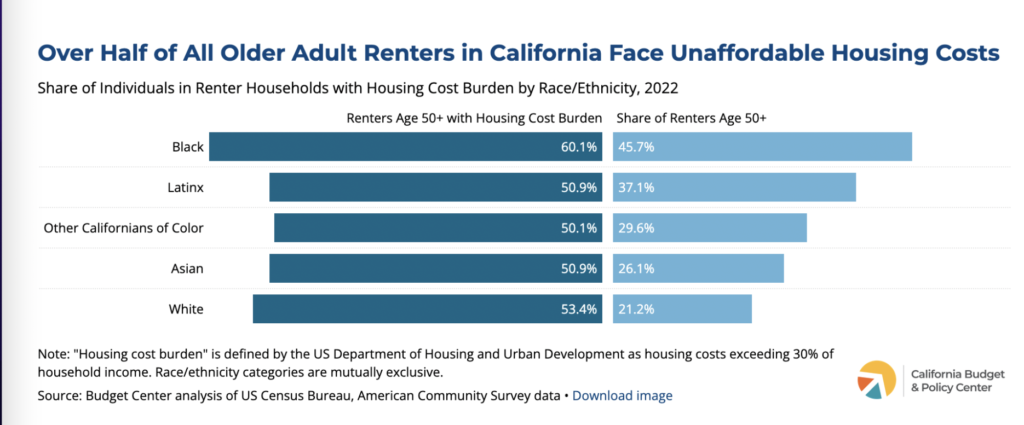
Sources: Elise Cox, “An 81-Year-Old Faces Eviction as Affordable Senior Housing Waitlists Stretch for Years,” MendoLocal.News, July 14, 2026; Cal Winslow, “Mendocino Coast: The Crisis in Affordable Housing,” Mendocino Institute, September 2002; Karl Marx, Capital, Vol. I, Part VIII; U.S. Census/ACS housing occupancy data for Fort Bragg and Mendocino-Caspar; Mendocino County Housing Element 2019–2027; reporting on the county’s short-term rental ordinance process, The Mendocino Voice, 2025–2026.
Sincerely, Del Potter