Why is Memorial Day Important? Ask the Iversens, who never came back to the Mendocino Coast

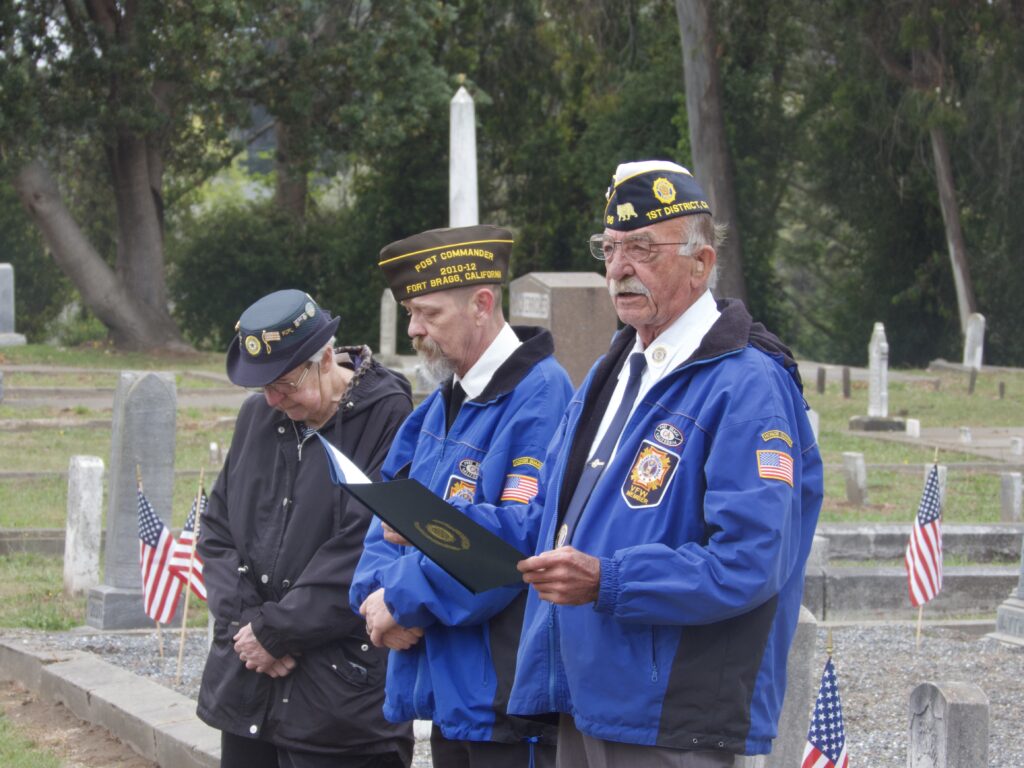
Here is a video of today’s Memorial Day in 2026 and some images. A crowd of about 70 turned out. We will have more in a follow up story
We are updating and rerunning part of last year’s Memorial Day coverage — a story that had somehow never been fully told here until we published it. The response was immediate and heartfelt. Many readers wrote about the two local brothers whose deaths devastated a family that had already raised six or seven daughters. The loss of both sons broke something in that household that never fully healed, even as the sisters continued to hold their patriotic brothers in the highest esteem.
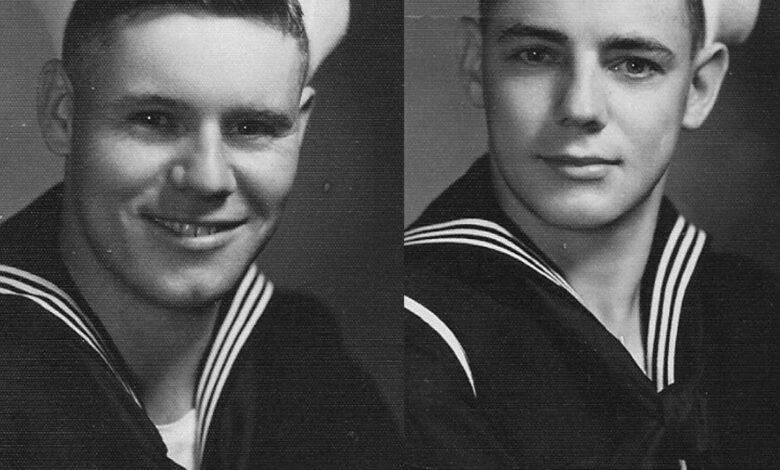
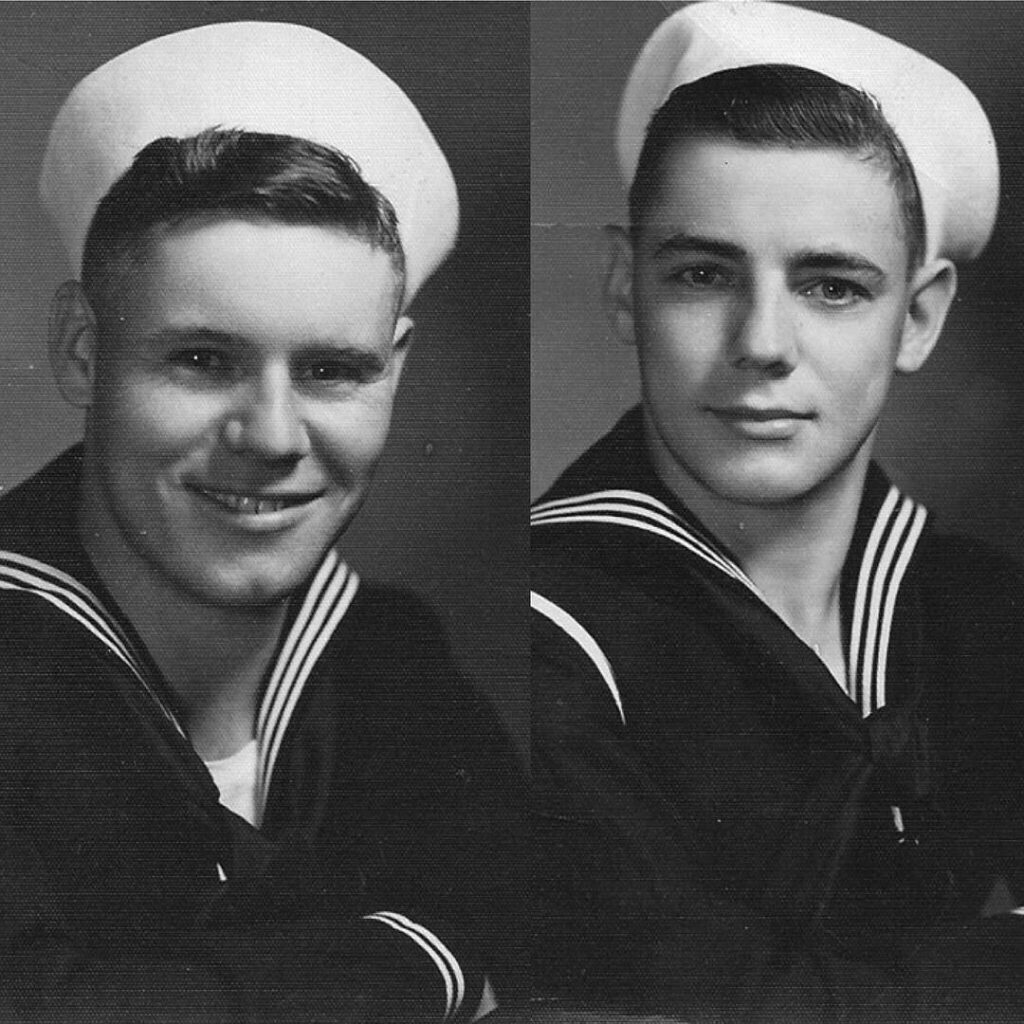
On Jan. 30, 1941, Norman Kenneth Iversen enlisted in the United States Navy. His older brother, Earl Henry Iversen, enlisted the same day. They were the only two sons of Iver Henry and Irma Ilene Iversen, part of the wave of Scandinavian immigrant families — likely from Sweden, Norway, Denmark, or Finland — who helped settle the Mendocino Coast.
A grand‑grandniece remembers that the family included seven sisters and two brothers. The boys had always planned to look out for all those girls, to be the steady male presence in a bustling household of daughters. But that was never to be.
Many men enlisted in the Armed forces that month, after President Franklin D. Roosevelt made a speech about Four American Freedoms worth fighting for: freedom of speech,freedom of worship,freedom from want, andfreedom from fear. Germany was bombing Dublin, in the British controlled Ireland at the time they enlisted.
They were serving aboard the USS Arizona when the Empire of Japan launched a sneak attack while other Japanese were trying to negotiate peace in Washington D.C. They were killed by the Japanese and remain entombed with their fellow sailors at the bottom of Pearl Harbor, from enlisted men to an admiral. A total of 2,403 Americans were killed at Pearl Harbor, all but 49 being those who served in the military.
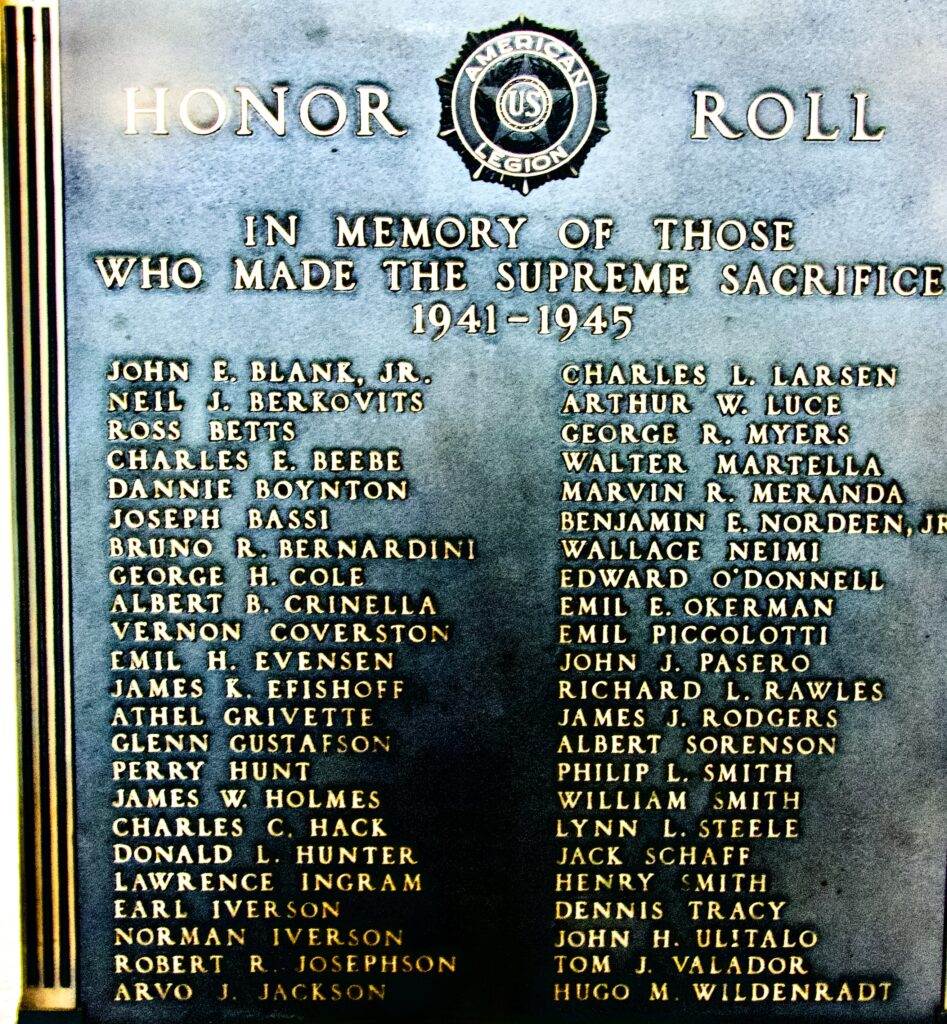
It’s hard to imagine the impact the deaths of two sons must have had on Iver and Irma. They moved from Mendocino to Monterey County at some point, but I could not find out more. Special plaques, one for each war in the 20th and 21st centuries, are mounted in the rear lobby of the Fort Bragg Veterans Hall. The one for World War II lists the iversen brothers and 44 other servicemen who never returned to the Mendocino Coast from World War II.
ahve done had they not given all for all of us.
There were 37 sets of brothers killed aboard the Arizona, including the Iversens, whose names are specially honored in bronze in Fort Bragg.
The military ceased the practice of people from the same towns and especially from the same family from serving in the same unit, after whole towns had their native sons killed in the World Wars, and as portrayed in the movie
Historians note that in the years leading up to Pearl Harbor, Japan’s right‑wing militarists steadily pushed aside the civilian leaders who were still attempting diplomatic negotiations with the United States. The military faction distrusted the modernizers and liberals within their own government almost as intensely as they distrusted the West.
These hard‑line officers promoted a mythologized vision of Japan’s past, invoking selective samurai imagery to justify expansion and to suppress those who argued for science, modernization, and political reform. By the early 1940s, the militarists had effectively seized control of national policy, silencing internal opposition and steering the country toward war.
Japan’s path to Pearl Harbor was shaped by a deep internal conflict. In the late 1930s and early 1940s, right‑wing militarists steadily pushed aside the civilian leaders who were still pursuing diplomatic negotiations with the United States. These hard‑line officers distrusted the modernizers and liberals within their own government almost as intensely as they distrusted the West.
The militarist faction promoted a mythologized version of Japan’s past, using selective samurai imagery to justify expansion and rally public support. They resisted — and ultimately suppressed — the modernizers who advocated for science, diplomacy, and political reform in what was then the most industrialized nation in Asia. By the time of the attack on Pearl Harbor, the militarists had taken firm control of national policy and silenced internal opposition, steering Japan decisively toward war.
Why the history lesson? In reading the comments to this story it seems many people have forgotten how much was given by so many to uphold our flag. Perhaps others are as sick as I am of of fake patriotism, such as politicians hugging and kissing the flag or sending young men and women to wars when they themselves skipped out, but men like Norman and Earl gave up lives that were full of promise and lust for life. What would Fort Bragg have been like had just some of these 46 men had a chance to contribute to the future, which is now our past. What was the story of this family? I wish I could tell that story. All I have is what the military provided.
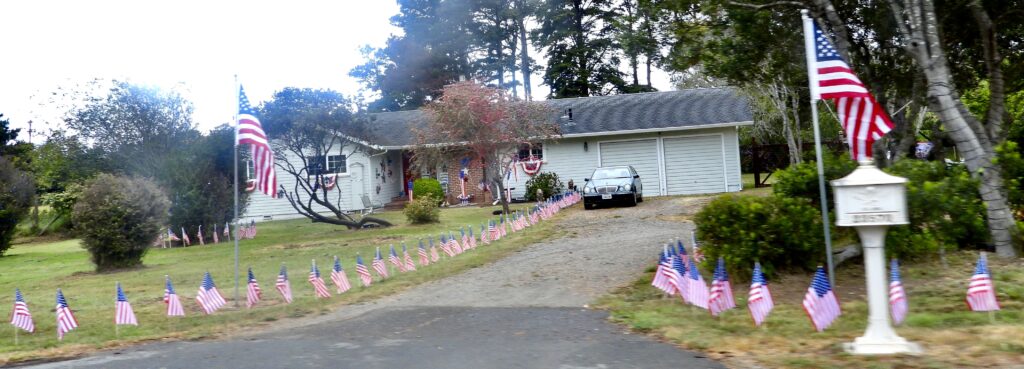
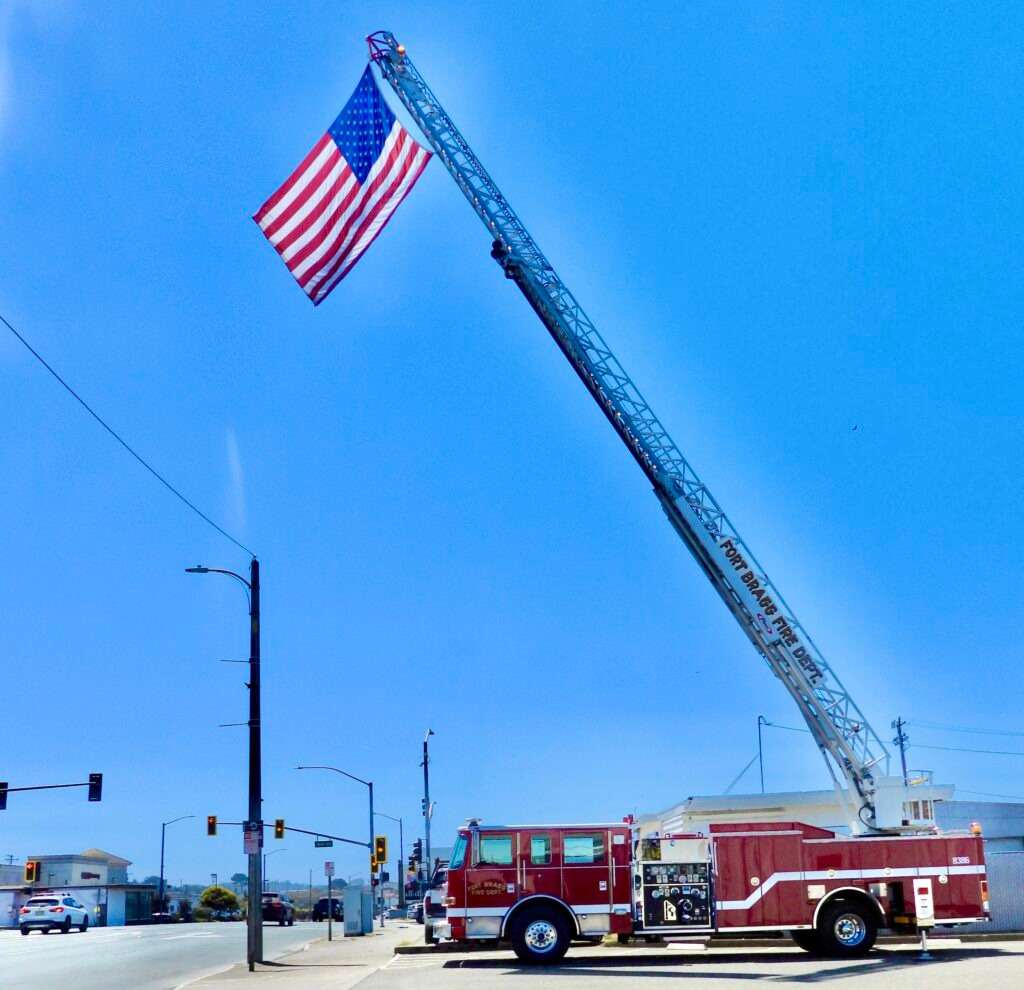
| Norman was a Seaman Second Class. His service number assignment was 3762373. He was born on 4 December 1923, so he had just celebrated his 18th birthday that terrible Sunday morning. He was barely 17 when he had joined the Navy. For the rest of the article, I drove around Fort Bragg and took photos of cool American flags I found. The most awesome flag display is in Cleone on the west side of State Route just before you get to Green Acres campground. They have a huge flag display on patriotic holidays worth seeing and one today. While they are Ok with photos, they did not give me permission to tell their story.I would advise all those who don’t understand the importance of the flag and of serving to come to the somber Memorial Day ceremonies today! |