Quick work by crews halts Ten Mile River brush fire — a sharp trial run for the hot summer ahead
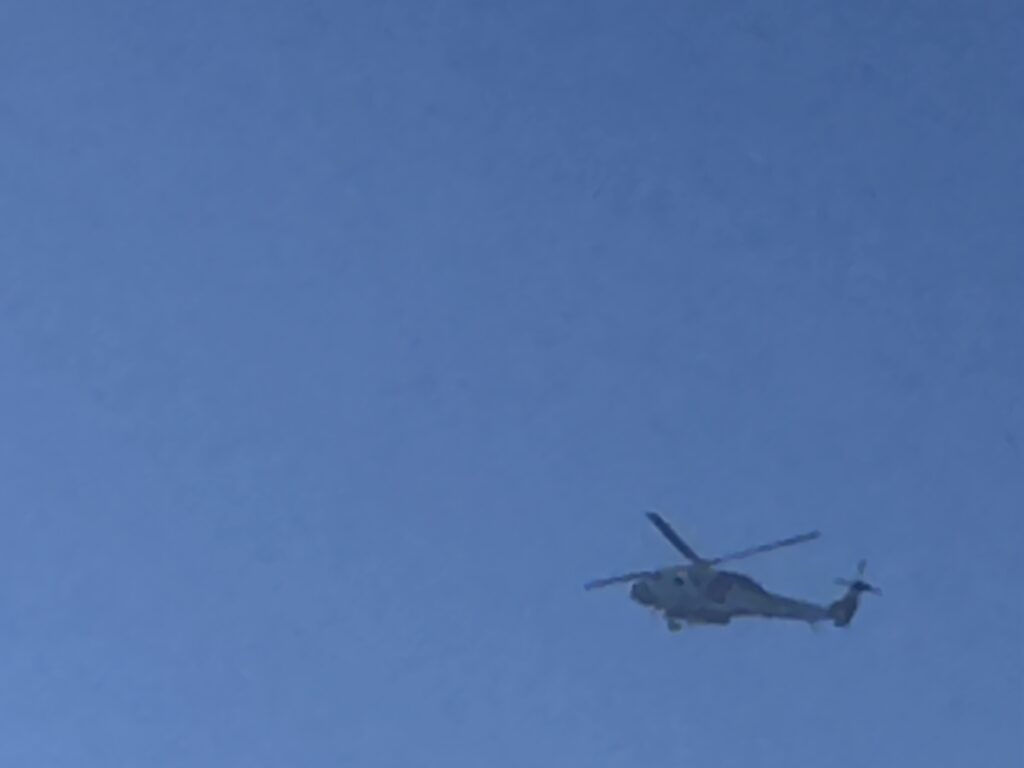
The big Cal Fire helicopter swept down the Ten Mile River corridor, then along Ten Mile and Seaside beaches then went back up the river.. Hovering over the choppy Ten Mile River near where it goes into the ocean, a periscope‑like tube extended from the belly of the aircraft and plunged below the whitecaps, pulling ocean water into its onboard tank. When I was a seasonal firefighter years ago, crews relied on giant buckets slung beneath the aircraft. Pilots had to drop them into a pond or the ocean, then fly low and awkwardly over the fire to dump the load. It was dangerous and imprecise — a far cry from today’s system.
They hit the fire fast. The helicopter swung back from its ocean pickup and aimed the load at a patch of deep brush burning along the Ten Mile River on Sunday afternoon. I’d broken my camera and was stuck with my phone — not ideal for me — but I can describe what I saw. The whole sequence happened so quickly that there was barely a second or two to catch a usable frame anyway.
The copter had sprayed water twice and crews had the fire surrounded before I even wound my way over the Ten Mile River and through the dense woods. I was half‑hoping it would be out by the time I got back to write this story. I got turned around looking for it — and I wasn’t the only one. Still, getting to the scene and seeing the conditions firsthand was worth it. Thanks to quick work under tough conditions, this one doesn’t rise to the level of a major fire story, and that’s exactly the point.
I wasn’t needed to warn anyone this time as the crews did their jobs and it was contained, and so to most it ceased to be a story. The scanner hounds had word of the fire up almost immediately, and in this case that’s a good thing. Fire news, disasters, and anything that could pose a threat to people needs to move fast. The problem is when the same people apply those habits to crime and other press releases, pushing out unverified information without checking facts. That’s when the practice becomes harmful.
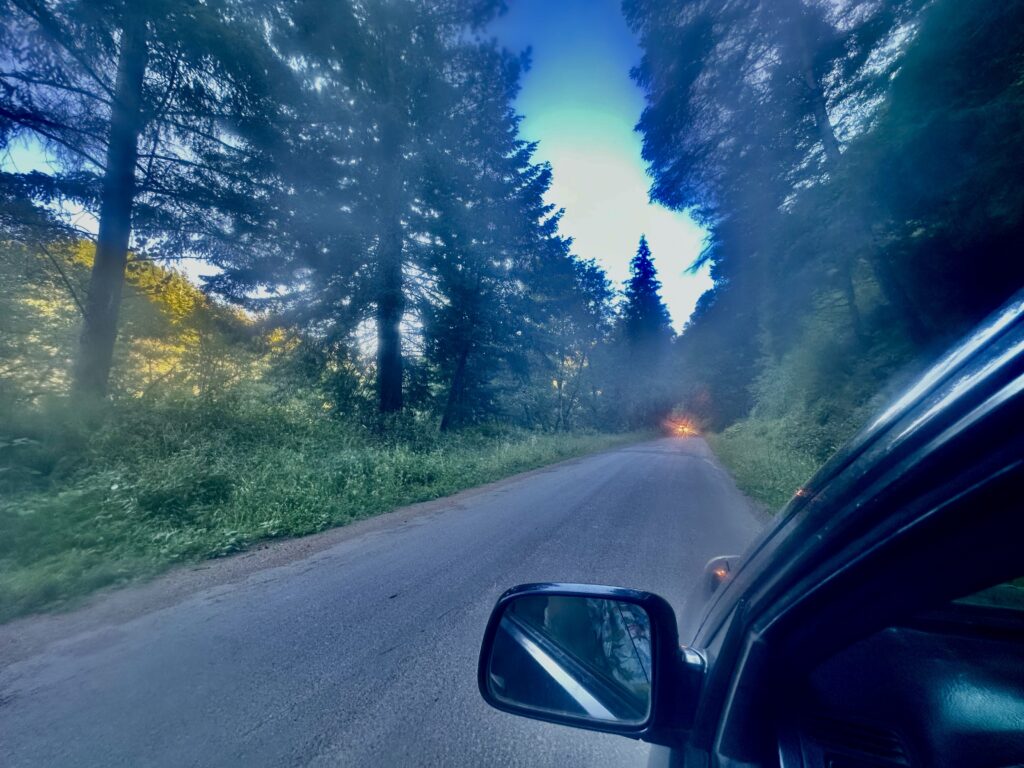
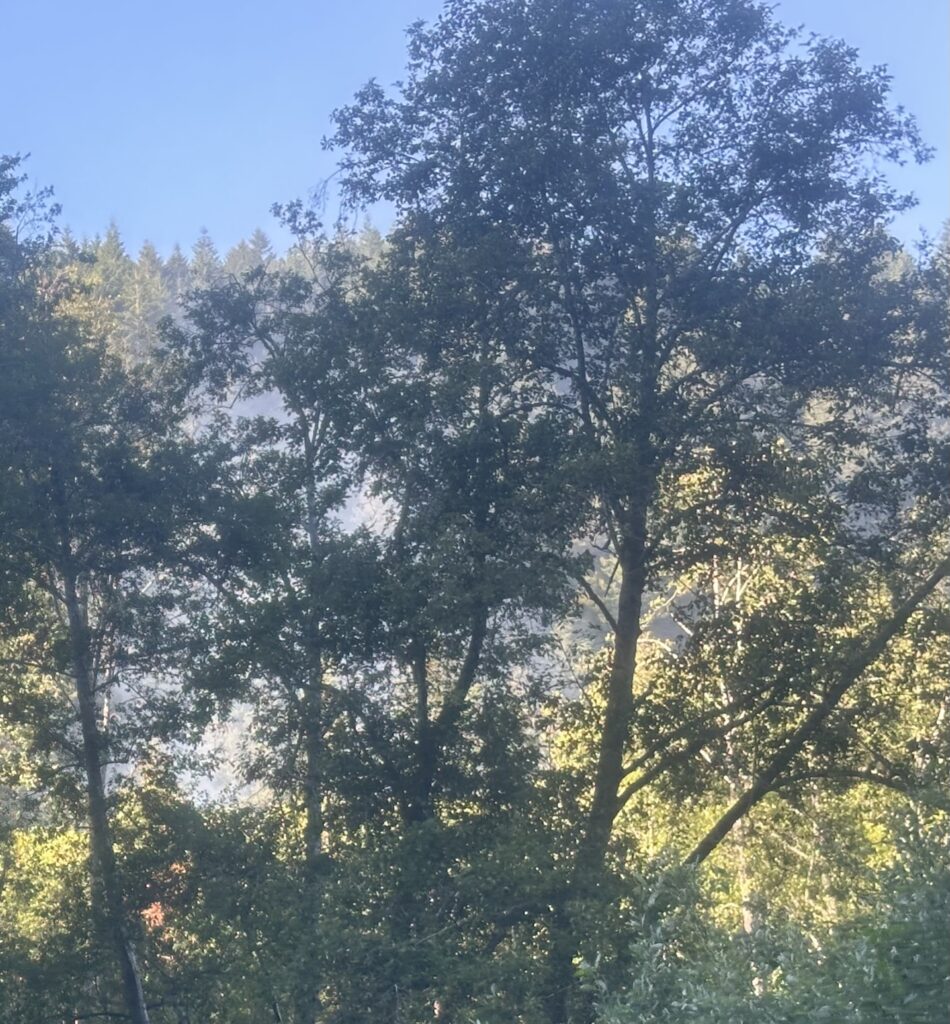
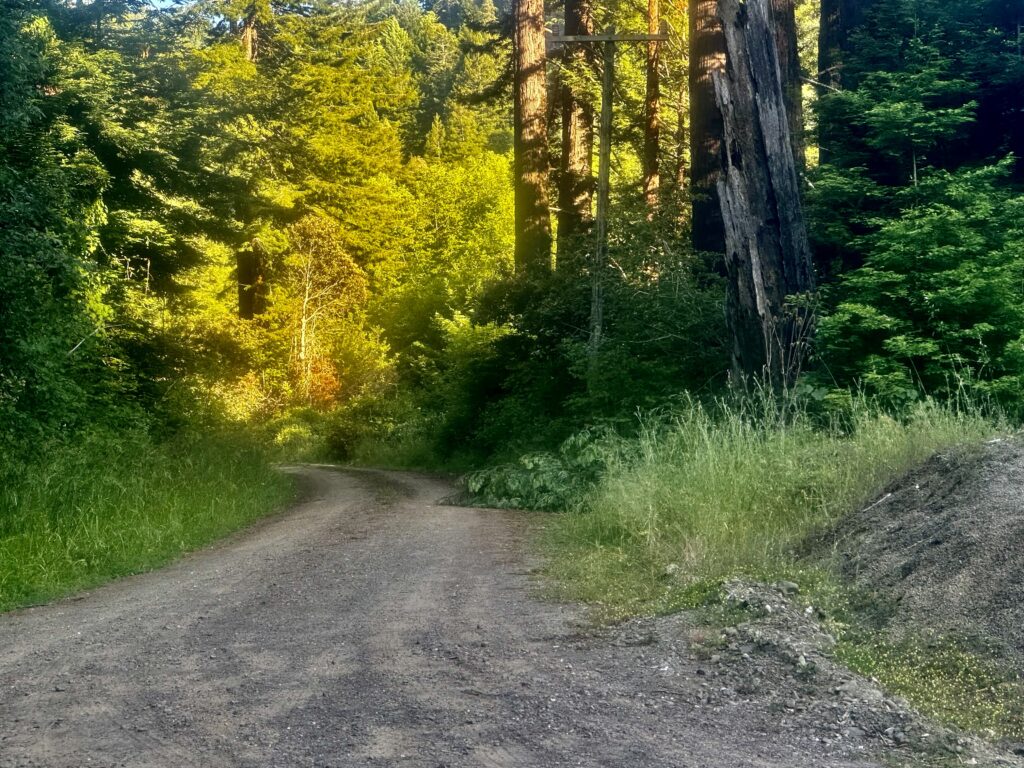
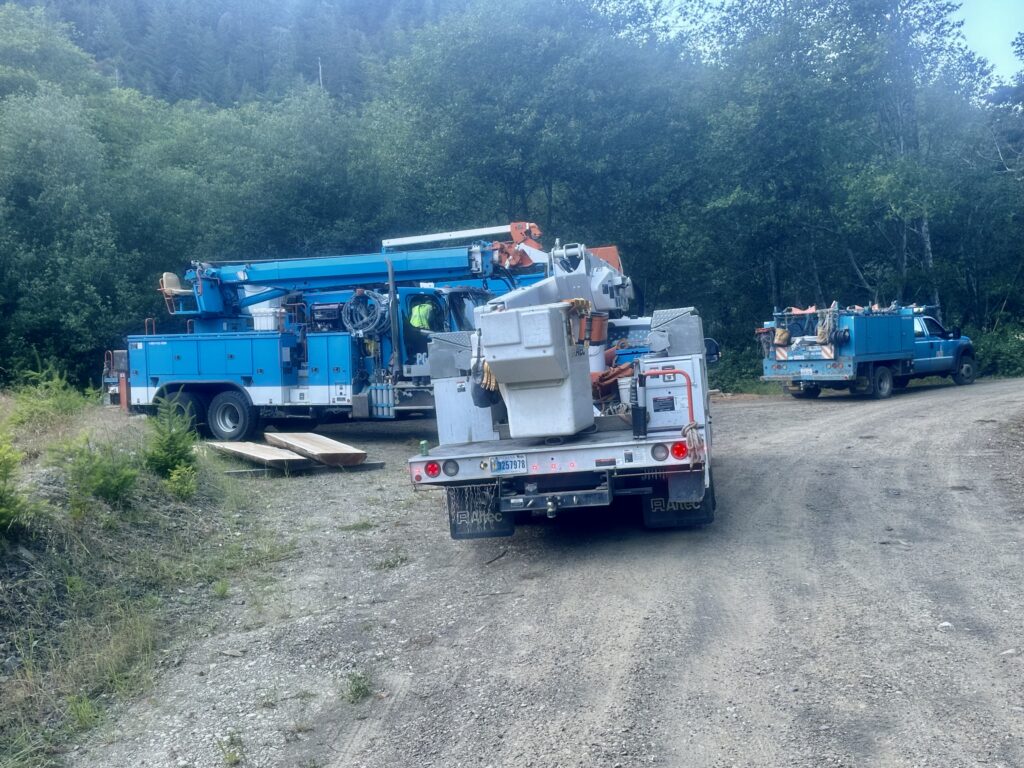
On the scene, I saw not only the Cal Fire helicopter but also a line of PG&E trucks. Crews told me they had been working in the area when the fire started. They didn’t identify a cause, but downed power lines were a possibility. The response was big and fast — not just the air attack but a long procession of ground units coming out the road just south of Ten Mile Bridge. What could have been a nasty fire was already under control by the time I arrived. The tall column of smoke visible around 5:30 p.m. as I was driving in had been reduced to smoldering brush by about 6:15 p.m., when I left.
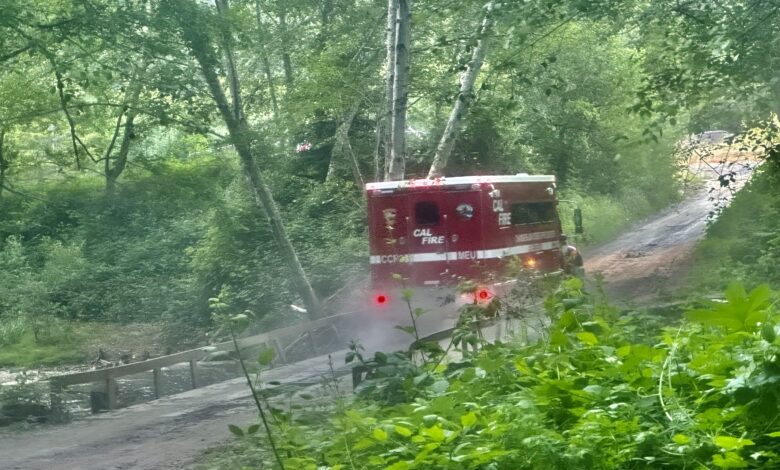
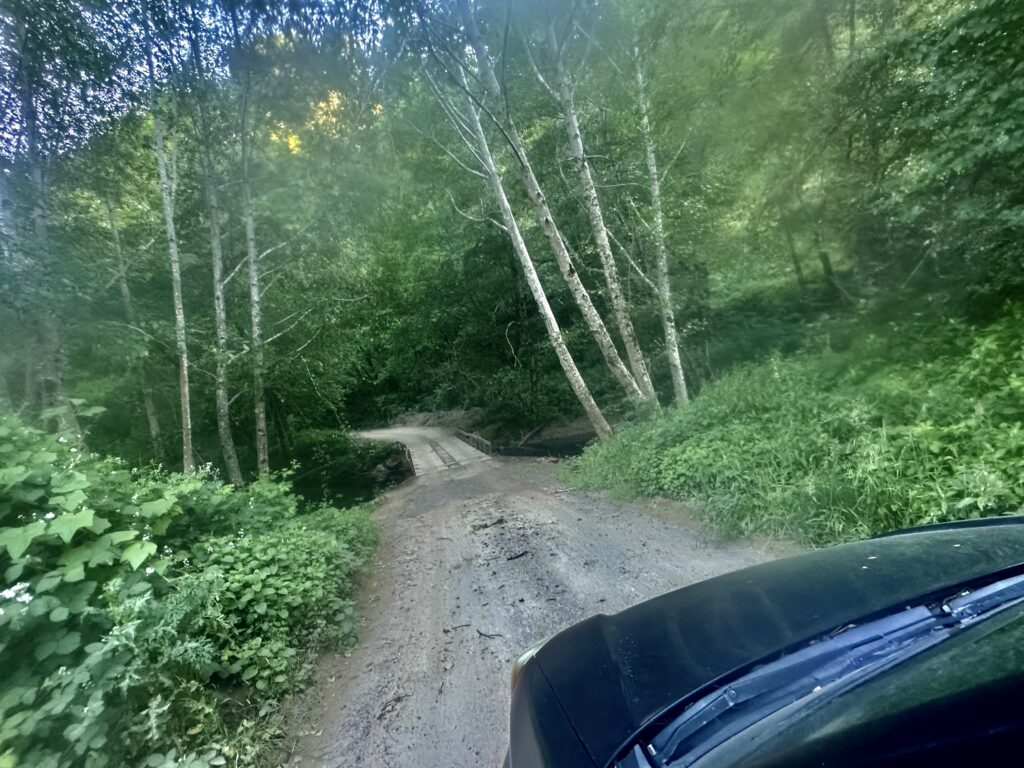
As the smoke died down and spread out, I thought about driving farther into where the crews and PG&E were working. But the road was narrow, and I pictured myself meeting a fire engine head‑on and becoming the story, so I turned back — and was quickly glad I did. As I approached a one‑lane private bridge to leave, a large Chamberlain Creek crew bus appeared on the far side, coming downhill. There was no room for both of us on that bridge, so I crossed fast, pulled up onto the bank, and let them pass. Back on the main road, an even bigger unit came through with its lights on, and I pulled well off the shoulder to give them space.
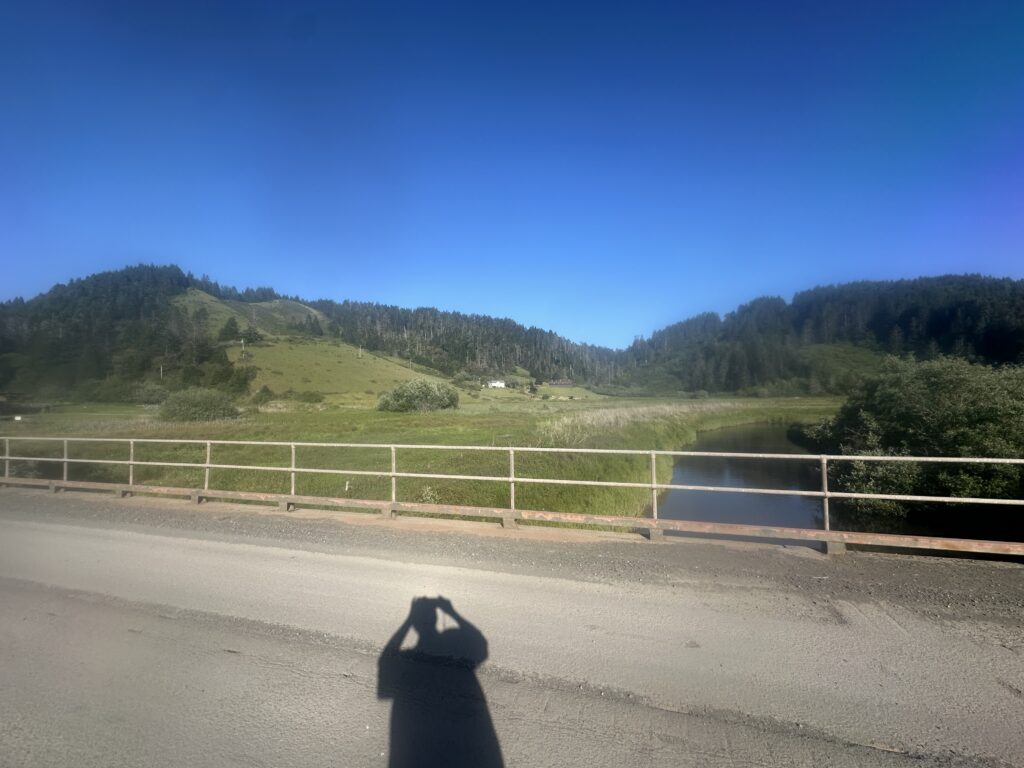
I could see the smoldering brush as I drove along the river. The fire had been beaten down, but this is a bad place to fight a fire — and a bad place for one to take off. The quick action helped. I was told PG&E reported the downed lines immediately, and units from Fort Bragg were on scene in less than half an hour. Cal Fire now dispatches helicopters to wildfires much faster than in years past. Sometimes it can feel like overkill, but not this time; in general, it’s far better to hit these fires hard and early. They’re doing that now, and good on them.
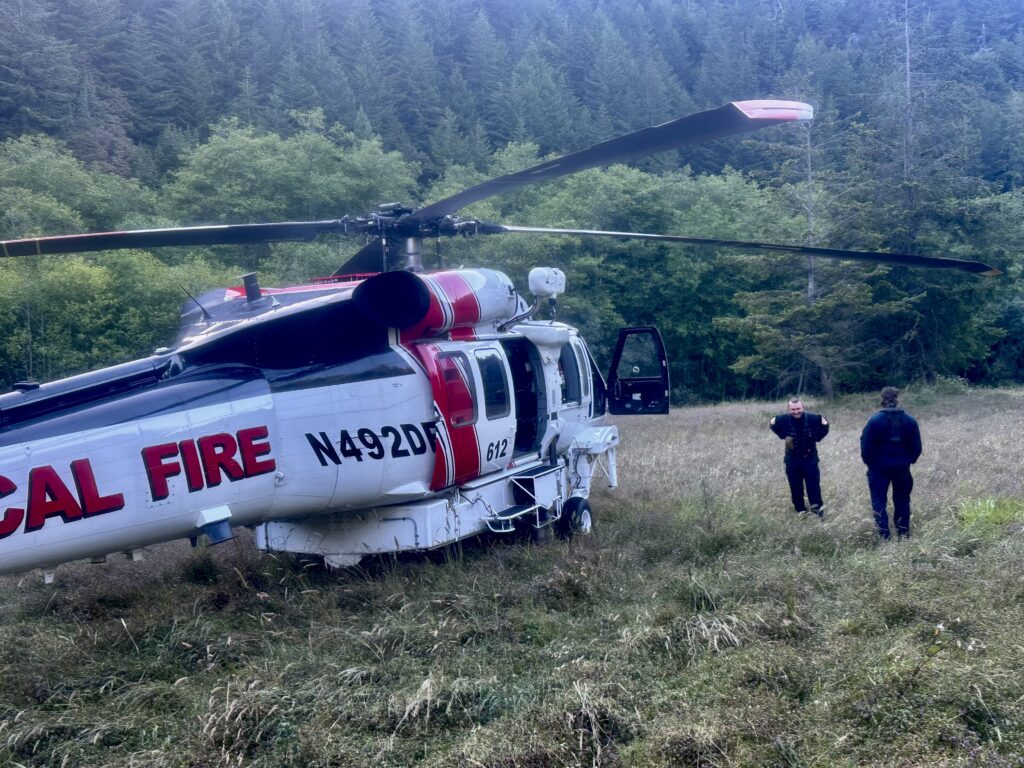
The big helicopter found a field close to the fire where it could set down — about the only spot in that whole stretch of forest where that would be possible. I talked with the crew there; we could all see the smoke but not the fire itself. After at least two drops — the ones I saw — they were told to stand down because ground crews had the fire surrounded, though more units kept arriving. I could hear heavy work underway in the deep brush, and the smoke from the smoldering vegetation was sliding sideways along the river and hanging low in the trees. The high winds, which had topped 40 mph earlier in the day, had eased by then, another big plus.
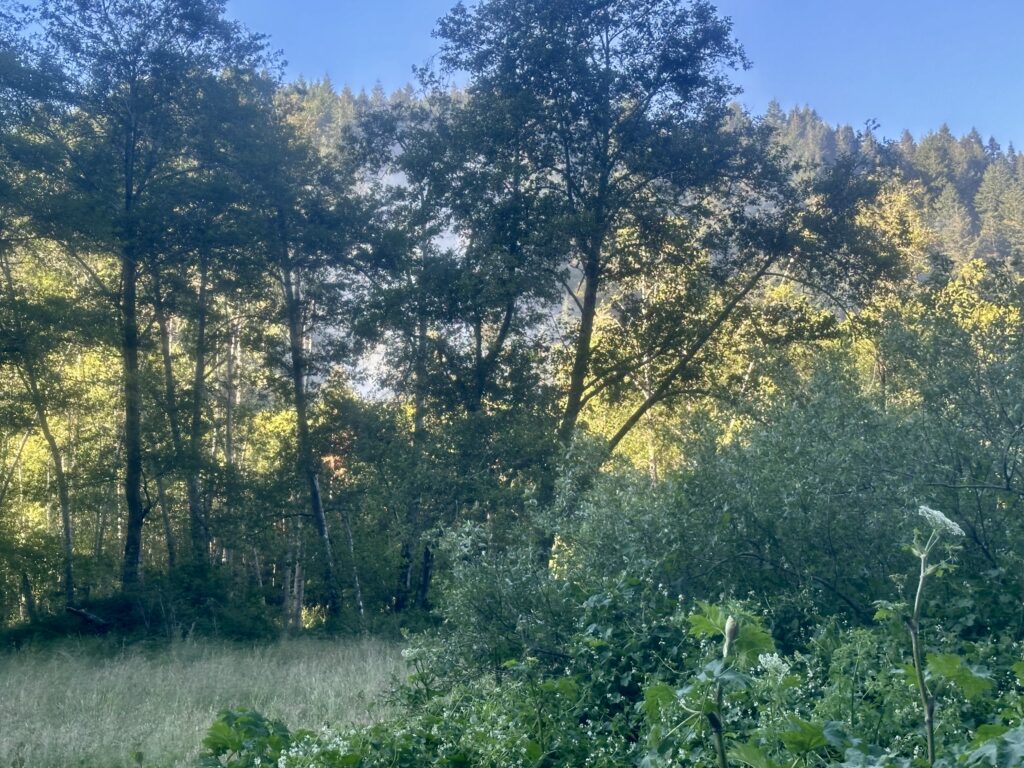
To me, as an outside observer, this fire went remarkably well. Gates were unlocked without delay, and a fire that could have turned into a monster was instead being fought literally in the trenches. Crews had to connect and work without cell‑phone reception. Not all volunteers have the satellite phones that commanders carry, or the communication reach of a helicopter, yet they still managed to coordinate effectively in a difficult patch of forest.
This fire was dangerous despite being relatively easy to reach from the wide road we all came in on — and despite being close enough to the Coast to stay out of the worst heat. With a hot summer predicted inland, and so many forests packed with slash piles and dense brush, we’re going to need to stay diligent.
This is a sparsely populated area with only a few property owners, mostly the Smith Ranch and the Parker Ranch. Much of the surrounding land is being restored as a one‑of‑a‑kind delta for natural wetlands and salmon habitat. The Nature Conservancy leads that work.
The big tragedy I keep circling back to is this: everywhere I drive, I see the new communication lines being buried. Highway 20 alone had five work sites this spring where crews were trenching under the road or carving into steep terrain to get those cables underground. My question is why that work couldn’t have been paired with burying the electric lines — the ones that spark fires, take out power for days, and put lives at risk. The technology exists. The trenches were open. The need is obvious.
Out here, where a single downed line can turn a quiet river corridor into a fast‑moving fire, the cost of doing nothing is always higher than the cost of doing it right. Sunday’s fire was a reminder of how quickly things can go bad, and how much better our odds are when crews hit it hard and early. But it was also a reminder of the work still undone — the kind that prevents these fires in the first place.
In a summer that’s already shaping up to be hot and brittle inland, with forests stacked with slash and brush, the question isn’t whether we can respond fast enough. It’s whether we’re willing to fix the things we already know are broken.