What a million‑dollar home sale means for all of us — and what the Company Store actually sold for
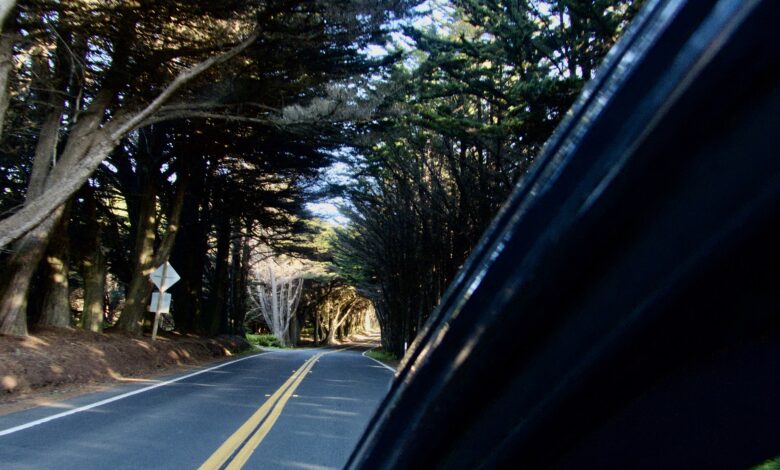
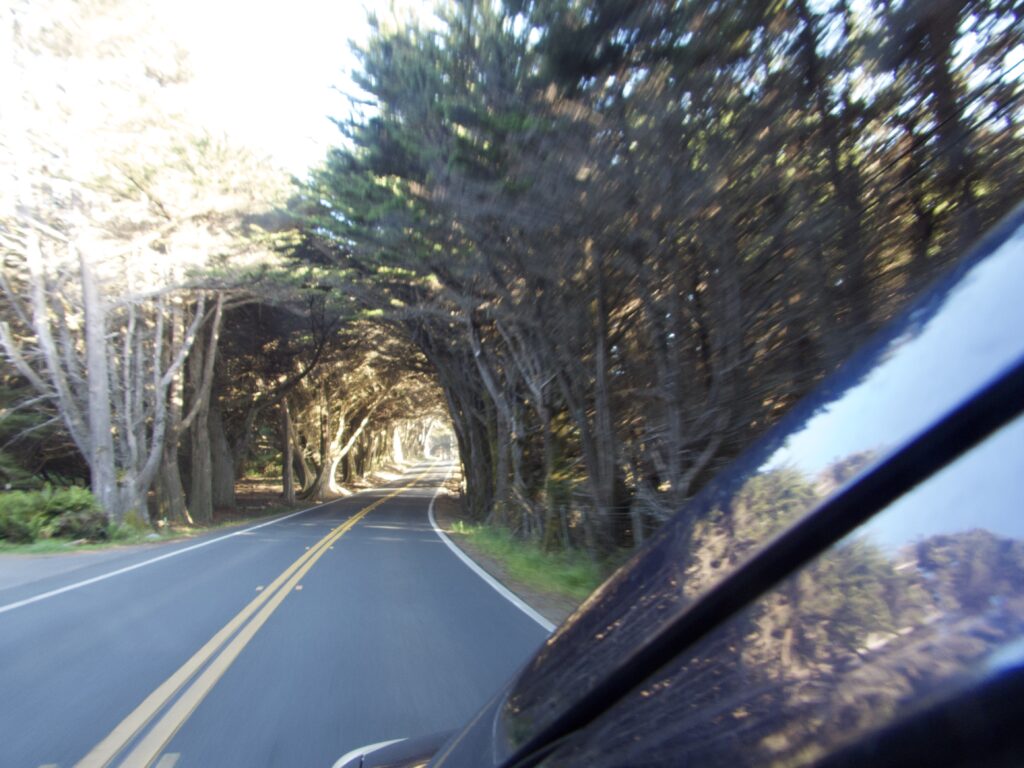
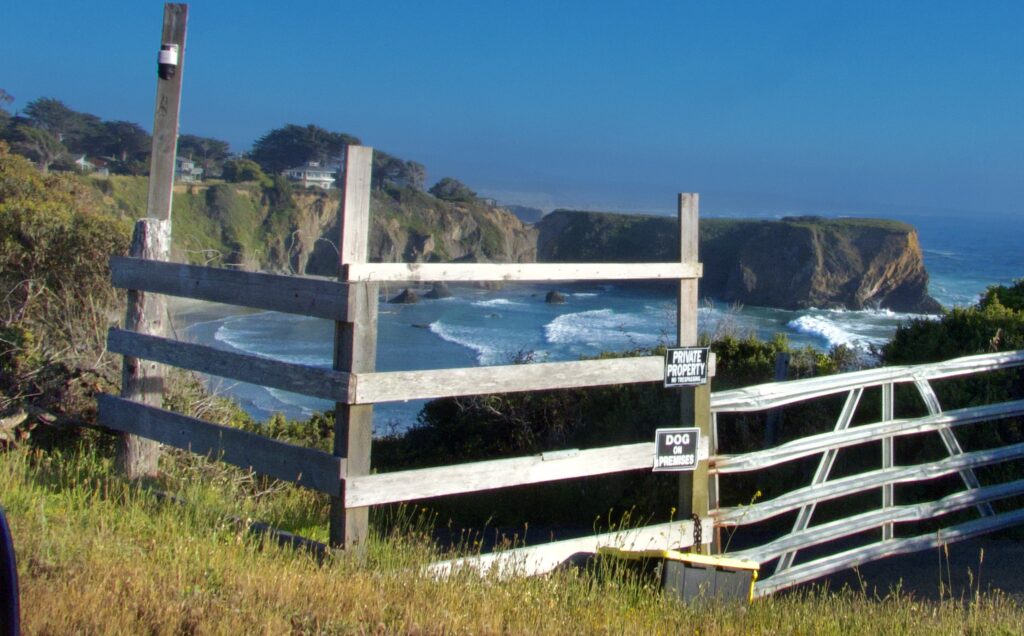
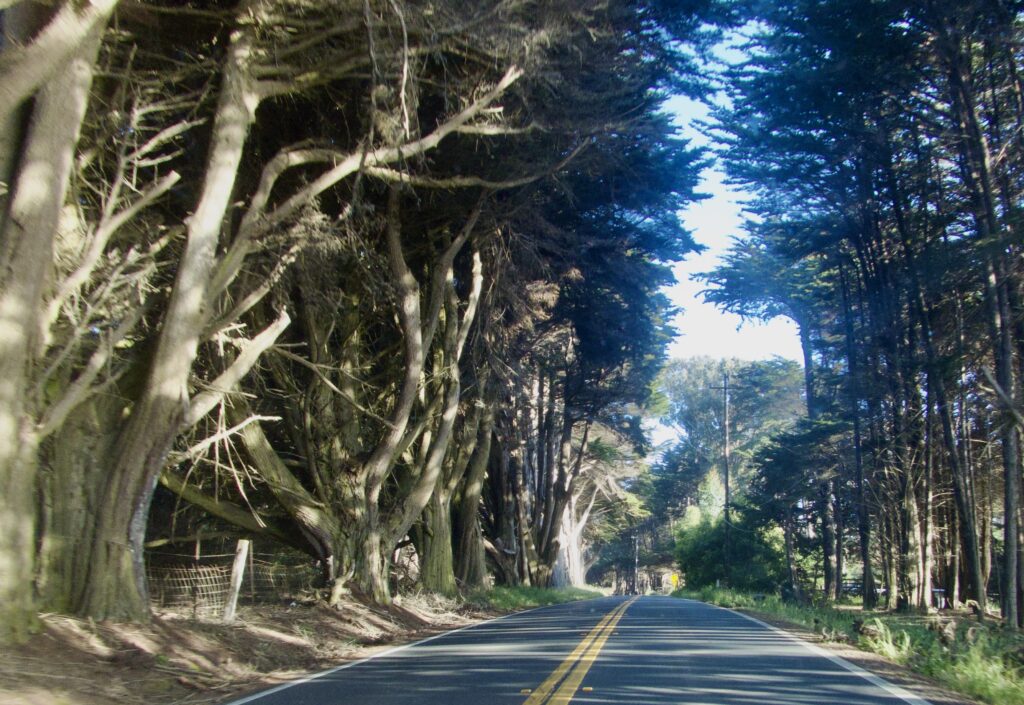
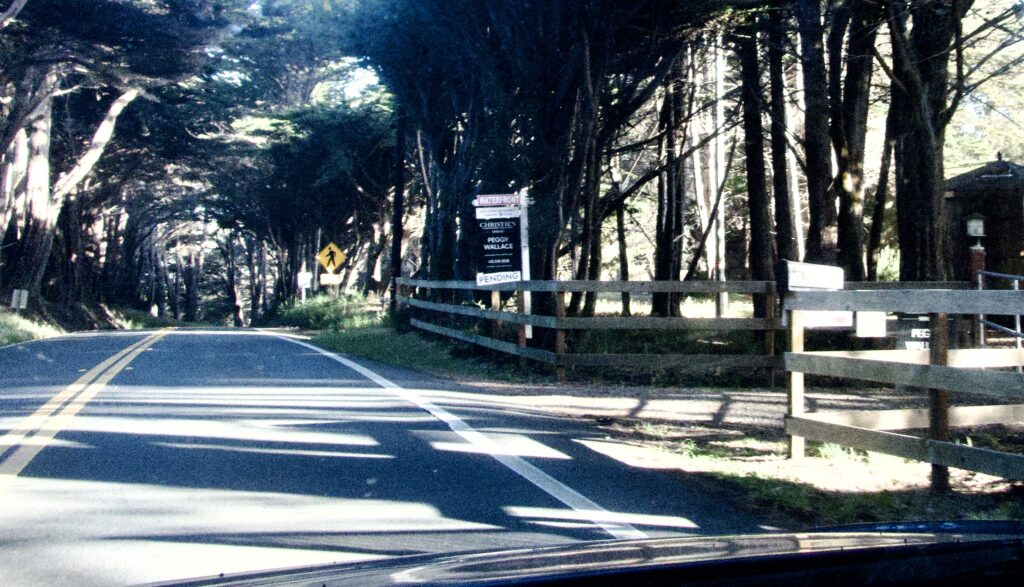
On our way back from a dog outing on the Mendocino Land Trust’s so‑so Newport Ranch trail, we noticed a “Pending” sign on a listing tucked inside the tree tunnel — one of the most awesome stretch of homesites on the coast. These properties come with real acreage, not the postage‑stamp lots that oceanfront mansions in Southern California or Santa Cruz barely fit on. Each site has panoramic ocean views, a beach below, and a level of quiet and privacy that keeps turnover rare. Despite the steady traffic at nearby Seaside Beach, almost no one walks or rides that stretch of road, and the homes are seldom seen, let alone sold.
Dream house row! Why would anybody sell?
A quick records check confirmed how long it has been for this one: this parcel last changed hands in 1996 for $73,000, likely for the land alone. Michael Haun of San Carlos later built a striking, rarely glimpsed vacation home there. The current sale price hasn’t been disclosed, but the property was listed at $1.595 million. Haun died last year at 77, which is almost certainly why the home is now on the market. And this wasn’t the only sharp investment he made.
The listing is still online for now, though it will likely disappear once the sale closes – it can be viewed at the link here — as often happens with these rarely traded coastal parcels. Even without the final price, the asking figure and the property’s history tell a clear story about long‑term value on this stretch of coast.
https://www.zillow.com/homedetails/30200-N-Highway-1-Fort-Bragg-CA-95437/19202781_zpid
Haun’s obituary notes that he loved both his Fort Bragg vacation home and his place in San José del Cabo, Mexico. He seemed to have a Midas touch: a résumé that ran from chemistry and business studies to a career capped as a First Vice President at Morgan Stanley in the Bay Area, plus a passion for collecting Rolls‑Royces and Mercedes. (If I’d been in his shoes, it would’ve been Packards and Chryslers.) I’m fairly sure we met him once and he and Frank talked cars.
People come to the Coast and we pass their houses every day. Some become part of the community; others remain quietly in the shadows. But they’re a resource most rural places don’t have tucked away. And when one of these long‑held properties finally sells, the impact is real. A single sale like this brings a meaningful cash infusion to the county, because the assessed value jumps from the old land‑plus‑construction figure to the new market price. That reassessment helps fund the property‑tax‑supported services we all rely on — fire, schools, the hospital.
That’s why we strongly agree that investing in things like college bonds is a sound idea: if we build it, the money follows. New housing, new residents, and people like Mr. Haun — who didn’t just enjoy one of the best places on earth but also invested in it — will come. I’ve worked in real estate and know how easily escrows can fall apart at the last minute, so we may or may not see a new owner with a good eye for a great spot. But the pattern is clear. When we create opportunity, people step into it, and the community grows.
One has to wonder who the next lucky resident of this place will be, and what they might bring to the community. When new people land here, a friendly Fort Bragg welcome goes a long way — and sooner or later many of them find their way into one of our volunteer groups, where an extra set of hands always matters.
And while we were looking — rummaging through the records, one of Frank’s favorite pastimes — we found that the Company Store sold for $2 million. It’s a number that says something about where Fort Bragg stands right now. The dream house in the tree tunnel is easily worth more than a million, but sharp businessman Mike Haun might have admired Sierra Railroad Holdings’ investment even more than the one being made by the buyer of his old home.
Because here, everything is connected. Every sale, every reassessment, every newcomer, every long‑held parcel that finally changes hands — all of it feeds the same shared future. Property taxes support the fire district, the schools, the hospital. And every bond tax measure — including Measure A — becomes part of that same system, another way a small community builds what it can’t afford to lose. New residents bring new energy. Investments in housing, the college, and the hospital make it possible for opportunity to take root. One piece strengthens the next, and the whole community rises together..
Fort Bragg has been through lean years, but it has also shown what happens when people believe in this place. Values climbed after Haun made his investment in 1996 — rising from a $73,000 land purchase to a 2026 listing of $1.595 million. That’s roughly a 2,085% increase over 30 years. If we grow wisely — if we build, welcome, and keep improving the institutions that hold us together — this town can become the kind of place where opportunity isn’t an accident. It’s the result of all of us pulling in the same direction, one sale, one project, one newcomer at a time.