$7.5 million price tag and 2–3 years for new Covelo bridge; exclusive inspection report reveals long‑known risks — we’ll check other county bridges next

Inspector rated the Green Bridge’s condition “intolerable” in 2024 but did not recommend closure; 23 deck girders were identified for replacement
Covelo’s collapsed Green Bridge will cost roughly $7.5 million to replace and take at least two to three years to rebuild, Mendocino County Transportation Director Howard N. Dashiell said in an interview Monday with MendocinoCoast.news.
The cause of the collapse remains unknown and is currently under investigation by the CHP, based on the information available so far.
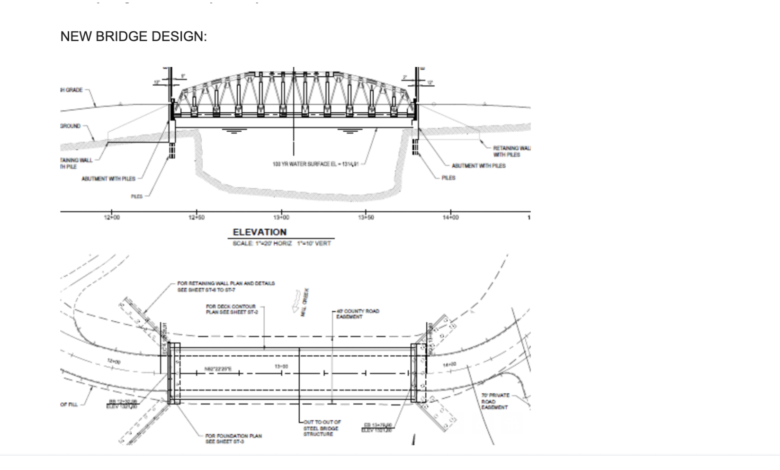
The good news for Covelo is that the county is already prepared to put the replacement project out to bid, following more than a decade of preliminary work, including right‑of‑way acquisition. The new bridge is designed on a shifted alignment that eliminates the sharp curve the old structure was known for.
“This project has been in process for quite some time (we have CEQA/NEPA and Right-of-Way acquisition phases complete) – we are at the “starting gate” for advertising for a contractor to start construction. Nevertheless, it will take a minimum of two years to replace. Maybe three or more. MCDoT plans to get the project started as soon as possible – start Phase I – remove old bridge, maybe build abutments and order the NEW bridge truss to be prefabricated (one year lead time), Dashiell said, in email correspondence with the news media.”
“Phase II (year 2) install new bridge – two-year process at least. In the meantime, there is a detour north and south. The old bridge could not carry heavy emergency loads anyway, so little function is lost. The road will remain closed until new bridge is installed.”
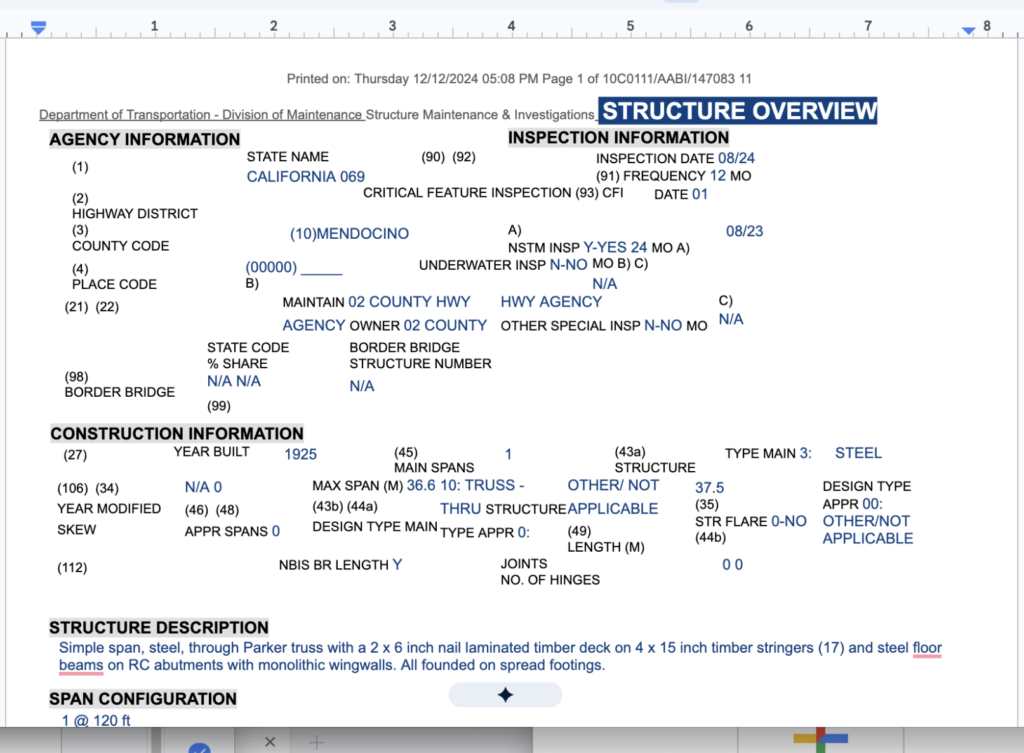
MendocinoCoast.news filed a California Public Records Act request after the collapse. The bridge over Mill Creek failed at about 6:40 p.m. Friday. A 2024 inspection report described the structure’s condition as “intolerable — needs replacement” and gave it a rating of 29 on a 1‑to‑100 scale.
What caused the bridge to collapse? Was the structure struck by a vehicle in the hours or days before it failed? Where was the car when the bridge gave way? Could the driver who was crossing the span have hit the bridge or gone over the side?
At this point, the cause is unknown. The CHP is the lead agency investigating the failure, and no preliminary findings have been released. The county has not identified any structural trigger, impact, or overload.
“At this time Mendocino County Department of Transportation (MCDoT) is not investigating the vehicle collision (assume CHP will do that) nor are we looking at the bridge failure cause – we simply want to move forward with our approved design which was “at the starting gate” for construction,” Dashiell said.
We put those questions to the California Highway Patrol and will update this story as soon as the agency provides answers.
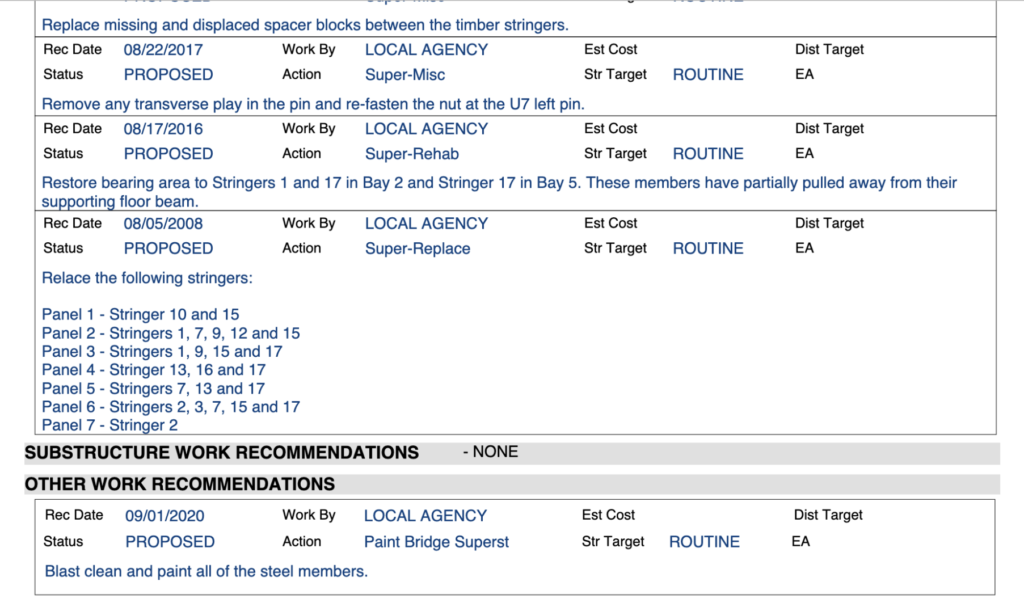
The inspection report shows the bridge had a long list of deficiencies, several of which appear significant to MendocinoCoast.news. We will be gathering additional information on this and other county bridges for future coverage. For now, we are publishing the full inspection report and encourage readers to review it and send us questions we can press with officials. If you have expertise in any of the issues raised in the report, please reach out. This article offers only part of the picture; a full understanding requires examining the inspection document that MendocinoCoast.news has obtained exclusively at this time.
How often are inspections done?
“The bridges are reviewed by county staff regularly, but the detailed report attached are done every two years… these Caltrans special trained engineers from Caltrans are funded by Federal Highway Administration (FHWA) to inspect local bridges,” Daschiell told Mendocinocoast.news.
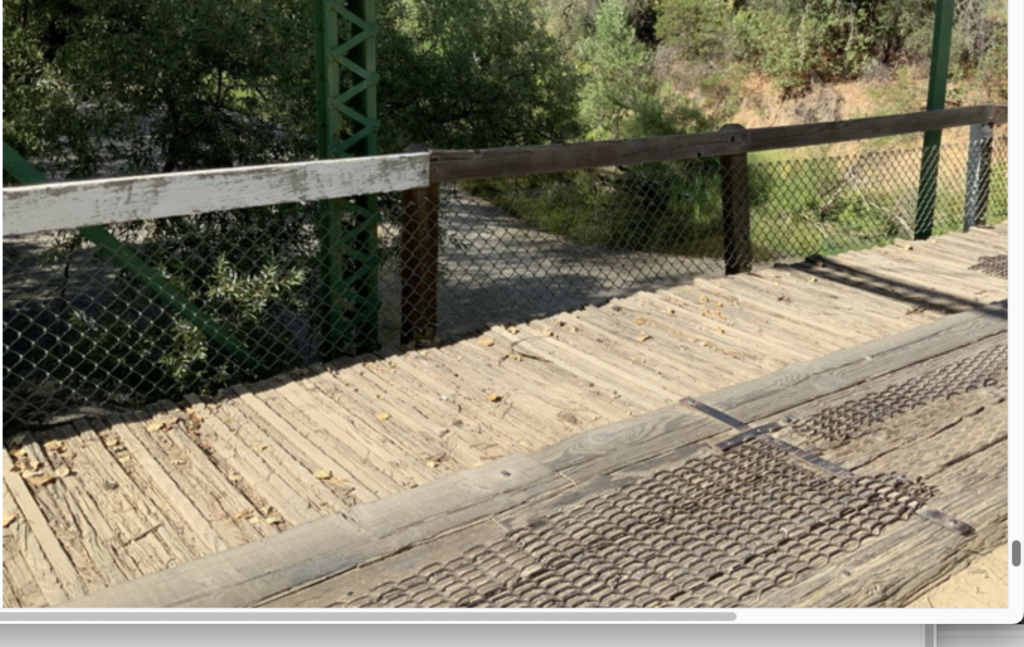
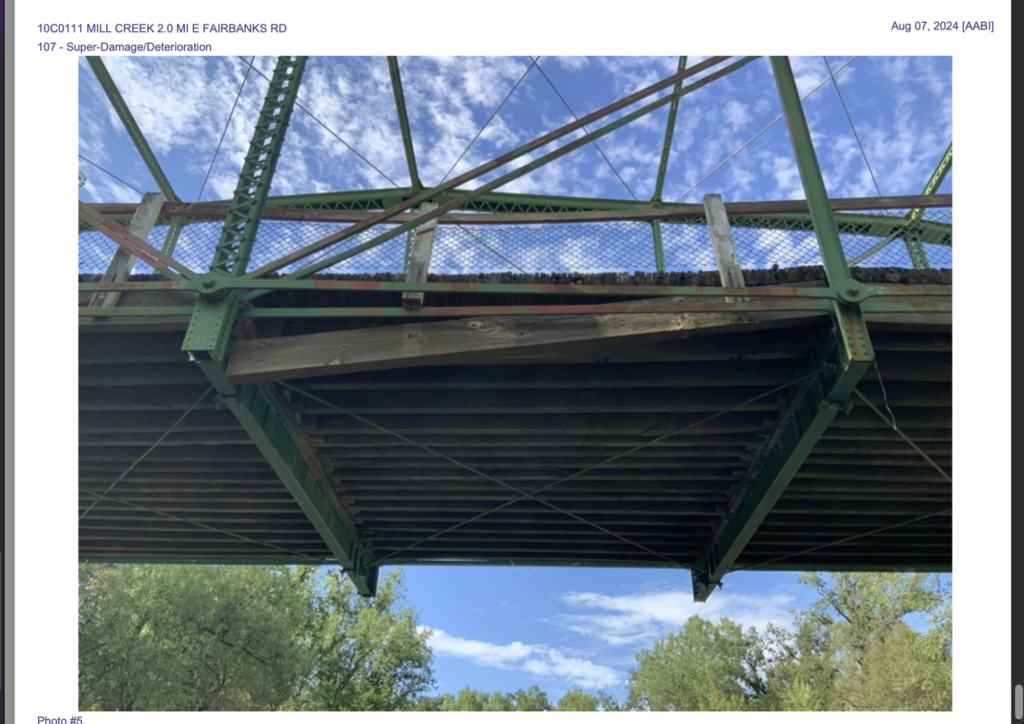
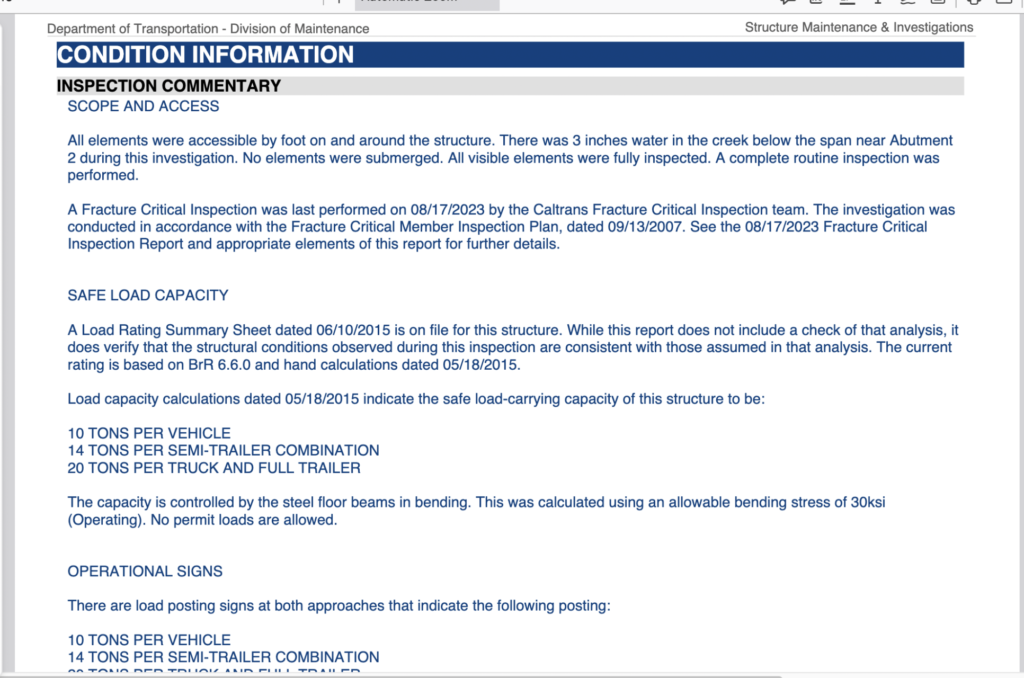
Most of these conditions have been previously reported and no significant changes were noted.
Dashiell said he does not believe the deficiencies noted in the inspection report caused the collapse. He added that county crews addressed several of the issues after the 2024 inspection.
“The minor repairs recommended, which crews attended to were not germane to failure in my opinion,” said Dashiell.
Mendocino County maintains 157 bridge structures, of which about 129 qualify for federal Highway Bridge Program funding.
“The subject bridge (Mill Creek at Hill Road Covelo) is one of those HBP bridges and as I said, we have been processing this bridge for replacement and fortunately are ready to proceed,” said Dashiell.
Are other county bridges safe? Based on what we know, we believe so. MendocinoCoast.news will be reviewing additional inspection reports, especially for bridges readers want to know more about.
If you know of a county bridge you believe deserves a closer look, please email us at frankhartzell@gmail.com. For now, we’re focusing on the 157 structures Mendocino County maintains — though not all of them at once.
Mendocino County has three categories of bridges, and none are part of the federal Interstate Highway system.
- State bridges, which are maintained by Caltrans.
- County bridges, which are inspected by Caltrans but maintained by the county.
- Private and non‑road bridges, such as the Pudding Creek Trestle in Fort Bragg, which is used only by pedestrians and cyclists and maintained by California State Parks. Logging companies also maintain many private bridges throughout the county.
Inspection requirements vary for these non‑public structures, and they are not included in this story.
Dashiell answered our questions about the cost of the new bridge, which is about $7.5 million.
“You asked about your estimate on funding… let me say that thus far all the design, environmental studies, right of way acquisition – everything needed for going to bid for contractor is about $1.5 million… then the guesstimate for construction is about $6 million… when we report bid results to the Board of Supervisors we will know for sure, ” Dashiell told Mendocinocoast.news.
“The proposed new bridge will have a length of 147 ft. and a clear width of 27 ft. The new bridge was scheduled for phased construction within the next two to three years and the intention of MCDoT is to proceed with that project which is designed and certified under the California Environmental Quality Act (CEQA) and National Environmental Policy Act (NEPA) as soon as possible; but the likely timeframe is still two to three years,” Dashiell said.
Couldn’t it be done faster with a prefabricated box girder bridge for example?
“There are other bridge construction methods which could be done in one season (e.g. standard concrete bridge)… But during the public process the public wanted “architectural features” to be similar to the old bridge, so we set up the bridge pictured.. problem is once you let a contract the “lead time” to prefabricate the new weathering steel pony truss is a year, therefore we will need to close the road longer,” Dashiell told the media.
‘If you are thinking why not change the design well just know reprocessing all the approvals might take five years… we are so close to proceeding with the approved design pictured below that we will be better off just staying on schedule… maybe accelerate the abutment construction this summer BUT… even that would require an early permitting, which is dubious.
‘Two years at best… three years likely… start changing design getting more right of way… five years or more… you can see below we need to build in the same footprint… we should just stay with our present project schedule and 100% federal funding… speeding it might mean a county cost share for emergency funds which might take longer, ” D said.
Dashiell said the county is in gear this week to get the fix going.
‘Just know MCDoT will be talking to state-federal agencies and looking for the best way forward as soon as we can.”
Our previous story which pinpoints the location.
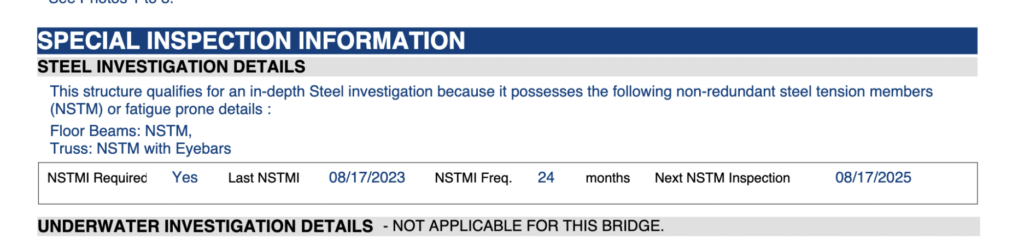
The inspection report shows the bridge qualified for a special steel inspection, in part because it contained non‑redundant steel tension members — components that can leave a structure vulnerable if a single point is overstressed, since there is no backup load path. That type of vulnerability is one of several potential factors investigators will consider in this collapse, but no cause has been identified. It is not yet clear whether the National Transportation Safety Board investigates county bridge failures of this type; we have contacted the agency and will update this story when we receive a response.
Mill Creek Bridge is located on Hill Road (County‑maintained Road CR 327B), about 3.25 miles southeast of Covelo in northeastern unincorporated Mendocino County. The project site is at the point where Hill Road crosses Mill Creek, roughly 1.5 miles east of the Hill Road–Dobie Lane intersection, at Milepost 2.05.
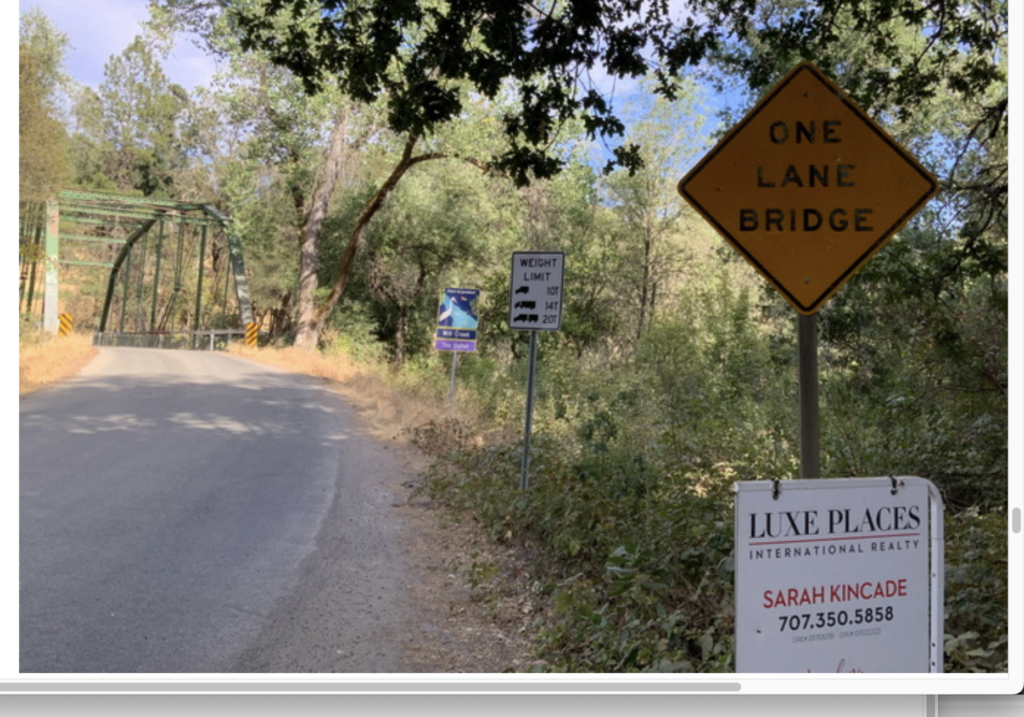
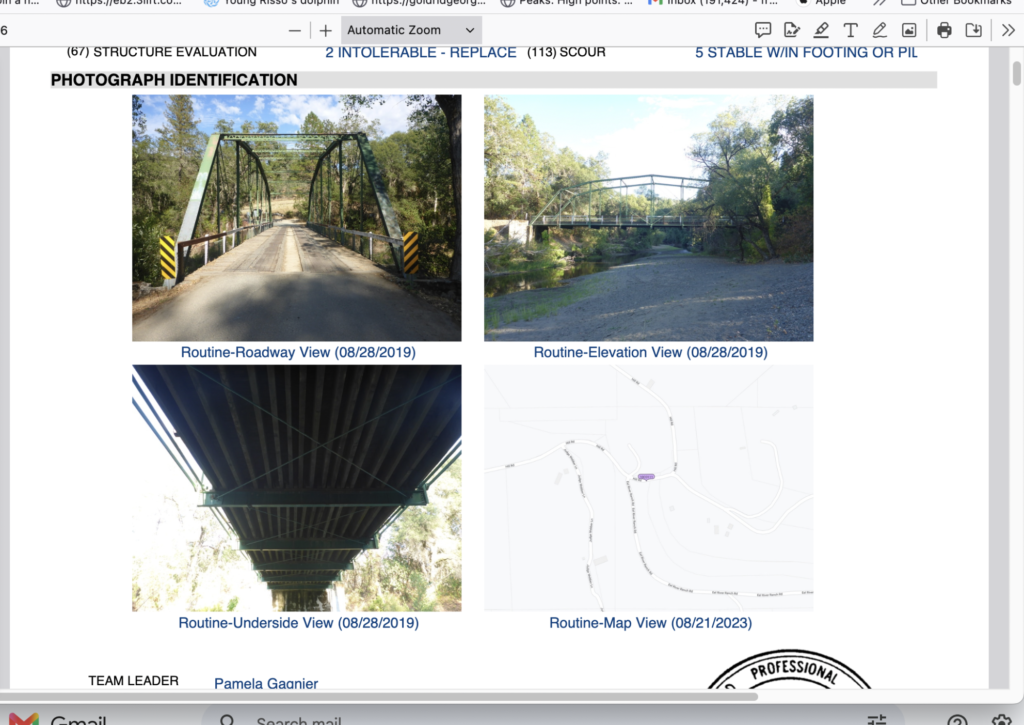
We cross our bridges the way we breathe — without thinking, trusting the quiet work they do beneath us. But every span has a story, and some stories only surface when the boards groan, the steel shifts, or the headlines force us to look down instead of straight ahead. This collapse leaves a question hanging over every daily commute in Mendocino County: How well do we really know the bridge we cross without a second thought?
Most days, the answer is simple — we don’t. We drive, we roll on, we assume the structure beneath us is as steady as the routine that carries us across it. But moments like this remind us that safety isn’t a feeling; it’s a fact that has to be earned, inspected, maintained, and proven.
And so the next time we cross a familiar span — the one we’ve crossed a thousand times — we may find ourselves glancing at the rails, the timbers, the steel, wondering what stories they would tell if we asked. Wondering what we’ve missed. Wondering what we should know.
That’s the work ahead. And we’ll be doing it, bridge by bridge, right here at MendocinoCoast.news.