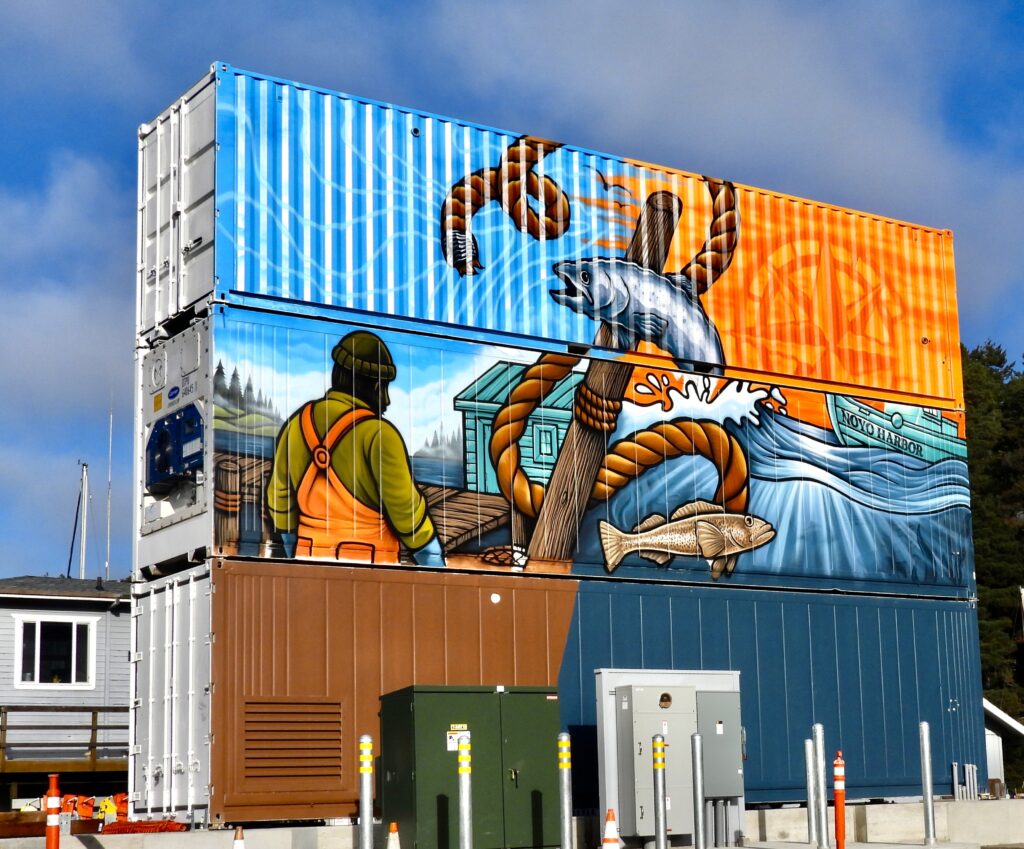
Longhorn ranchers buy old Thanksgiving Coffee site — plan upscale charter boat business as Noyo Harbor shifts again; what else is changing on the waterfront

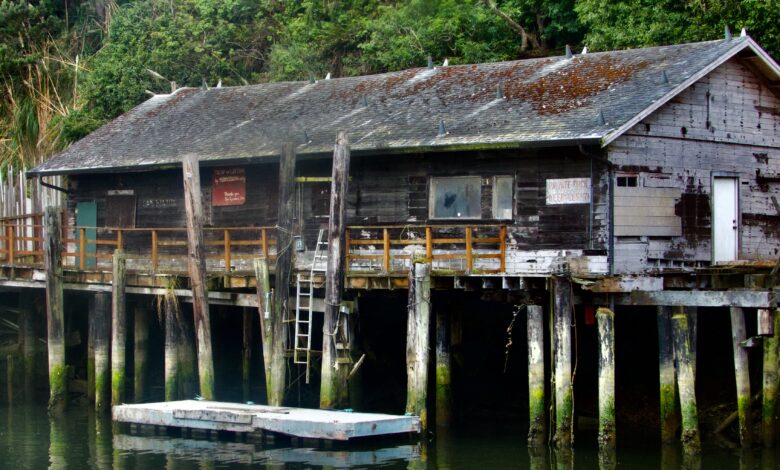
A Penn Grove couple known for their longhorn cattle and for restoring the century‑old LaPorte General Store has purchased the old Thanksgiving Coffee building on the water’s edge in South Noyo Harbor, where they plan to launch an upscale charter‑boat business.
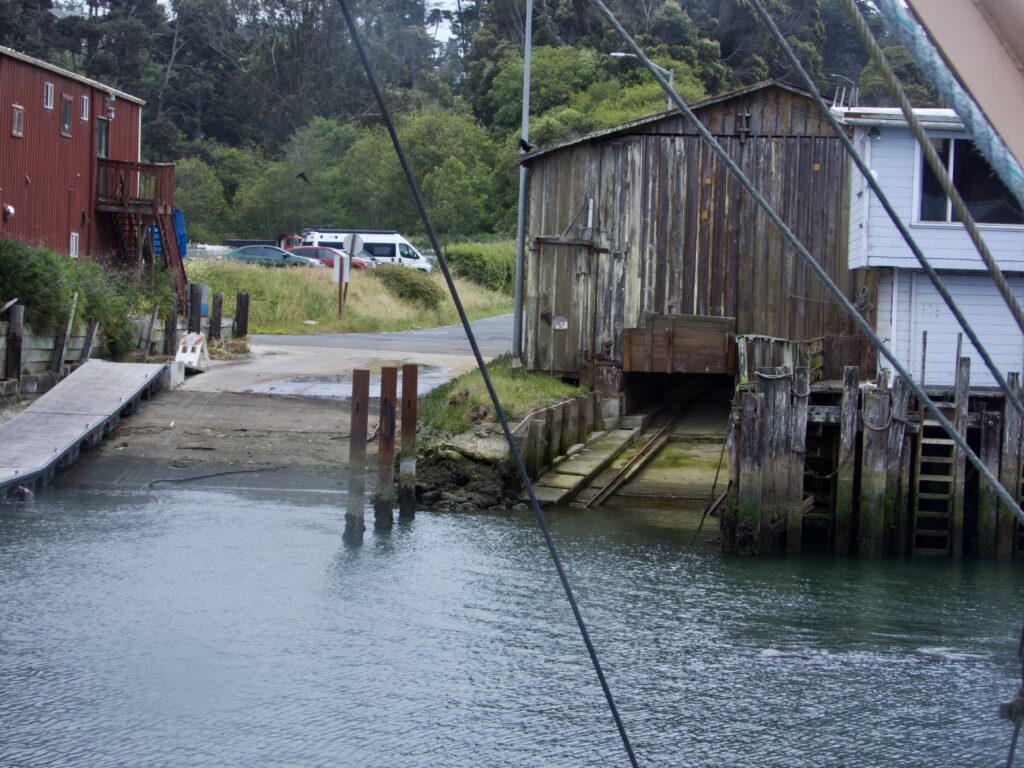
The building, already well‑worn when Paul and Joan Katzeff bought it in 1974, is slated to be replaced under the plans Neal “Mac” Siller is developing.
“We’re going to be taking the building down and putting a new building up. We will be utilizing some of the old wood in the new building, but it has to come down. We plan on doing a complete revamp there,” Mac Siller said. Mac Siller is the key player in a nationwide construction company, Odin Environmental.
“The pilings and the bones of the building are very, very sad underneath, and yes, we will have to change those out. We will have all concrete piles underneath.”
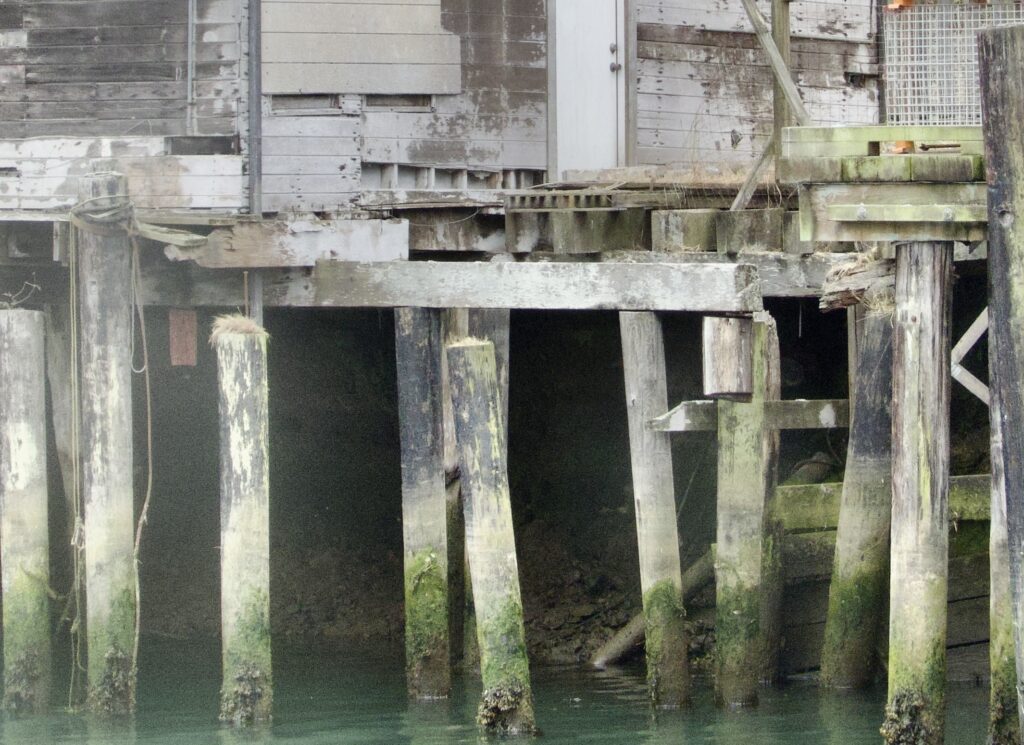
The lot at 19350 South Harbor Drive is only 13,500 square feet, and the building itself sits on telephone‑pole pilings over the river. It belonged to the Caito family before being sold to Paul and Joan Katzeff, though the earlier ownership history was too murky for us to see through. A similar vintage structure — the old Alioto Fish Company building two doors down — was demolished in 2024. That small lot is now listed for $690,000. Siller is one of many Central Valley residents who have developed a deep affection for Fort Bragg.
“About 10-15 years ago, I was in Fort Bragg about two weekends out of every month,” he said.
And he says he’s glad to be carrying on the entrepreneurial spirit of the Katzeffs, who built an internationally known coffee brand from this humble spot on the river.
County records show Neal and Andrea Siller Children’s Trust paid $240,000 for the property.
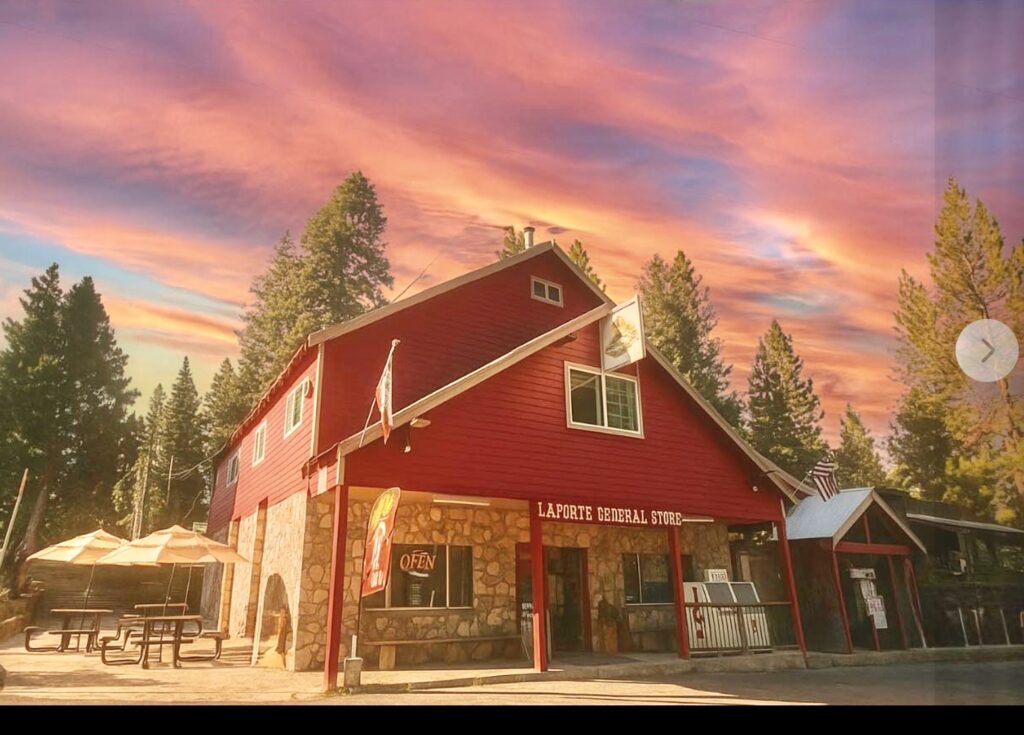
The couple made a similar purchase in another of their favorite places to visit. In 2024, they paid $300,000 for the LaPorte General Store, a lifeline for the mid‑ and high‑Sierra community of Strawberry Valley. Residents had mounted a campaign to save the store — the only source of gasoline for 20 miles — after years of deferred maintenance left the building at risk and the business failing. The Sillers stepped in and restored the historic structure, with Mac bringing in his construction company to stabilize and rebuild what the town considered essential. He had long loved visiting LaPorte, much as he loved visiting Fort Bragg. Andrea wasn’t convinced at first.
“My wife wasn’t real, real happy with me about it at first.. I didn’t even tell her we bought it, but we bought it, and I took her up there and showed it to her. She was not happy when she first saw it, but we ended up having a great time in the community there. We revamped that place, and it’s absolutely beautiful there. And yet they’re so freaking happy, and it’s in full operation, not making us much money, but, I don’t need to make a living there, you know? I mean, I can just carry the store, it’s great for the community. I love LaPorte and went there for years and now get to be a part of the community.”
But a fishing boat that serves wine — will that idea find traction in rugged, old Noyo Harbor?
“A lot of wives don’t want to go out on a fishing boat, but this will be one people will want to go out on, even if they don’t like fishing. The guys can still have fun and do some fishing but the wives could be in a really nice cabin, its called a ‘yacht fisher’, and comes with a living room, and hopefully, it’ll be the best of both worlds”.
Most people we spoke with believe the building Siller just bought is the oldest structure left in Noyo Harbor. Even if that’s true, its significance stems less from its age than from the fact that the Katzeffs used it as the launchpad for a coffee company that became known worldwide. Beyond that association, it’s hard to see the building itself as having much historic value.
While Noyo Harbor is known for dreamers and for ideas that never quite materialize, Siller says he’s serious — and wants to move fast, aiming to make it happen within two years if that proves possible.
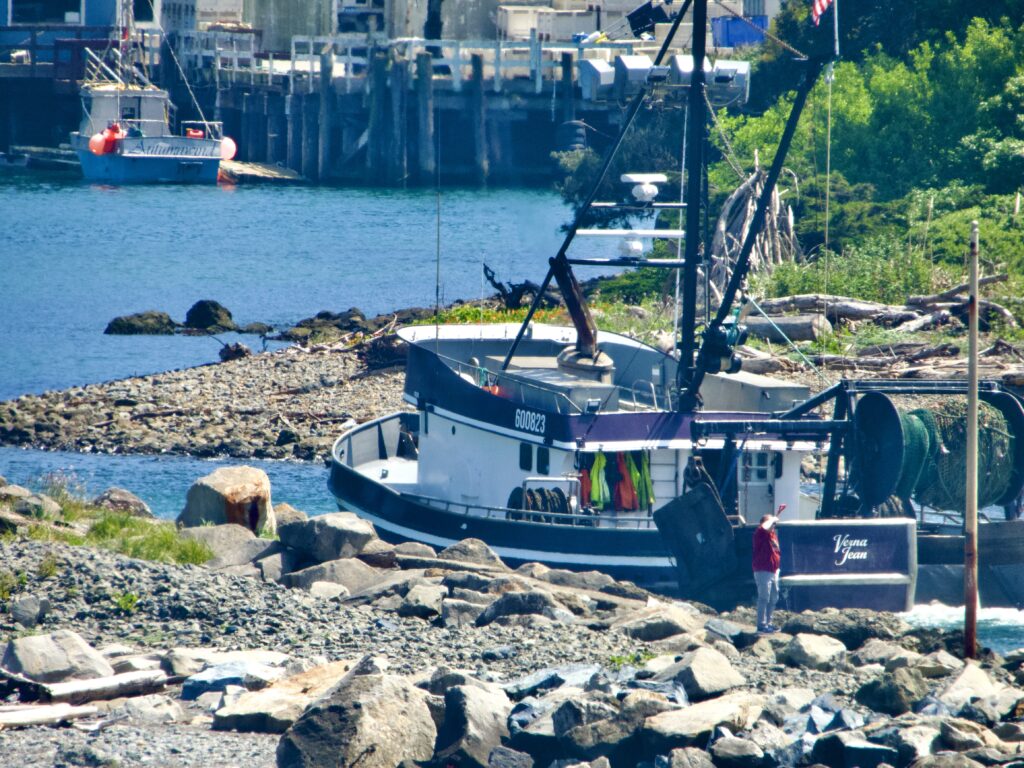
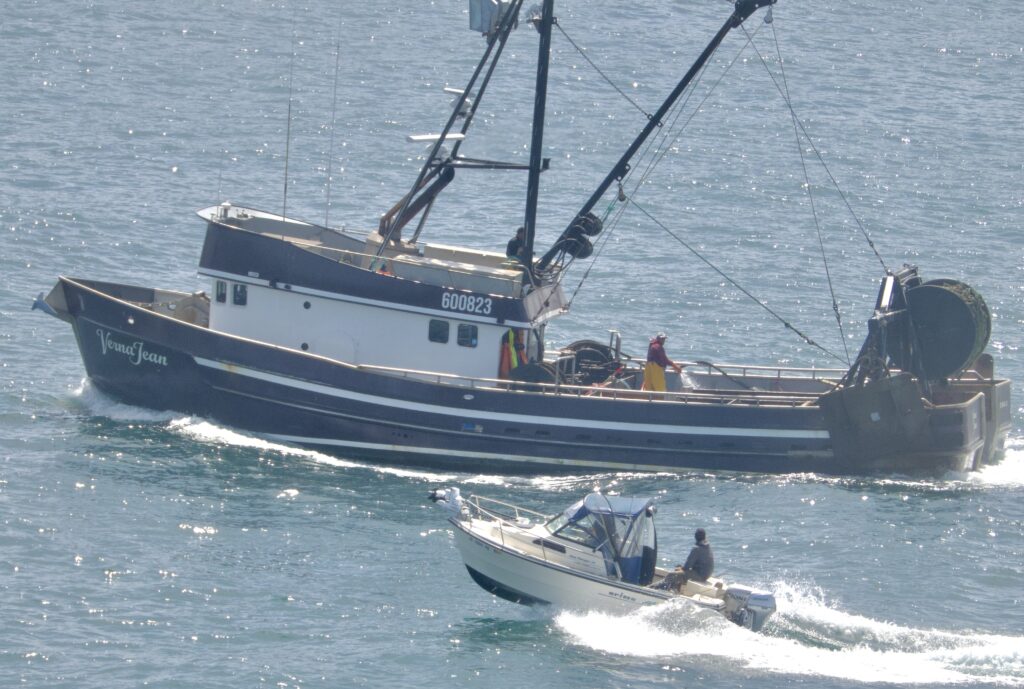
He envisions buying a 60‑ to 70‑foot vessel built for comfortable voyaging. The size isn’t unrealistic; one of the fishing boats that regularly uses the harbor comes in at 83 feet.
Siller struck up a friendship with local builder Travis Swithenbank in the mooring basin, where each man had their own fishing boat.
Siller says he’s glad to have Swithenbank working with him on the plans. He has engineers and planners evaluating the concept, and he knows he’ll have to navigate the often difficult and time‑consuming California Coastal Commission process for anything to move forward. He believes his case could be helped by the Commission’s awareness of the building’s deteriorated condition and the need for a major overhaul.
The family owns or is a partner in about 40 cattle ranches. Mac Siller says his wife, Andrea, oversees the longhorn operation. They’ve been featured in news and social‑media reports for their work tracking down top longhorn genetics and developing a low‑fat, flavorful beef. Their home base is in Yuba‑Sutter, with their primary ranch in Penn Valley. They also own a ranch in Texas, and their largest operation is in Glenn County, just east of the Mendocino National Forest near Elk Creek — an area traveled by the well‑known Tule/Roosevelt elk herd.
Siller said it has been difficult to find facilities willing to humanely slaughter longhorns, noting that some insisted the horns be cut off with a saw before processing.
“We just couldn’t do that to the animals.”
A slaughterhouse now under construction in Colusa County is being designed with the most humane features possible and will be equipped to handle longhorn cattle. Once it’s operating, Siller says he hopes to expand their meat sales — including offering some in Fort Bragg.
Mac Siller is also in the rice business, and his “real” job is construction. He spoke with Mendocinocoast.news from the Florida Everglades, where he was working with his construction firm, Odin Environmental, which has offices around the country.
“We’re building the largest wetland restoration project in the history of our country, the Everglades Restoration Project for the Army Corps of Engineers. “ The 10 billion, 35 year project involves numerous sites and companies. Mac Siller is identified as a top executive and operational leader of the national construction company, Odin Environmental.
“Alongside CEO Louay Owaidat, Mac Siller helped build Odin into a premier environmental and geotechnical services provider, focusing on both public and private sector projects nationwide. He previously held the role of Chief Operating Officer (COO) and continues to guide the firm’s strategic initiatives, project management, and heavy civil construction operations,” a company excerpt says about Mac Siller.
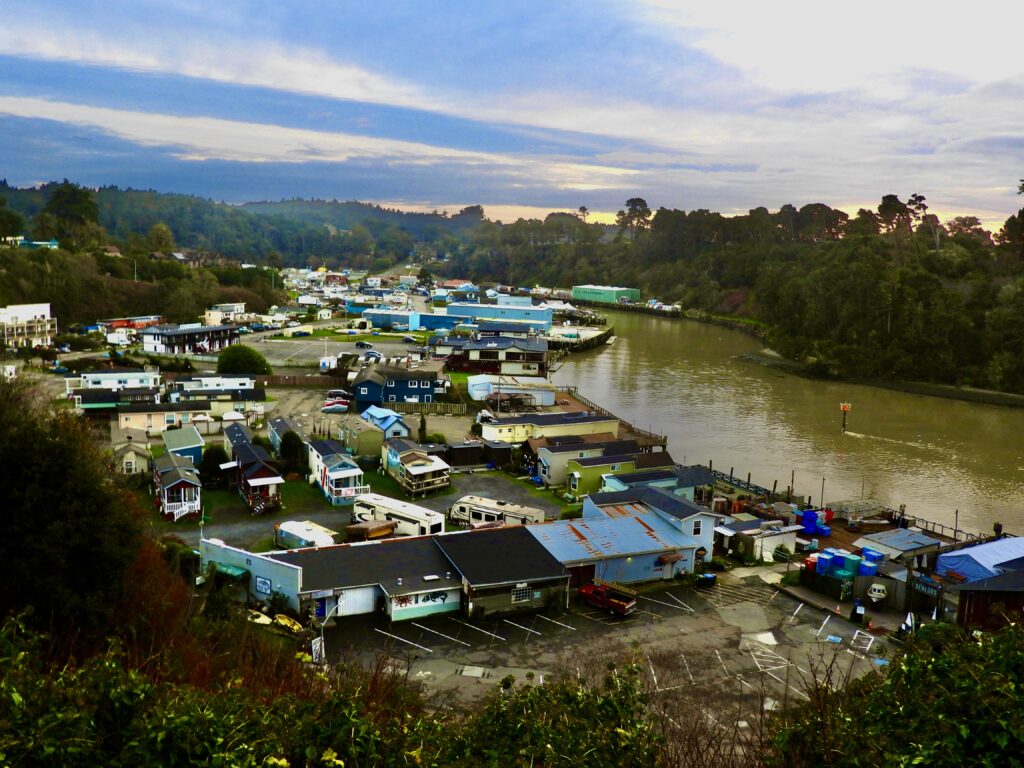
The industrial stretch of South Noyo Harbor was once one of the state’s strongholds of fish‑processing companies run by old Italian families who helped build the local industry. Noyo Harbor had the Caitos, the Aliotos, the Tarantinos and the Carines, who together created a kind of San‑Francisco‑style seafood grotto culture on the docks, with the Carine’s serving the food. But shifts in trade, transportation and the broader fishing economy steadily eroded that role. Entrepreneurs like diver Bob Juntz later carved out the niche urchin industry, but global markets and overfishing eventually slowed that sector as well.
One industry that has grown steadily is recreational fishing boats for hire
The creation of the Noyo Harbor District in 1950 marked the beginning of what would become the party‑boat era. Before then, there was no space — or culture — for recreational deep‑sea fishing. Commercial vessels tied up two deep along both sides of the river, and skippers fought for dock space; there was simply no room for amateurs. Once the district — and later its mooring basin — opened up new berths, everyday Joe and Jill anglers began heading out, and demand quickly grew. The party‑boat business took off from there.
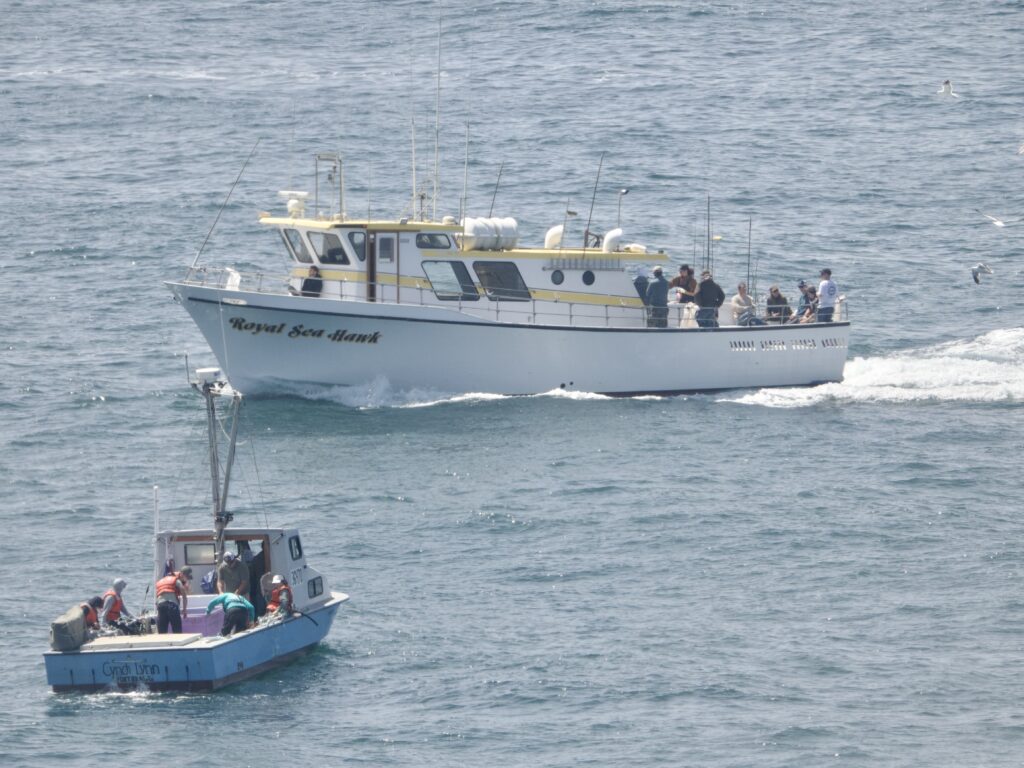
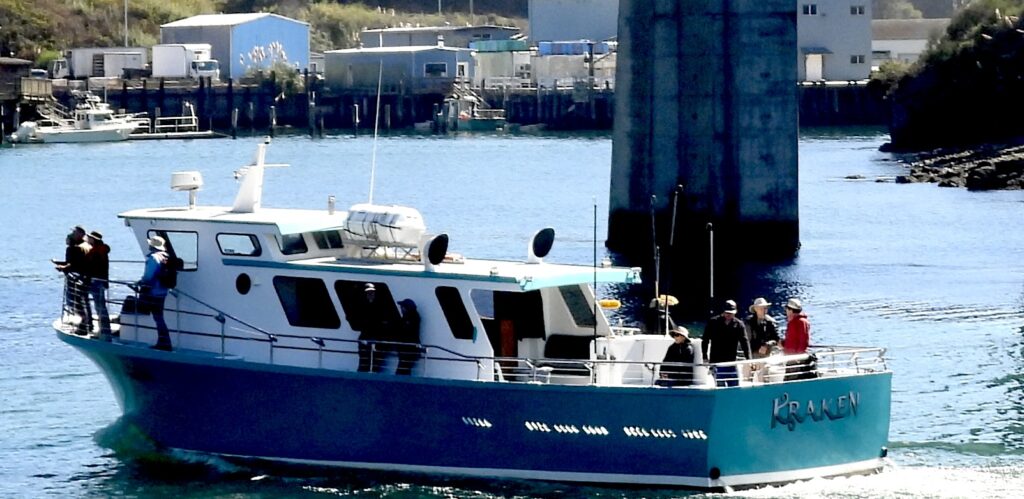
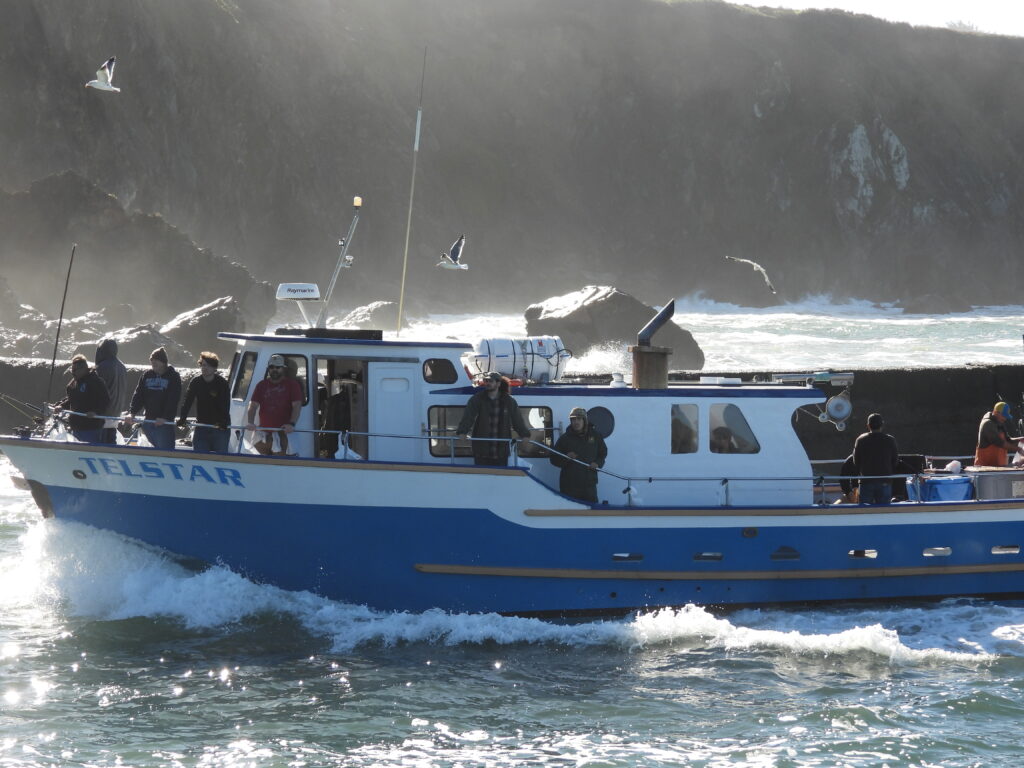
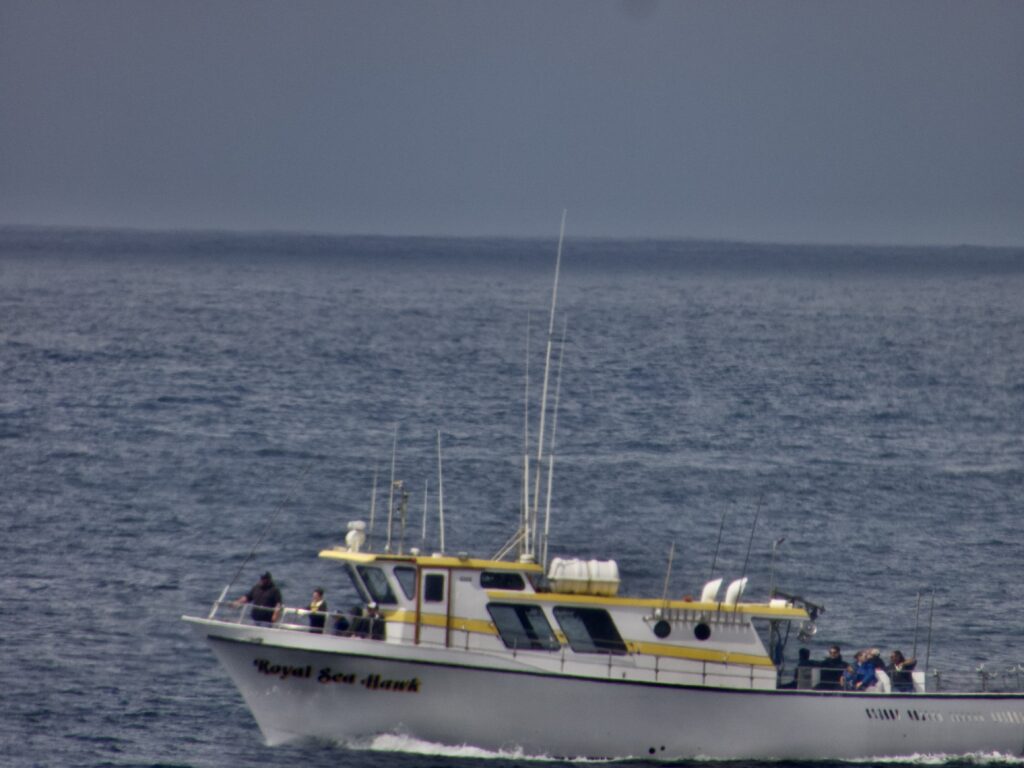
Today, recreational fishing lands more of some species than the commercial fleet, and the party‑boat trade is highly competitive. The Sea Hawk, Royal Sea Hawk, Kraken, Telstar and Trek II are among eight vessels now running fishing, crabbing and whale‑watching trips out of north Noyo Harbor. South Noyo Harbor’s mooring basin has several “six pack” fishing boats.
We confirmed that Noyo Harbor Tours — the small, longtime operation run by former commercial fisherman Dan Platt out of Dolphin Isle — will be back this summer, though with limited hours. Platt is semiretired.
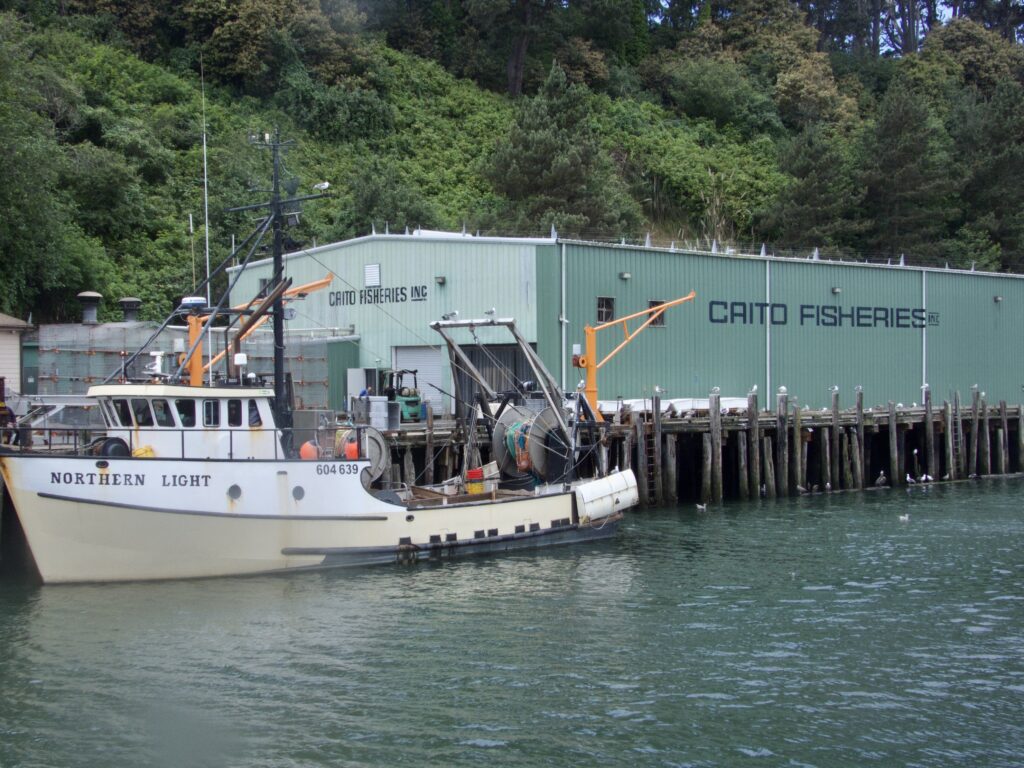
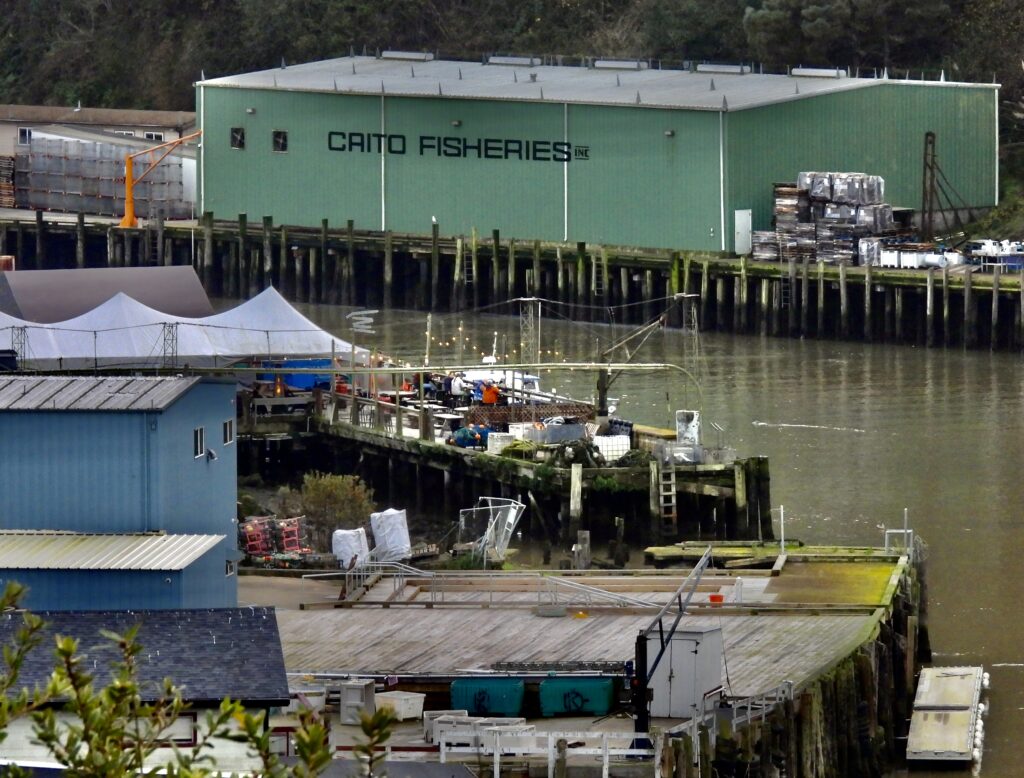
The dramatic end of Fort Bragg’s era as the headquarters of a major fish‑processing operation came in 2023, when the Caito family sold their empire, long based in Noyo Harbor. The entire business was acquired by Southwind Foods, including Caito facilities in San Francisco, Eureka and Crescent City, as well as the Fort Bragg headquarters. Locally, the one‑acre property with the large blue building sold for $1.8 million to Bragg Management of Long Beach. The Galletti family and Caito family were friends and business associates going back half a century before the sale.
The Siller property sits adjacent to the former Caito operation, which still carries the family name. Katzeff had purchased the building from the Caitos. The family retained only one small parcel — the one on the opposite side of the property the Sillers just acquired.
Brand‑new ideas are also in motion. The Noyo Center for Marine Science, which purchased Carini’s restaurant, has been providing research support and encouragement to two emerging urchin‑farming operations — one on each side of the harbor.
One door down from the new Siller property is another recently purchased Fort Bragg icon. Wild Blue Aquaculture, run by Jake and Aubree Gord, bought the old Makela building. Jake, an urchin diver and entrepreneur, saw the potential immediately. Their mission is straightforward: “Restore Northern California’s kelp forests by turning overabundant purple sea urchins into premium, locally ranched seafood — creating coastal jobs and a regenerative aquaculture model from Noyo Harbor, Fort Bragg.” Their story and plans are detailed on their website — it’s well worth a look.
https://wildblueaquaculture.com
They bought the building last year from the boat‑building Makela family for $575,000. Jake and Aubree Gord’s plans could turn one of the Coast’s biggest problems — the purple‑urchin barrens — into one of its biggest assets by using the old Makela’s Boathouse to farm purple urchins for food. If a viable market can be established, the wild urchins offshore could be harvested. Those urchins are currently tiny and starving, but if thinned and then harvested regularly, the hope is they could become a sustainable economic engine for Noyo Harbor.
On the other side of the harbor, Tom Trumper and partners are planning a second urchin‑farming operation. Trumper, a former ocean diver who once owned a processing company, is exploring a new approach to purple‑urchin aquaculture, though details of the project have not yet been publicly released.
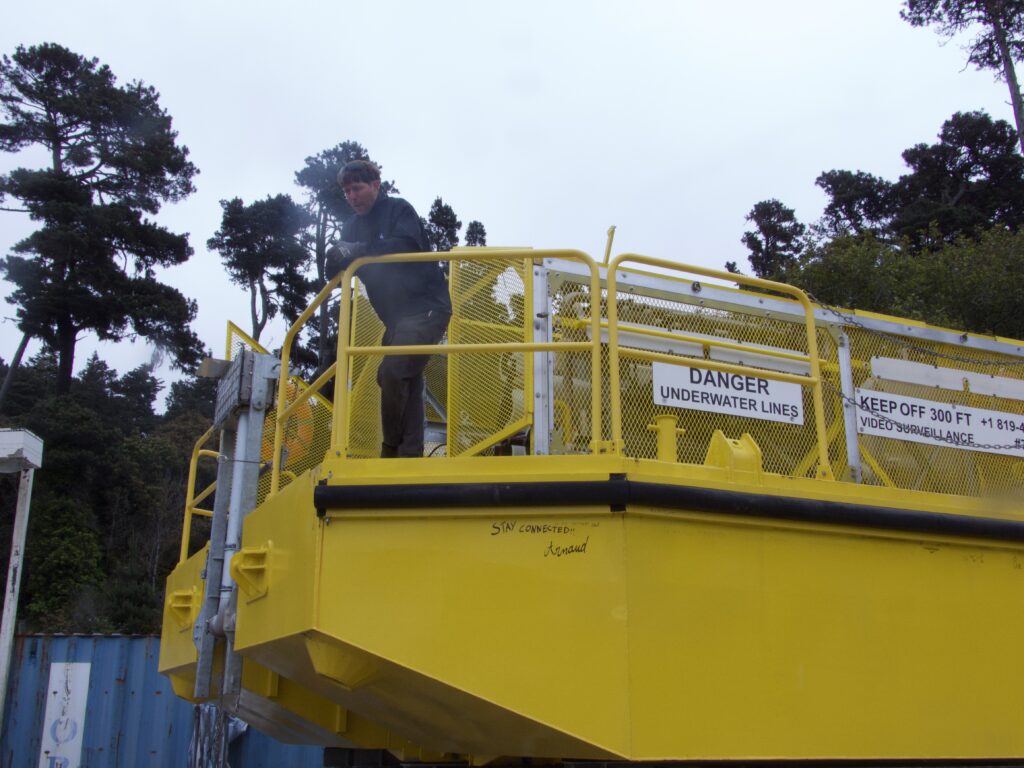
Something entirely new is also on the horizon: the experimental Oneka “Iceberg” wave‑powered desalination buoy that the City of Fort Bragg and Oneka Technologies expect to launch in late June or July. The large, bright‑yellow, square buoy — essentially a floating wave‑powered desalination station — will be deployed on the highest tide available and on a calm day, officials said.
A 108‑foot ship will enter Noyo Bay to deliver the buoy and set it in the water, about one to two miles offshore. Officials said, on a clear day, it may be visible from Soldier Point on the old millsite.
The iconic Alioto building on San Francisco’s Fisherman’s Wharf was torn down this year. Preservationists mounted an effort to save the massive landmark, but the Port determined the cost was too high and approved its demolition.
We wish all of these innovators well. And, truth be told, we’re looking forward to trying some longhorn beef when it finally reaches the Coast. “There is nothing like longhorn beef that is raised right,” Mac Siller said.
In a harbor once defined by fish processors, party boats and the grit of the old Italian families who built the waterfront, a new generation is stepping in — ranchers, aquaculturists, scientists, divers, and engineers, each testing an idea that didn’t exist here a decade ago. Their projects won’t replace the past, but they’re beginning to sketch the outlines of what comes next.
If even a few of these efforts take hold, the working waterfront at the mouth of the Noyo could be on the edge of another kind of growth — quieter, more experimental, and unmistakably local.