COMMENT NOW ON TRUMP’S NEW PLANS FOR FORESTS AND OCEANS but READ OUR INFO FIRST + MISSING MEN THAT DIDN’T KNOW THEY WERE MISSING + COPS KICKING BACK + WHO BELIEVES THE COAST IS WORTH ARGUING OVER



LOTS OF FUN AT NATIONAL NIGHT OUT, DESPITE LAST NIGHT
The night before National Night Out in Fort Bragg — and everywhere else — local deputies, rangers, and CHP officers were already busy. In the early morning hours they drove to Manchester to investigate a report of a man being snatched by a mountain lion. At almost the same time, after midnight, a big fight broke out among frustrated salmon fishermen camping at MacKerricher Park.
As often happens, both “adventures” ended the Mendocino way: de‑escalation, getting people to bed, no arrests, and nobody devoured by lions. By sundown, everyone was asleep and the officers were headed back north or east.
Intoxicants of different types were involved at both calls.
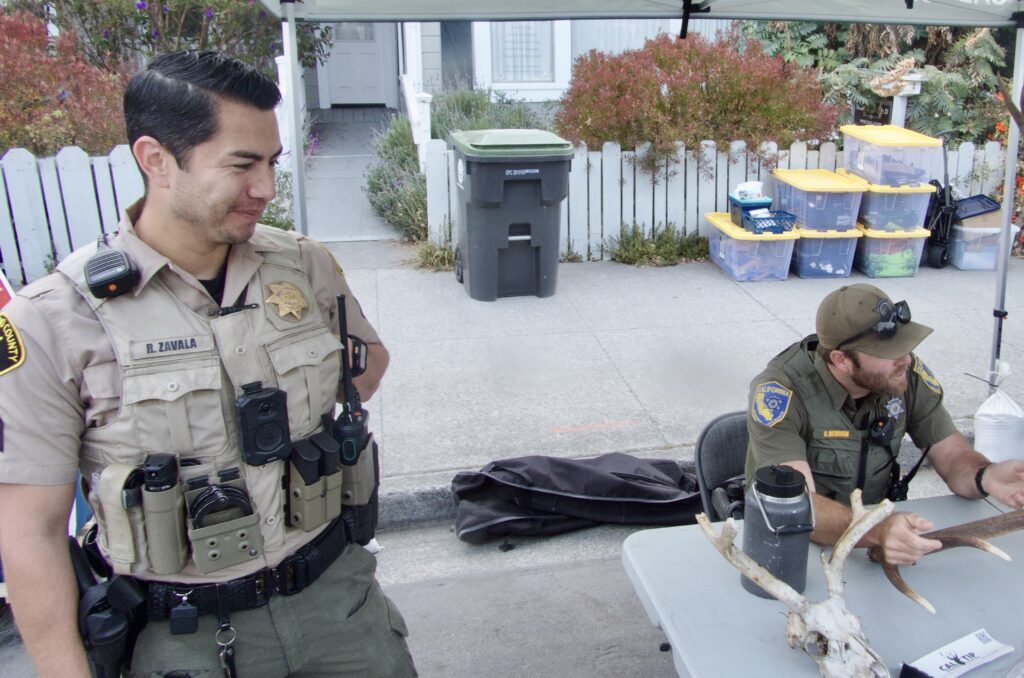
Then those same officers came out the next day in Fort Bragg and had fun clowning with kids and meeting and greeting the family crowds at National Night Out.
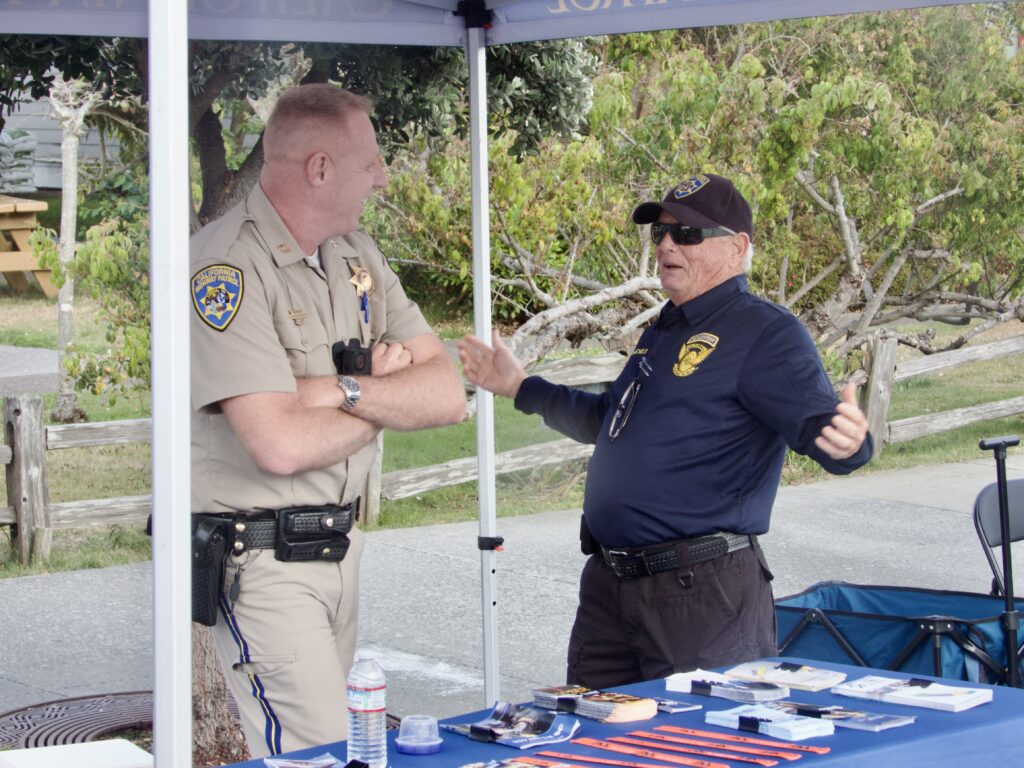
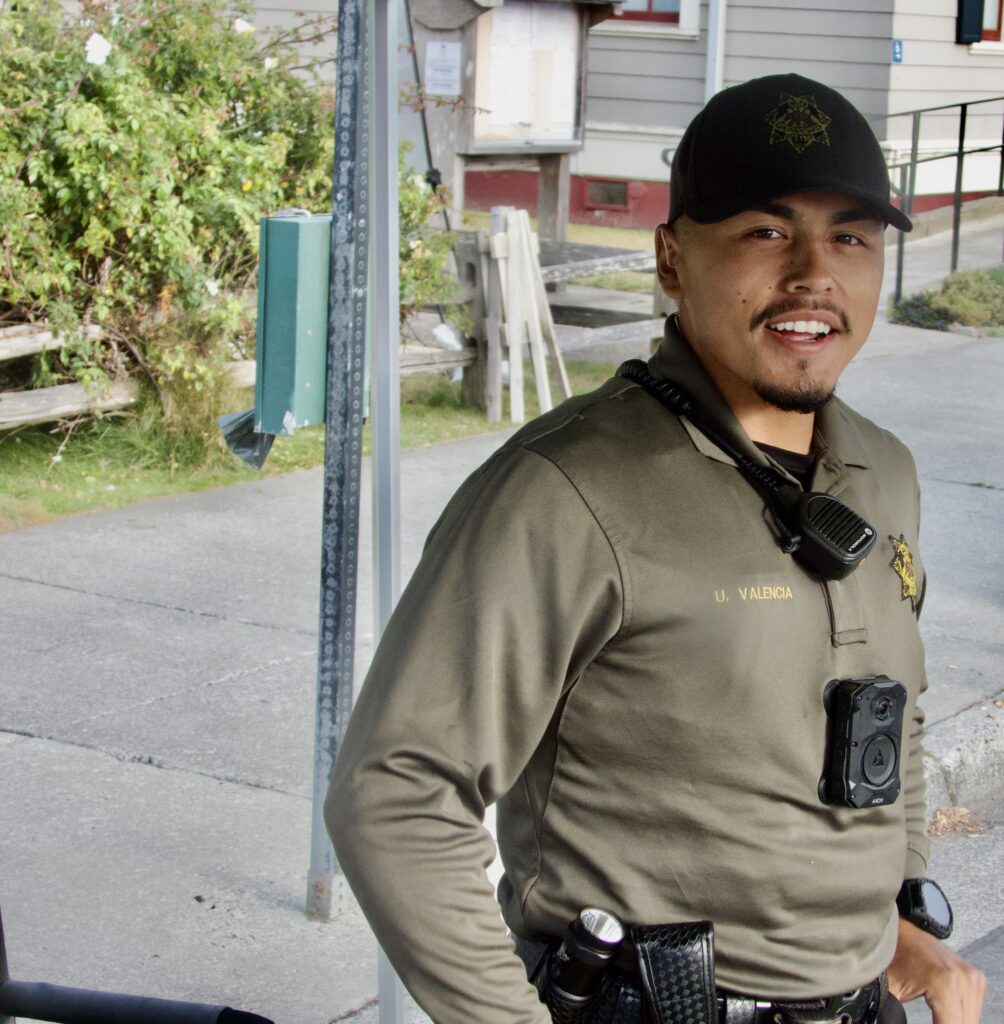
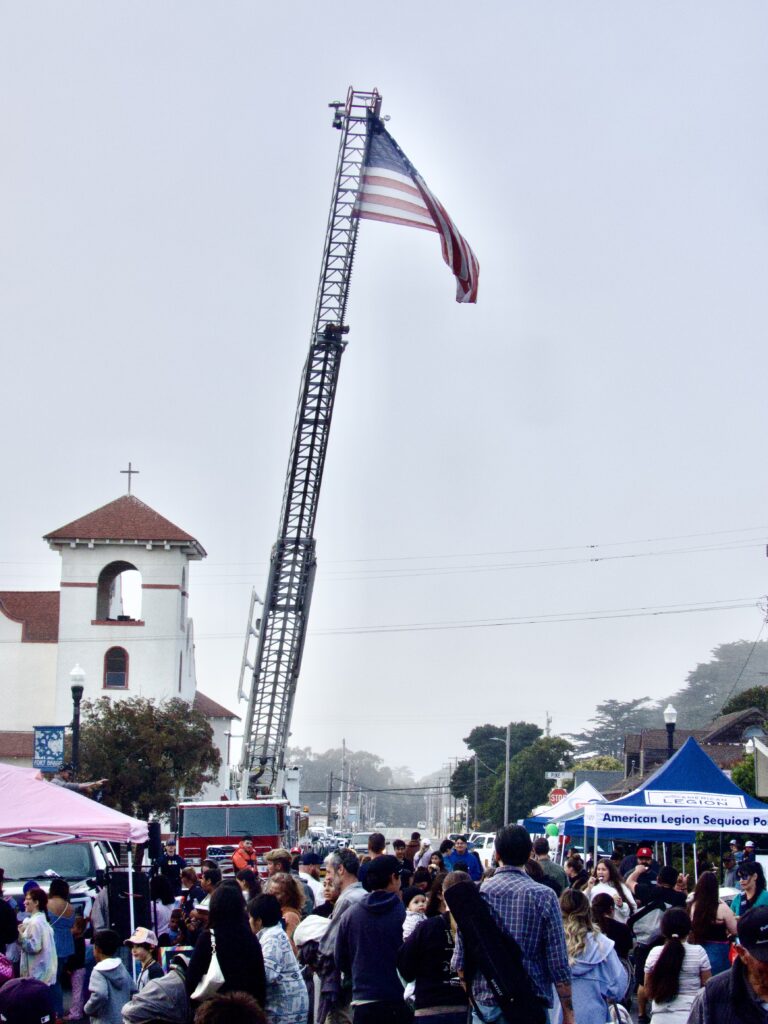
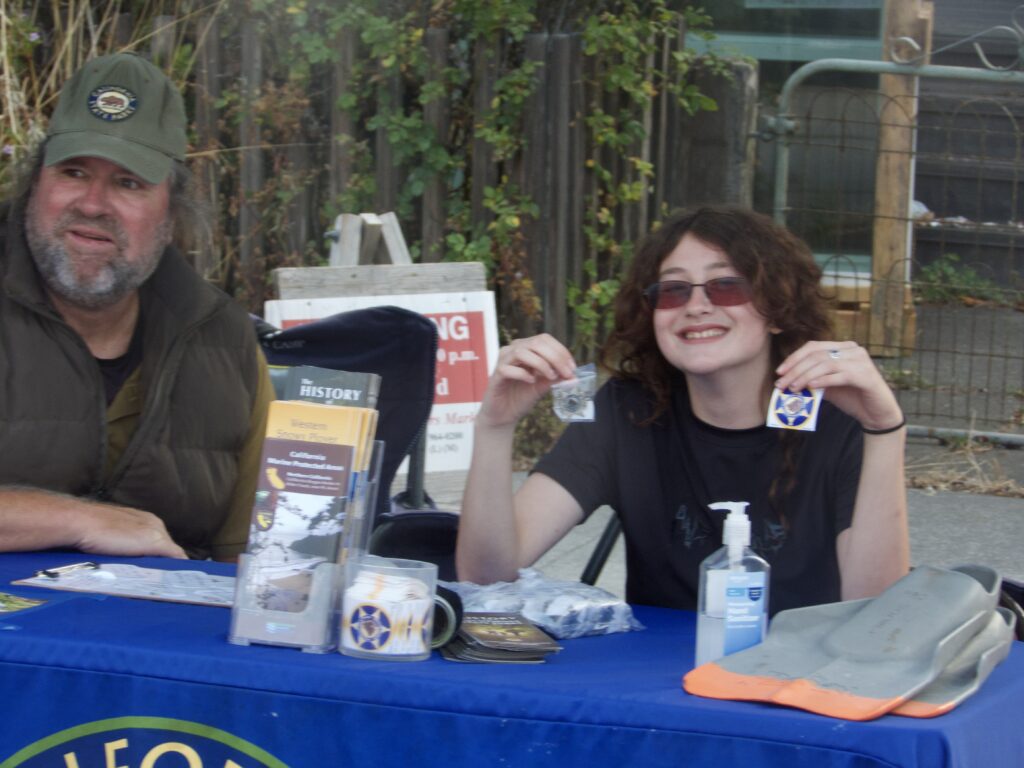
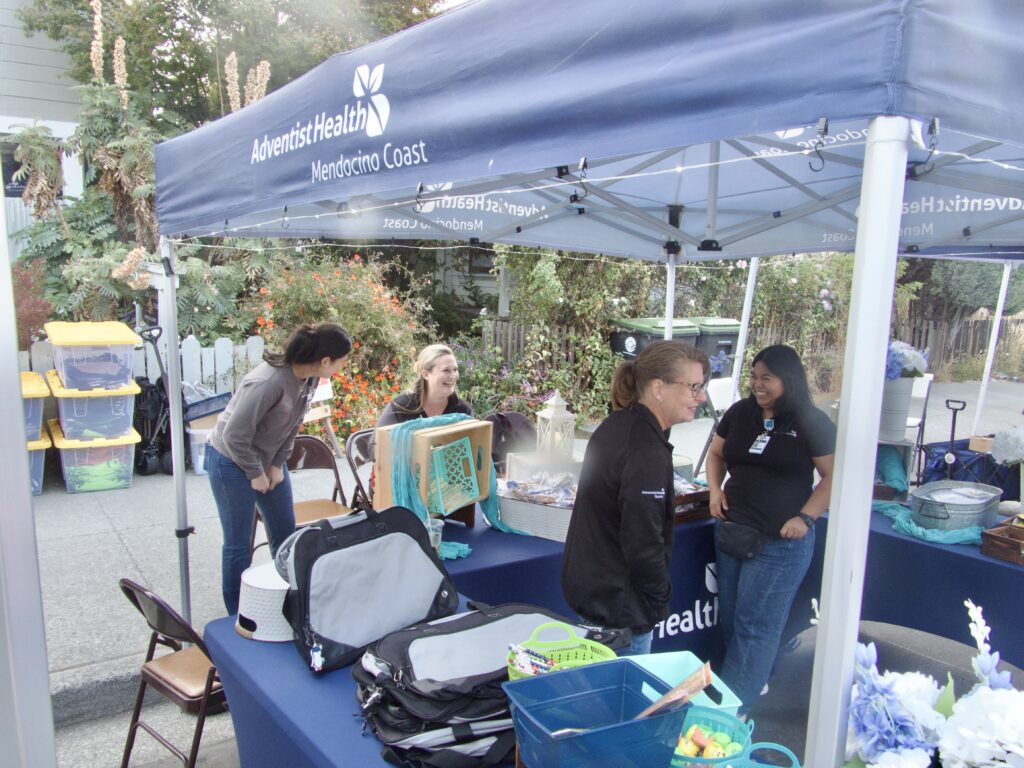

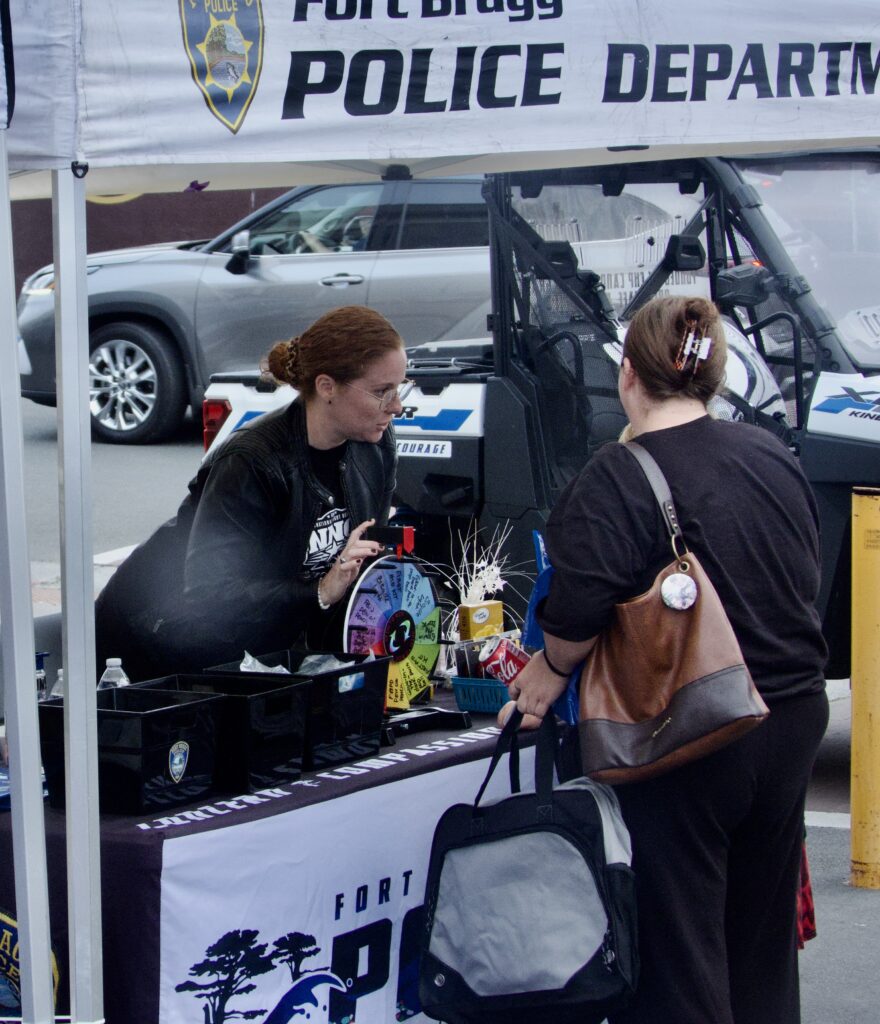
The National Night Out event introduces these officers — and many more — to those of us who don’t know what it’s like to step into foolishness and danger in the middle of the night and make sense of it.
National Night Out — which might also be called “Meet the Police” — started in 1984 in the Philadelphia area, with people turning on their house lights and sitting out on their front porches. The original intent was neighborhood watch, but it quickly grew into a chance for law enforcement and the rest of us to meet and talk about how we’re all in this society together.
Fort Bragg’s event was packed in its new location downtown in front of City Hall. Everybody was closer together, but we liked it a bit better at the park in front of Veterans Hall. The American Legion hot dogs were a big hit. We met an eager new recruit just about to start as a deputy — very inspiring energy.
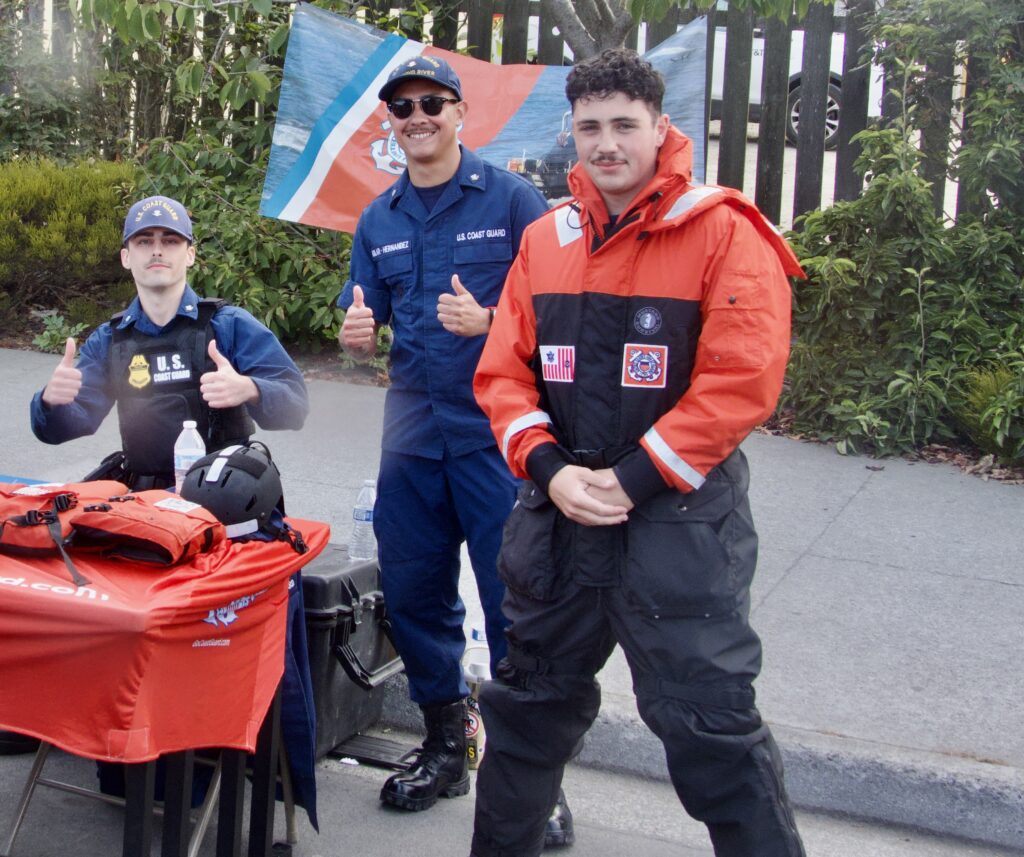
Best of all was how the kids came together with all the parts of the system: schools, Coast Guard, wildlife officers, Fort Bragg Police, and support agencies. Everybody had something fun to do — face painting, games, and the CHP’s mascot CHiPper, who was easily the biggest hit of all.
CHiPper is a friendly chipmunk who serves as the official mascot of the California Highway Patrol. Introduced in 1991, the character wears a miniature CHP uniform complete with a campaign hat, badge, and nametag to promote child and traffic safety.

TWO MISSING MEN WERE ACTUALLY FINE THE WHOLE TIME
Two men reported missing turned out to be fine. The Mendocino County Sheriff’s Department took reports on both and put out fliers, but each case ended up being a misunderstanding. The sheriff’s office does searches when someone is reported missing, especially if the report comes in that they’ve been ill, at risk, or — like the one in Manchester — had friends who thought he’d been eaten by a mountain lion.
We tracked the stories down after we reported them missing. Joseph Paul Kruchowski, 65, turned up less than 24 hours after he was reported missing from Dolphin Isle, but the word didn’t get back right away. It also turns out the man feared eaten by a mountain lion was OK too. It was a personal matter we don’t need to report, but he is back as well. Jason Bean, 54, of Gualala also turned out to be fine.
TRUMP PLANS FOREST SERVICE CUTBACKS
BUT WHAT DOES IT MEAN HERE?
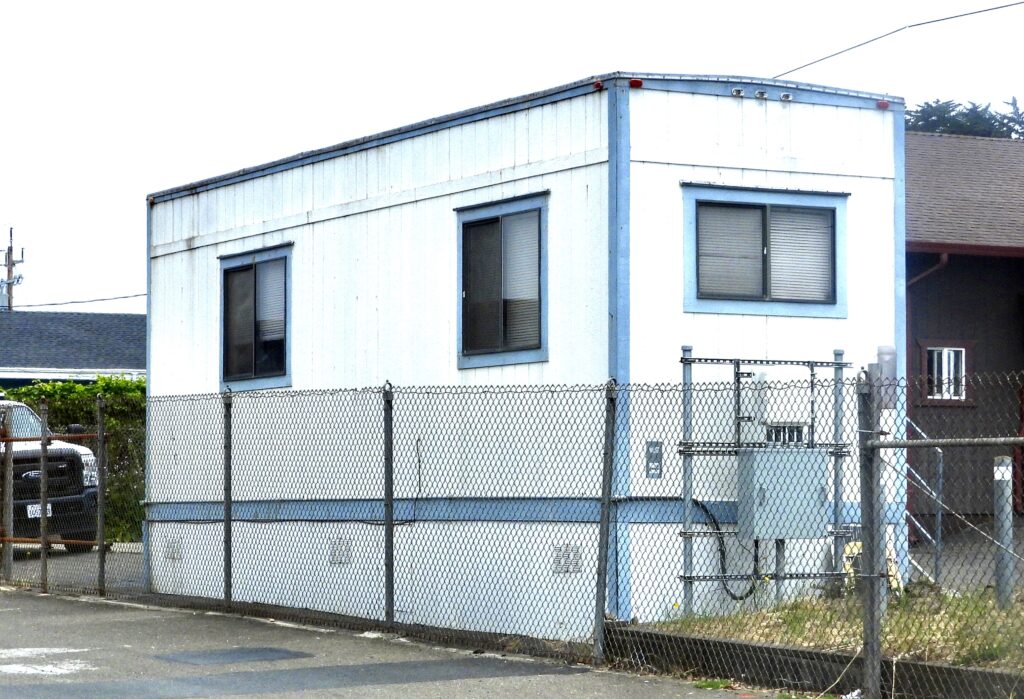
The Trump Administration announced in April it would be shutting down 6 of the 8 U.S. Forest Service research stations in California, including the one in Fort Bragg. But they have not done so, and from what we’ve learned, the one here in Fort Bragg won’t be shut down anytime soon. This is part of a massive reorganization and downsizing of the U.S. Forest Service. Trump is moving the headquarters from Washington, D.C., to Salt Lake City.
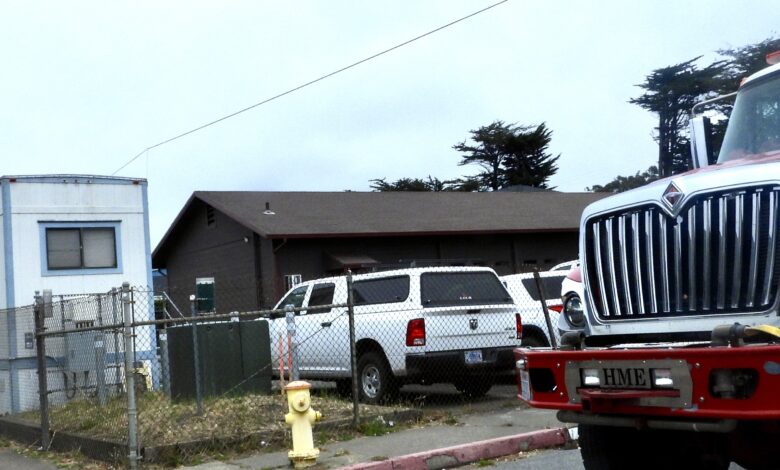
There have been downsizing pains. The Forest Service website now says the closing of many local stations across the country may not happen after all. The Fort Bragg Forest Service station — located in an office trailer behind the Cal Fire offices — has been operating since the end of the Korean War, monitoring Caspar Creek and the impacts of changing weather, logging practices, and residential runoff. The scientific data set is priceless, and apparently it’s not being closed anytime soon, or perhaps not at all.
We have talked to a dozen people since the announcement was made and have pieced together the story, although nobody could speak on the record. All government employees declined to comment. The Trump Administration has a clear track record of punishing employees who criticize it, and of prioritizing issues that appear in the news. The Administration’s websites now say they never really intended to close all those research stations — that the cuts were “proposed.” That is not accurate. The original announcement was explicit.
What appears to be happening is that many of these efforts involve multiple contracts and multiple funding sources. Canceling or reorganizing them is complicated and expensive, and in some cases would require rehiring or paying out people whose contractual rights were violated. When Elon Musk was in charge of the federal agency DOGE, he fired people involved in many of these efforts — although it remains an open argument whether Musk was ever officially “in charge” of anything more than a temporary assignment by Trump. He was never recognized by Congress or the Senate as a federal employee, and any such role would not have carried formal federal authority. The lesson seems to be that abrupt reorganizations can cost huge amounts of money and often end with rehiring the very people whose contracts were disrupted.
Here is the initial story from SF Gate. They only had the social‑media announcement to go on, and their reporting was accurate based on what was available at the time. But the closures have not happened, and do not appear to be happening.
April SF Gate story on forest service cuts
MUSK’S FRUSTRATION WITH CALIFORNIA LEADS TO “PERFORMANCE REVIEW” OF THE STATE, PLUS RENEWED PUSH FOR OFFSHORE OIL DRILLING, DESALINIZATION AND EASIER PROCESS
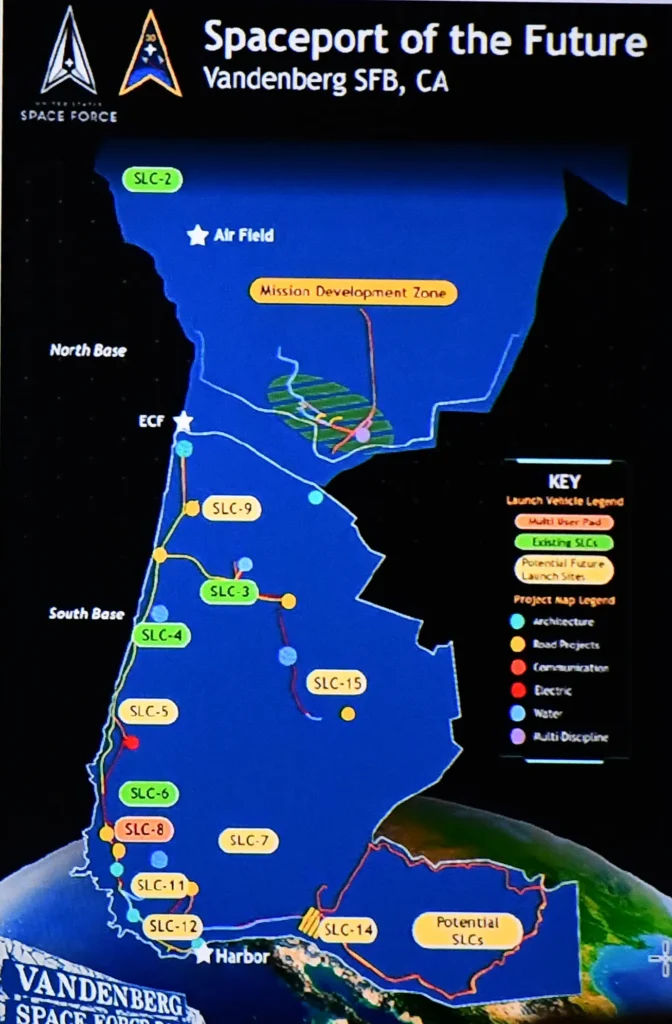
The state of California frustrated Elon Musk in his efforts to build a SpaceX launch facility on Vandenberg Space Force Base (formerly Air Force). The Space Force recently demolished a historic rocket launch area funded by taxpayers to turn the land over to Musk. But the state didn’t want exemptions given to military branches like the Air Force and Space Force to automatically apply to Musk. This caused him to complain to the man he spent over $100 million on getting elected.
Then the Trump administration launched a full review of the California Coastal Act, not hiding that Musk’s conflict was at the heart of it all. In the last sentence of the tweet by Secretary of Commerce Howard Lutnick, he says that because of the SpaceX spaceport stickywicket, he would also be reviewing how offshore oil drilling, undersea cables and other commercial development are regulated in California.
So Elon grumbles about Spaceport permits and suddenly offshore oil drilling strolls back onto the table like it never left.
Then, Lutnick did something extraordinary. He said this was not a new plan, but merely the continuation of a review of the California Coastal Act by the Biden Administration. The Trump administration had let lapse the Biden plan to review the Coastal Act, which sought to find ways to solve water issues while not violating the Clean Water Act. Now the Trump administration said that they will lump all the public comments from the 2024 Biden plan with the new plan and then issue a review of the California Coastal Act, with the stated intention of making California more obedient to federal goals of energy development, desalination plants and not interfering with Musk’s efforts to develop the former Air Force launching area. The reason? We have not confirmed this entirely and reporting on statewide and nationwide issues is a bit beyond our focus, but when fellow reporter Ed Oberweiser got us into this, we couldn’t resist drilling down. But what we understand is that the Musk‑Trump administration did this to shorten the timeline.
The letter that announced this is below and the entire letter, except for the last line, is about the SpaceX stickey wicket. It is directed to Kevin Hassett, the head of President Trump’s Economic Council. It was also sent out on Twitter, announcing the decision to do a “performance review” of the California Coastal Commission, the California Coastal Act and, indeed, the entire performance of California on economic matters as a Coastal State — a bit of a stretch of the authority of NOAA.
Perhaps most unsettling of all is the fact none of the press with the resources chose to look at this issue, other than to note a hearing was happening and possibly Trump wants to restart offshore oil drilling. He has never hidden that intent, nor is the Musk controversy buried at all — it’s right there in the letter. California has not raised any issues with Air Force or Space Force (the new branch of the military) Spaceport development. All of the problem is Musk complaining to Trump.
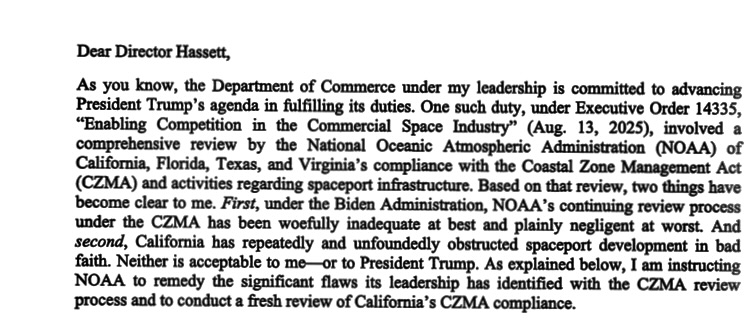
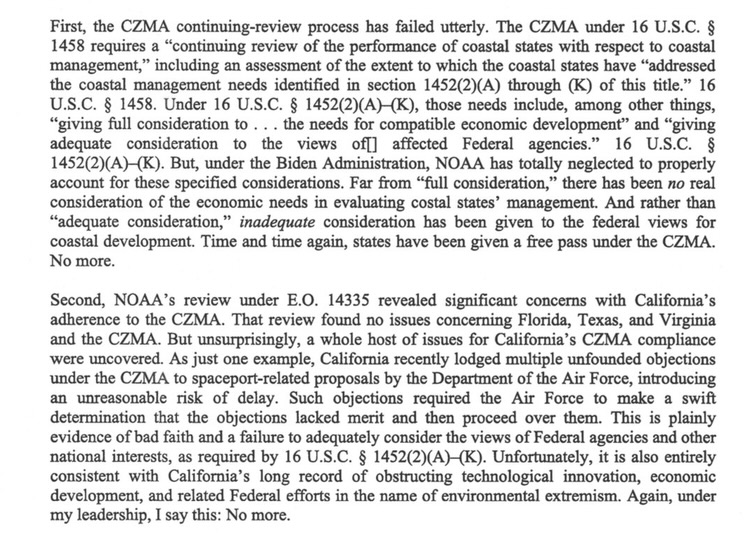
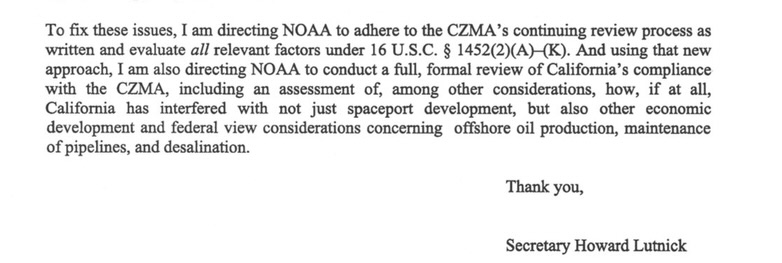
The Trump administration is now seeking your comments on all of this and whether the federal government should exercise power over the coastal zone of California the way it does in Gulf and some Atlantic states (as the Secretary states above). We have links at the bottom on how you can comment on the review of the California Coastal Act, the Coastal Commission and the issues raised. The messages about both the Forest and Ocean plans have been confusing in the media.
- Why the confusion? The reason is simple. The Trump Administration now uses boss Donald’s method of announcing everything through tweets on selected social media. They don’t hold press conferences or any two‑way processes. They say they’re going to do something and don’t answer questions. But those questions would have helped them as much as anybody. So they end up finding out the hard way that many of the ideological plans they announce don’t work in the real world.
Trump’s head of oceans in May directed the National Oceanic and Atmospheric Administration (NOAA) to initiate an assessment. Now there are hearings that originated from this. This letter was the only communication about the initiation of the process. It was ONLY issued on Elon Musk’s X‑Twitter and posted as a JPG with small print. The lines run off the end of the page and the document fades dark and light as if it was taken off an old‑fashioned copy machine. That was all the press had — that’s how they communicate now. I obtained the JPG, took a screenshot, cut it larger, and cleaned the shading out.
The letter was written by Lutnick when he became frustrated with delays in the process of making Vandenberg Air Force Base into a spaceport of the future. SpaceX complained to Lutnick about delays to property on Vandenberg where Elon Musk’s company is installing a launch facility. The Air Force removed a long‑used, historic rocket‑launching site over the past year to allow Musk to build on that spot. We are not sure what sort of delays have been happening, and we don’t have the sources or location to report on Spaceports. Sounds exciting! Who is against a spaceport? What is it? We have to wonder if the Air Force first destroying its historic launch facility and then leasing that land to Musk was designed to benefit taxpayers — or the former trillionaire.
Lutnick said his frustration over California’s insistence on making its own rules for federal facilities in the Spaceport case had compelled him to do an assessment of how other ocean development is being restricted by the state. And only then does he mention that the process will also involve offshore oil drilling and desalination, along with the spaceport issue.
Here is Surfrider’s take on the plan
Now the assessment is complete and a process has been set up for you to comment. There are hearings scheduled and specific actions underway to open oil drilling back up, against the will of the state. The Trump Administration has already managed to open a long‑unused pipeline that had been shut down for years, over the objections of the California Coastal Commission and despite claims it couldn’t be done.
Is the plan to open up all of the California Coast to drilling? Or just Santa Barbara and Southern California areas, perhaps including San Diego? Any forced drilling would be an exertion of federal power beyond what anyone could have imagined before Donald Trump became president. Trump is all about his own agenda and getting it done. People both hate and love him for not worrying much about the legal process.
After many court defeats of other hasty proposals, the Trump Administration is holding what appears to be a legal process this time. This is an opportunity for you and us to try to find out what Trump and company want to do. We know the Trump administration is dedicated to increasing oil production anywhere it can. Trump shut down a private‑public partnership to build massive wind energy facilities off Central California and Humboldt County. The only reason for this was that one man, Donald Trump, does not like wind energy. The projects would have greatly reduced energy costs in California, but they are now off the books for no reason whatsoever. Many environmentalists were happy to see the projects shut down by Trump. The projects had made compromises with fishermen, but opposed on both left and right, they were silently ended, at least for the foreseeable future. But now Trump, killer of a big offshore energy project, says it’s imperative that offshore oil drilling happen off California. We have Ed Oberwesier as our reporting partner on this story. But investigating this is way beyond the investment of time we have available. Someone out there must care enough to help. The Democrats are telling us that the entire Coast is at stake. From what we have read, we doubt that, but we don’t know. Trump is not laying all his cards on the table, but is trying to follow legal processes for public input so as not to be overturned by the courts again.
So now for your comments. Perhaps you think oil drilling is needed. Or not. Being against all new offshore oil drilling makes a lot of sense to a state whose economy relies on its oceans being scenic and full of life. You could also object to the entire business of combining this plan with a Biden plan that did the opposite. Or you could object to the federal government doing all of this because Elon Musk felt the state was going too slow on a federal base. There is a link below to make your feelings known. That would be my personal comment on offshore oil drilling. It’s purely idiotic to support more oil when Trump shut down the wind energy offshore for no good reason.
We do think the Coastal Commission and the Coastal Act could use some revisions, but not by Trump, who does everything with little research and great haste. Having him lead the effort would only slow development and more sensible rulemaking down. But that doesn’t mean we can’t spell out some of the problems and solutions. On desalination plants, we do think those are needed, and it would be interesting to learn more.
The best way to get involved in the forest issue is to come to the upcoming Cal Fire tour of their plans to begin logging imminently in the Camp 20 area. Although that timber harvest plan is not directly connected to the U.S. Forest Service research station, the people on the tour are acquainted with Caspar Creek, and all of it is in the Jackson Demonstration State Forest. You can ask them about Caspar Creek, which is studied by numerous government agencies and universities. We have a press release at the end about the forest tour.
Onto the ocean plan by Trump’s regime. Here is how you comment.
Federal Register Document #2026-12907opens in a new window posted Friday, June 26, 2026, and includes the following information regarding how to engage in the public process.
Pursuant to the federal Coastal Zone Management Act of 1972, as amended, the National Oceanic and Atmospheric Administration’s (NOAA) Office for Coastal Management will hold one in‑person and two virtual public meetings to solicit input for a performance evaluation of the California Coastal Management Program. These meetings will add to the input obtained from the previous public meeting held in August 2024.
Comments on all aspects of the California Coastal Management Program will be accepted. In particular, NOAA is seeking input from relevant stakeholders regarding spaceport infrastructure, offshore oil production, pipeline maintenance, desalination projects, and undersea cables.
NOAA will hold an in‑person public meeting from 2 p.m. to 6 p.m. Pacific Time on Monday, August 10, 2026, in the Pacific Ballroom at the Hilton Santa Monica Hotel and Suites, 1707 4th Street, Santa Monica, CA 90401. Anyone who wants to speak at the in‑person meeting must be physically present and register by emailing czma.california‑evaluation@noaa.gov by 11:59 p.m. PT on August 8, 2026. Each speaker will have three minutes. Those who do not register in advance may sign up on location.
NOAA will adjourn the meeting at 6 p.m. or when all participants have spoken, whichever comes first. The meeting will be livestreamed, but comments for the in‑person meeting will not be accepted via livestream. Registration for the livestream is available at:
https://noaabroadcast.adobeconnect.com/euqe1fzlqysm/event/registration.html opens in a new window.
NOAA will hold two virtual public meetings on Tuesday, August 11 and Wednesday, August 12, 2026, from 2 p.m. to 5 p.m. PT. The meetings will be conducted via Adobe Connect. Anyone who wants to attend either virtual meeting must register electronically by 11:59 p.m. PT on August 10, 2026.
Attendance at each virtual meeting will be limited to 1,000 individuals, so NOAA requests that people attend only one session — either August 11 or August 12. Speakers will be called on a first‑come, first‑served basis using the raised‑hand function in Adobe Connect. Each speaker will have three minutes.
NOAA will adjourn each meeting at 5 p.m. PT or when all participants have spoken, whichever comes first. NOAA retains discretion to extend the virtual meetings if appropriate and feasible.
To register for either virtual meeting, use the following link:
https://noaabroadcast.adobeconnect.com/e23ewcr5d65q/event/event_info.htmlopens in a new window.
Each registered participant will receive an Adobe Connect link for the meeting.
NOAA will prepare written transcripts of the in‑person and both virtual meetings, and they will be available by email request at czma.california‑evaluation@noaa.gov. Written comments may also be submitted to NOAA’s Office for Coastal Management at the same email address. Please include “Comments on Performance Evaluation of the California Coastal Management Program” in the subject line. Written comments received by 11:59 p.m. PT on August 22, 2026, will be accepted.
Please direct any questions to czma.california-evaluation@noaa.govopens in a new window.
Links:
Coastal Zone Management Act Federal Review
Coastal Zone Management Act Federal Review Fact Sheet
Press release about the forest tour: Mendocino County, CA – The California Department of Forestry and Fire Protection (CAL FIRE) will host a public tour at Jackson Demonstration State Forest (JDSF) in Mendocino County about the Adaptive Management Experiment, commonly referred to as the AMEX. Join leading scientists and CAL FIRE staff as we discuss how adaptive management can help our forests persist in a changing climate.
Public Tour Meeting Schedule:
Tuesday, August 11, 2026 — 4:00 p.m. – 6:00 p.m.
Location: Camp 20 (mile marker 17, Highway 20) (map below)
Call (707) 964-5674 or email JDSF@fire.ca.gov to RSVP
RSVP encouraged, but not required
The field-based tour will provide an opportunity for members of the public to learn more about AMEX, ask questions, and hear directly from scientists and CAL FIRE staff about the purpose of the project, the planned forest treatments, what visitors may see during operations, and how the project will be monitored over time. Participants should be prepared for field conditions, including uneven ground and variable weather. Sturdy footwear, water, and weather-appropriate clothing are recommended.
AMEX is a long-term climate-change forest experiment that compares different forest management approaches under real forest conditions. At JDSF, the project is in mixed second-growth forest conditions within the coast redwood range. Researchers will compare several treatment types, including resilience, resistance, transition, and untreated control areas.
The AMEX Timber Harvest Plan is the implementation step that allows the initial research treatments to occur on the ground. These treatments are designed to help researchers and forest managers evaluate how different second-growth stands respond to management over time, including changes in forest structure, species composition, regeneration, wildfire risk, wildlife habitat, tree cover, and long-term forest resilience.
“Testing, not guessing” reflects the basic purpose of AMEX: comparing different management approaches, tracking forest response over time, and using that information to help inform future redwood forest management.
In the end, all of this — the spaceport frustrations, the desalination questions, the pipeline revival, the sudden push for offshore drilling — comes down to one truth: California’s coast is being pulled into a national fight it didn’t start. The hearings are real, the stakes are unclear, and the process is moving whether anyone here is ready or not.
What happens next won’t be decided by Musk or Trump or NOAA alone. It will be shaped by whoever shows up, whoever speaks, whoever still believes the coast is worth arguing over. That’s the part they can’t streamline, tweet, or fast‑track.