Your Friday + Saturday 7/10-7/11 Update Paper: Please Get Involved! Logging after four‑year pause + Whale monitor + Suzi’s art classes + Covelo homicide + Kemp reports dead body
A PIVOTAL MOMENT IN MENDOCINO COAST HISTORY IS HAPPENING. LOGGING IS BEING RESTARTED.
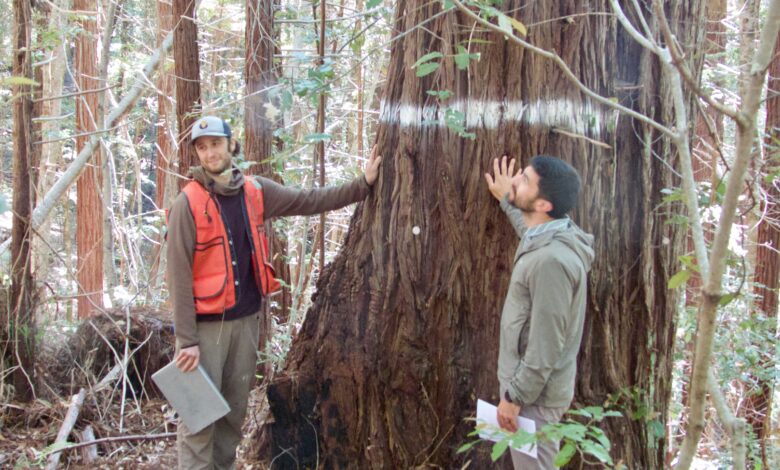
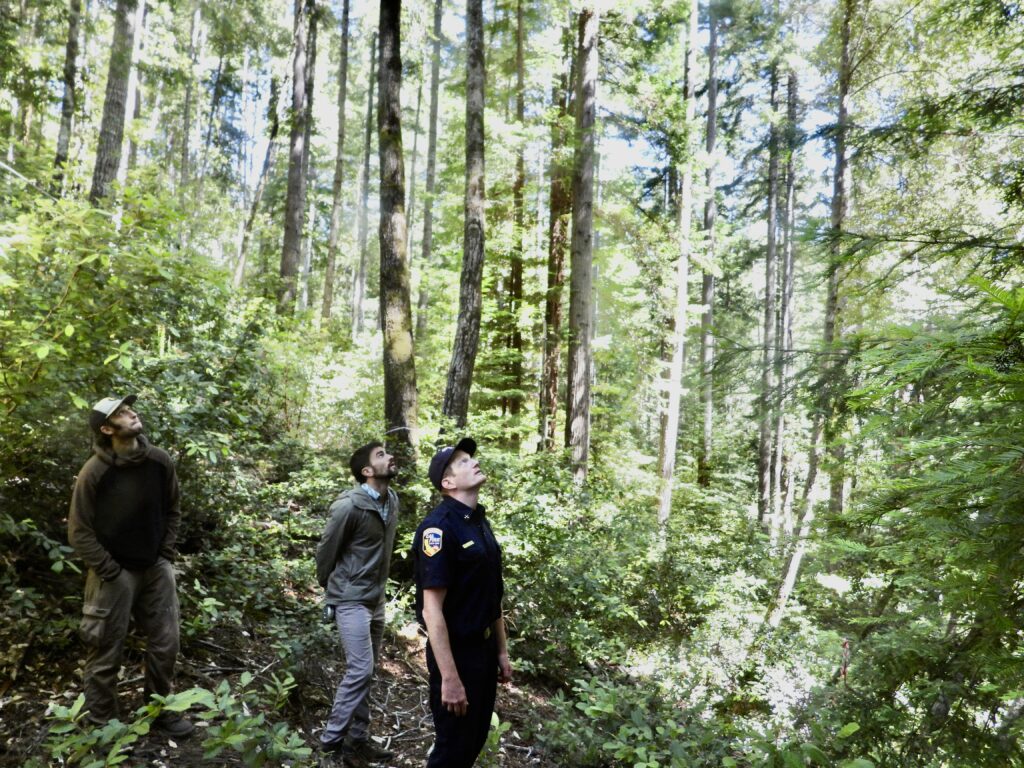
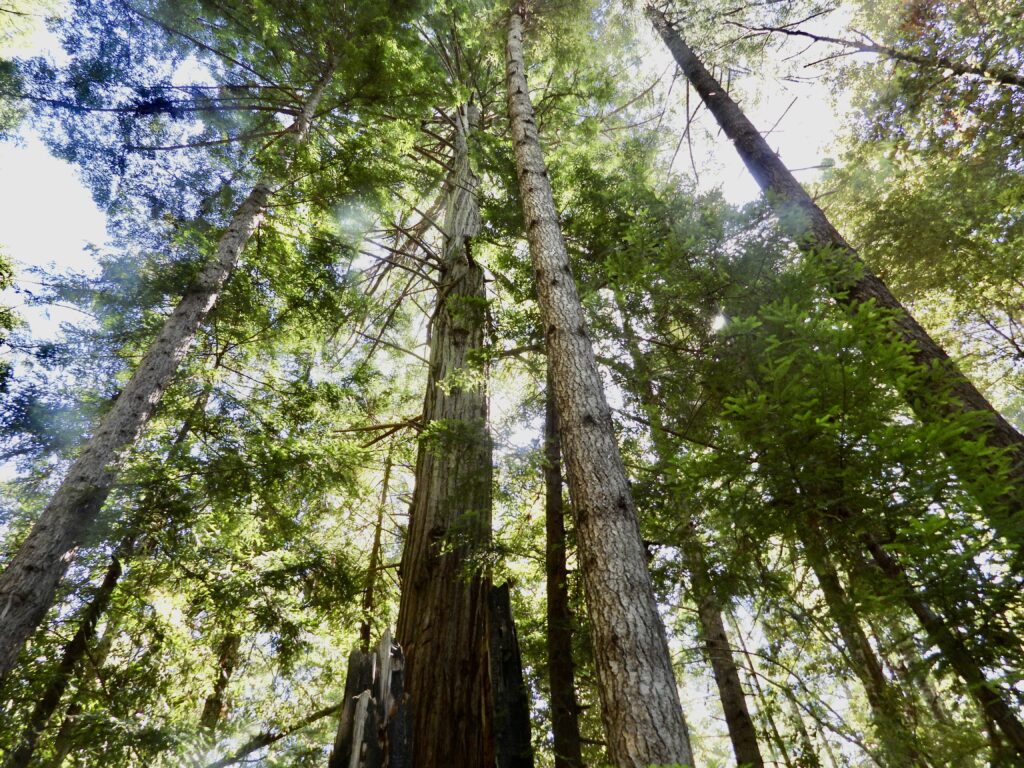
Logging is being restarted. Within a few weeks, the Camp 20 harvest we toured today will begin with road preparation work. They will then begin logging, which will go on until mid-October.
There was a tour Saturday morning — we slept through it
MendocinoCoast.news asked for another tour for everyone – Please – Let us give them more notice to turn up for this important tour – this important moment.
We learned late Friday night that a second tour may be offered.
“We are tentatively planning a second tour for early the week of July 20, details will follow soon. Folks that are interested but can’t make those dates should reach out to us at the JDSF office, JDSF@fire.ca.gov or (707) 964-5674.” Kevin Conway of CalFire said. (Apparently we were left off the distribution list by mistake and notice went out Monday of this).
The following video helps visualize the four experimental treatments underway at Jackson Demonstration State Forest — control, light harvest, moderate harvest, and high harvest — used to study watershed resistance and resilience under different levels of disturbance.
Control — no harvest (0% removal).
Light harvest — about 35% stand‑density reduction.
Moderate harvest — about 55% reduction.
High harvest — about 75% reduction.
The tour will give people a chance to see the research methods firsthand — or to decide for themselves whether the operation feels more like cutting than studying..
This is historic. All logging has been shut down for four years, and 2020 was the last time a new Timber Harvest Plan even got started. This plan will be different from any in the past, marking the first restart of operations after a long pause and a major shift in how the forest is being managed.
We hope to see a broad cross‑section of the Fort Bragg community — loggers, Native Americans, environmentalists, hikers, cyclists, and anyone who cares about this forest. Environmental advocates have long dominated meetings, and they clearly care deeply about the land; their point about over‑logging contributing to climate change is well‑supported. But on this tour, people will also see a scientific team studying climate change across four types of experimental plots. There are roughly 300 of these plots, including test areas where researchers introduce different redwood varieties — and even other species — to see which might be better adapted to a warmer future climate.
We call on all five members of the Fort Bragg City Council — several of whom have deep knowledge of forestry and local history — and at least County Supervisors Bernie Norvell and Ted Williams to attend Saturday’s tour or the future tour we just found out about. If attendance isn’t possible on such short notice, we urge them to stay engaged in the review process now underway. The Fort Bragg Council had the most valuable discussion of the new bill that will upgrade the purposes of the State’s Demonstration Forest System and they expressed an opinion from their council seats. Its time to get out and take a look. Short notice, granted, but they can ask for updates on what is going on.
The following summarizes this harvest plan, which was approved by the JAG two years ago.
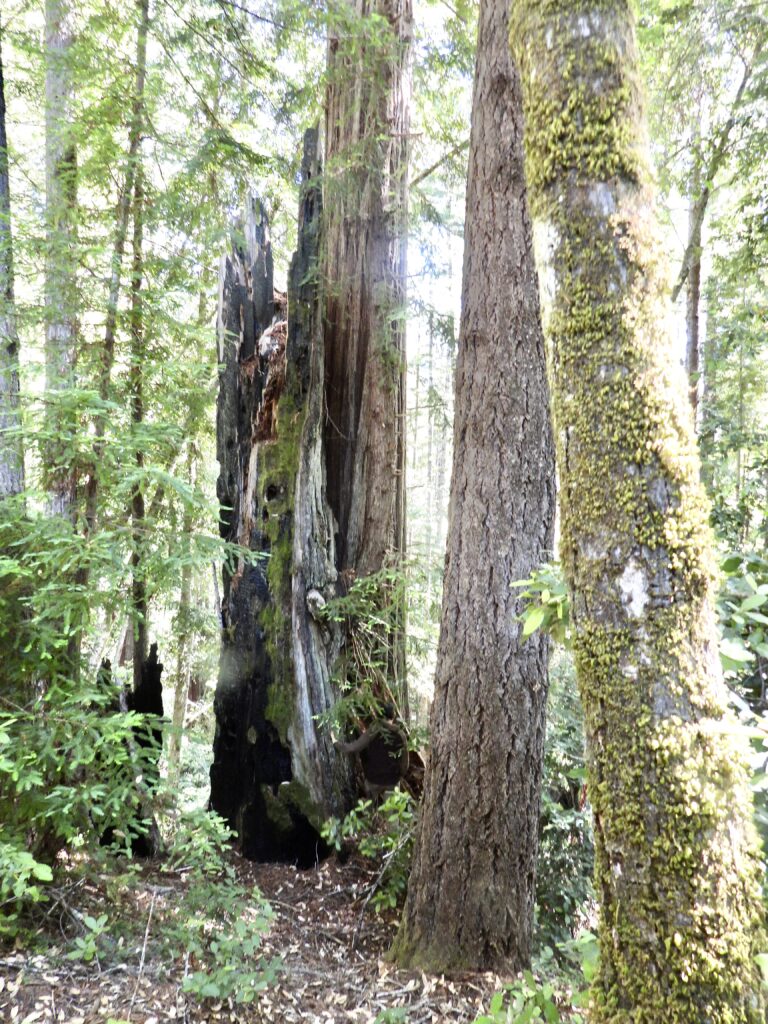
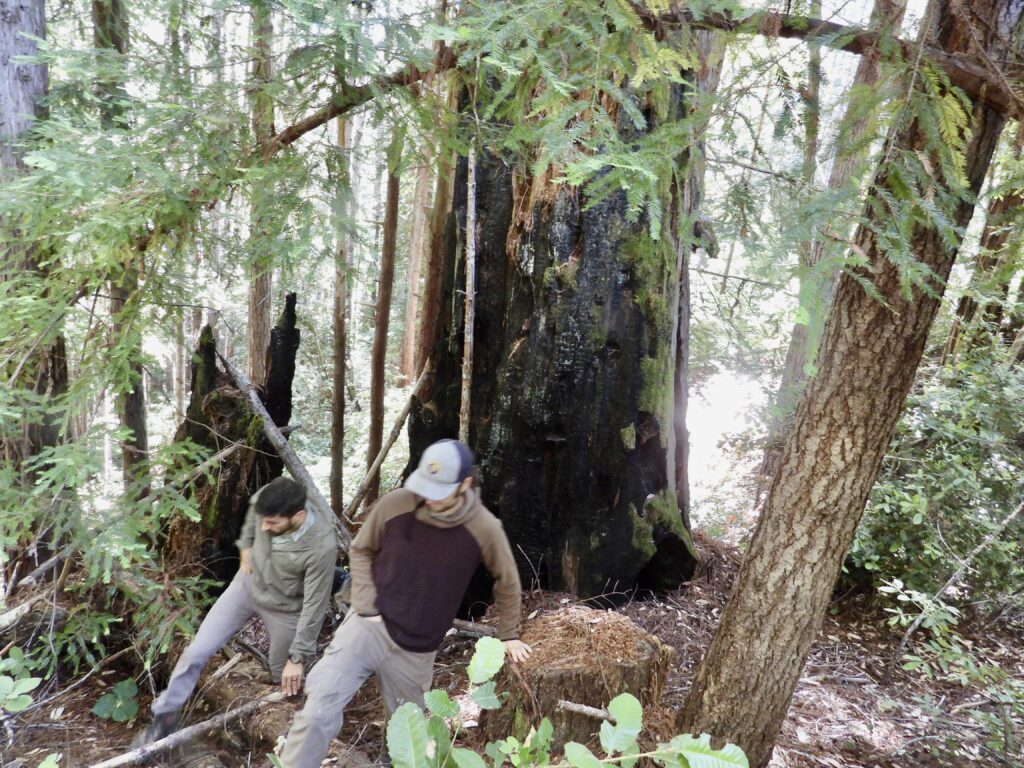
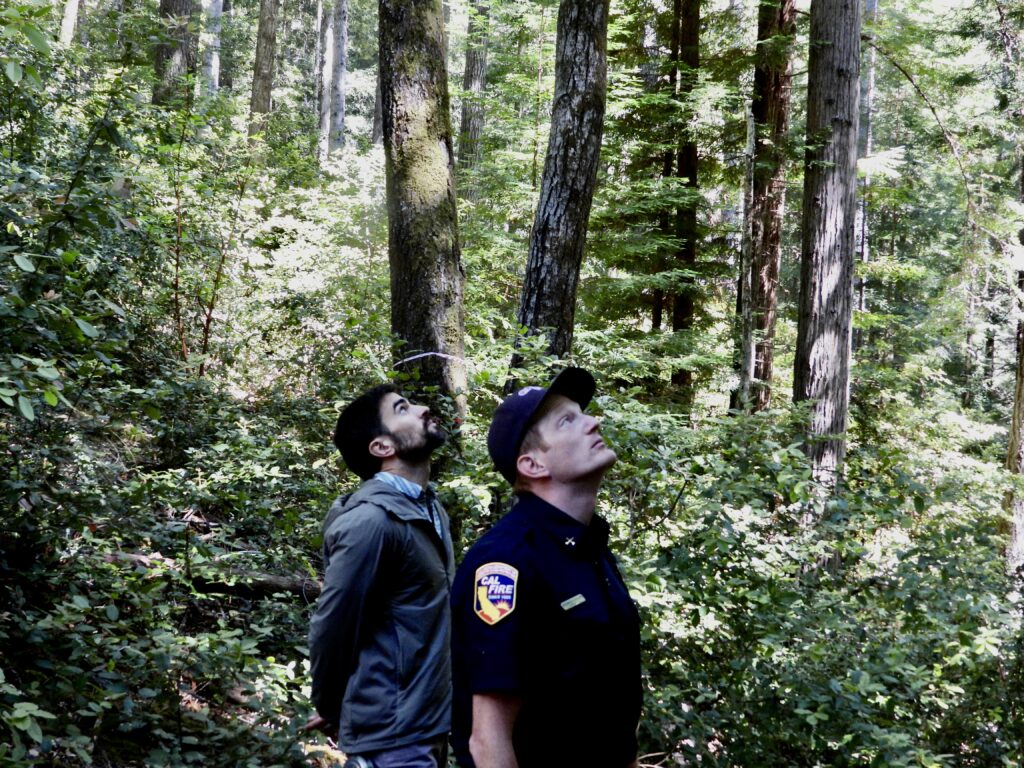
We toured the site Friday with Cal Fire and two scientists from the University of Nevada–Reno, taking a second look at the proposal to remove roughly a million board feet of second‑growth timber — a volume that, based on what the scientists described, represents about 1,200 to 1,600 trees, the range most foresters use for redwood country.
The Saturday tour runs from 9 to 11 a.m. and offers a look at how in‑depth studies by the University of Nevada have shaped a timber harvest plan to be carried out by Two Brothers Logging Company. The firm won the competitive bid at a steep discount compared with what that volume of lumber would normally bring. Kevin Conway, a top Cal Fire official, said the total value of the harvest would be only about $600,000. More than $1.2 million has been spent on study.
But there’s a significant caveat: the company must follow an extensive set of scientific requirements — including four different methods applied across more than 300 separate study areas.
We have a lot of fascinating material to publish in the coming days, but we needed to make sure you were invited to something of real importance. These tours have often drawn environmental activists, many of whom oppose logging. But on the last tour, the largest contingent of environmentalists to attend a JAG meeting and field visit engaged directly with Cal Fire — a discussion that, based on post‑interviews, proved eye‑opening for both sides.
We have been watching the JDSF process far longer than anyone currently at Cal Fire and longer than most environmentalists still attending meetings. Logging on the JDSF was halted from roughly 2001 to 2009, when a compromise — signed by both local loggers and environmentalists — created the Jackson Advisory Group (JAG). For a few years, the JAG provided genuine local input on timber harvests. That changed when the California Board of Forestry stepped in, effectively undoing the agreement, reducing the JAG’s authority, and shifting decision‑making back to Sacramento.
Cal Fire has been required to consult with Native American tribes since 2020 by order of Gov. Gavin Newsom. But how is this done?
On this project, the consultations were in secret. The Cal Fire administration could not tell me anything about what the Native input was. In other areas, tribes have advocated for increasing acorn production. Three limited burns of tan oak trees were done, but the location of that is also secret. Like the new bill, adding good new uses to the forest, no actual HOW process was part of these inclusive moves. This needs to evolve, while not getting into private tribal matters like sacred sites.
Here is another story I did with the Mendocino Voice on this…
Logging resumed until 2020, when a second wave of environmental opposition emerged. The Caspar 500 sale near Caspar was stopped that year, though some deeper‑forest harvests already underway were allowed to finish. Since then, no new Timber Harvest Plans have begun. In the years following 2020, Cal Fire has conducted numerous in‑depth field tours. The tour for this harvest took place two years ago and ran for eight hours, ending only at twilight as everyone walked back down a remote logging road. It was the most substantive exchange between environmentalists and foresters I have witnessed, led by environmentalist Naomi Wagner and Cal Fire’s Jeremiah Steuterman.
Jeremiah Steuterman is a Forester I with CAL FIRE assigned to Jackson Demonstration State Forest (JDSF). In 2021, he worked in both the Timber Sale program and the Research & Demonstration program, taking on reforestation and vegetation‑management responsibilities and participating in public outreach. He also completed Situation Unit Leader training and contributed to forest‑management operations and safety training.
Wagner and several others continue to oppose all logging as a statement about planetary destruction and the accelerating impacts of climate change.
We understand that point, but we disagree politely on stopping all logging. We all live in wood houses. Cal Fire’s headquarters once promised a model of scientific forestry with genuine local input, and the agency fell short of that commitment. But that is past. After roughly 50 hours of field tours over the last six years, we believe studying timber cutting is more valuable to understanding climate change — and improving forestry practices — than halting all cutting here. If logging stops on the JDSF, the same amount of lumber will be cut somewhere else, without any scientific study and likely with fewer safeguards. The work done here, under scrutiny and with data, has the potential to inform better forestry far beyond Mendocino County.
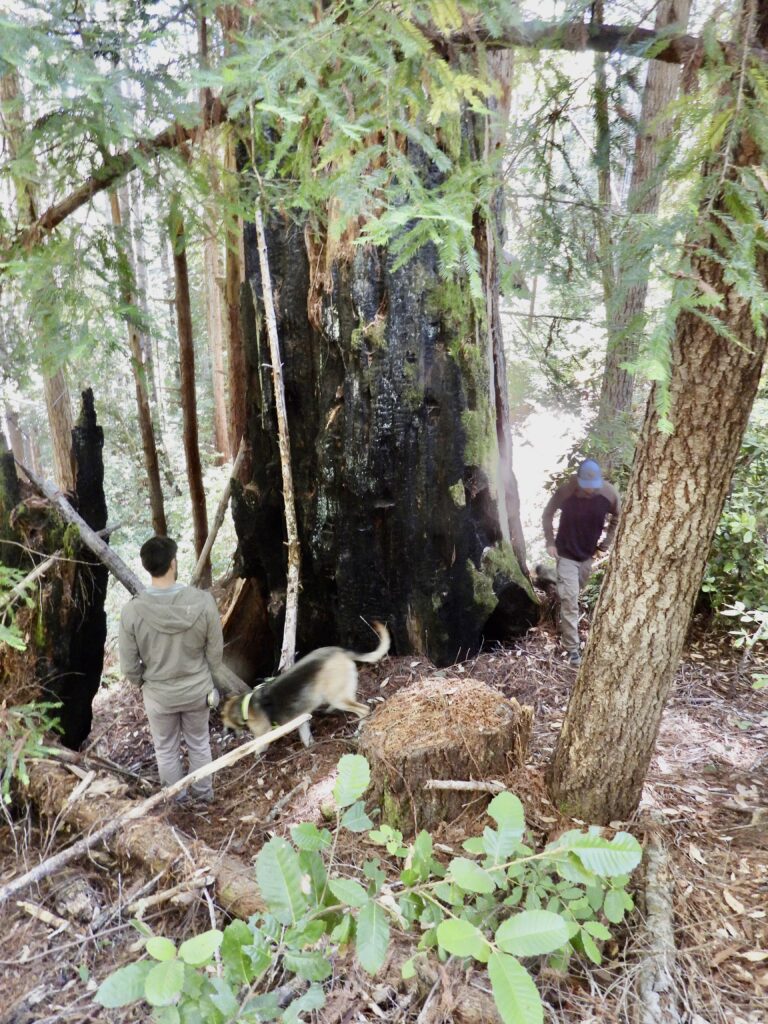
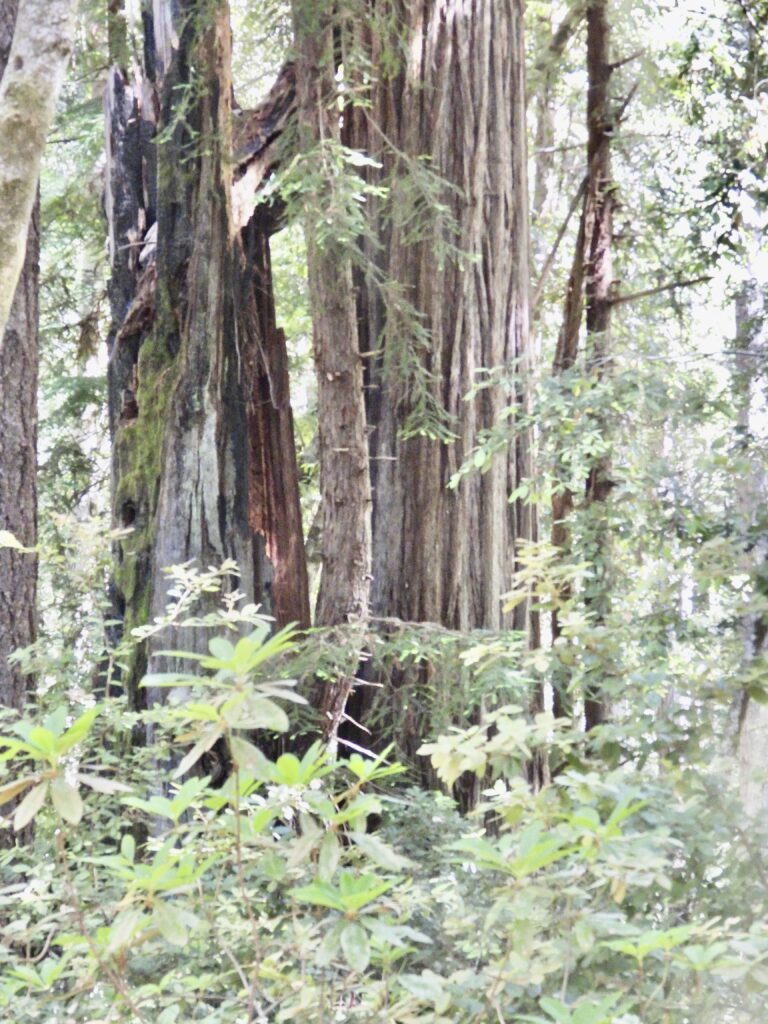
Please read Frank’s previous article in the AVA; things have changed since then, but it remains useful for understanding how this plan came together.
If only environmental activists show up, the forest could end up shut down again. Maybe that is the message the community wants to send. But if you think that, or think something else, now is the time to get involved.This tour is a chance to learn what is actually happening — your best chance. We’ll have more videos and reporting in the coming days, and we welcome input from all viewpoints. The Timber Harvest Plan (THP)process — the state’s formal review system that determines whether a logging proposal can proceed and under what conditions — badly needs more local participation. Some environmental groups strongly support a new bill now moving through the Legislature, but our concern is that it may centralize decision‑making even further in Sacramento. Continued dialogue is essential. We need concrete ideas for how to build a truly local, responsive process for reviewing THPs, and we are nowhere near that yet. We think this plan can work in a previously harvested area, but we invite you to come on Saturday and see for yourself.
Naomi Wagner has followed this process with me, and we hold different views. She is one of the most intelligent and compassionate people I know, and she provided this letter after the last JAG meeting.
We also believe Cal Fire should be open to offering a second tour of this property in about a week. After that, the contracts are already in place to bring in road graders to upgrade the road for logging equipment. And once the harvest ends for this year on Oct. 15, the public should be allowed in to see the impacts on the forest. It is, after all, our forest.
Here is a video of Jeremiah Steuterman explaining some of what we saw.
Check back to this article — we will be adding videos and information steadily through the weekend. We hope to hear from local leaders as well. Some will likely raise concerns about the short notice for this tour, and that would be a mistake. We strongly encourage people to come out and engage in dialogue if you can.
Public Tour Meeting Schedule:
Saturday, July 11, 2026 — 09:00 AM–11:00 AM
Location: Camp 20 (mile marker 17, Highway 20) (map below)
Call (707) 964-5674 or email JDSF@fire.ca.gov to RSVP
RSVP encouraged, but not required
The field-based meeting will provide an opportunity for members of the public to learn more about AMEX, ask questions, and hear directly from CAL FIRE staff about the purpose of the project, the planned forest treatments, what visitors may see during operations, and how the project will be monitored over time. Participants should be prepared for field conditions, including uneven ground and variable weather. Sturdy footwear, water, and weather-appropriate clothing are recommended.
AMEX is a long-term climate-change forest experiment that compares different forest management approaches under real forest conditions. At JDSF, the project is in mixed second-growth forest conditions within the coast redwood range. Researchers will compare several treatment types, including resilience, resistance, transition, and untreated control areas.
The AMEX THP is the implementation step that allows the initial research treatments to occur on the ground. These treatments are designed to help researchers and forest managers evaluate how different second-growth stands respond to management over time, including changes in forest structure, species composition, regeneration, wildfire risk, wildlife habitat, tree cover, and long-term forest resilience.
“Testing, not guessing” reflects the basic purpose of AMEX: comparing different management approaches, tracking forest response over time, and using that information to help inform future redwood forest management.
CAPE MENDOCINO LIGHTHOUSE NOW BEING USED TO MONITOR WHALE MIGRATIONS
Here is an interesting news account of the first West Coast effort to monitor whales by a group that operates more than 60 acoustic monitoring stations on the East Coast, many of them housed in old lighthouses. The new West Coast station is inside the Cape Mendocino Lighthouse at Shelter Cove, where researchers are beginning to track whale movements using underwater microphones that can detect calls from miles offshore. The East Coast network has been used for years to monitor endangered North Atlantic right whales and other species, and this Shelter Cove installation marks the start of a similar long‑term effort here. It’s a small room in a historic lighthouse, but it represents a major step toward understanding how whales use our coastline — and how changing ocean conditions may be affecting them.
From Redwood TV, new whale monitor system debuts
ENJOY ART WITH SUZI — CLASSES AVAILABLE WITH VIEW OF THE HARBOR
Scribble & Splash — Suzi Long’s beginner‑friendly art classes at the Blue Pelican Gallery send everyone home with a small finished piece. You’ll pick up simple perspective tips and easy techniques in a relaxed, encouraging setting, with supplies available at the gallery if you need them.
Thursday, Friday, or Saturday through December 10:30 a.m. to 12:30 p.m. Blue Pelican Gallery 401 N Harbor Dr. Fort Bragg, CA 95437
FORT BRAGG CITY COUNCIL FILINGS BEGIN MONDAY, FIRE TAX ON BALLOT
Fort Bragg City Council filings begin Monday, opening the window for candidates to formally enter the November race. The FIRE TAX measure will also appear on the ballot, giving voters a chance to weigh in on long‑term funding for local fire protection.
Fort Bragg press release on elections
COUNTY ROAD TAX PROCESS CONTINUES
There is so much going on that we can’t follow it all. Here are some recommended articles by others:
And so the week closes with a forest tour on short notice, a FIRE TAX headed for the ballot, City Council filings opening Monday, whales being quietly tracked from a lighthouse above Shelter Cove, and beginners turning out small masterpieces at the Blue Pelican Gallery. It’s a lot for one Friday, but it’s Mendocino: forests in debate, oceans speaking through hydrophones, artists scribbling and splashing, and a town getting ready for another election season. Check back through the weekend as we add videos, updates, and whatever else this coast decides to hand us next.
HOMICIDE IN COVELO
| MEDIA ADVISORY/NEWS RELEASE |
DATE: “July 11, 2026” FOR IMMEDIATE RELEASE: Incident Number: 2026-12629 Crime/Incident: 187(a) PC – Homicide Location: 22000 block of Rifle Range Road in Covelo, CA Date of Incident: 07/09/2026 Time: 8:58 P.M. Victim(s): 31-year-old female from Covelo, CA (name withheld) Suspect(s): Withheld Written By: Captain Quincy Cromer #2651 Synopsis: On 7/09/2026 at approximately 8:58 P.M., the Mendocino County Sheriff’s Office received a 911 call from a female advising she located her family member deceased in a rural area outside of Covelo, CA. The 911 caller stated their deceased family member was located inside a vehicle in the 22000 block of Rifle Range Road northwest of Covelo, CA. Mendocino County Sheriff’s Office Deputies were in Covelo at the time the call was received and responded with their emergency lights and sirens to the scene. Emergency medical personnel were dispatched and Sheriff’s Deputies requested additional law enforcement personnel from throughout Mendocino County to include the California Highway Patrol. Sheriff’s Deputies arrived in the area within approximately 15 minutes and assessed the scene. An adult female victim was located inside a silver 2007 Toyota Tacoma pickup and was confirmed to be deceased at approximately 9:17 P.M. on 7/09/2026. The victim was later identified as a 31-year-old female from Covelo, whose name is being withheld at this point of the investigation. Sheriff’s Deputies noted numerous apparent gunshots into the Toyota pickup and the victim appeared to have suffered numerous gunshot wounds. The scene where the victim and vehicle were located was at a large illicit marijuana cultivation operation, which was also investigated by law enforcement personnel who responded to this incident. Detectives from the Mendocino County Sheriff’s Office responded and took over the homicide investigation. Additional investigators were requested from the Mendocino County Major Crimes Task Force, Mendocino County District Attorney’s Office, and the County of Mendocino Marijuana Eradication Team. Criminalists from the California Department of Justice in Eureka also responded to assist with processing the crime scene for evidence related to this homicide. Investigators learned family members of the victim had been looking for the 31-year-old female for numerous hours on 7/09/2026 and received information about her possibly being at the property on Rifle Range Road. This led to a family member responding to the property, locating the victim, and contacting law enforcement to report the female being deceased. There are numerous suspects believed to be involved in this homicide, but information about the suspects is being withheld at this time to maintain the integrity of the ongoing investigation. The identity of the victim from this case will be released at a later date. A post-mortem examination will be conducted next week by a forensic pathologist. If a preliminary cause and manner of death are determined by the pathologist, they will be released after the autopsy has been completed. Sheriff’s Detectives and other investigators are still actively investigating this homicide and anyone with information related to this case is requested to contact the Mendocino County Sheriff’s Office Dispatch Center at 707-463-4086 (option 1). Information can also be provided anonymously by calling the non-emergency tip-line at 707-234-2100. Approved by: Captain Quincy Cromer #2651 |
REDHEADED BLACKBELT REPORTS BODY FOUND- FOLLOW THEM FOR MORE