The Stories Beneath the Stories: Blues Beach, the Redwood Trail, and the Rogers JDSF Bill Take Sharp, Unseen Turns Behind the Public Narrative
We are failing our history‑deprived leaders by not paying attention to these stories — and our neglect is part of the problem.
1. The Blues Beach tribal transfer was a great idea — and it’s days from the finish line. The media threw a parade on Day One (after Frank broke the story and started asking the questions no one else wanted). But the real questions are only now surfacing, long after everyone except Caltrans and the tribes declared victory and wandered off.
2. The Great Redwood Trail also sounded good in theory. In practice, its rollout has been a master class in how to sideline Mendocino County while funneling the benefits to Marin and Sonoma. Humboldt and a sliver of Trinity don’t fare much better — they get the branding without the payoff.
3. The bill to expand uses in Jackson Demonstration State Forest may be a smart long‑term idea, but it partly collapses on the issue of local control. It hands the community nothing in the way of real decision‑making, leaving Cal Fire right where it likes to be: Alpha, Omega, and everything in between.
We can fix every one of these failures the same way: by paying attention. By demanding more from what we read than cheerleading and press‑release journalism. But that only works if we start now — before the next “done deal” rolls past us with no one watching.
Here’s the reality we come from — a reality almost no one in power shares. We come from a coast where history isn’t abstract; it’s lived memory. We know who built what, who protected what, who tried to take what, and who stood their ground. We know the stories behind every bluff, every mill site, every trail, every forest fight. Sacramento doesn’t. And that gap — between a place that remembers and a power structure that doesn’t — is exactly how we end up with Blues Beach celebrated before the hard questions are asked, the Great Redwood Trail resulting in economic good news for everywhere but here, and Cal Fire still running JDSF as dictators.
First Story – The Great Redwood Trail is a scam and a lie. There is no “300‑mile trail,” no matter how many times the rest of the media repeats it. We through‑hiked the entire corridor and filmed every mile — every washout, every collapsed tunnel, every impassable stretch that makes the claim impossible. And after we documented all of it, showing plainly that the myth doesn’t match reality, suddenly there was zero appetite anywhere for a critical, accurate story. Three hundred miles? Show me where.
There is no trail coming through Humboldt County — none. Cross it off. Another trail could exist someday, but not on the old rail line. The Eel River Canyon is now impassable for hikers, never mind trains.
Sonoma County has a stretch of GRT, and it’s nice — but the real project down there is the new rail line from Cloverdale to the Bay. Most of it already exists as SMART. Its a railroad!! With a trail alongside. Most railroads are hiked.
Marin will never have a continuous trail. The tracks run over swamps and wetlands that can’t be built on. You can zigzag through streets, but there is no Great Redwood Trail.
Which leaves Mendocino County — the only county that loses everything. No trail except in the cities, no rail, no connection to the outside world. The GRT in Mendocino County was an attack on rail while creating it elsewhere, such as Marin and Sonoma counties, and anyone who’s tried to restore the Willits‑to‑Cloverdale line gets attacked for it.
A modern rail line for Mendo is still possible. It could be electric, low‑impact, farm‑to‑market, and actually serve the people who live here. It could give corridor landowners real opportunities — hostels, farm stands, local commerce — instead of a fantasy trail that delivers nothing and takes everything.
Let’s not pretend the Great Redwood Trail isn’t a cool success — unless you live in Mendocino County. And even here, it could be fixed, if the public and their elected supervisors had the desire to ask for what’s actually needed. But we don’t. But we could still.
Senator McGuire is a brilliant idea man. Truly. But he and his staff carry the same history‑blindness that’s become universal. And the public, exhausted by political warfare, now demands nothing from “their side.” When one party has gone off the rails in ways that feel almost demonic, people convince themselves it’s disloyal to criticize the Democrats at all.
That’s how we end up here: a great idea that works everywhere except the place that needs it most — and a public too shell‑shocked to insist on better.
Two huge stories in one place that nobody else is telling you — unless you count the folks who just repost Caltrans’ glossy photos and press releases while pretending that’s journalism.
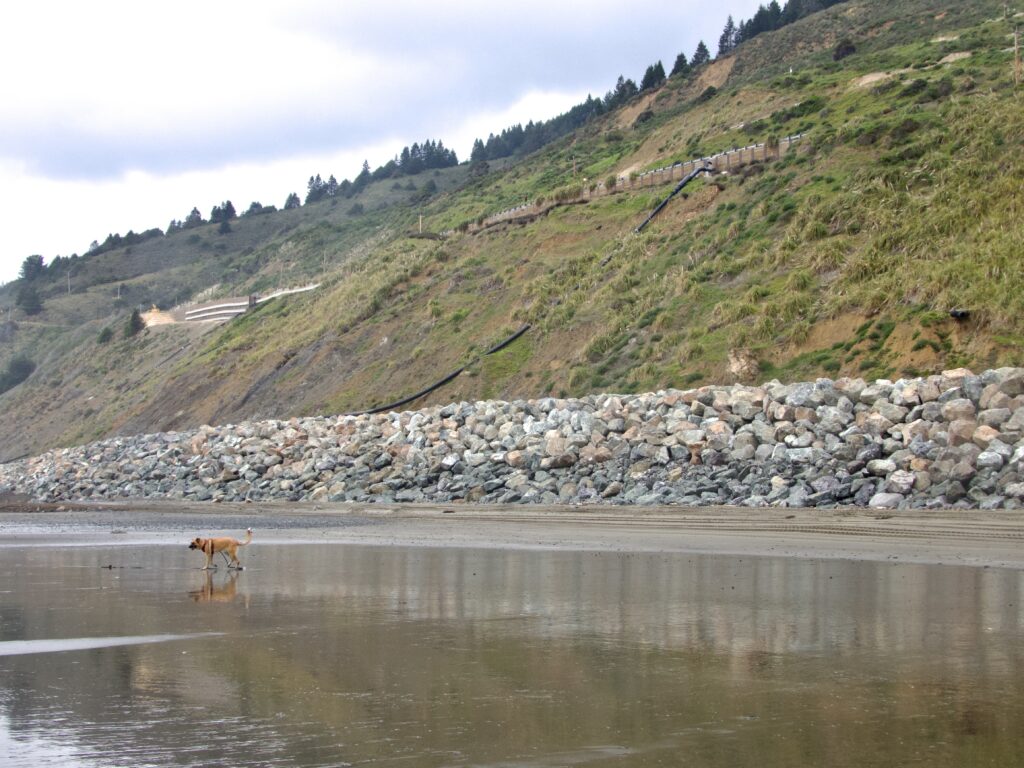
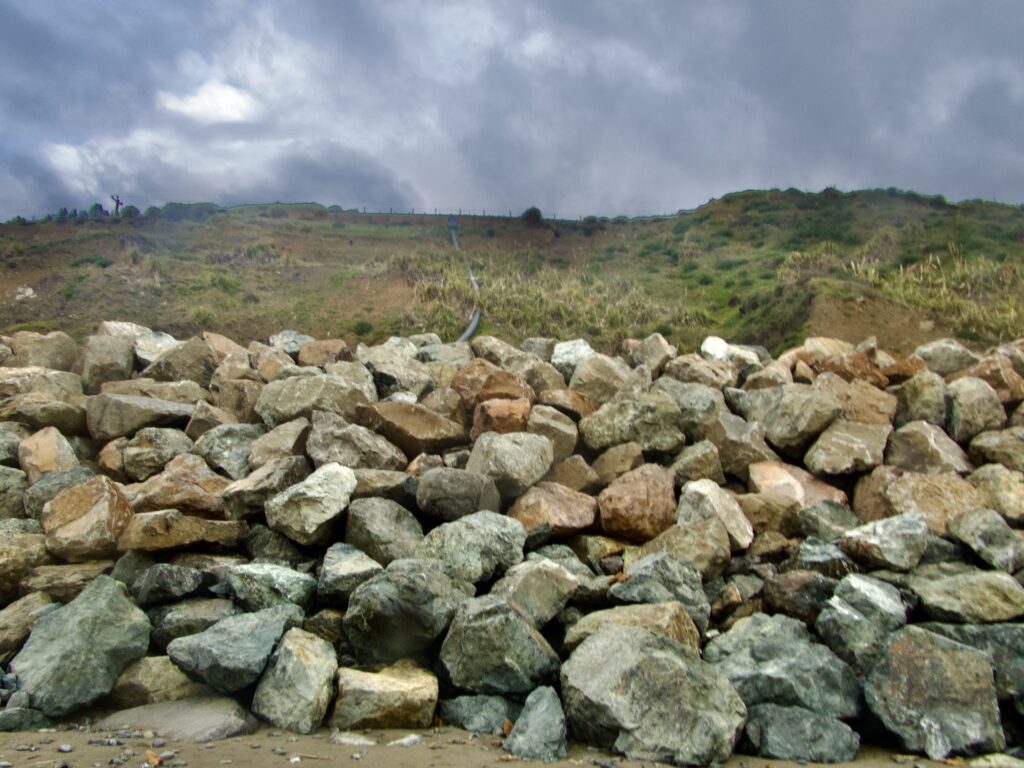
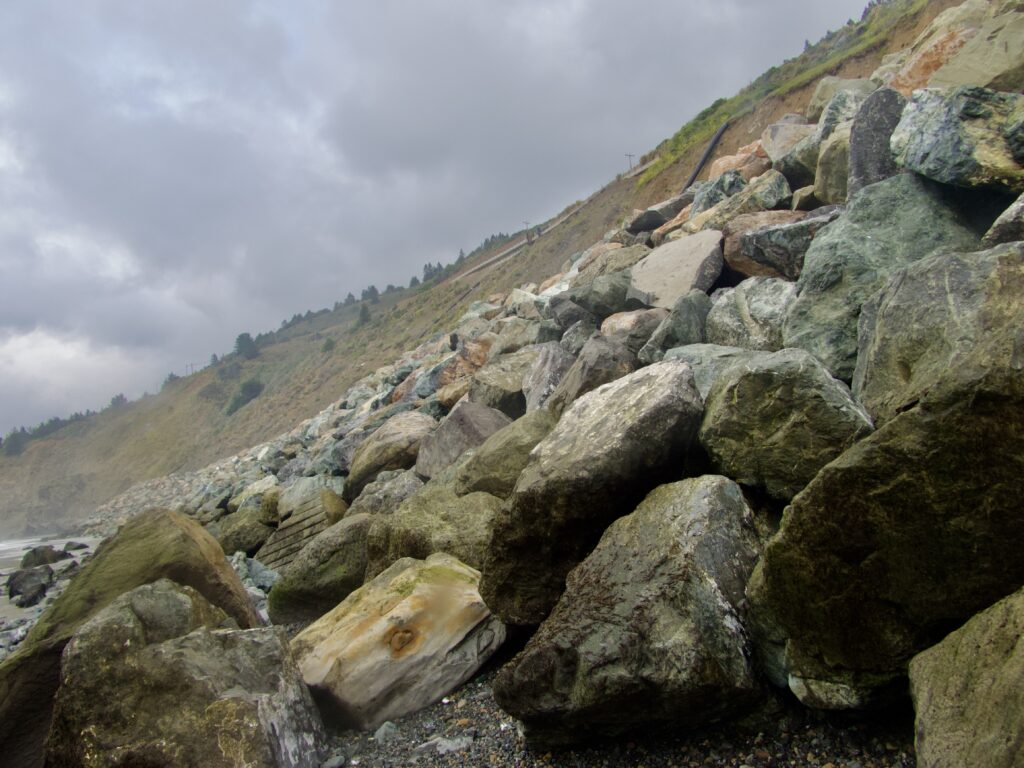
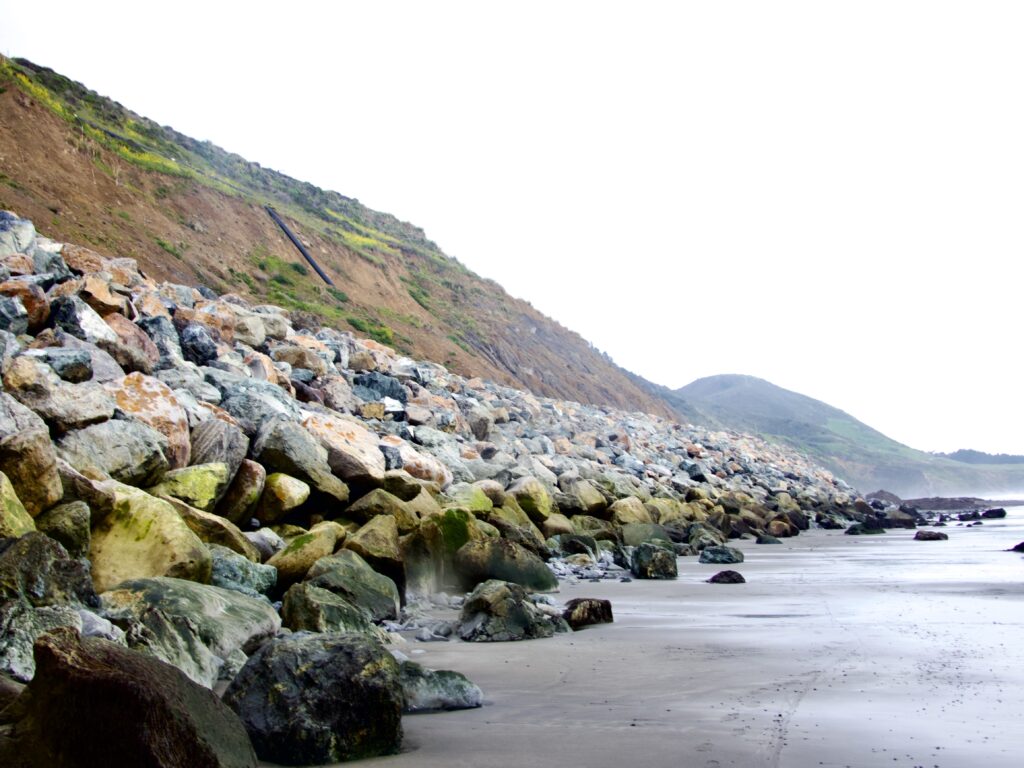
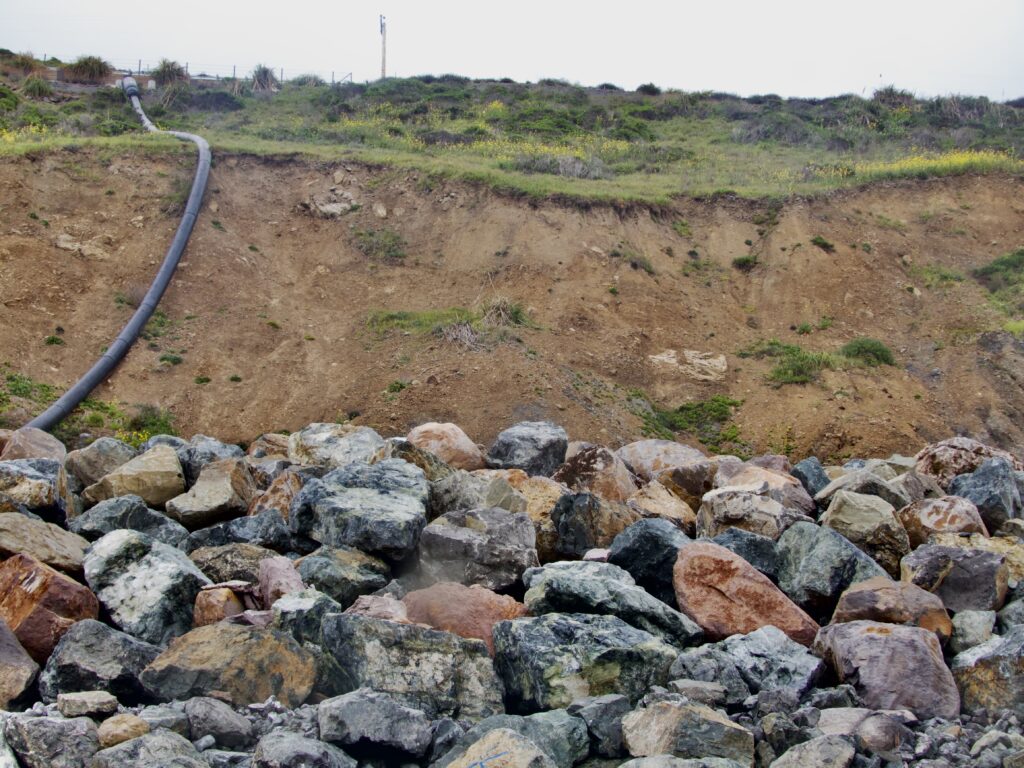
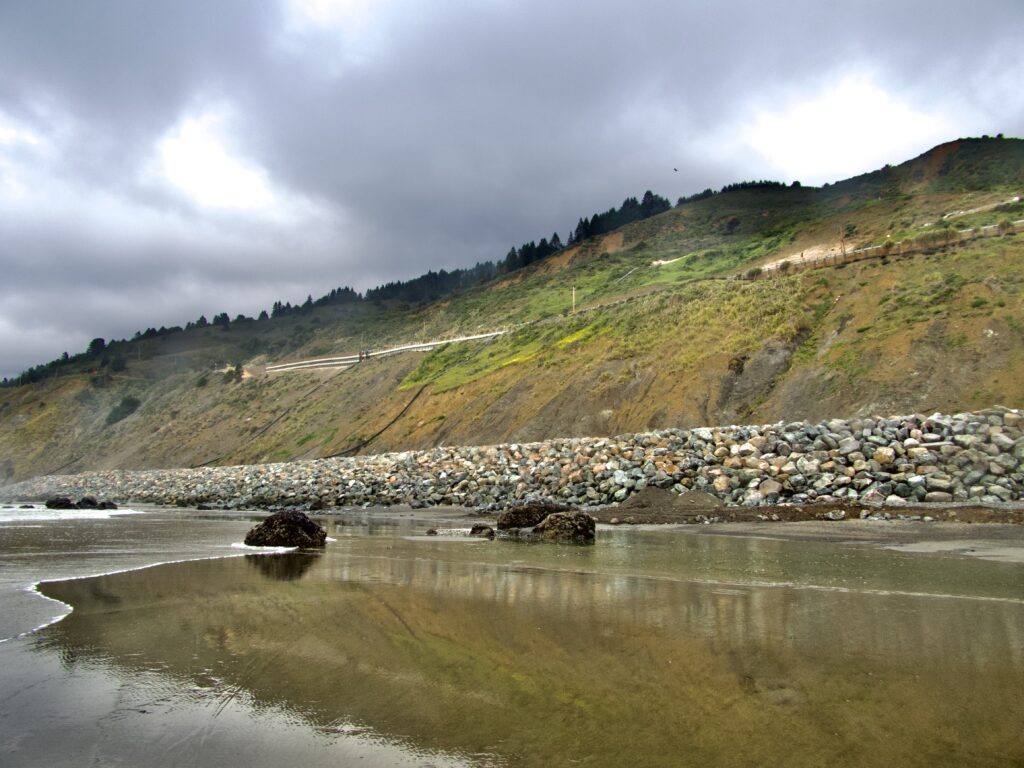
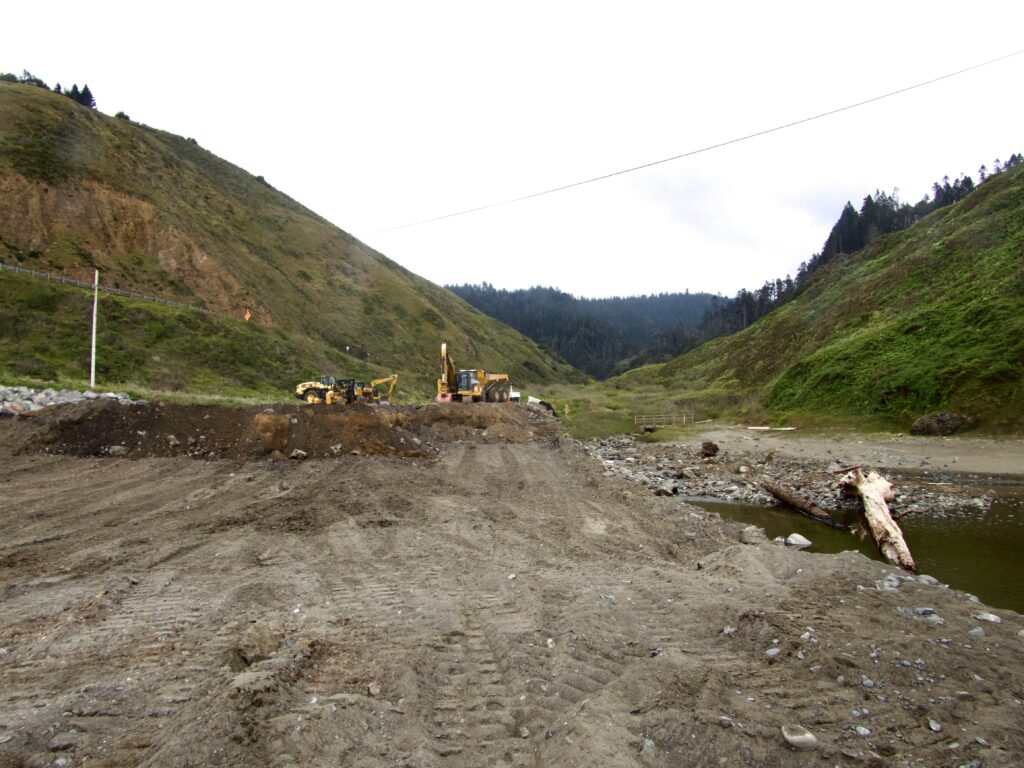
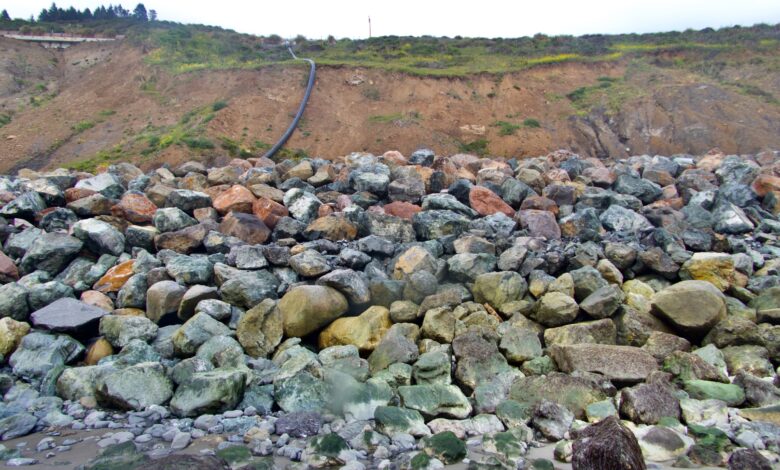
Second Story: One of the biggest seawalls ever built in California is now complete at Blues Beach. The massive construction site is in its final hours. And at the same time, the Kai Poma tribal nonprofit has signed the long‑delayed agreement to take ownership of the land Caltrans has been trying to transfer for four years.
But the bigger issues — the ones that actually matter — are still unresolved. And we’re the only ones paying attention.
Most outlets won’t touch this. Why? Because it’s hard work. Because it takes time. Because you don’t get 100x the clicks the way you do by posting yet another crime press release — the same one every other outlet copies and pastes without a question asked.
That’s the news diet now: one‑sided, authority‑driven, pre‑digested. It’s what people click, so it’s what they get.
The transfer of Blues Beach/Chadbourne Gulch Beach from Caltrans to the Kai Poma tribal nonprofit is the story you should care about — not another press release about some stranger getting arrested in Covelo, Fort Bragg, or Point Arena. Those crime blurbs get mindless, slobbering clicks every time. Blues Beach construciton, saving the highway and the tribal transfer is real news. How do we get you excited about real news again? We want to!
California just returned land to three tribes at once. That has never happened before — and never this far from any existing reservation. And that’s exactly how it should have been. McGuire and the others who pushed this were right to start it.
But to understand why this matters, you need the history no one in power seems to carry anymore:
- The Yuki, the people with the strongest ancestral claim to this land, were nearly wiped out. One Yuki group survives today as part of Round Valley.
- There is no reservation on the Mendocino Coast — unless you count the unofficial one under the northwest end of the Noyo Bridge — because the tribes who lived here were killed or force‑marched away after being “given” the Mendocino Indian Reservation (Fort Bragg).
- The Pomo, the most vigorous modern tribal presence here, traditionally moved seasonally between inland and the Coast. Their history is woven into this landscape.
This transfer isn’t symbolic. It’s a correction — one of the few this state has ever attempted at this scale.
And yet almost no one is paying attention.
Because it’s easier to click on crime.
Easier to repost a press release.
Easier to pretend that’s “news.”
But this — land returned, history acknowledged, a future reshaped
— is the story that actually matters.
McGuire gets an A‑plus on the land‑back itself. No question. But on execution, the grade drops fast. When we went out and walked the land, it was immediately obvious the real‑estate information had been botched. And, as usual, the moment we pointed it out, everyone except the people actually involved tried to shout us down.
The rest of the media wanted one thing only: to scream from the rooftops about how wonderful it all was — and nothing more.
No nuance, no corrections, no uncomfortable details.
Just a celebration.
And it gets worse. The tribes were asked to accept a deal where the land could be handed to them — and then taken back if they failed to meet every condition set by Caltrans and the California Coastal Commission. That isn’t a partnership. That’s a historical echo so loud it rattles the cliffs.
The tribes were also asked to submit a management plan — something that is almost never required when land is returned. They were flexible, willing, and simply asked what the plan was supposed to include. No one would tell them. Their first plan was rejected without explanation.
Then the acreage itself shrank along the way. One minute it was 176 acres, then it shrunk by 20 percent.. The lands originally promised in the bill — and in the early public descriptions — were suddenly reduced, with only partial explanations offered. And at one point, Caltrans wanted to manage Chadbourne Creek entirely through other state agencies, leaving the tribes with responsibility but not authority.
But after all the confusion, revisions, and historical amnesia, a better deal finally emerged. Blues Beach is going to the tribes. A final transfer agreement has been signed and will become public once the state approves it in May. And there’s more coming: additional land on the north end of Blues Beach is being restored and added to the transfer, along with access connections.
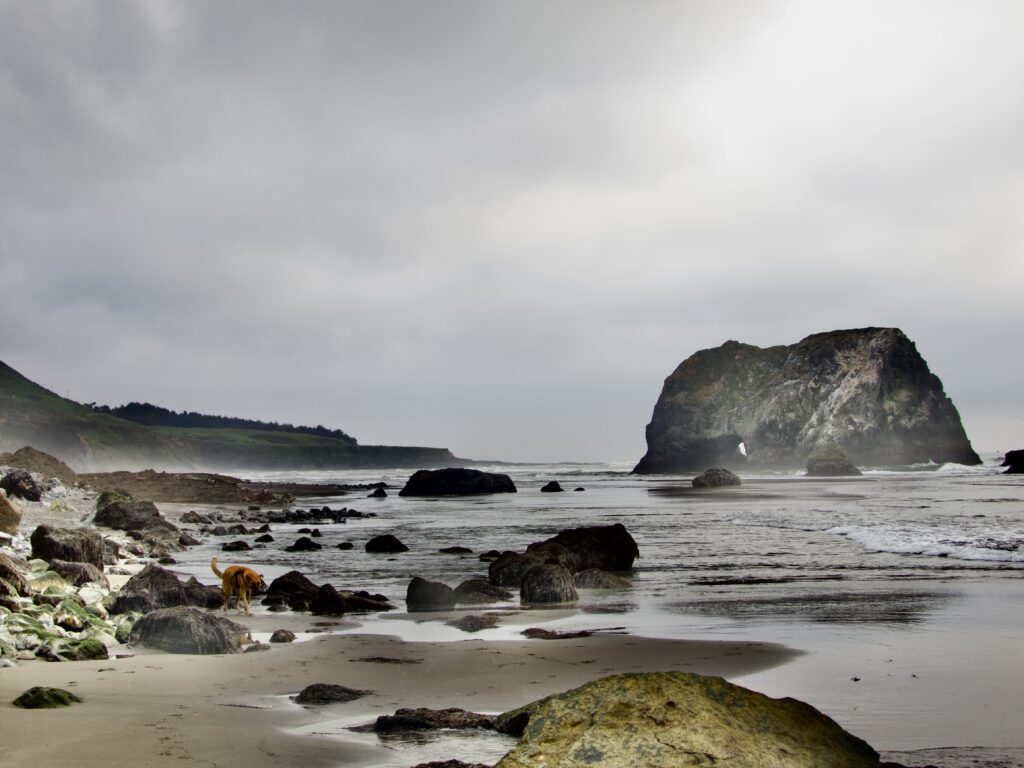
What the tribes gain is extraordinary — some of the most spectacular coastal land in California, rivaling anywhere in the world. They will own most of Blues Beach and have access across the rest. On both ends, they inherit towering bluffs layered with evidence of their ancestors. The northern bluffs were even purchased for them by the Mendocino Land Trust.
The long, tangled process may fade from memory, but the confusion it created — for users, for neighbors, for anyone trying to understand what happened — will linger. All because the people making decisions lacked the history of this place, and the people who held that history weren’t listened to soon enough.
Story Three: AB 2494 — The Reboot of Jackson Forest
AB 2494 is being framed as a statewide modernization of California’s Demonstration State Forests. In reality, it’s aimed squarely at Jackson Demonstration State Forest, the only forest where management has ever been contested. This is important because the state says Jackson is NOT a local resource, just one of many and all need to be managed for every Calironian. We demur. Each forest should have local input. We don’t need input here on lands near San Diego and visa versa.
Chris Rogers’ original bill limited logging to work tied to environmental protection, fire safety, or climate goals. That language has been removed. Logging is now back on equal footing with everything else.
The idea that this bill is about “all demonstration forests” is a convenient fiction. The others have never seen protests, controversy, or scrutiny. Jackson’s size, its redwoods, and its history make it the real target.
Cal Fire has long resisted local control of Jackson. That’s why the Jackson Advisory Group (JAG) was made toothless after it was created, and why the promised creation of “JAGs” in other forests never happened. The message has always been: people who live around Jackson shouldn’t have more say than someone in downtown Los Angeles.
Most people backing AB 2494 — including Rogers — likely don’t see the long‑term consequences. But the structure is unmistakable:
The bill contains no local mechanism. None.
Right now, any climate‑change proposal for Jackson goes straight to the State Fire Chief. Cal Fire selects a contractor — sometimes from out of state — and shapes the plan internally. The JAG never sees it. They are only required to be informed of timber harvest plans and the overall management plan, and even then they have no authority to make changes. This forest is entirely located in Mendocion County. Everything about it impacts US much more than Bakersfield. Its literally the beating heart of our county.
Jackson has had a local mechanism for 25 years. The others haven’t — and that’s fine. Jackson is different. It needs local oversight.
And buried deeper:
The state could charge whatever it wants for recreation. Camping, horseback riding, day use — all currently capped by law — would become unlimited. That might be reasonable if there were a local body with veto power. But there isn’t.
Without local oversight, fees and management decisions become tools of centralized control. The money all goes where, exactly? Can it be guaranteed to come back to staffing Jackson?
For myself, I part ways with some environmentalists. The research happening in Jackson — including the logging — has value. Yes, the state abused Jackson for years and treated it like just another timber forest. But the reality is we all live in wood houses, and the long‑term study of logging impacts happening here is irreplaceable. Keep the research. Keep some logging. But give local people real control and veto power. And fund the forest with carbon credits — which are a scam in many ways, yes, but also a gold mine for Mendocino County. If the system is flawed, then let’s use it to support something good. At that point, it stops being a scam and starts being a tool.
There are other enormous consequences to this new public appetite for media that behaves like obedient lap dogs to authority. Most outlets already do. And now we’re seeing something even worse: MAGA‑funded online operations trying to replace actual reporting with AI — no humans, no questions, just algorithm‑generated ‘positive’ news blasted out as if that’s journalism.” news gleaned from algorithms.
And here’s the truth we all have to face: there are enormous consequences when we — all of us — start wanting our media to behave like obedient lap dogs to authority. Most outlets already do. And now something even more dangerous is rising: MAGA‑funded online operations trying to replace real reporting with AI‑generated “positive news,” no humans, no questions, just algorithmic cheerleading dressed up as journalism.
We have to relearn the muscle we’ve let atrophy. We must question again. We must think again. We must learn to question again — all of us. We must learn to think again — together.
Assembly Bill 2494 is a great idea and Rogers is to be commended for writing it, only to have it edited in committee. We need YOU to think and be involved not be a head nodder for the press release versions of this in the Press Democrat and Chronicle and the rest of the local media.
This coast has always belonged to people who pay attention. People who walk the land, who know the tides, who remember the stories that were almost erased. And right now, we are living through decisions that will shape this place for generations — land transfers, forest laws, the future of our beaches, our bluffs, our redwoods.
If we don’t stay awake, someone else will write the story for us. Someone far away. Someone who has never stood in the fog at Blues Beach or listened to the wind in Jackson.
We can’t afford that. Not again.
So here’s the call: Question everything. Think for yourself. Show up. Speak up. Push back.
Because this coast is not saved by obedience. It’s saved by people who refuse to look away. It’s saved by us..


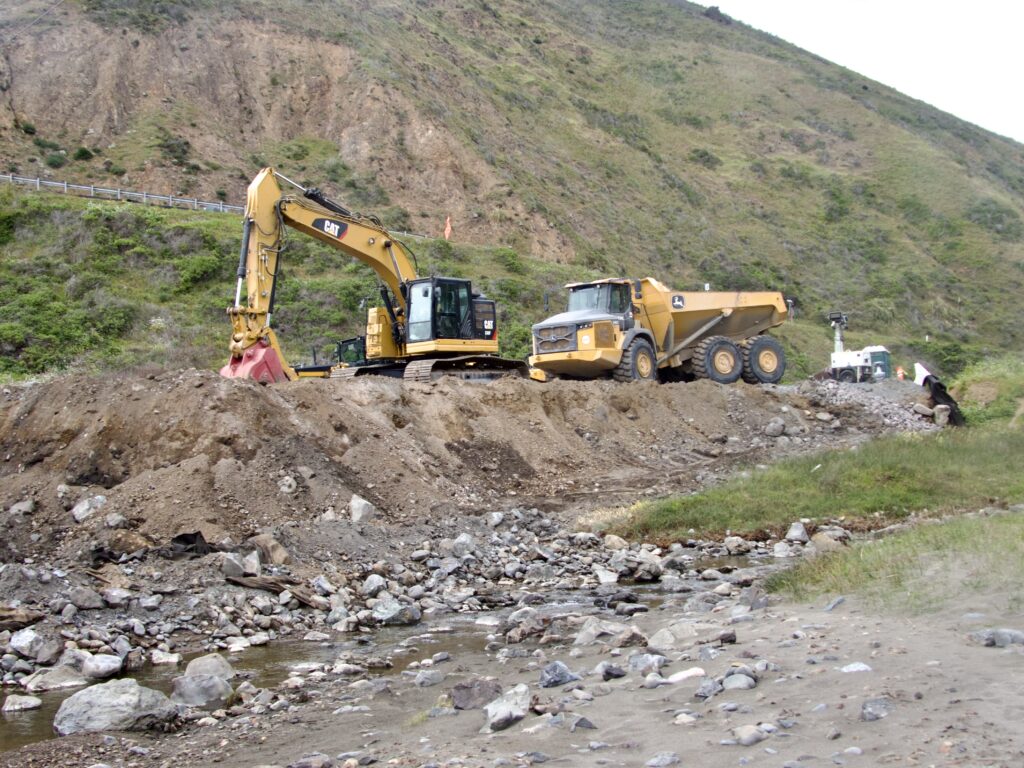
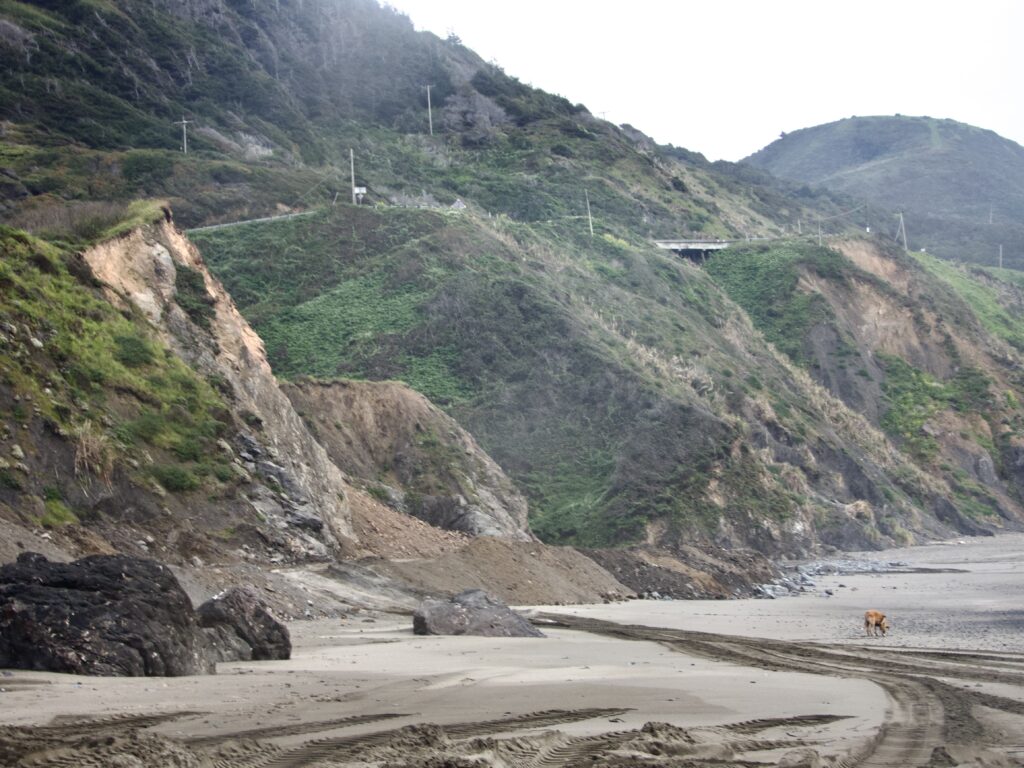
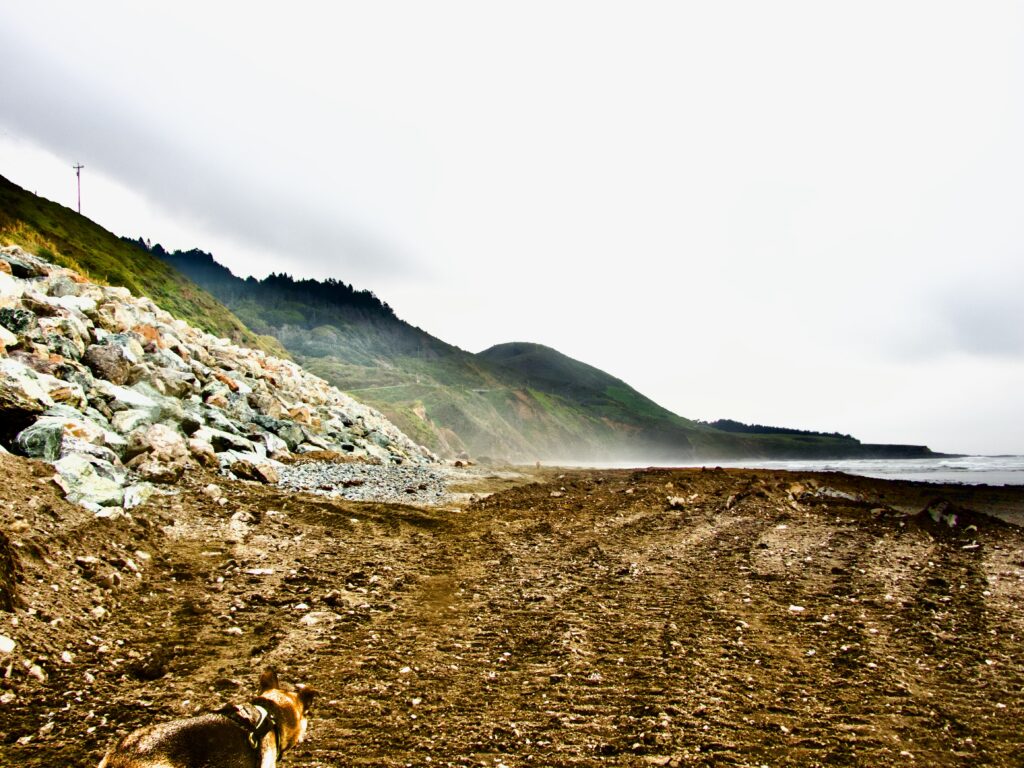
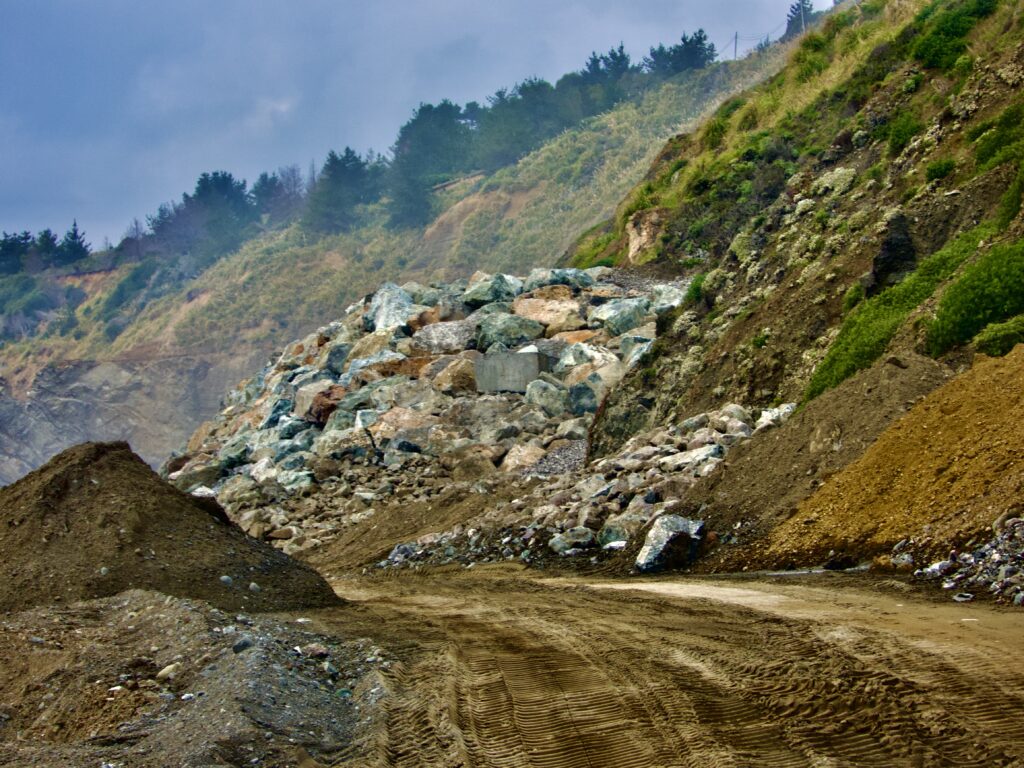
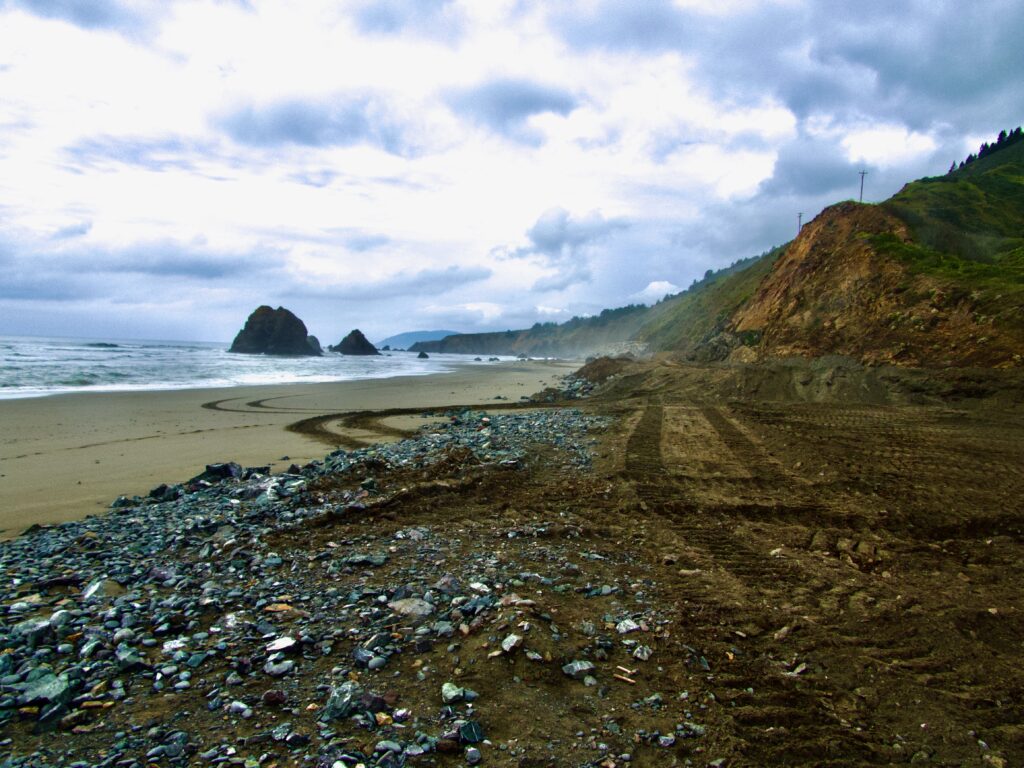
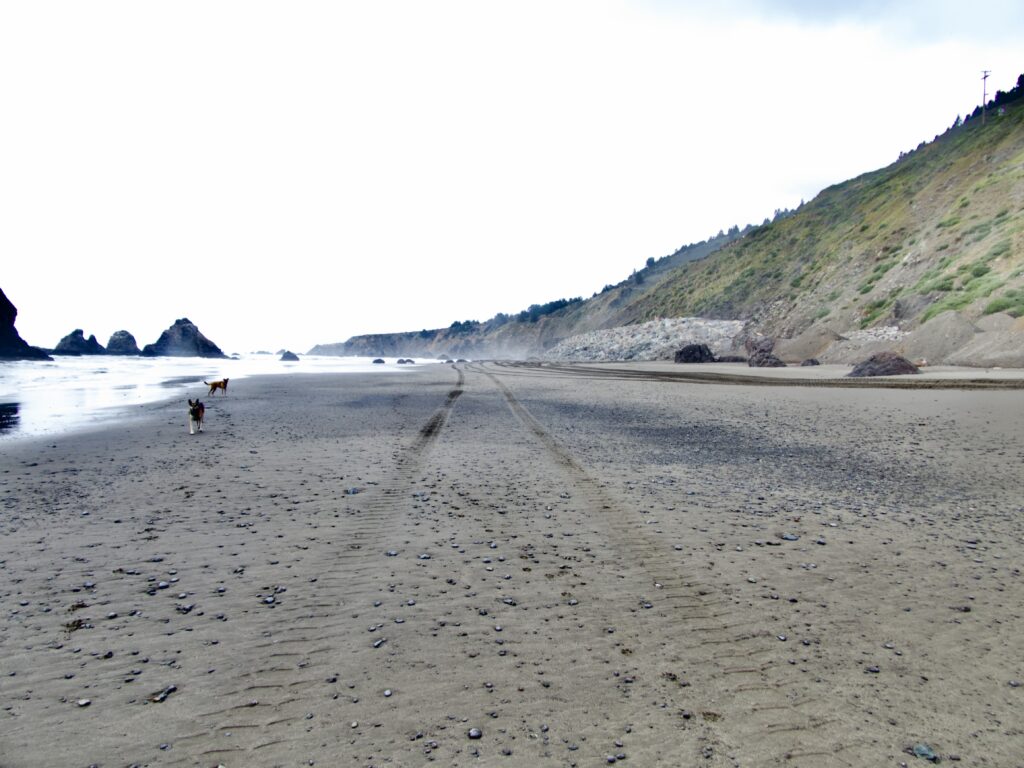
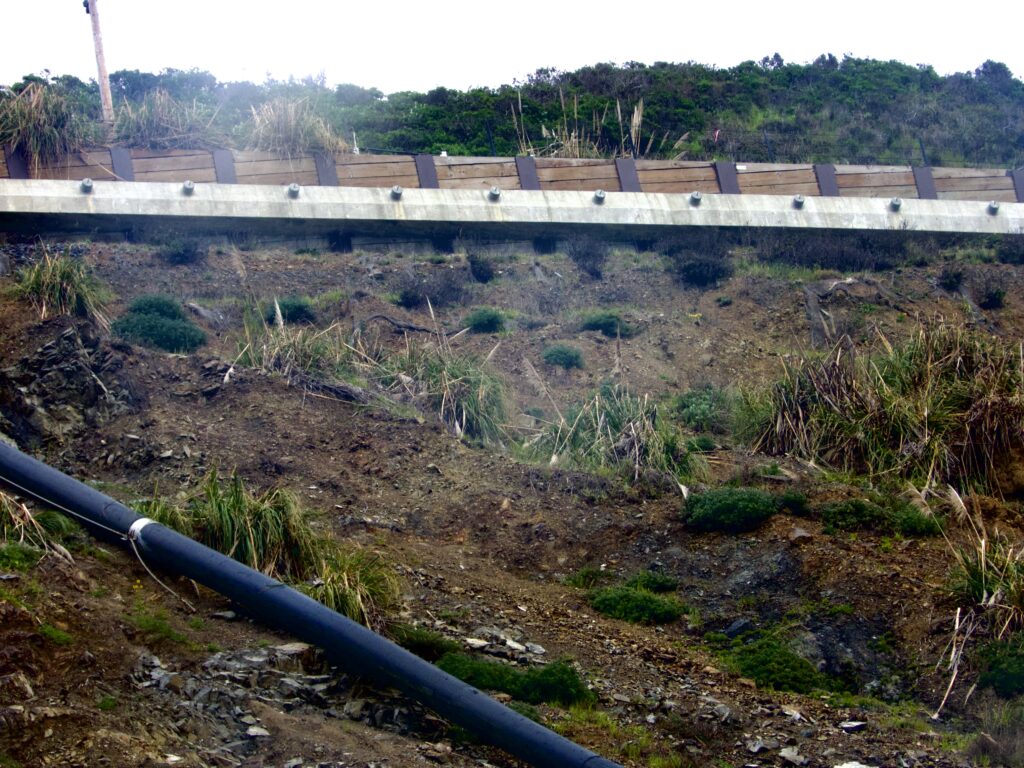
All the giant boulders are gone, and the Blues Beach entrance is about to be returned to the public before its transfer to the tribes. One piece of good news: Caltrans didn’t dig out the massive base boulders that leveled the pad. What used to be a rutted, eroded mess from reckless four‑wheeling is now a level road —
and will Caltrans leave the excellent parking area in place.
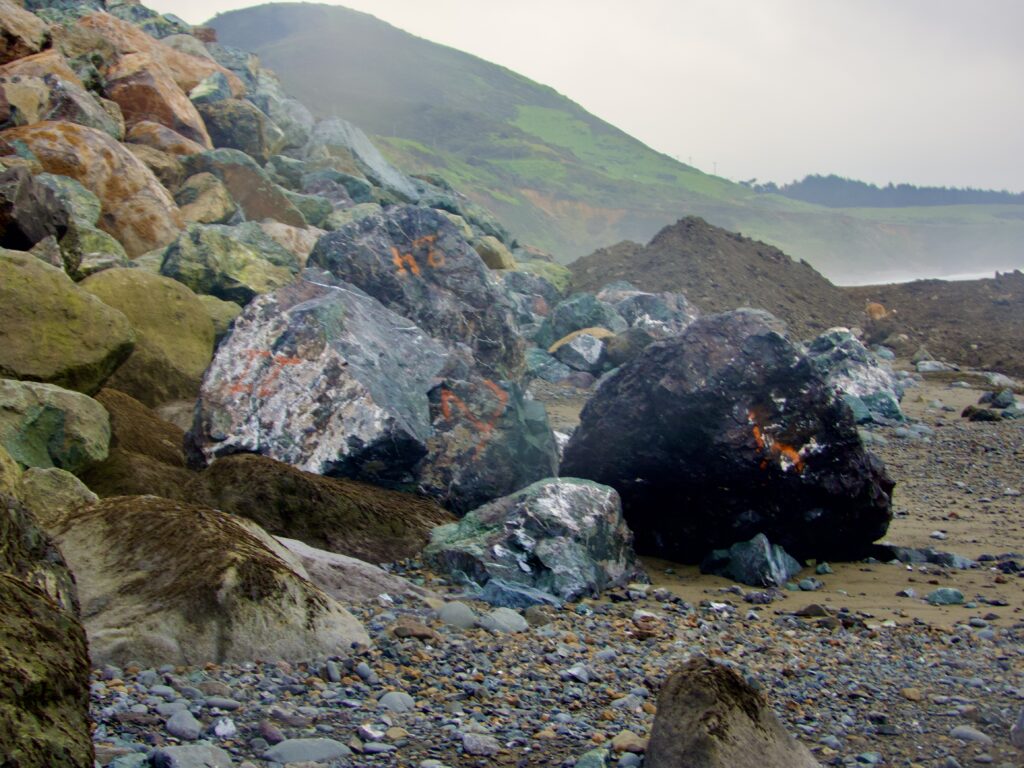
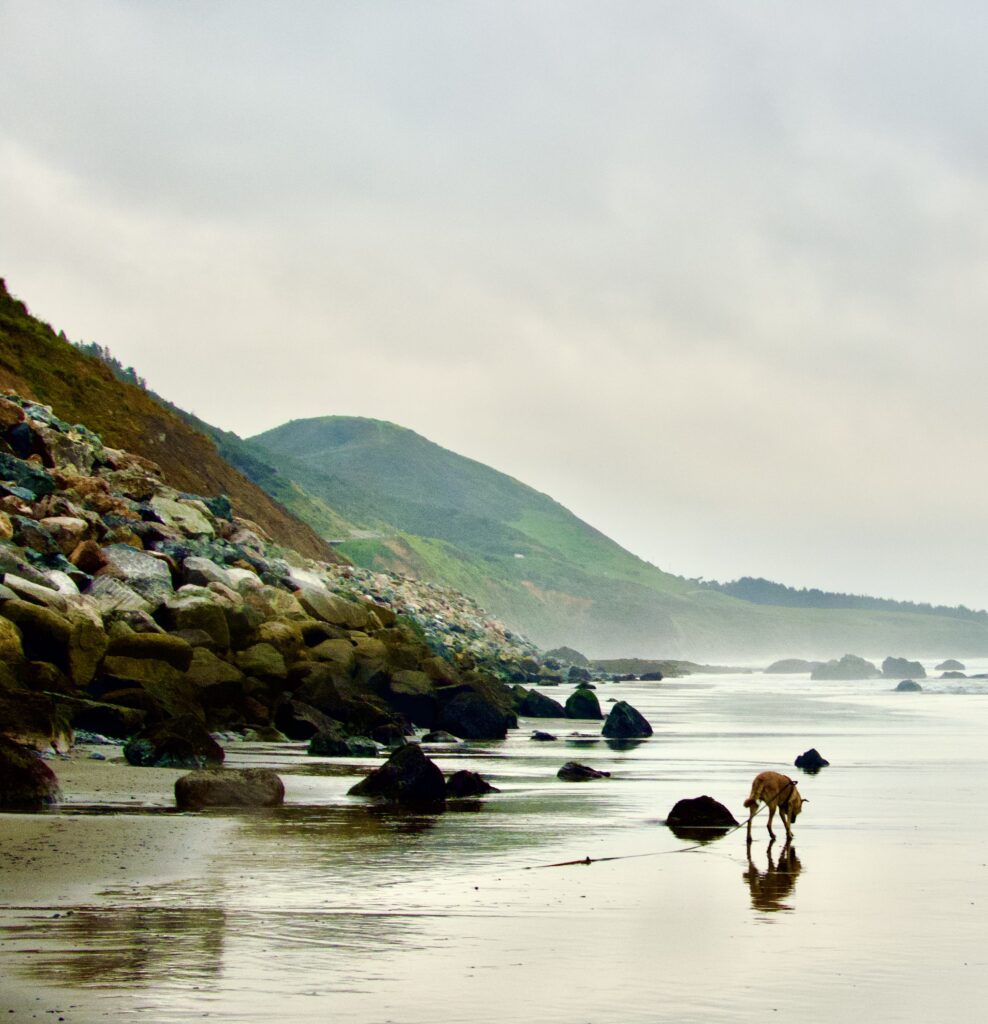
Don’t go down this way; it isn’t safe.
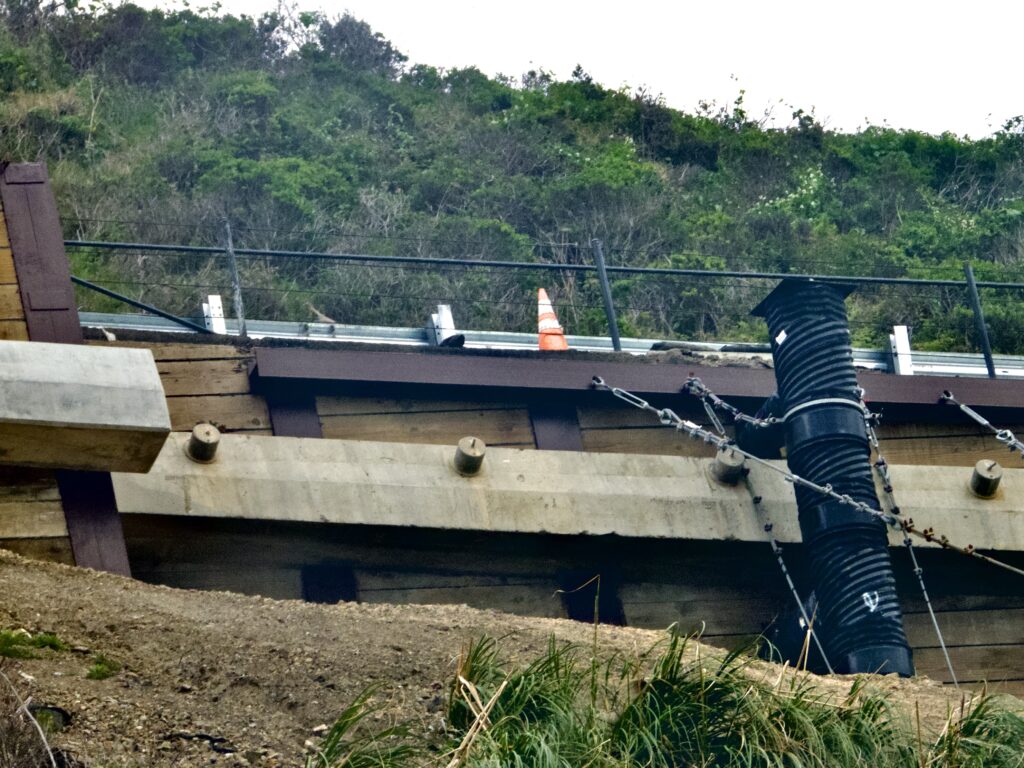
it stopped the road from sliding into the ocean then — and it’s still doing the job today.
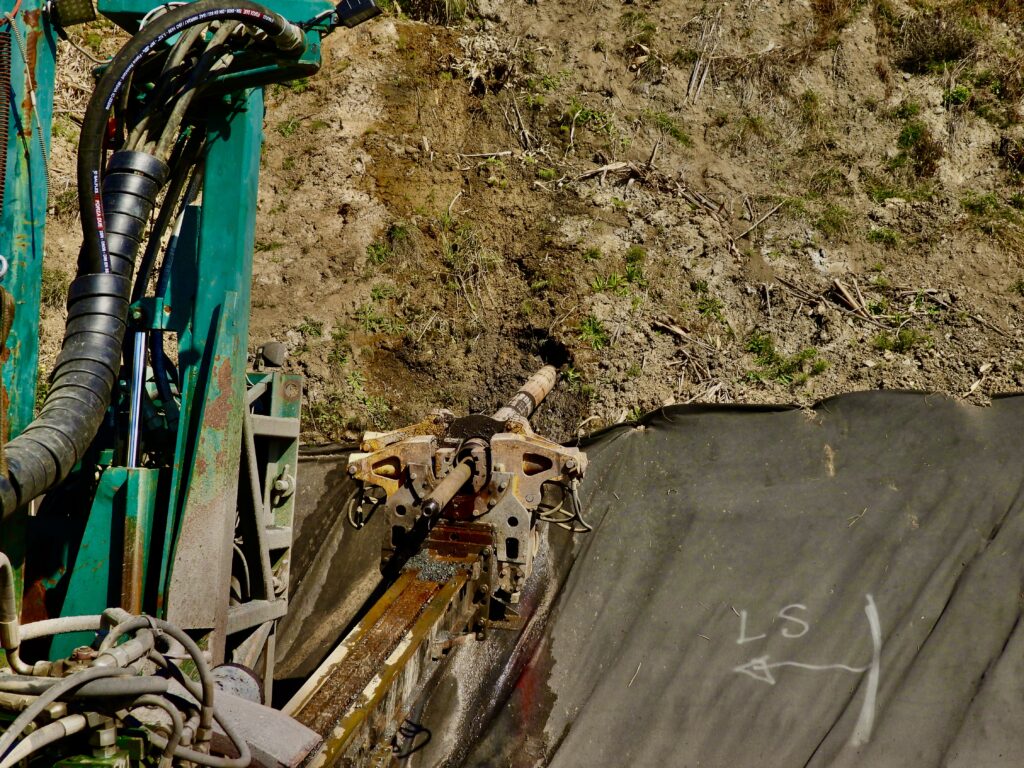
but there’s no calling one if a leak develops somewhere inside the mountain.