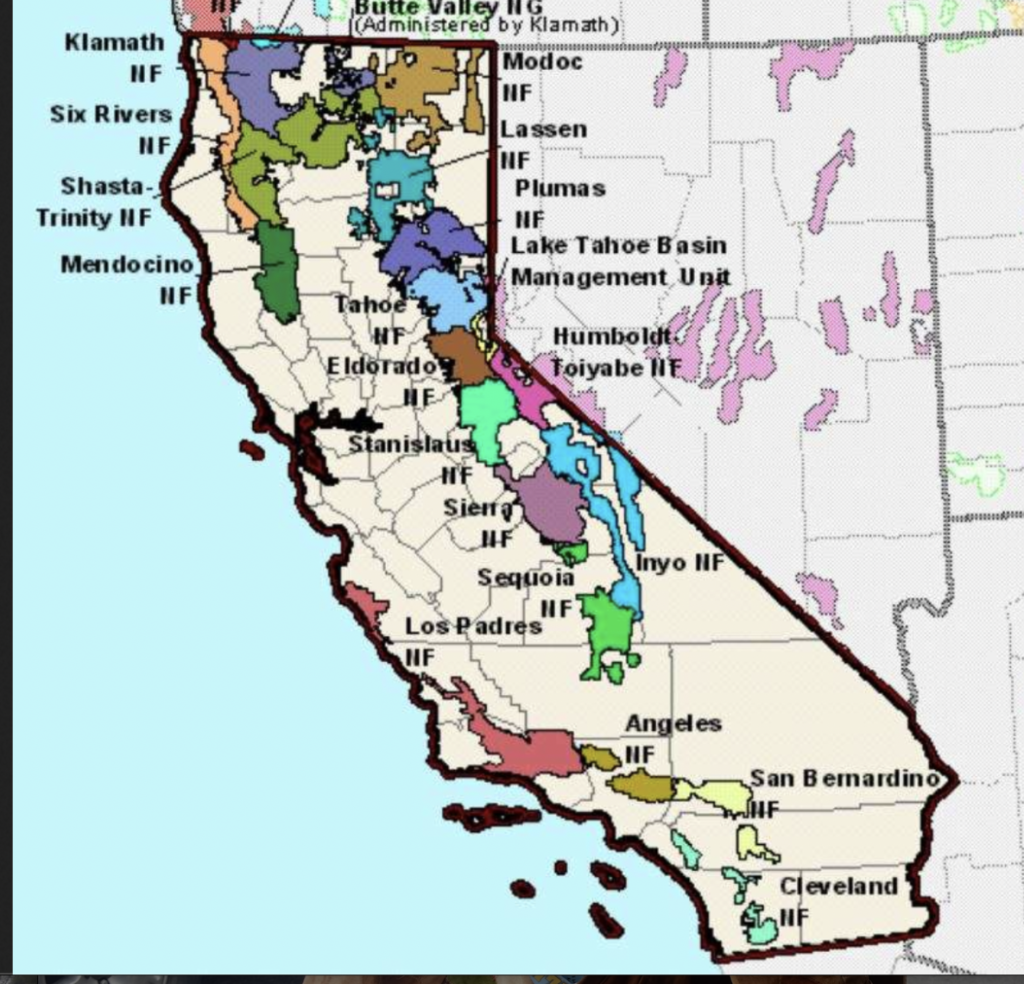
On Aug 18, the Trump Administration proposed removing all prohibitions on roads in National Forests. This is highly controversial. The New York Times gave a better summary than we could write, omitting one thing- that California does not have step protections for National Forests, while Colorado and Idaho do! That’s something that seems like it could be rectified. There are some good points about forest management but based on the size of the effort, its simply about decimating forests, which will only make even more brush to be thinned. From the New York Times: The Trump administration on Tuesday advanced a plan to open nearly 45 million acres of wilderness in national forests to road construction and logging, removing protections that had been in place for a quarter century. The proposal by the U.S. Forest Service would repeal the 2001 “roadless rule,” enacted during the Clinton administration to preserve the wild nature of forest land. It comes as President Trump pressures the agency to increase logging and to thin forests to reduce wildfire risk. The repeal would hand a major victory to Republican-led states and industry groups that have argued for years that the prohibitions have hindered economic development. More than a dozen lawsuits have unsuccessfully sought to strike down the rule. During his first term, Mr. Trump stripped protections from Alaska’s Tongass National Forest, the largest intact temperate rainforest in the world, only for the Biden administration to restore them in 2023. Roadless areas make up about 30 percent of all national forest land, encompassing nearly 60 million acres of America’s last wild areas and old-growth forests. They are home to more than half of imperiled wildlife, including grizzly bears, wolves, elk, salmon and wolverines. Forest land in the United States also absorbs millions of tons of carbon per year, helping slow climate change. In fact, some warned, roads could actually increase the threat of wildfires — partly because roads bring people. Nearly 85 percent of wildfires begin with human activity like discarded cigarette butts, burning debris or sparks from equipment, research has shown. Roads can also be corridors for invasive species, including flammable grasses. Mr. Trump has made timber production a top priority. Last year, he called for a 25 percent increase in logging from national forests and directed agencies to bypass endangered species protections and other environmental regulations to make it possible. Ms. Rollins then issued a secretarial memo declaring an “emergency situation” in national forests, establishing a process for the Forest Service to fast-track logging by cutting short public participation and legal reviews. After the proposal is published in the Federal Register, which is expected later this week, the Forest Service will accept public comments before making the rule final. Here is a fix it idea—The new measure is on the same subject that AB2494 covers; why not create state protections for National Forests in that Bill? Below we present BOTH the USDA statement and a rebuttal by Congressman Jared Huffman. USDA acts to remove roadless rule restrictions that exacerbate rising wildfire risk (Washington, D.C., Aug. 18, 2026) – Today, Secretary of Agriculture Brooke L. Rollins announced the U.S. Forest Service has filed a proposed rule to rescind in its entirety the national 2001 Roadless Area Conversation Rule, a one-size-fits-all restriction that has frustrated land managers and served as a barrier to wildfire risk reduction work across large swaths of America’s national forests.“Our forests can’t afford another decade of inaction. Across the country, we’ve watched preventable conditions – overgrown stands, insect outbreaks and disease – turn healthy landscapes into tinderboxes,” said Agriculture Secretary Brooke Rollins. “For too long, outdated restrictions have kept tens of millions of forested acres off-limits to the very treatments that improve forest health and reduce wildfire risk to our communities. Today, we filed a proposal to restore authority to local forest managers who know the land best, removing the barriers that have kept them from doing the work the land demands. It’s time to turn the page on the failed roadless rule and return our forests to health and productivity.”For 25 years, the 2001 Roadless Rule restricted road construction and limited the Forest Service’s ability to carry out critical active management work within inventoried roadless areas. Today, that includes more than 44 million acres of the 193-million-acre National Forest System. The rescission is intended to prioritize local agency decision-making over regulatory rules that are the same across the country, regardless of specific land management issues and needs.“This proposed rule is commonsense policy sought since the first Trump administration. In the years since, the need for it has only become more apparent,” said Deputy Secretary Stephen A. Vaden. “It is a credit to President Trump that we can begin to put into place a rule that will allow us to properly manage our national forests, because the first step to managing forests is to have access to them.”The agency will seek public comment on the proposal and on a draft of the environmental impact statement filed today in the Federal Register. The rescission removes national designation of roadless areas but does not mandate timber cutting or road construction. The action removes regulatory burden and sends decisions about roadless areas to the local national forest managers.“Active forest management is not an option. It’s essential,” said Forest Service Chief Tom Schultz. “More than 40% of inventoried roadless areas, primarily in the West, have high or very high wildfire hazard potential. And only 5% of those areas have received hazardous fuels reduction treatments since 2014. At the same time, more than a quarter of these lands—11.3 million acres—are already near existing roads. Acting now, thoughtfully and decisively, is the best way to restore the balance, reduce wildfire risk, and secure the long-term health of our forests and neighboring communities.”“For 25 years, the heavy thumb of Washington D.C. has hindered Montana’s ability to properly manage wildfire risk and road development on nearly 60 percent of Forest Service land across the Treasure State,” Montana Gov. Greg Gianforte said. “Today’s long overdue decision will empower states like Montana to pursue proper forest management on federal lands with local communities in mind. I’m grateful to President Donald J. Trump and Secretary Rollins for their strong leadership in restoring common sense to active forest management.”“Utahns love our forests, and loving these places means taking care of them,” Utah Gov. Spencer J. Cox said. “For 25 years, the Roadless Rule has tied the hands of local land managers with a one-size-fits-all federal policy. Rescinding it restores the flexibility to make thoughtful decisions based on the needs of each forest and each community. We can protect the landscapes we treasure by actively managing them for the next generation.”The proposed rescission reflects the administration’s commitment to return authority to local line officers and ensure they have the tools needed to restore forest health and productivity. The rescission aligns with Executive Order 14192, Unleashing Prosperity Through Deregulation, to alleviate unnecessary regulatory burdens, Executive Order 14225, Immediate Expansion of American Timber Production, Executive Order 14154, Unleashing American Energy, and Executive Order 14153, Unleashing Alaska’s Extraordinary Resource Potential.Returning roadless-area decisions to forest-level land management planning provides flexibility the national rule did not. Future land management decisions would be based on natural resource conditions and needs and informed by states, tribes, and communities. Rescinding the rule allows forest managers to address watershed, economic, and wildfire-risk conditions within the sideboards of existing laws, regulations, and policy. That would put those decisions within the same planning framework that guides individual plans throughout the National Forest System.More than 95% of inventoried roadless areas are in 10 Western states: Alaska, Arizona, California, Montana, Nevada, New Mexico, Oregon, Utah, Washington, and Wyoming. The proposed rule does not apply to national forests in Colorado and Idaho because those lands are under separate state-specific roadless regulations.To comment on the proposed rule and draft environmental impact statement, go to Regulations.gov. Public comments must be received by midnight on Sept. 21. Information will be available Aug. 19 on the Forest Service Roadless Areas webpage.### |
STATEMENT BY CONGRESSMAN JARED HUFFMAN ON THE PROPOSED TRUMP MOVE Washington, D.C. – Today, House Natural Resources Committee Ranking Member Jared Huffman (D-Calif.) issued the following statement after the Trump administration proposed to finalize the rescission of the 2001 Roadless Rule, which would strip protections from nearly 45 million acres of national forests and leave these lands vulnerable to reckless development: “The Roadless Rule protects nearly 45 million acres of the last untouched forests we have left, forests that filter drinking water for millions of families and support hunting, fishing, and small businesses in hundreds of rural communities. The Trump administration is at again, selling out our public lands to corporate polluters, ignoring the overwhelming objections of the American people. “And they’re doing this in the middle of one of the worst fire seasons on record. This administration fired thousands of Forest Service employees, including people trained to fight fires, slashed the agency’s budget, and let fire prevention work collapse. Now they want to build thousands of miles of new roads through our national forests, when we know most wildfires start within a half mile of a road, all so they can make it easier to clear cut old growth forests that have stood for centuries. It’s reckless. “These forests belong to the American people, and they have said, over and over, that they want them protected. We will fight this in Congress.” |