OP-ED Dr. Sarah Bisbing tells how AB2494 could hurt forest research
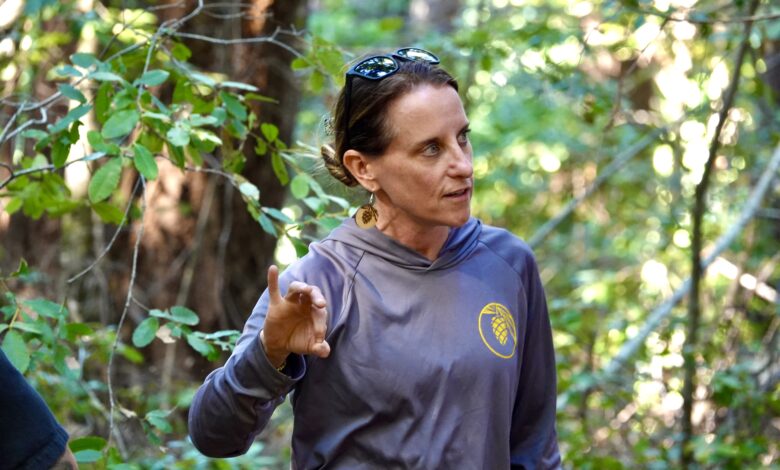
Editors Note- We met Sarah Bisbing in the Jackson Forest. This is her testimony on AB 2494. We checked if recent changes had allayed these fears. They had not. Acheya Wachtel and Frank and Linda are making a video about the forest. We have film going back for years of forest tours and meetings. With logging supposedly about to start, we want to show all perspectives on this issue and follow it through time. We encourage you to watch this video of an interview by Frank with Dr. Sarah Bisbing, Cal Fire Forester Jeremiah Steuterman and Justin Britton, head of the Cal Fire Demonstration Forest Program. We will have many more from the environmental, business, mushroom, and bike riding community over time.
Dear Editor, State Senators:
I’m Sarah Bisbing, a scientist researching forest resiliency at 3 demonstration state forests. I testify with my opinions, not those of my institution.
I am concerned about the changes AB 2494 makes to the management framework of the demonstration forests.
I am also concerned that Jackson-targeted legislation will disrupt critical wildfire & climate change mitigation elsewhere in California.
This bill was written for management at Jackson but impacts all 14 forests. The demo forests are not intended to be Parks or “protected” areas but instead for conducting long-term applied
research on adaptive and sustainable management and to test new techniques to meet diverse objectives.
Of the 33 million acres of forest in California, the demo forests at ~85,000 acres are highly impactful at just ~0.2% of the forest landbase.
I appreciate the work to modify this bill but remain concerned about the impact it will have on research.
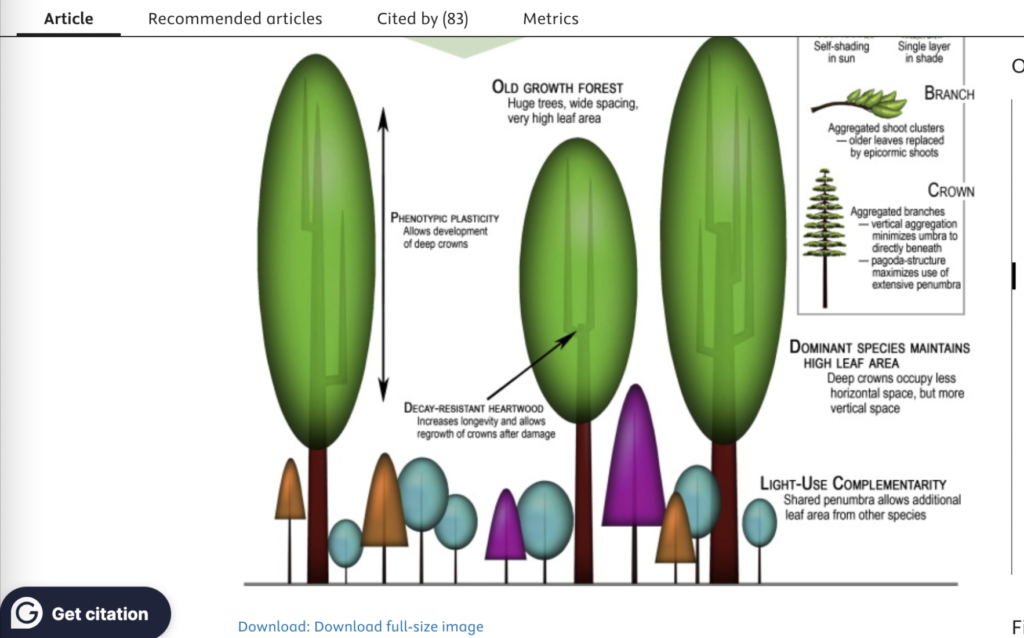
Experimentation on climate mitigation (designed by my lab and others) is being targeted by Save the Jackson Coalition and the bill’s sponsors, even though it tests the proposed acceptable
forest management detailed in this bill. Experimenting with techniques to maintain forests requires us to cut trees. Moreover, prioritizing “durable onsite carbon storage” and “biodiversity conservation” can conflict with managing for climate resilience.
I respectfully offer that public outreach has not been broad-based. Due to a lack of open conversation while in development, this bill does not explore the rationale behind research nor the breadth of options to meet proposed targets. The language is ambiguous and will impact our ability to inform
stewardship.
This bill also piles on the loss of federal forest research and further limits our ability to learn. It appears rooted in historical debates rather than reflecting how climate change is impacting forests across California. I respectfully ask that you not further impede our ability to do good-on-the-ground wildfire and climate mitigation work in the forests of California.
Other: 60+ institutions from all over the world. The research community includes scientists from California in the
University of California (UC Berkeley, UC Davis, UC ANR),
California State Universities (Cal Poly Humboldt, Cal Poly San
Luis Obispo, Sonoma), state agencies, USDA Forest Service
PSW Research Station, National Marine Fisheries Service, Rocky
Mountain Tree Ring Research, universities outside of California
(Nevada, Colorado, Washington, Oregon, Arizona, Wisconsin,
Minnesota, Texas, New Mexico, and Connecticut), as well as
scientists from Canada, Switzerland, and Portugal.
Editor’s note-Here is the bill. Read for yourself. We guarantee you will be astonished as to what it actually says:
https://calmatters.digitaldemocracy.org/bills/ca_202520260ab2494
Editor’s note- we met Dr. Sarah Bisbing and took a tour of the forest and the experiments she leads there, which will come to fruition once a timber harvest starts there. Save Jackson wants that timber harvest to wait for the passage of AB2494. That would move it to next year. Our worries are about the bill itself, which to our reading does not accomplish what the environmental and native community says it does. We think it could be improved and clarified in that area and in the areas brought up by Dr. Bisbing below. We are coming out with a series of stories on this. This was testimony she gave to the California State Senate. We asked her to let us run it as a letter to the editor. We also checked with her after the latest revision and she did not feel the problems have been corrected and we continue to be baffled as to why the bill does not define any of the things it is supposed to do and seems to be in such vague language as likely to accomplish nothing.