Letter to the Editor — Environmental activist Naomi Wagner on the recent timber harvest plan

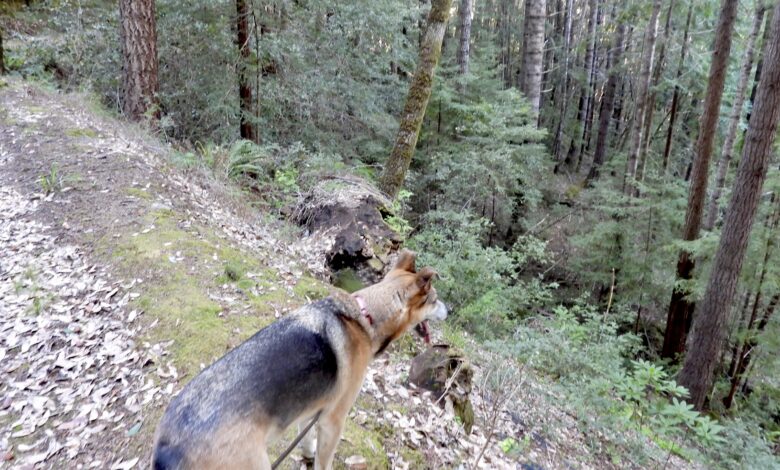
Editor’s Note — This letter was submitted by Naomi Wagner, a longtime Northern California environmental advocate. Wagner and the writer both attended a tour of a different timber harvest than the one covered in today’s articles. Wagner was also present when this timber harvest plan was introduced and, like us, has followed the process closely.
Dear Editor:
To hear CalFire and the Jackson Advisory Group (JAG) members tell it, timber harvest plan (THP) “Camp 8”, in Jackson Demonstration State Forest (JDSF), is the most “innovative”, “exciting” and “boldly experimental” plan ever to hit the slopes, (and I do mean slopes). By cutting down big trees, some well over one hundred years old, topping others and setting fire to half the plan area, they aim to create habitat for wildlife and birds by encouraging the formation of burned out crevices in trunks and the collection of aerial debris conducive to nesting places found in broken-topped trees. Only “a few” new roads would be built and, although the plan calls for tractor yarding, cables would be used to remove the logs. What’s not to love?
The twenty or more environmentally concerned citizens who attended the on-site JAG meeting, including members of the Coalition to Save Jackson, saw it differently. They said the THP, located above the North Fork of the South Fork Noyo River, would log the oldest, rarest second-growth redwood stands left in Jackson, — up to 200 years old — on some of the steepest slopes and most fragile soils in the forest, risking sediment delivery into the salmon spawning Noyo River. The plan abuts protected Old Growth in the Pentagon Grove and connects to some of the last undisturbed redwood stands in the region providing critical habitat for Northern Spotted Owls and Pileated Woodpeckers.
Not all the trees to be cut in the plan were marked yet, raising questions that received no answers, and crucial information, such as the tables showing how much total volume would be removed, was unavailable. CalFire’s verbally stated intention to burn half the area, for example, came as a shock to those who had never seen this impactful information in writing. Calling the plan “highly experimental”, forest manager Kevin Conway said this was a “new idea”, not yet incorporated into the final THP, characterizing it as a departure from basic fuel reduction into ‘cultural’ burning. Such ecological and spiritual practices are typically considered the purview of Native American TEK (traditional ecological knowledge), yet there was no Tribal input to the plan.
During the afternoon field trip, the public commented that the plan would allow logging in a ‘Late Seral Development’ zone (second growth with Old Growth characteristics) that is already showing signs of natural recovery and should be protected, not disturbed;
They said the THP should not be approved under the old, outdated Forest Management Plan (FMP) while a new FMP is pending and a true co-management plan with Tribes, now required by law, is not in place. Jackson Forest lies within Northern Pomo and Coastal Yuki ancestral territory. JDSF contains the highest known number of archeological sites in the state and is described by ethnologists as a “cultural landscape”.
Most emphatically, the public said no THPs should be approved while AB 2494 is passing through the legislature. This paradigm changing Bill, sponsored by EPIC (Environmental Protection and Information Center) and carried by Assemblymember Chris Rogers, would change the antiquated “Mandate to Log” built into the founding framework establishing the demonstration forest system, shifting it away from commercial logging to prioritize climate resilience, restoration, recreation, and Tribal co-management. Under the new definition, tree cutting in the state forests is permitted only for ecological, restorative and research needs. The Bill has flown through the House and will be on the Governor’s desk this year. Why the rush to approve Camp 8 and other logging plans?
At the end of the day, the public’s concerns fell on deaf ears. Out in the woods, the JAG voted unanimously to approve the plan. More urgently, another THP, the AMEX plan, is ready for operation. Located directly opposite Camp 20, aka Chamberlain Creek Campground, the 500 acre plan is just down-slope from ancient village sites.
In a letter to the JAG, the Board of Forestry and Assemblyperson Rogers’ office, the Coalition to Save Jackson stated: “…since early 2023, ‘pause’ in logging has been in place in JDSF during which time much needed changes and upgrades have been developing, including a pending new Forest Management Plan (FMP), compliance with new laws such as the Tribal Stewardship Policy from CNRA and AB 52 amendments to CEQA, and initiating co-management contacts with Tribes. Now, California Assembly Bill 2494, legislation to shift the Demonstration State Forests’ mandate away from commercial logging towards restoration, recreation, climate resilience and Tribal co-management, is under consideration in the California State Senate, after passing overwhelmingly in the Assembly. We believe the consideration and approval of any THPs, new or old, and the resumption of commercial logging at this time undermines the public trust …and furthermore, contradicts CalFire’s own declared “New Vision.”
Looks like Calfire’s ‘vision’ may be blurred by the Timber dollars in its eyes.
Sincerely,
Naomi Wagner
Willits, Ca. 95490