What You Weren’t Told: The Crimes That Go Unreported — and the Ones That Get Overhyped
Creepy Crime Stuff from Mendo
Frank joined the rest and reported on some old news during Frank’s stint on KOZT recently. The Sheriff’s Department sent out a press release last Monday about a horrific attack on a 72‑year‑old woman in Brooktrails — an attack that actually happened on Friday. From the law‑enforcement side, I get it. Small departments need time to get details right, and not everyone works seven days a week. That part makes sense.
What doesn’t make sense is the media response. These other sites never ask a single question. They slap up the raw press release within seconds of it landing in their inbox. This is not journalism. This is stenography. When law enforcement writes the news, they write it according to their rules — and to be fair, our local agencies do a better job than many I’ve worked with elsewhere. But their releases are meant to inform the media, not replace the media.
Worse is the story of the popcorn man, who has been selling funky corn at Reggae on the River and added .420 to his business name in one place. He has been doing this for years all over the county but nobody thought maybe we should check on whether kids were getting cannabis this way until the FBPD did in July 2025? Everybody else just threw up the press release, which answers no questions but what the FPBD needed to say about a triple-felony arrest. The media fails miserably in this one, so badly it could not have even been imagined back when I started as a reporter. I mean there were always wanna bees puttiing out bad zines and such but today, the worst of those is better than the slap up the press release media, which is pretty much ubiquitous. This story needs context and much more explanation and looking into how kids get a strong herb that can hurt them, as beloved as it is by adults. We should ALSO look into kids getting a hold of strong mental health drugs, not just in their parents medicine cabinent but by prescription. There are literally 100,000 articles about the dangers of cannibis to every one about the dangers of STRONGER, MORE DANGEROUS mental health and other prescription drugs.
In every newsroom I’ve ever worked in, you were required to rewrite a press release — interpret what happened, craft a clean lede, strip out jargon and CYA language, and give readers clarity. You didn’t just hit “publish” on whatever the sheriff’s office handed you. But that’s exactly what’s happening here, day after day. And it’s warping the public’s understanding of crime, safety, and what actually matters.
And it doesn’t matter whether the press release makes sense or not — or whether it contains errors, which does happen with at least one department. It makes no difference. Almost no one questions anything. Almost no one adds a single fact, correction, or piece of context. They just hit “publish.” By being first, they win the only currency that seems to matter in 2026: clicks. Then they move on and never look back, even if the person they just blasted across the internet turns out to be innocent.
Ironically, just as I typed that last line, an updated press release from the Willits case landed in my inbox. The Sheriff’s Department was correcting an error in the original. The 72‑year‑old woman had been attacked so violently she jumped out her bedroom window, breaking her legs, then crawled to a neighbor’s house to get help. Horrific doesn’t begin to cover it.
The correction? The first release said the suspect, 38‑year‑old Don Wiltse, was her “relative.” The updated version clarifies that the woman considershim her grandson, but he is not biologically related. I can only imagine her actual family saw that first version and panicked — no one wants their name or lineage confused with an accused attacker.
It’s Willits, sorry — and Wiltse’s history with law enforcement is long. In earlier years, we might have dug into why he was released on parole so many times after violating it. Maybe there’s a perfectly reasonable explanation. Maybe there isn’t. But that’s exactly the kind of question real reporters used to ask.
Today, that curiosity has evaporated. Modern news has been cheapened into a race to the bottom, where the “story” is whatever arrives in the inbox first. No verification, no context, no follow‑up — just the fastest possible regurgitation of someone else’s unchecked work. It’s the illusion of journalism without any of the labor. And the public pays the price for that laziness every single time.
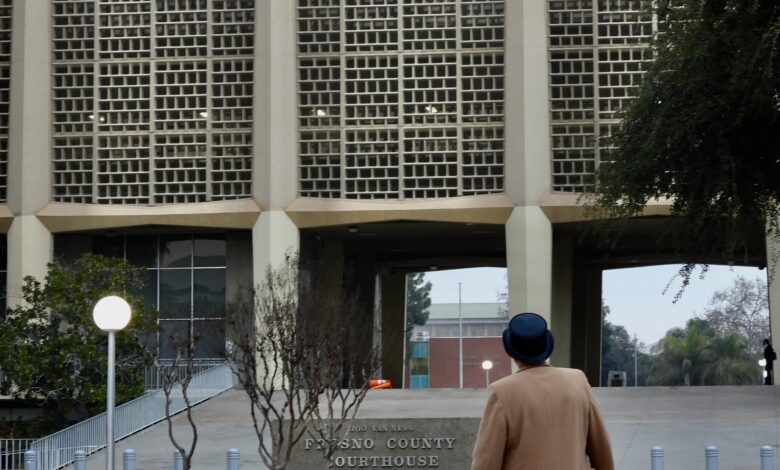
And then there’s the court system, which has quietly made public access nearly impossible. If you want to see a file, you have to physically go to the courthouse during limited hours and pay for the privilege. And what you get isn’t even the real public file — it’s a heavily redacted version scrubbed of anything that might make a DA or judge look sloppy, biased, or just plain wrong.
When I’ve tried to pull cases, there’s always a long wait to “preview” a file, and half the time the system doesn’t work at all. You end up having to pay first, sight unseen. This is not transparency. This is a velvet rope around information the public is legally entitled to. And it’s one more reason why real reporting in Mendocino County has become nearly impossible — the institutions that should be open are now locked down, and the media that should push back has forgotten how.
There was a time when court files were actually accessible — the real files, the same paper folders used by officers of the court, not the sanitized, redacted versions the public gets now. Sensitive material was sealed, as it should be, but everything else was open for inspection. That’s how reporters could track patterns, spot abuses of power, and hold DAs and judges accountable.
Those days are gone. Now we’re asked to simply trust the courts, trust the DAs, trust the public defenders — without access to the records that once made that trust verifiable. The ideal of open, accessible courts was quietly discarded by the California Judicial Council, and almost no one noticed. But the cost is enormous: the public can no longer see what the justice system is actually doing, and reporters can no longer check whether the people in power are using that power responsibly.
Twice now, since the Judicial Council’s decision to cut off online access to criminal court files was adopted in Mendocino County last summer, people have come to me claiming they’re innocent, getting nothing from their attorneys, and begging for help. And twice I’ve had to tell them I can’t do a thing — because I can’t read the files. The Judicial Council made sure of that.
This is the future we’re walking into: more and more people trapped in a system that knows it can operate in the dark. When no one can see the record, no one can question the record. And yes, some reporters are being spoon‑fed select files now — a little access here, a little access there — but that’s a game I won’t play. If the public can’t see it, if all reporters can’t see it, then it’s not transparency. It’s control.
What astonishes me most is that nobody inside the system has taken a stand for restoring public access. Not one judge, not one attorney, not one court officer willing to say, “This isn’t right.” I suppose you can misread entire professions the same way you can misread people — you think they’ll defend transparency, you think they’ll care about the public record, and then you watch them shrug as the lights go out.
So I watch the news, but I stay out of criminal‑court reporting now — unless something as horrendous as the allegations in this Willits case forces its way into daylight. And even then, I worry. What aren’t they telling me? What would the story look like if I could actually read the public records we used to rely on? It’s the cases they don’t tell us about that keep me up at night. The ones that never make a press release. The ones that vanish into sealed files and silent courtrooms. Those are the stories that should terrify all of us.
To that end, I’ve noticed some truly bad cases buried in the booking logs — and I’ve heard about others through the grapevine — but you’ll likely never hear about them. Not in a press release, not in a headline, not in the sanitized “crime roundup” the public gets fed. The worst cases are often the quietest ones. And when the system hides them and the media doesn’t bother to look, they simply disappear.
We’re still waiting to hear back from CHP about the three‑car crash that shut down Caspar Creek Bridge for three hours last week — who caused it, whether alcohol was involved, the basics any real outlet should ask. The other media never ask for anything, so when I do, it becomes a burden. They take whatever is handed to them, no questions asked.
The world has changed so dramatically, for better and for worse. On the better side, information can move fast. On the worse side, nobody bothers to verify it anymore. The press release becomes the story, the story becomes the truth, and the truth becomes whatever the system says it is.e.
We need to get back to good journalism — the kind that asks questions, checks facts, pushes back, and refuses to be the system’s stenographer. Because without that, we’re not a community informed by truth. We’re a community managed by whatever the institutions choose to tell us.
Take the child‑abuse case I stumbled across in the booking logs — allegations involving a child under 11. Chilling. Serious. The kind of case any functioning press corps would be all over. Yet there was no press release, no headline, no follow‑up, nothing. Total silence. Meanwhile, an elder‑abuse case with far less ambiguity was blasted everywhere instantly, errors and all, because it was easy and dramatic and required no work. That contrast tells you everything: the system hides the hardest, most consequential cases, and the media amplifies the ones that are simple, sensational, and already packaged for them.
And here is the updated press release about the senior citzen brutal assault incident in Willits from the sheriff’s department.
UPDATED PRESS RELEASE (3/17/2026 at 11:00 A.M.):
This updated press release is being distributed to correct an inaccuracy that was published in the original press release from 3/16/2026. The original press release stated the 72-year-old female victim from Willits was assaulted by her relative, Don Wiltse (38-year-old male from Willits, CA). The victim and Wiltse are not biologically related, but they lived together prior to the incident on 3/13/2026. The victim told investigators she considered Wiltse her “grandson”, but they are not relatives.
This case is still being actively investigated and anyone with information related to the assault that occurred on 3/13/2026 is requested to contact the Mendocino County Sheriff’s Office Dispatch Center at 707-463-4086 (option 1). Information can also be provided anonymously by calling the Sheriff’s Office non-emergency tip-line at 707-234-2100.
ORIGINAL PRESS RELEASE:
On 03/13/26, at about 12:20 A.M., Mendocino County Sheriff’s Office Deputies were dispatched to the 27000 block of Hawk Drive in Willits for a reported assault. The reporting person notified MCSO Dispatch that their neighbor, a 72-year-old female from Willits, crawled to their residence and requested law enforcement due to her being assaulted by her relative (corrected above), Don Wiltse (38-year-old from Willits, CA).
Officers with the Willits Police Department were first to arrive on scene, and first aid was rendered by medical personnel who confirmed the victim sustained injuries to her face consistent with strangulation and broken bones in her lower extremities. The victim was examined and initially transported to a local hospital before being transferred to an out-of-county hospital for further treatment.
Sheriff’s Deputies initiated an attempted murder investigation upon meeting with the victim at the local hospital. Willits Police Officers remained in the area and observed Wiltse walking around the driveway of the victim’s residence where he also resided. Willits Police Officers detained Wiltse pending further investigation by Sheriff’s Deputies. While being detained, Wiltse made threatening statements to a Willits Police Officer and a Deputy Sheriff regarding his intent to cause them harm.
During the investigation, Sheriff’s Deputies learned that an argument occurred between the victim and Wiltse leading to Wiltse physically assaulting the victim inside the residence. Wiltse chased the victim into her bedroom and strangled her while making threats to kill her. The victim attempted to call 911, however Wiltse took her phone. The victim was able to jump from a window which was approximately 9 feet from the ground. Upon landing outside, the victim crawled away from the residence and obtained further assistance from her neighbors to summon law enforcement.
During this investigation as search warrant for the residence was granted where Sheriff’s Deputies collected evidence consistent with the reported assault.
Wiltse was placed under arrest 664/187 PC (Attempt Murder), 245(a)(4) PC (Assault with Force Likely to cause Great Bodily Injury), 243(d) PC (Assault causing Serious Bodily Injury), 422 PC (Criminal Threats), 368(b) PC (Elder Abuse causing Great Bodily Injury), 69 PC (Threatening or resisting a Peace Officer by Force), 591.5 PC (Remove a wireless communication device to prevent summoning Law Enforcement). Wiltse was booked into the Mendocino County Jail where he is being held in lieu of $1,205,000 bail.
This investigation is ongoing and anyone with information regarding this case is requested to call the Mendocino County Sheriff’s Office Dispatch Center at 707-463-4086 (option 1), or the Sheriff’s Office non-emergency tip-line at 707-234-2100.
And that’s the heart of it, isn’t it? A child‑abuse case involving a victim under 11 sits in silence, unmentioned, unexamined, unseen — while an elder‑abuse case, horrific but straightforward, gets blasted across every outlet instantly, errors and all. One story is inflated beyond recognition; the other is buried so deep the public never even knows to ask. That imbalance isn’t an accident. It’s the predictable result of a system that hides what’s hard and trumpets what’s easy, and a media landscape that no longer knows the difference.
This is why good journalism matters. Not the button‑pushing, press‑release‑publishing imitation of it, but the real thing — the kind that digs, questions, verifies, and refuses to be managed. Because if we don’t fight for that, then the stories we hear will be the stories someone wants us to hear, and the stories we never hear will be the ones that should have shaken us awake.
In the end, the danger isn’t just in the crimes that happen. It’s in the ones we’re never allowed to see. And unless we reclaim the right to look for ourselves, we will become a county — and a state — where truth is optional, accountability is selective, and darkness is the default.
We can do better. We must. Because a community that can’t see its own reality can’t fix it. And a press that won’t look is no press at all.