Noyo High artists break out with a truly kid‑created show — a dance of words and images, no AI allowed, all heart — now at Cobalt Gallery
March First Friday Noyo High show will emphasize how we are all individual mammals- public can enter works
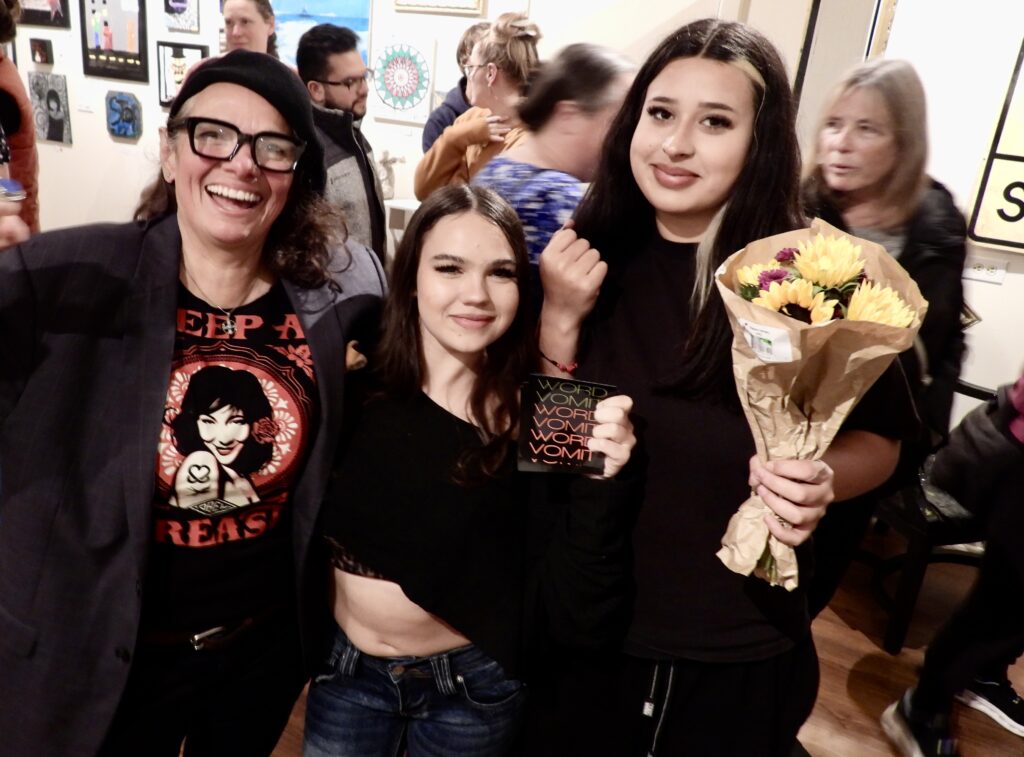
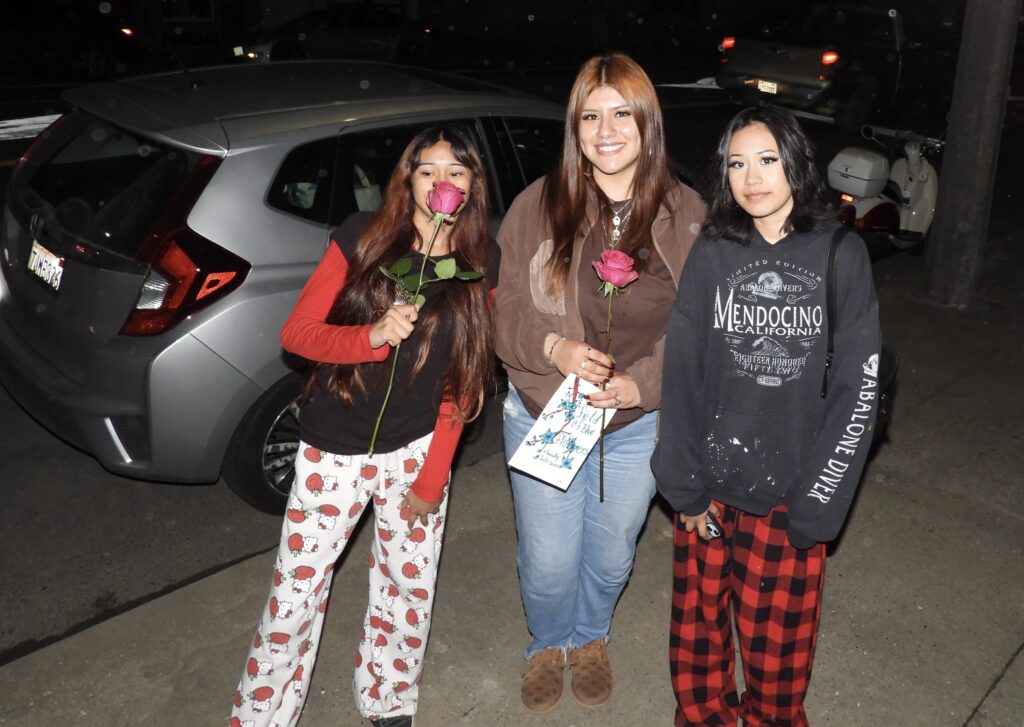
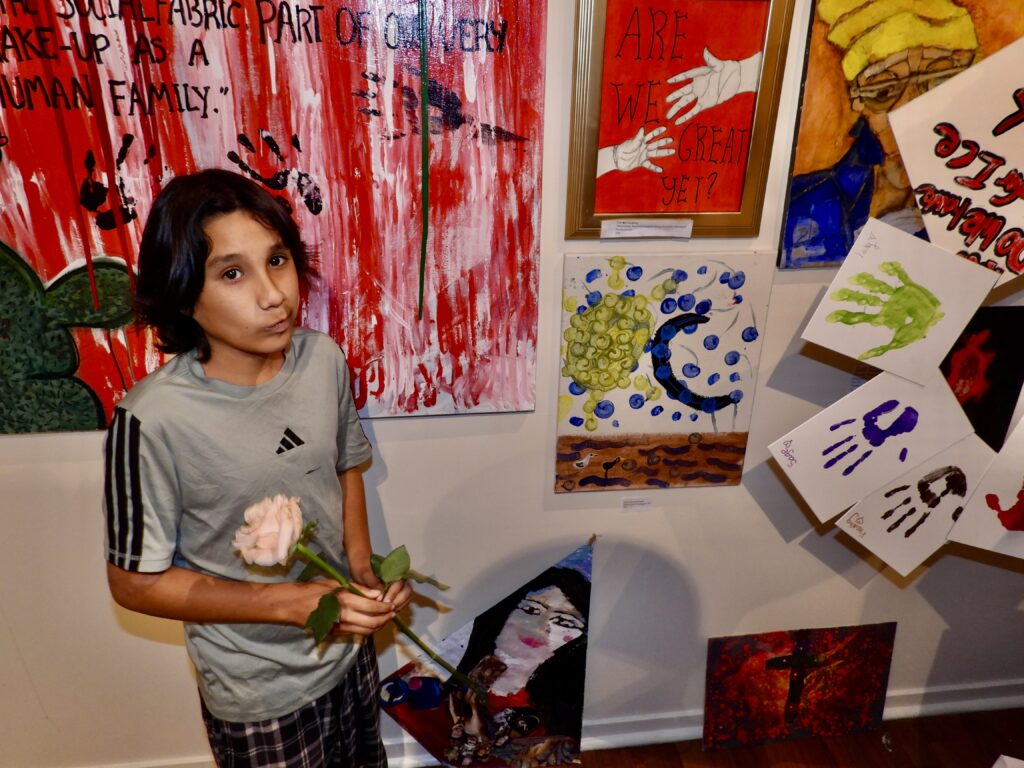
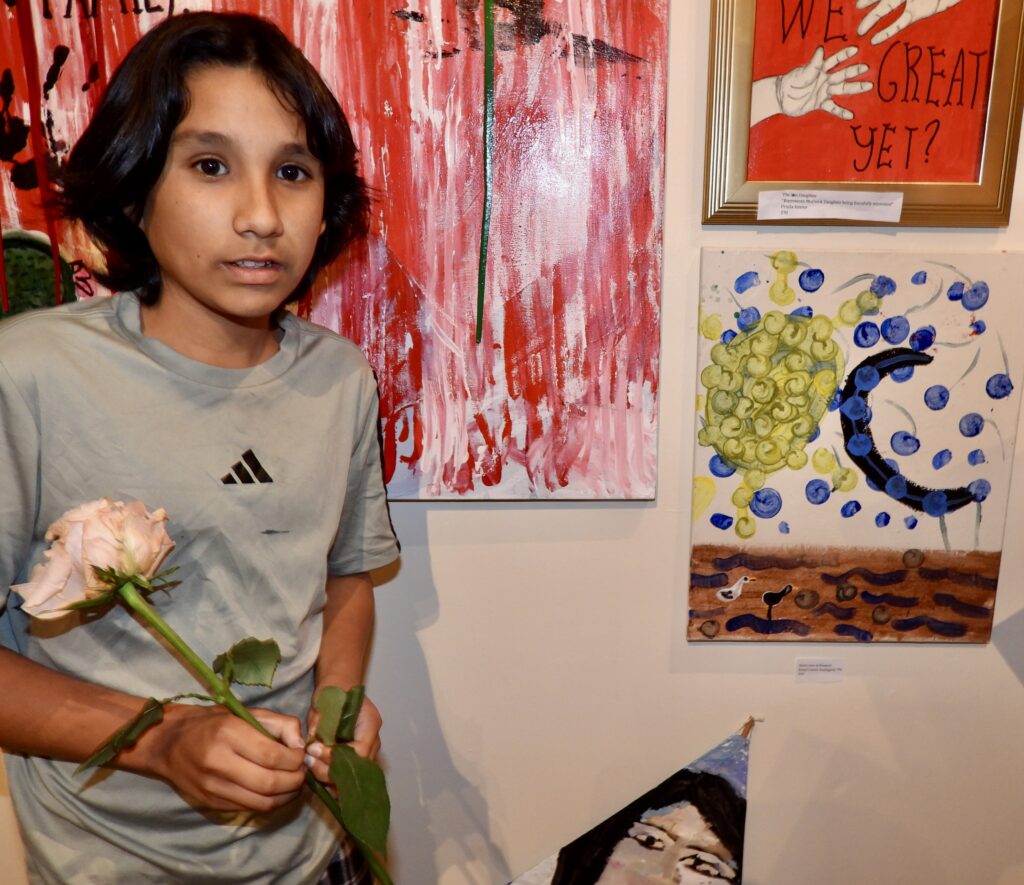
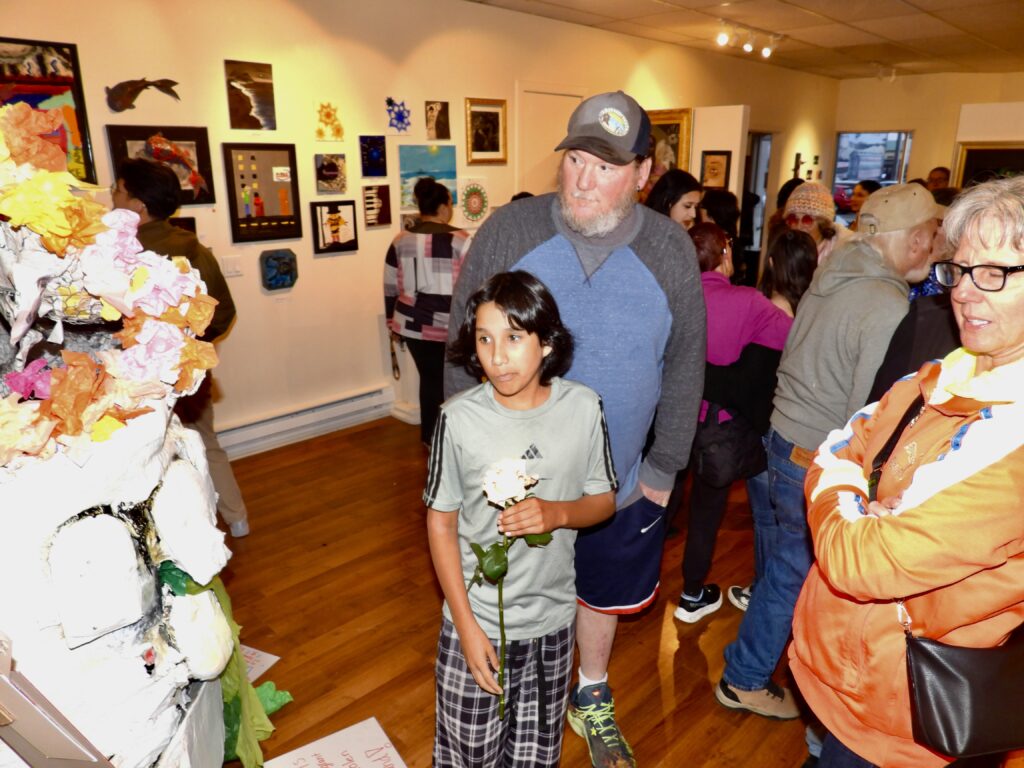
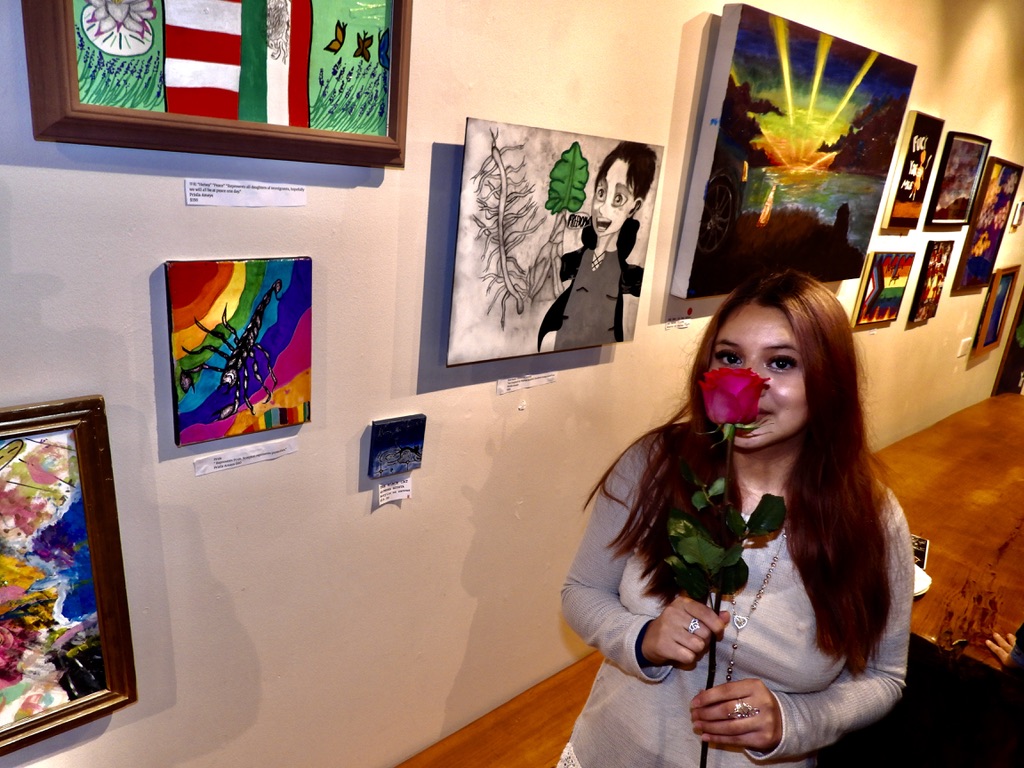
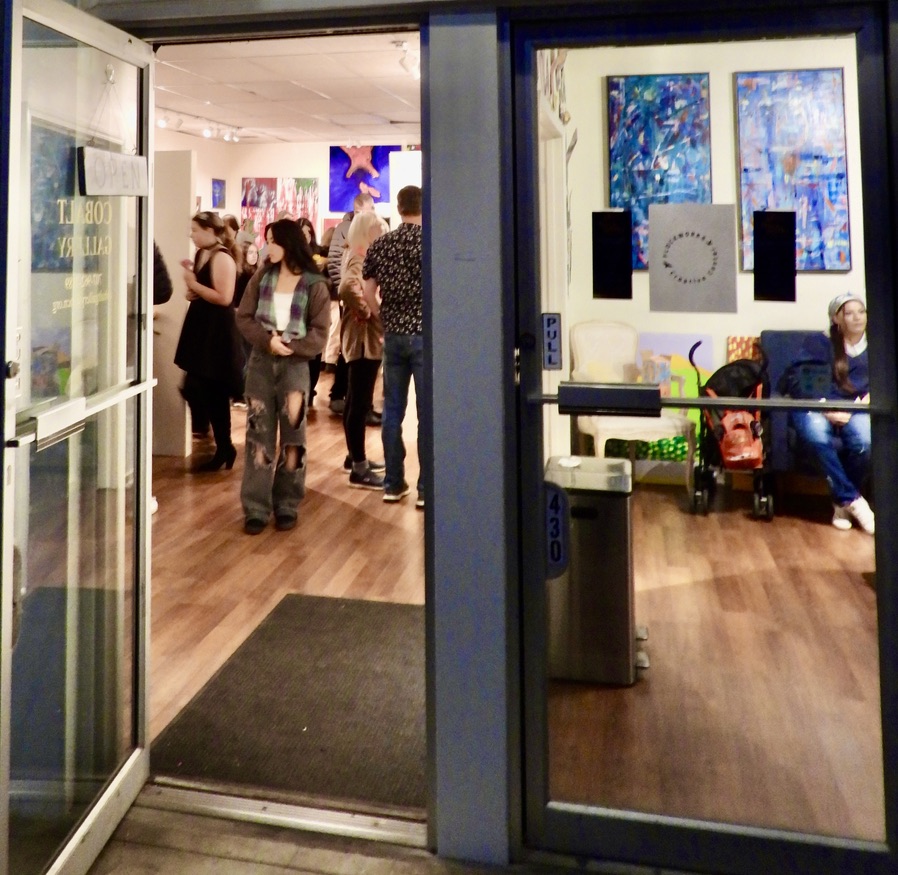
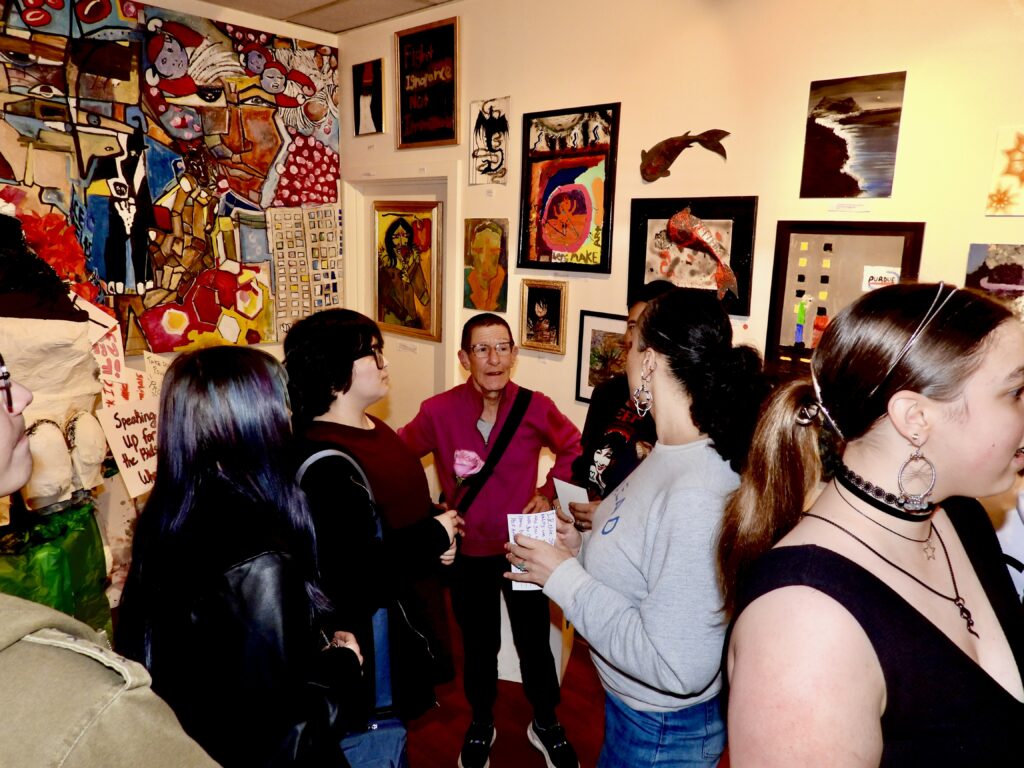
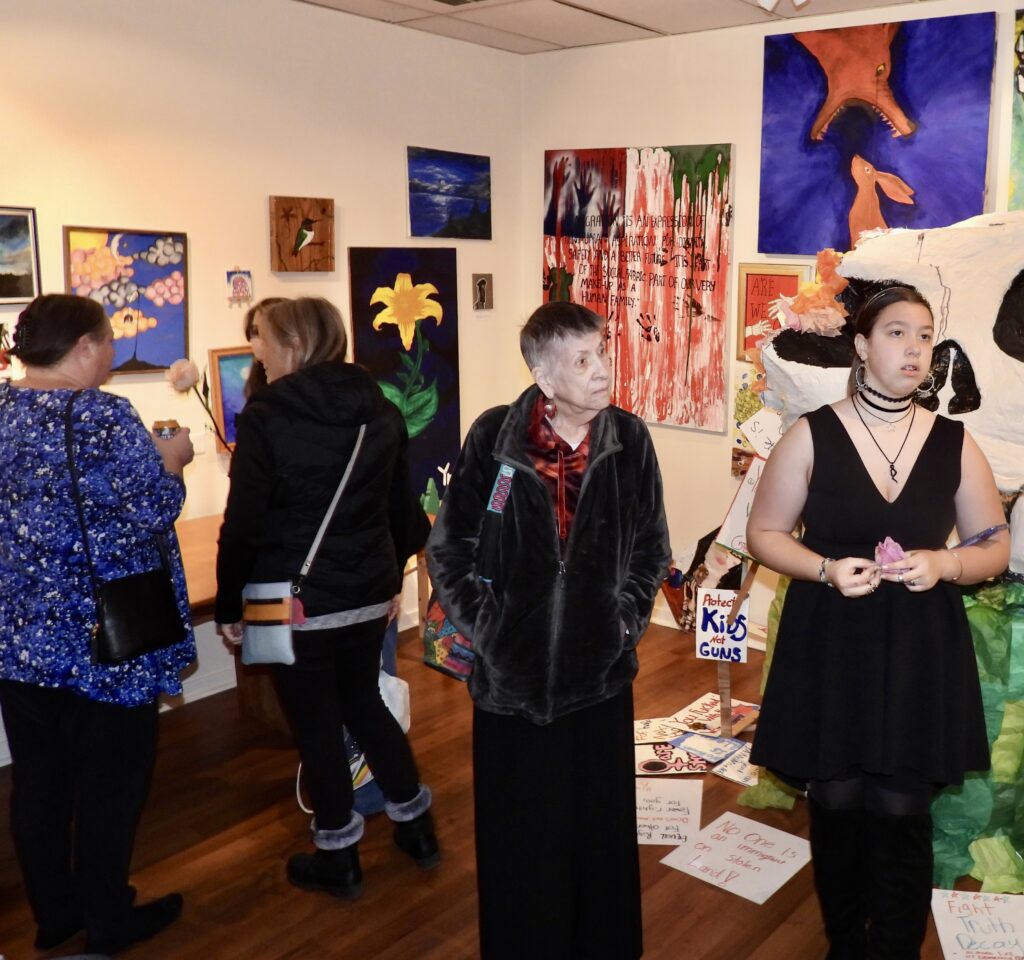
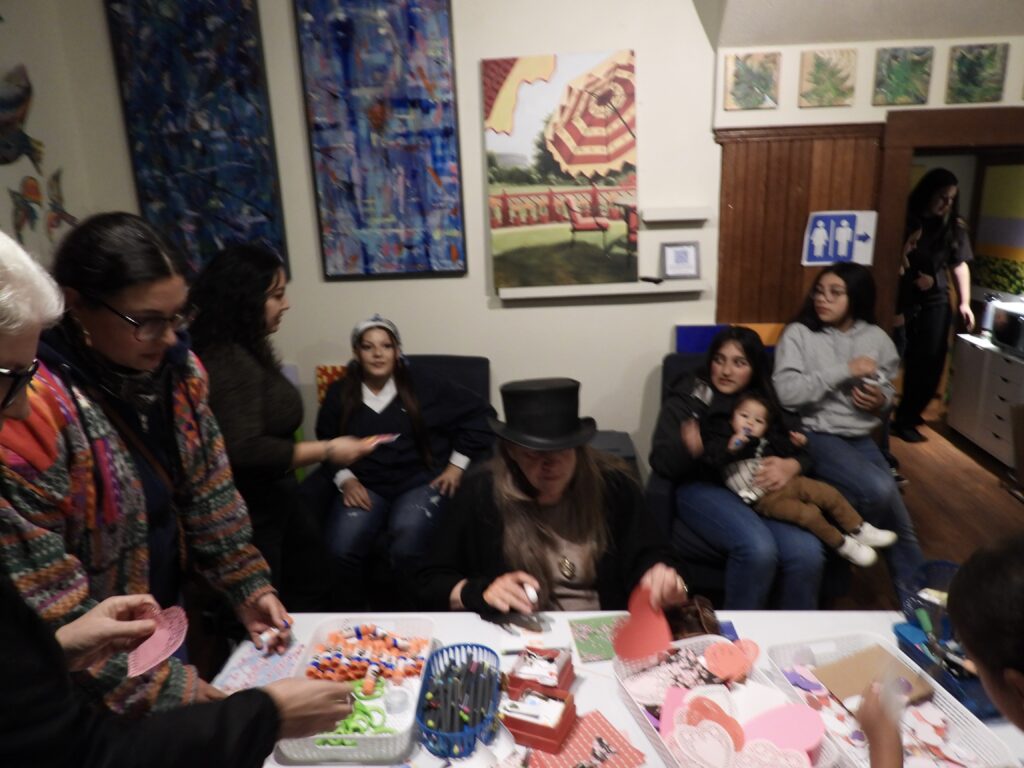
Roses in hand, young artists navigated a packed and buzzing First Friday opening, some electric with excitement, others pulled tight with nerves. The gallery’s energy snapped like a live wire — part celebration, part confession, part teenage storm about to break into color. Come out this weekend and see it!
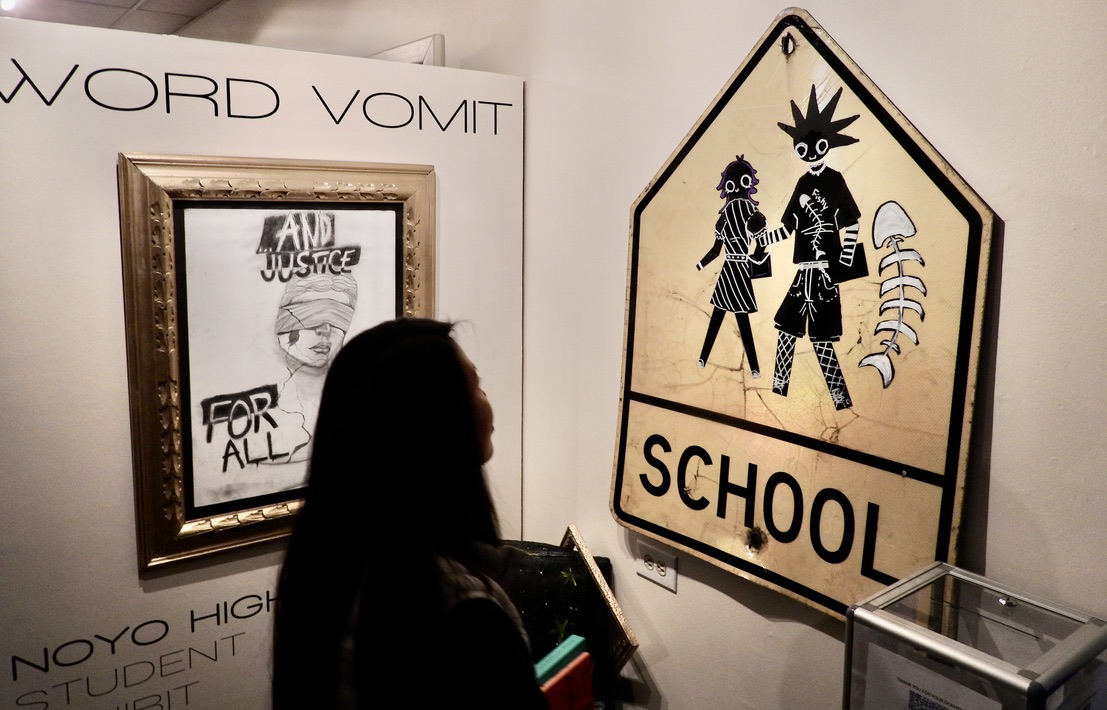
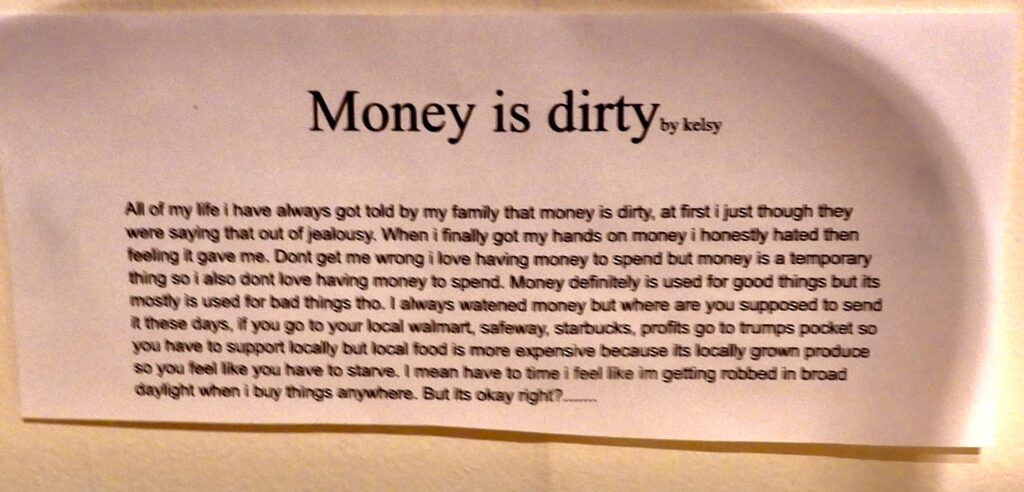
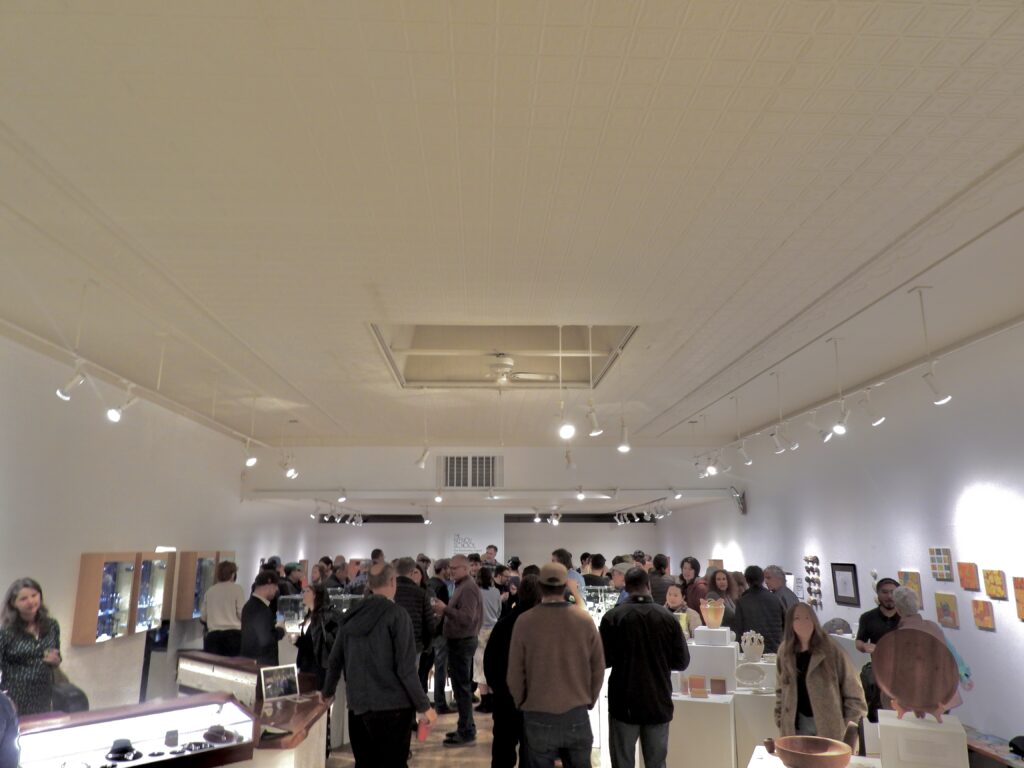
Noyo High School students brought their eclectic art show, “Word Vomit,” to a packed house at Cobalt Gallery. Opening night landed on First Friday, kicking off a month‑long run through the end of February. The show was entirely student‑led, sparked by the vision of Noyo High student Kelsy Aguilar‑Anderson, who shaped the concept and guided it into reality.
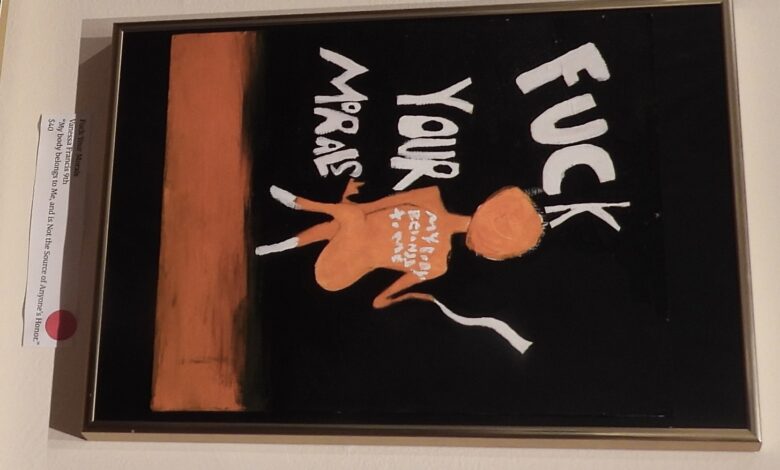
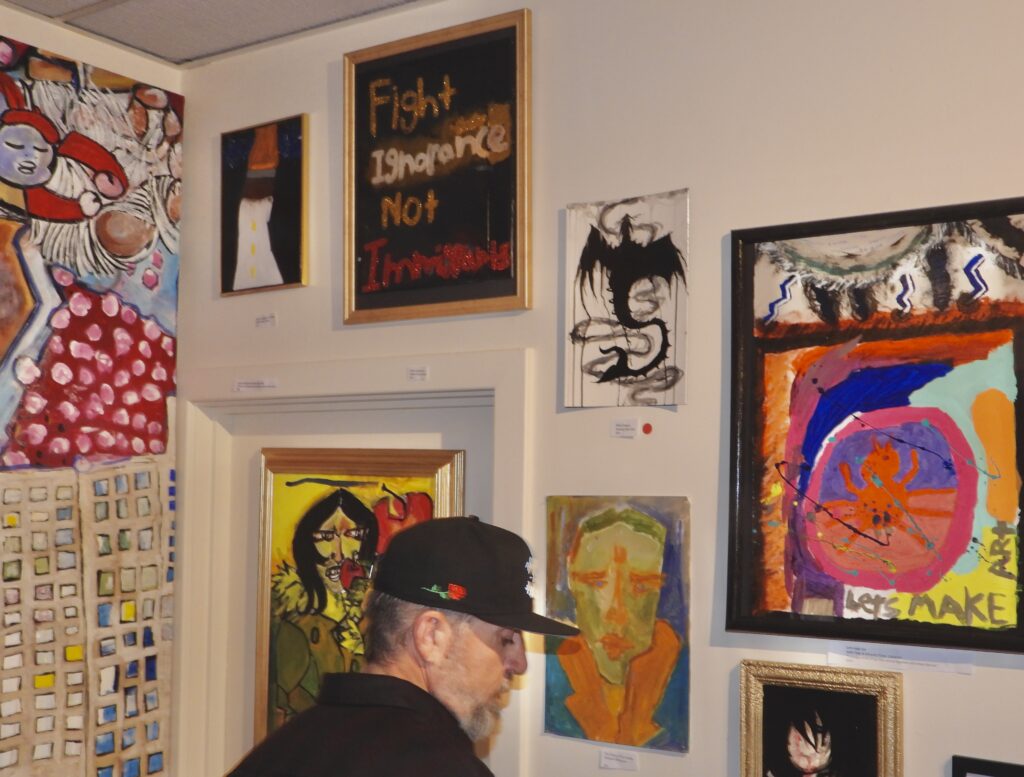
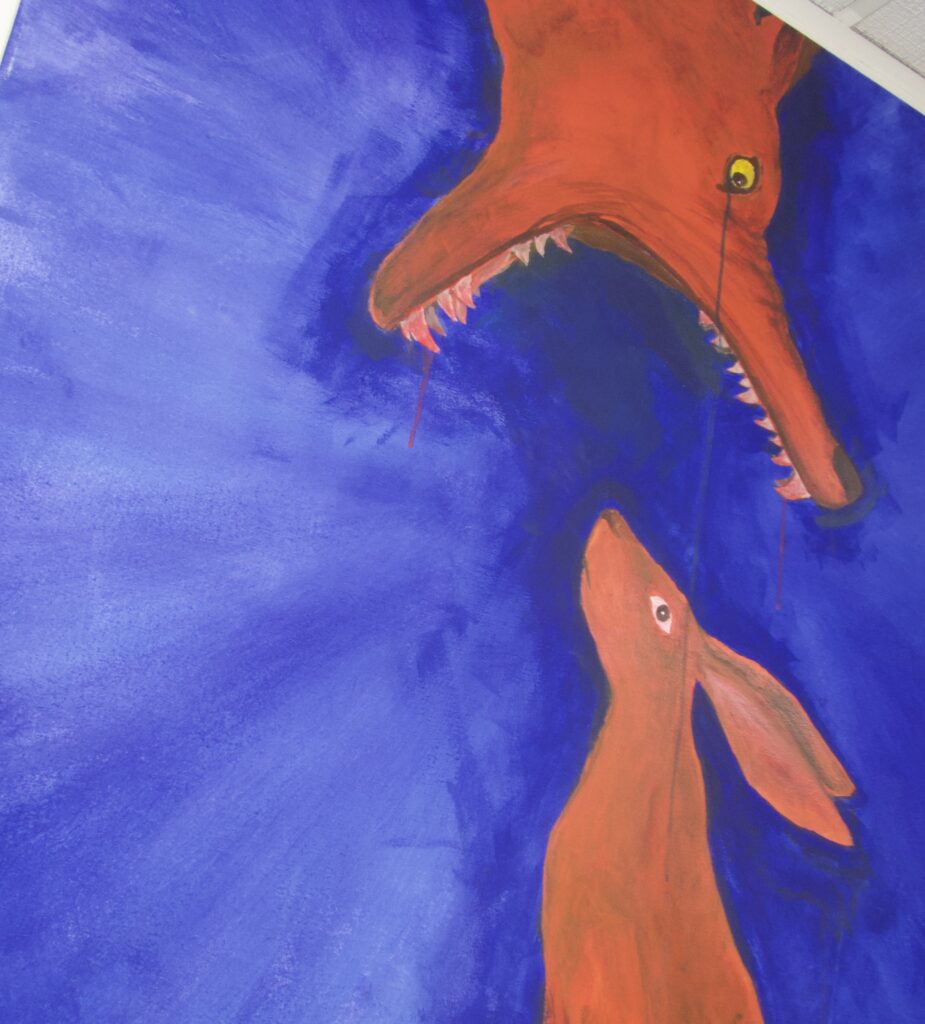
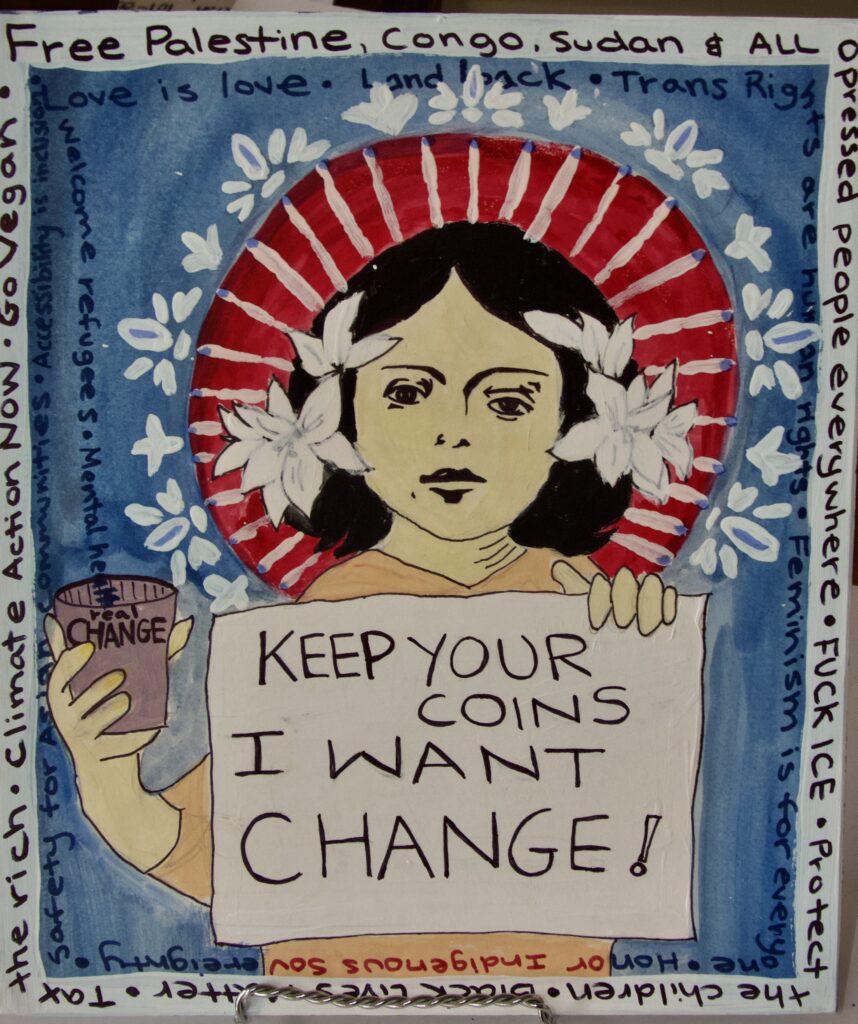
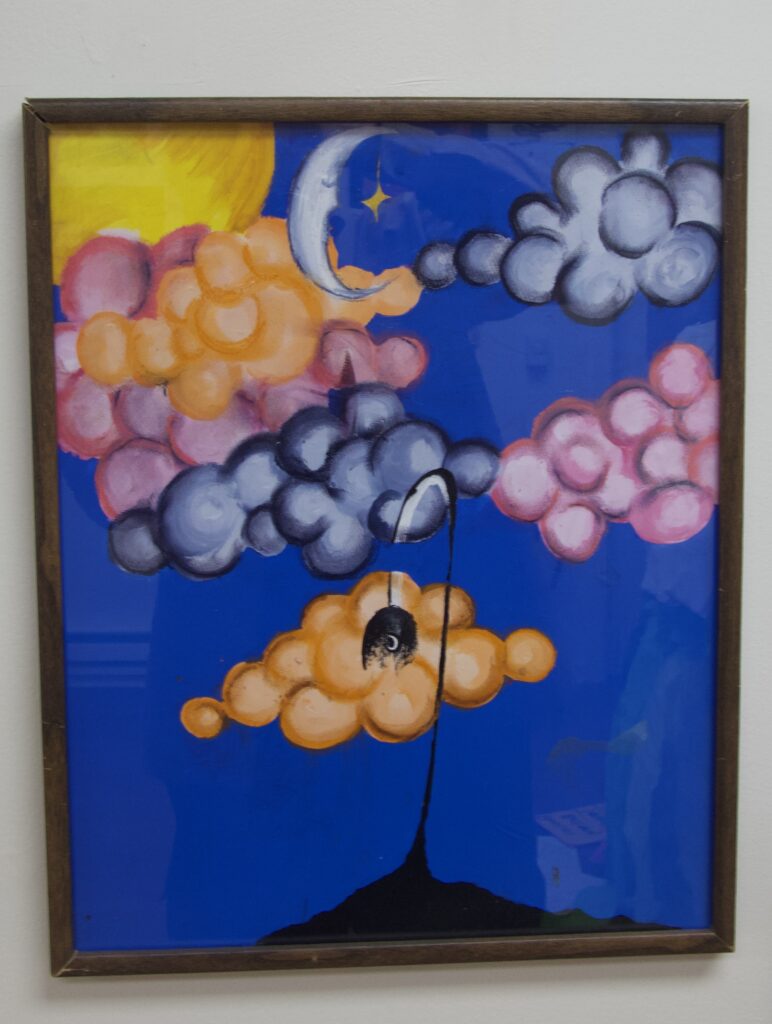
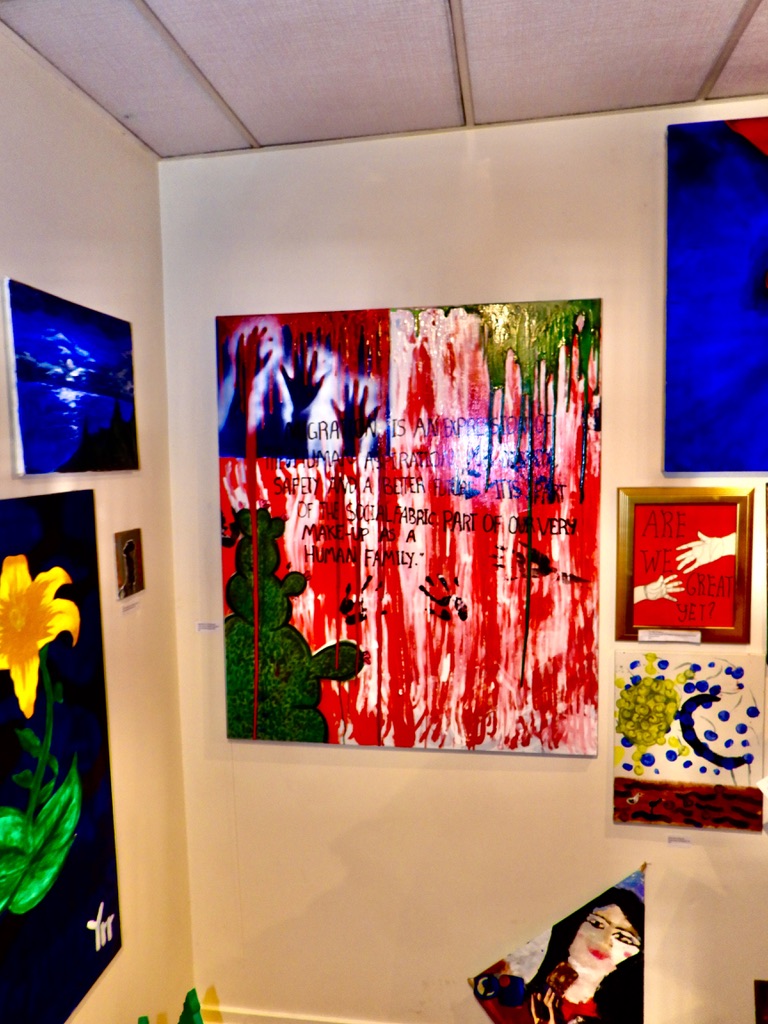
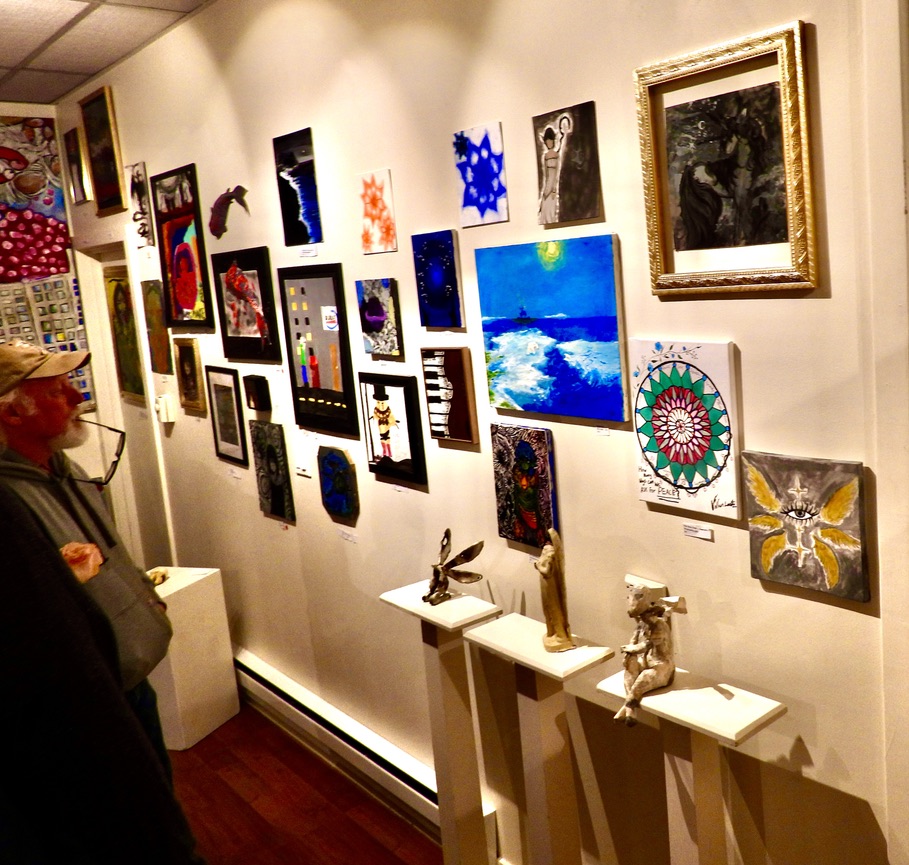
Their show breaks one of art’s oldest taboos: using prose to poke at the mystery of what the artist is saying — or meant to say — or maybe didn’t mean at all. Some pieces soothe the viewer, others deliberately unsettle, and a few outright contradict the images they accompany. Traditional art rules insist on silence: no explanations, no hints, let the viewer fend for themselves. Not here. These students toss the rulebook, pairing words and images in ways that amplify, undermine, or explode each other.
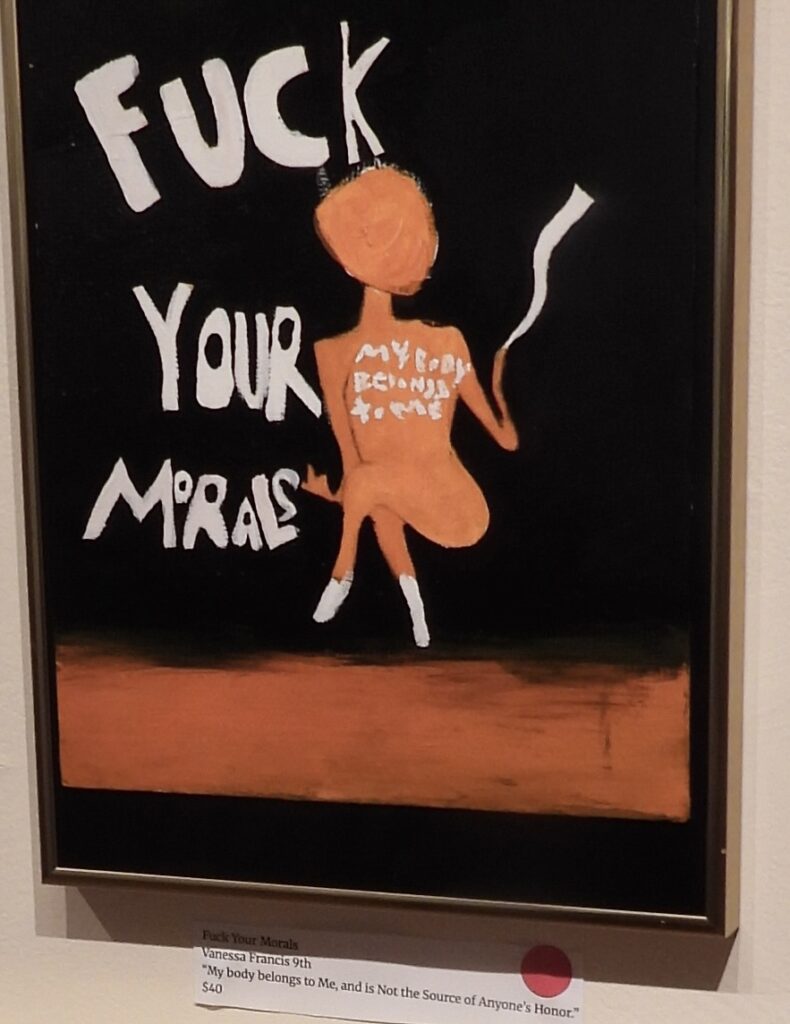
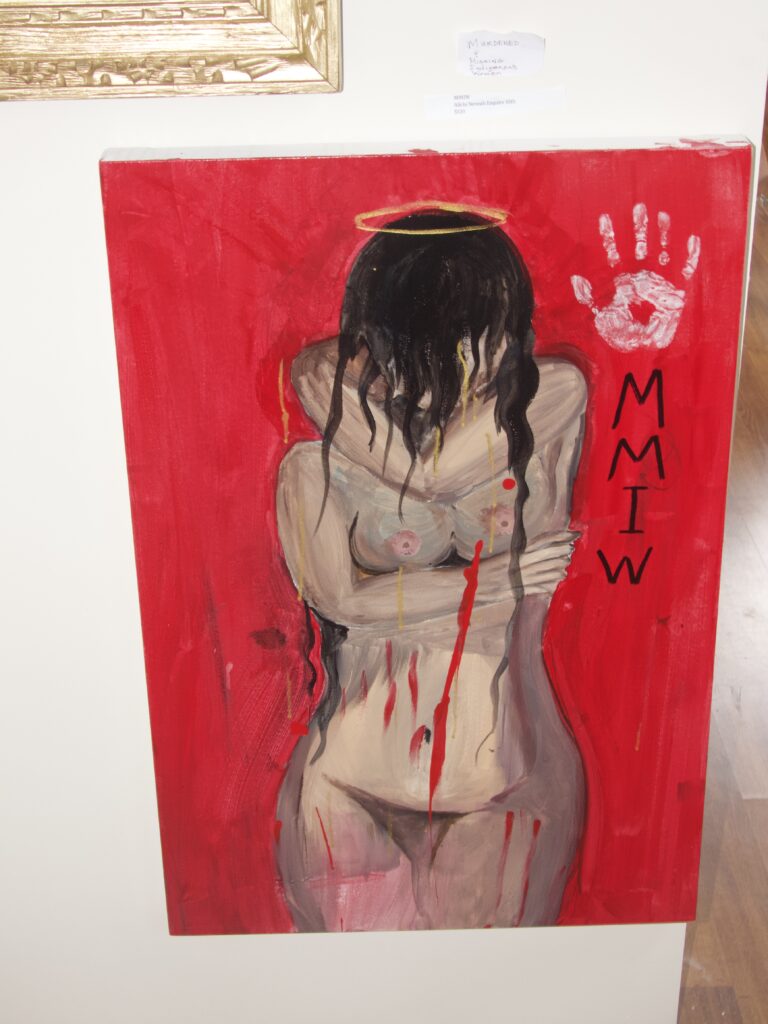
This is experimental art from high school students at its best — raw, fearless, and, frankly, some of it is astonishingly good. These teens are coming of age in a moment that feels chaotic, dishonest, and often cruel, and their work doesn’t look away from any of it. Instead of staring up at the noise and confusion of the wider world, the show invites viewers to look closer: at the art, at their classmates, at their families, at the teachers who steady them. Many pieces take direct aim at the violence women endure and the unstable, truth‑bending world this generation is inheriting.
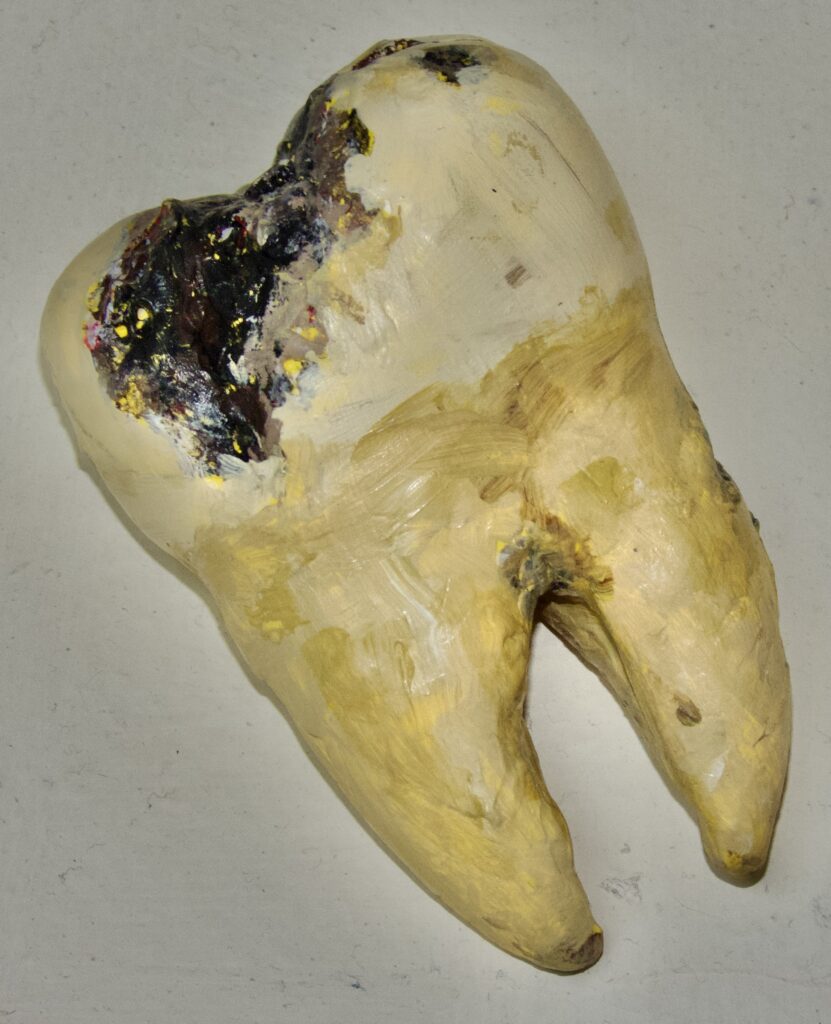
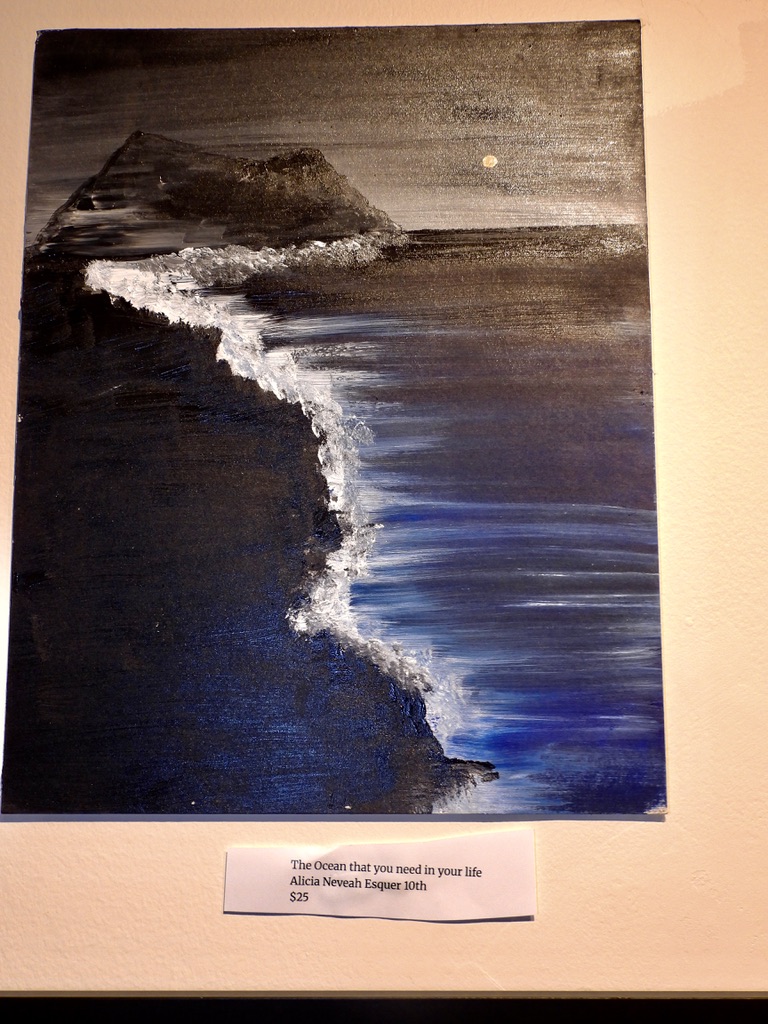
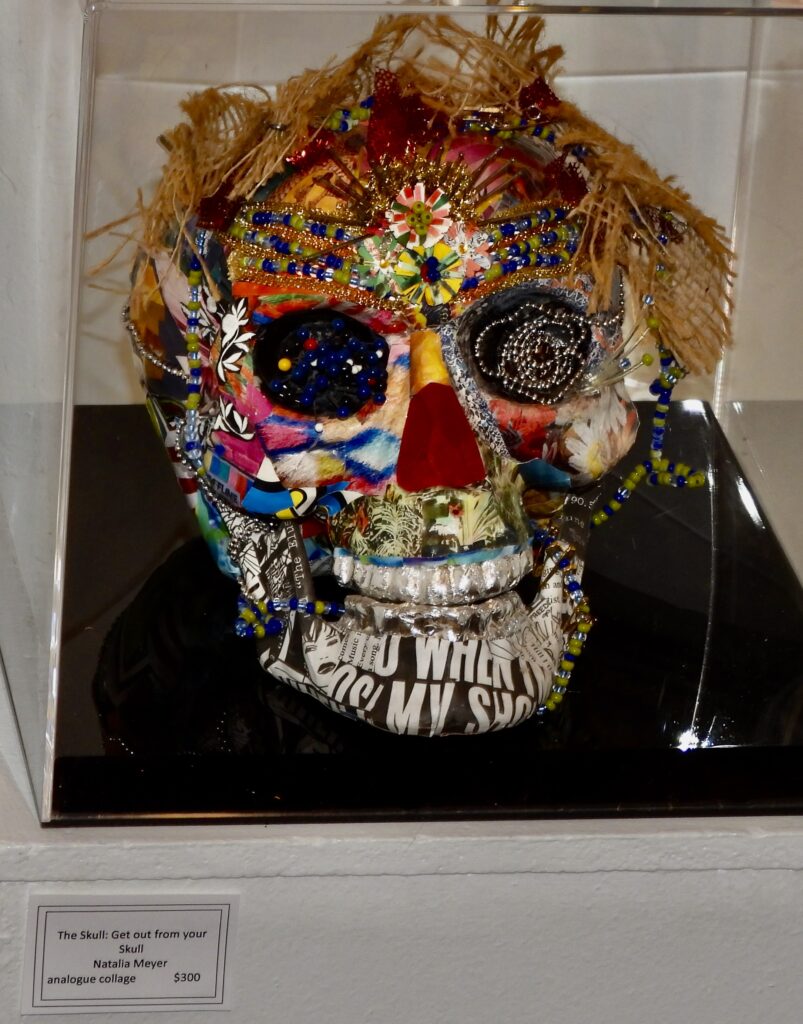
Middle‑ and high‑schoolers aimed their written, sculpted, and painted messages squarely at the so‑called “adults” now running the “real world.” Twenty‑five students created roughly sixty pieces and collaborated on a hideous, gigantic skull layered with handwritten notes. While some works drew from ocean landscapes or the human body, many canvases took aim at a world far more screwed up than any previous generation could have imagined.
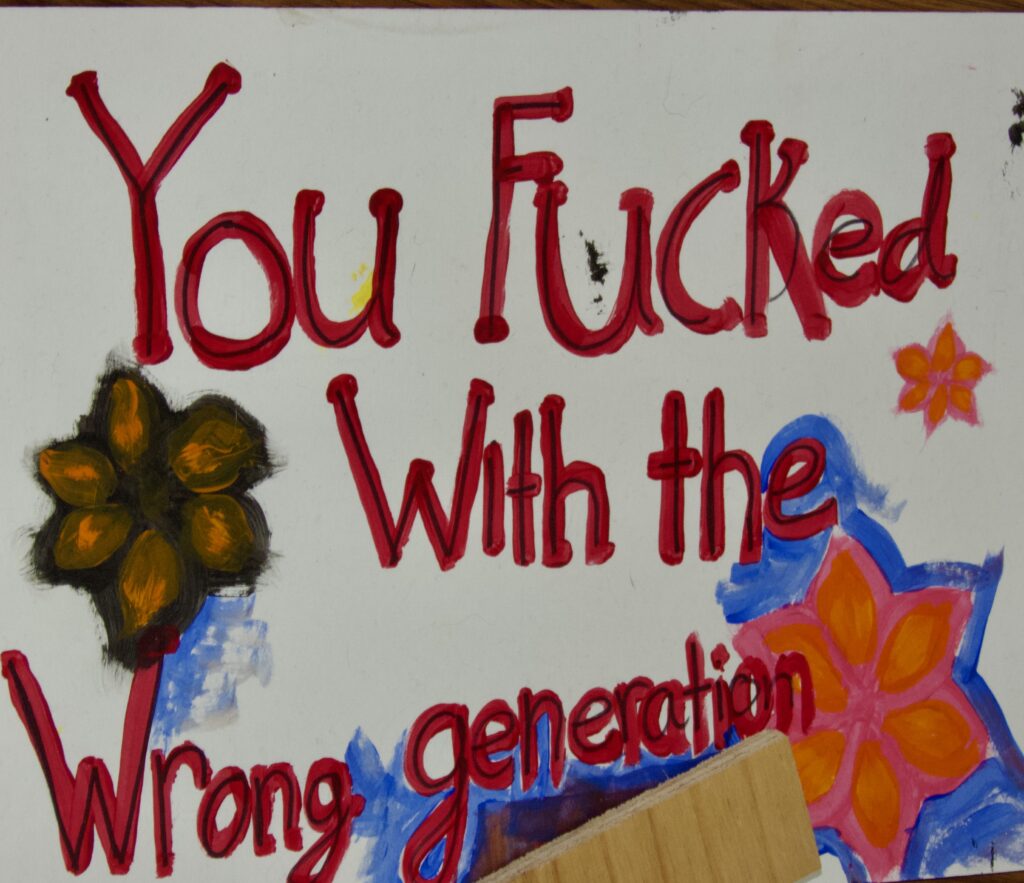
“You fucked with the wrong generation,” the students wrote more than once across the surface and signs of the giant collaborative skull. Before the show opened, art teacher Sally Rodriguez checked in with Noyo High Principal Gary Lewis to ask where the boundaries were on language.
“I had them ask for permission and get it cleared through Gary,” Rodriguez said. “The limit is this: if you’re using a word to express yourself — and not directing it at a specific person — then it’s a form of expression.”
Language like this was common in art a generation ago. Today’s teens seem far less prudish than their parents and, in many ways, more aligned with their grandparents’ blunt, say‑it‑out‑loud generation.
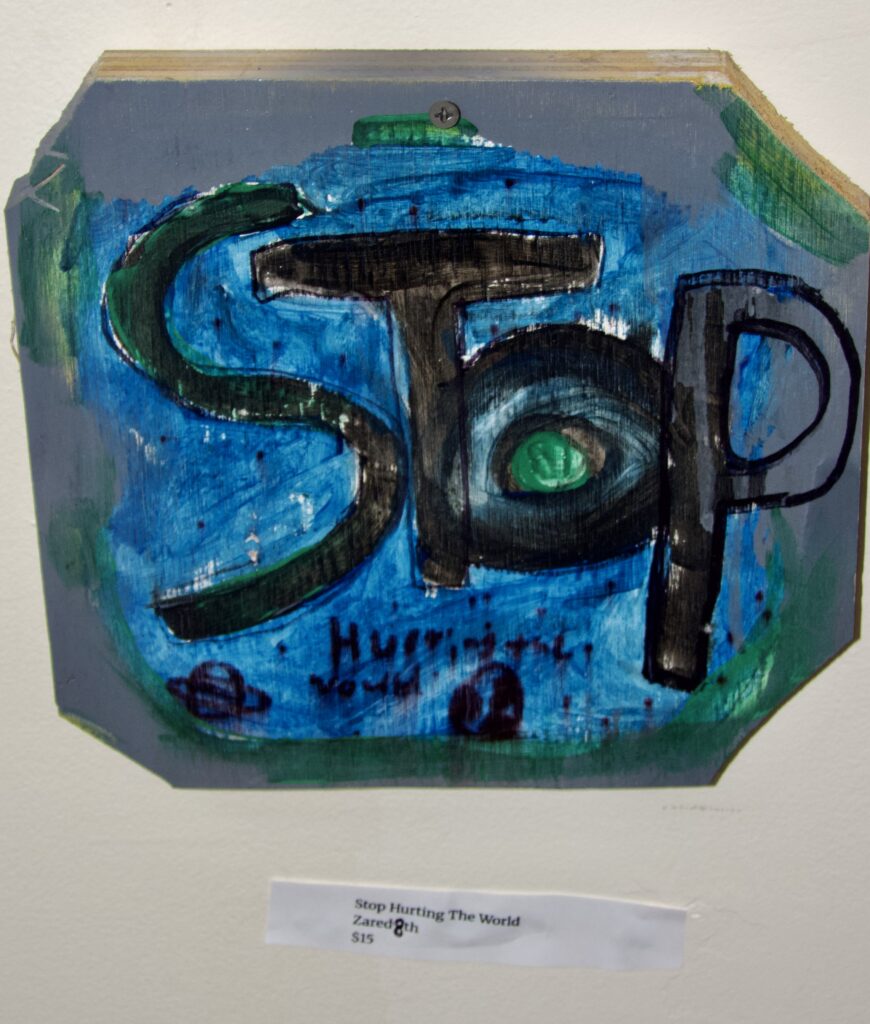
Zared’s contribution was a blazing blue‑and‑green octagon, “STOP” stamped in bold black across its center, with the gentler script “hurting the world” trailing beneath like a whispered aftershock.
Kelsy Aguilar‑Anderson, who first imagined the show and helped steer it into being, put it this way:
“Us as kids and teens should speak up more, because this future is ours. I hate that everyone thinks they can’t do anything, or they can, but don’t want to. Kids are so creative and smart, but they don’t want to be when they are invisible, demeaned, ignored and silenced,” said Kelsy.
About 80 percent of Noyo High students are involved in art, a number that’s grown steadily over the years. The program’s popularity isn’t a trend so much as a lifeline — a place where students show up, stay engaged, and make work that actually matters to them.
“This was their brainchild, their mentorship. At this point, they are rolling. I’m just the chick handing out paint,” Rodriguez said.
“Kelsy wanted everyone to be able to express themselves , not just with abstract art, but with words too, especially in these times where words are just being used to manipulate and devour,” said teacher Rodriguez.
“I see a new revolution,” she said. “We’re in an age where everything is supposed to go through AI. No. One of the requirements for the show — something Kelsy insisted on — was that there would be no AI‑generated or digitally generated artwork.”
Some students sketched on tablet computers with a stylus and then enhanced those pieces, while others went fully old‑school and worked entirely on paper.
“Everything in this show is hand-built, hand-painted, Rodriguez said.
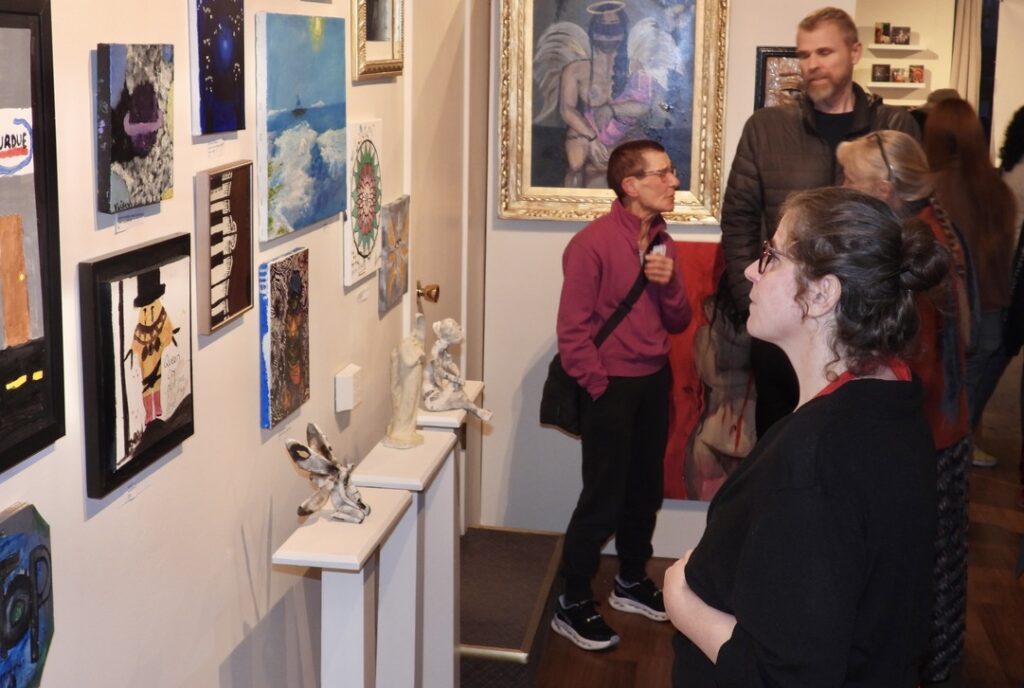
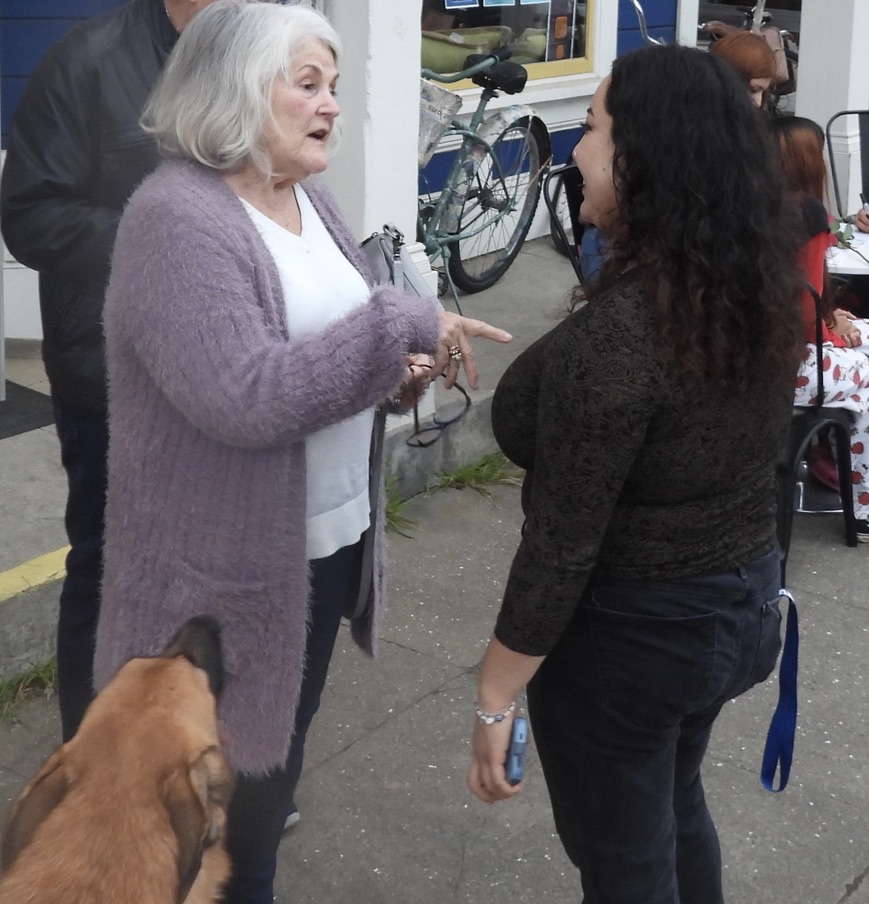
The event drew a packed house on First Friday’s opening night. Fort Bragg turned out in force to support the program — and these fine young artists, brave enough to put their work on the walls.
“A lot of people cried. A lot of people that view the paintings get tears in their eyes, Rodriquez said.
The artists were all students from Noyo School in Fort Bragg, an alternative‑education campus. It’s a Big Picture Learning school, built around real‑world learning and student‑designed curriculum — a place where interests, passions, and talents shape the work that ends up on the walls.
Those of us who’ve had the chance to work at Noyo School knew this kind of raw, thought‑provoking artistic energy would erupt the moment students were given room to run. And honestly, it couldn’t come at a better time. There are barely any adults left in the rooms where politics and business decisions are being made — so the kids are stepping up to say what needs saying.
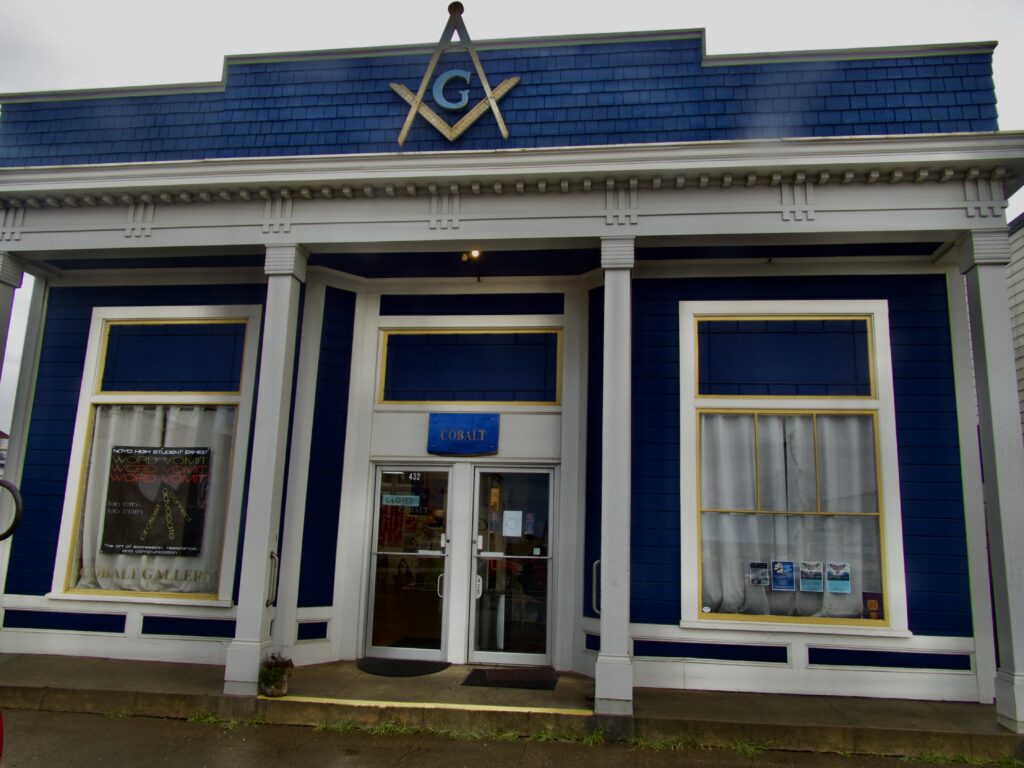
The art program at Noyo High has been empowered by Janet Self over the past decade. Her nonprofit, Flockworks, has taken over the Cobalt Gallery and is using Fort Bragg’s bluest building to present a steady run of innovative shows. Flockworks has been doing community‑based art education for more than fifteen years, and now offers a robust weekly schedule of activities — including regular exhibitions by Noyo High School students.
Check out what Flockworks is up to!
The current momentum began when Self brought on Sally Rodriguez, who now serves as Noyo School’s contract art teacher.
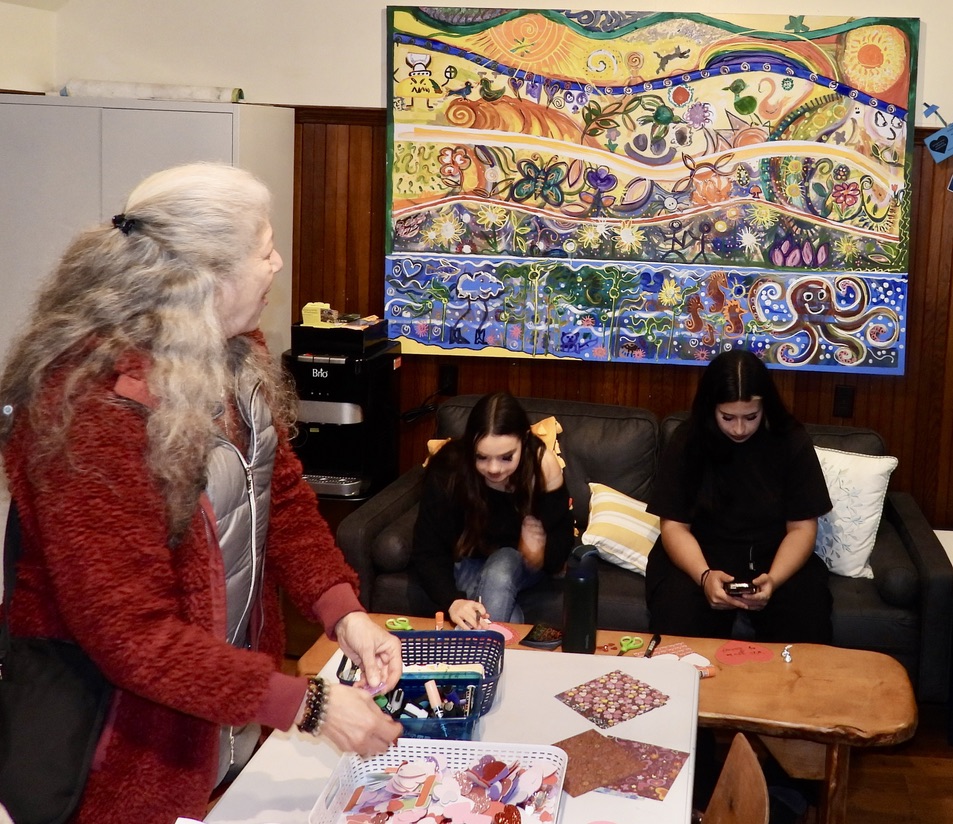
Renowned Mendocino artist Button Quinn ran the gallery before Flockworks took it over for educational projects, and she returned on behalf of the nonprofit for opening night. Like Linda and me, Quinn was amazed — downright agog — at what the Noyo High students had managed to create. She’s there to lend her experience and teach, but she’s also learning from the young artists, gaining fresh perspectives from the work they’re bold enough to make.
“When they started, many of them came in hoodies and grunge,” Quinn said. “Art pulls you out of yourself and into new, unfamiliar, sometimes painful places. It wasn’t long before the hoodies were gone and they were what you see here tonight — dressed up, standing tall, looking good, and owning their work.”
Quinn described the moment a high‑school girl learned someone had bought her painting — a reaction so immediate, so dramatic, it stopped the room. The student burst into tears, then laughter, then disbelief, cycling through every emotion at once as it sank in that her work mattered to someone out in the world.
“No matter who you are, when you first realize someone is willing to buy work that came from within you it is a powerful experience. And her work was good, she earned it.”
We saw how the show empowered kids who usually don’t say much to strangers. Suddenly they were standing beside their pieces, explaining the work, talking about why they made it, and sharing what they loved about it — voices opening up because the art gave them something real to stand on.
Noyo High School students learn differently — and now we know that’s a strength, not a liability. More and more people are realizing that thinkers who don’t fit the mold are priceless in a society stuck in a rut of AI and conformity. These students aren’t outliers; they’re the ones showing us where the real creativity still lives.
Holly Aldreich, a substitute teacher at the school, knows many of the artists from class, but she found herself learning far more about them as she stood before their paintings and sculptures. In the work, she said, she could see their human souls — glimpses of humor, hurt, hope, and imagination that don’t always surface in the quick rhythm of a school day.
She’s often delighted by the unique perspectives the students bring, and she was amazed by how many of them managed to translate those perspectives into art — clear, confident expressions
“We are all seeing some students who are truly finding their vocation, stepping into life in a way that will change them and us too.”
Many of the youngsters created art, but didn’t want to use their name. Nonetheless, the show changed some of their minds about that, the gala was just too fun to resist, even for those who had been too cool for a school project.
This show was a thrill for Linda and me because of its raw power — the tremendous passion and strength rising right up through the despair. Artists have always despaired, of course; real problems have always driven real art. But in an age when so much feels fake, especially our so‑called “problems,” you can’t help but wonder: can these youngsters, and their whole generation, break through the nasty crust we older generations have plastered over reality? Can they lift their heads into the light and see that the creator has already given us more than enough right here on earth — and that so many of our supposed hardships are just manufactured noise from people who want to control the story?
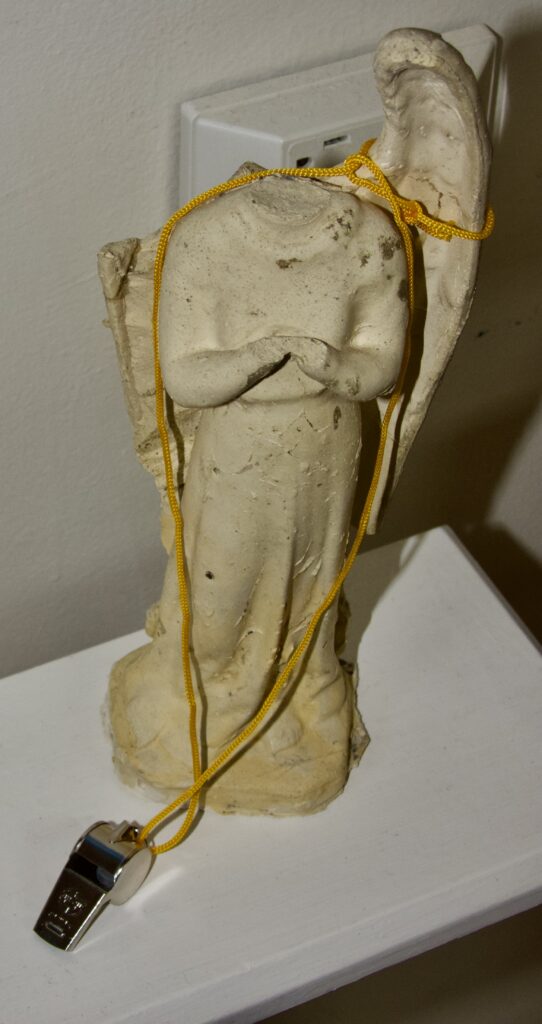
Any artist — rich or poor — has to wrestle angels, like the biblical Jacob, on the way to finding the ladder to heaven. You could see that struggle in these works, and you could see how the process had pulled the students together like a sports team: not all superstars, but all in it together. And there was no question to anyone who looked closely that these pieces came from kids — messages that were raw, largely untested, and sometimes breathtakingly profound.
“Art makes students, anyone able to sit with yourself comfortably. And maybe in a room of people that you really don’t want to be around. And after you get to do that, you find out, wow, this piece actually connects me to other people, and they want to talk about it. And also it’s a form of currency. And when they buy it the artist is giving them a piece of themself and getting a kind of immortality, where that part of them goes somewhere and lives on,” Rodriguez said.
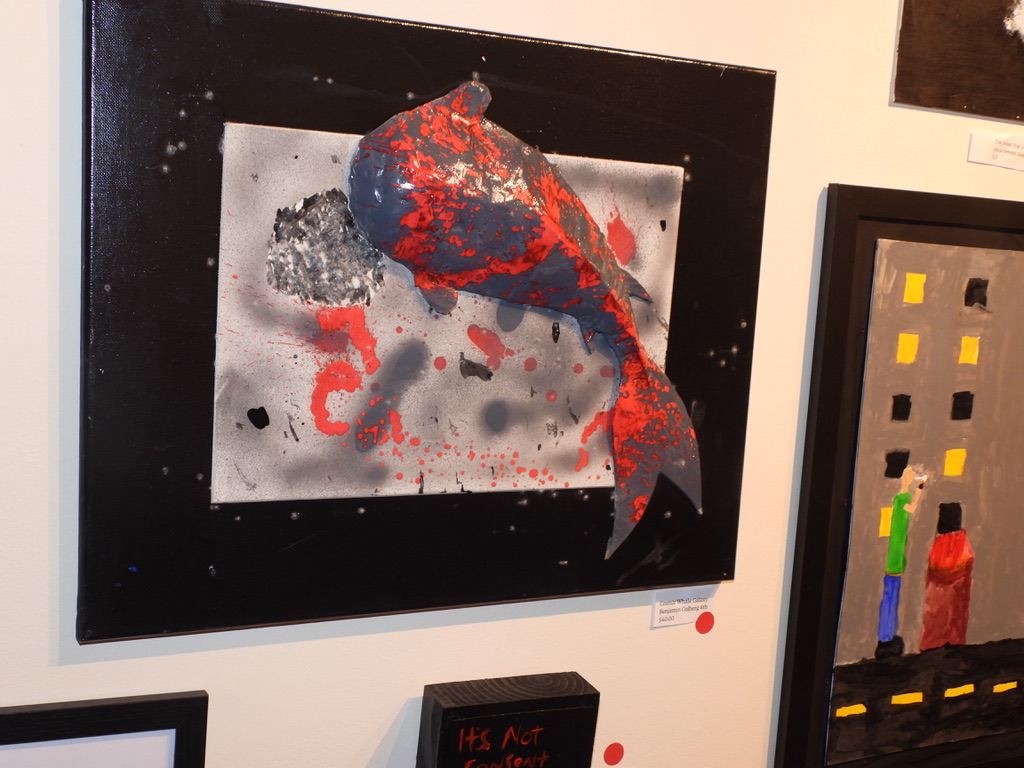
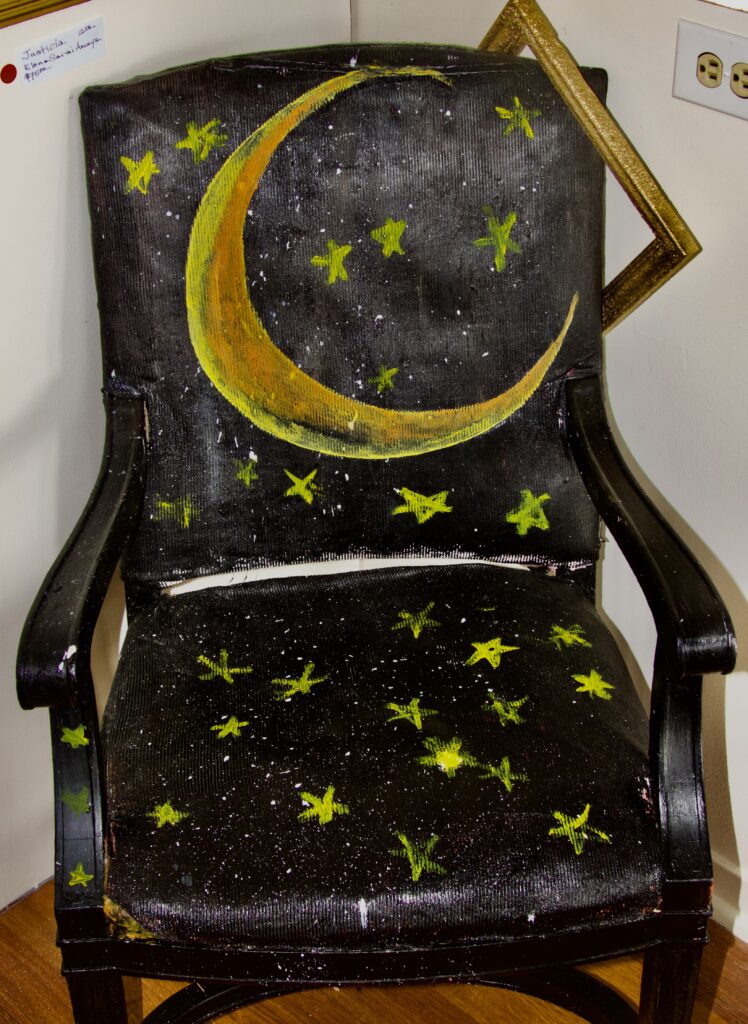
More exciting news: on First Friday in March, Noyo High student Elena Amaya will present her senior capstone graduation show, which she has titled “We Are All Individuals.” Her “individuals” include whales — fitting, since First Friday on March 6 also marks the launch of the Fort Bragg Whale Festival. Even better, this show is open to any artist who wants to submit work; for the first time, you don’t need to be a Noyo High student to take part.
The show will emphasize that every individual on earth — not just humans — is a unique being with their own message and mission to live.
“Whales have a singular identification,” Rodriguez says. “It’s the underside of their fluke — their tail — and just like our fingerprint, you can identify each whale by the pattern on that fluke.” Then she adds the real invitation: use your own imagination and enter.
This effort keeps expanding, and the momentum is only growing. In 2027, Noyo High will present shows in January and February, followed by a senior capstone project likely featured on First Friday in March.
Flockworks provides artistic mentors, as do the Mendocino College ceramics program and the owner of Bragadoon, located just across the street.
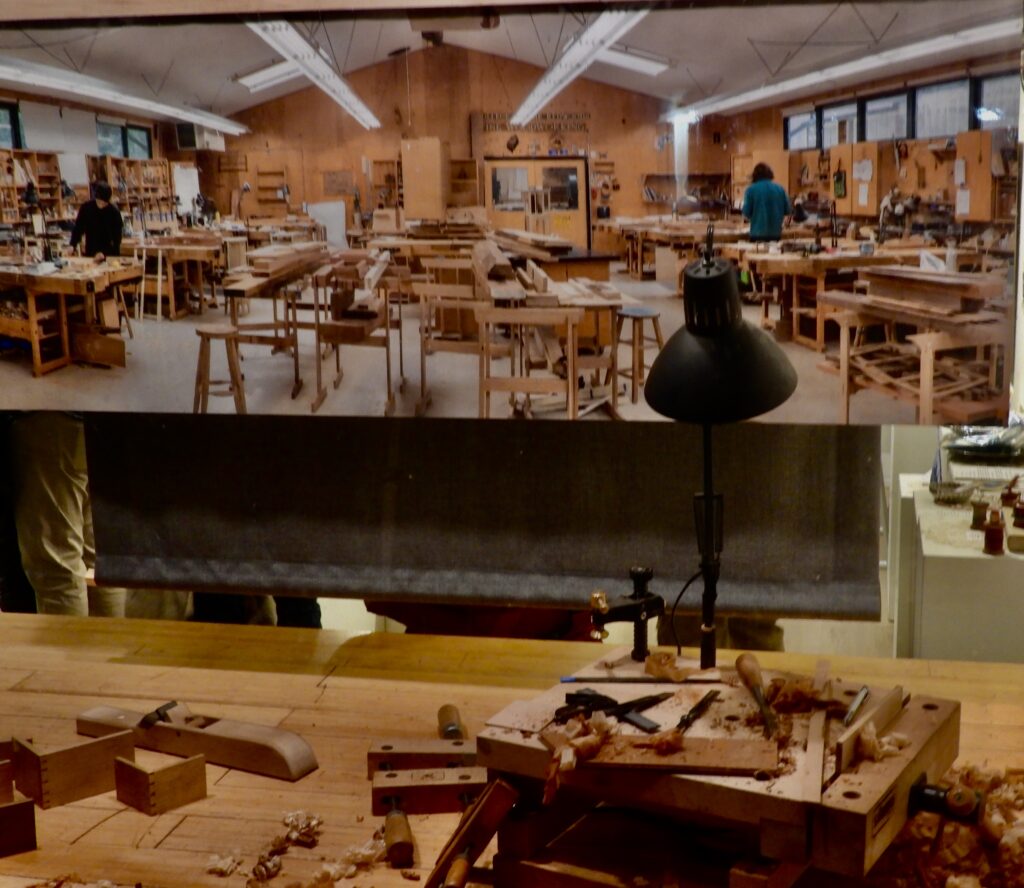
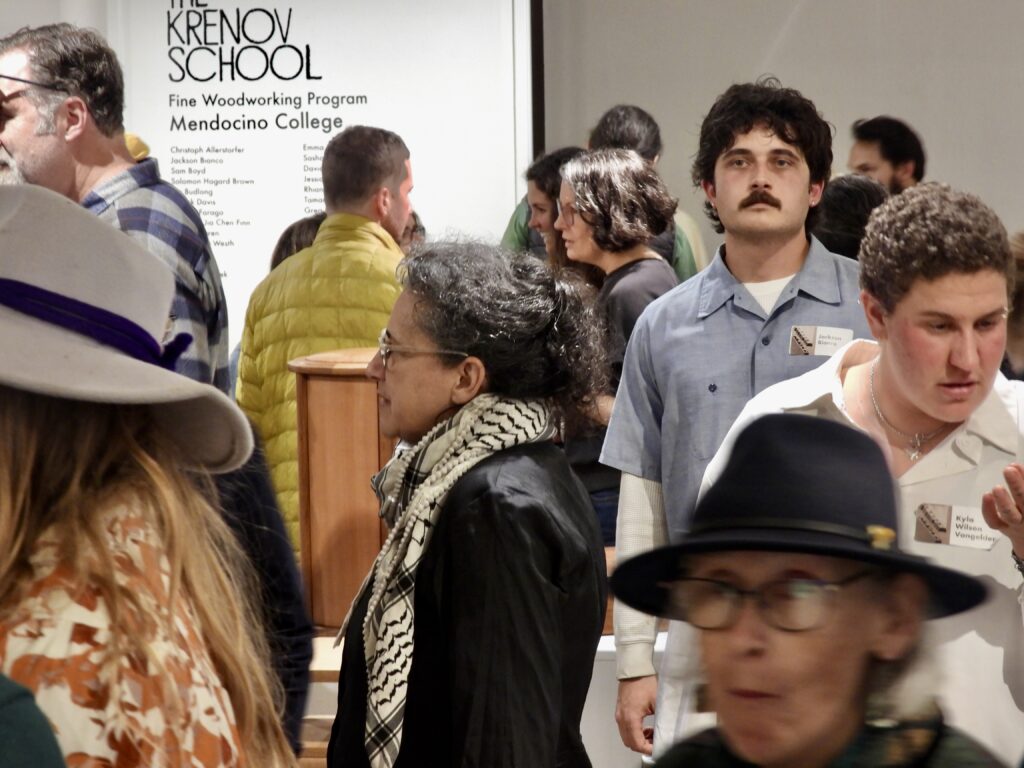
“We’re hoping the Krenov School is going to take on an internship with one of our kids. Oh, that would be great,” Rodriguez said.
The school is a prestigious woodworking program in Fort Bragg, drawing students from around the world.
Word Vomit runs Thursdays through Saturdays in February, noon to 5 p.m., or by appointment. Every dollar goes straight to the students; the gallery takes no cut. It’s their show, their voices, their future—unfiltered and fully their own. And in a season when so much art feels packaged or polished for someone else’s approval, this little room on Franklin Street offers something rarer: young creators standing in their truth, inviting the community to witness what happens when they’re trusted, supported, and given the keys.
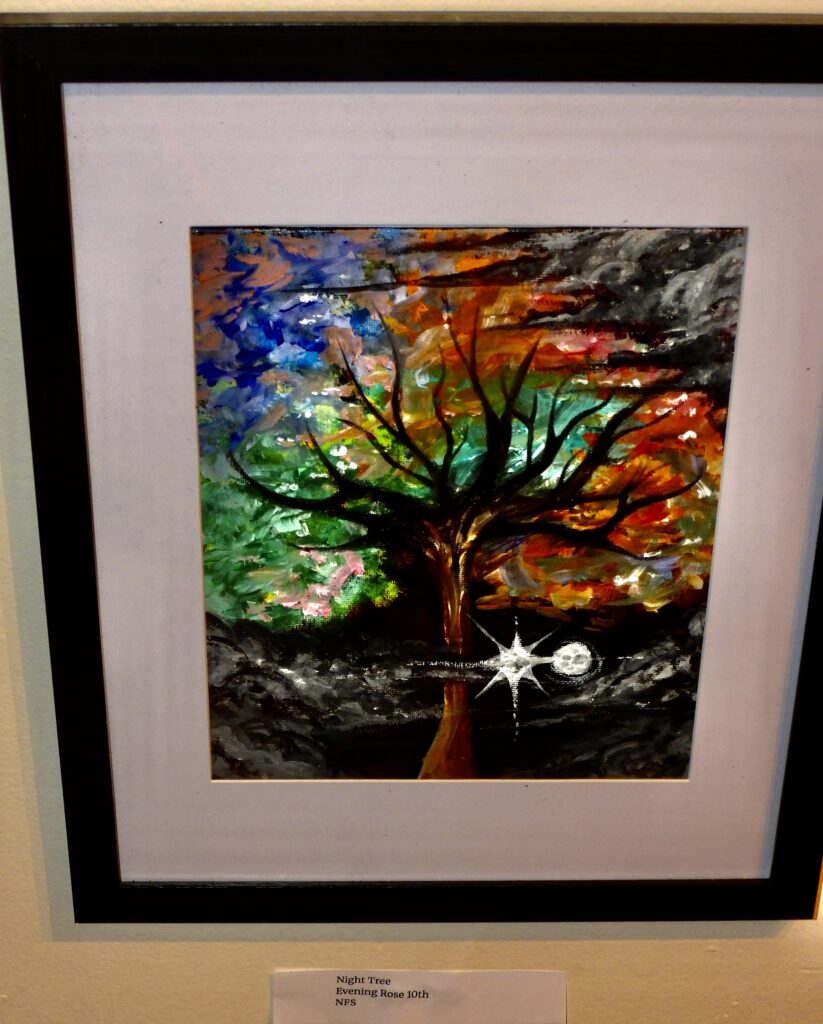
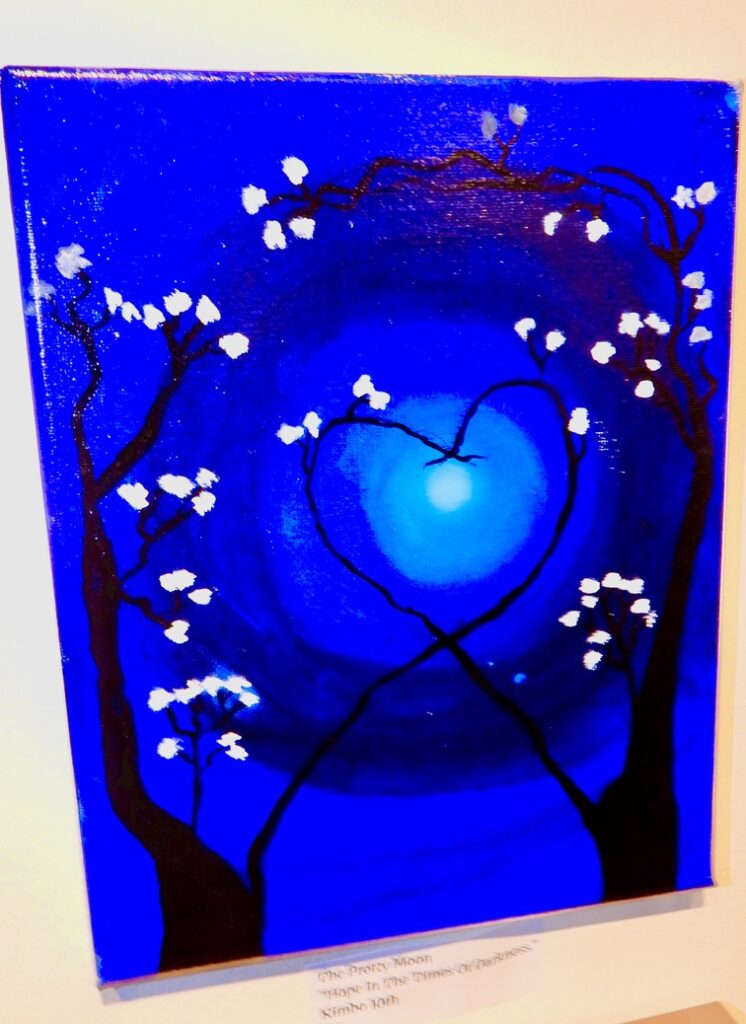
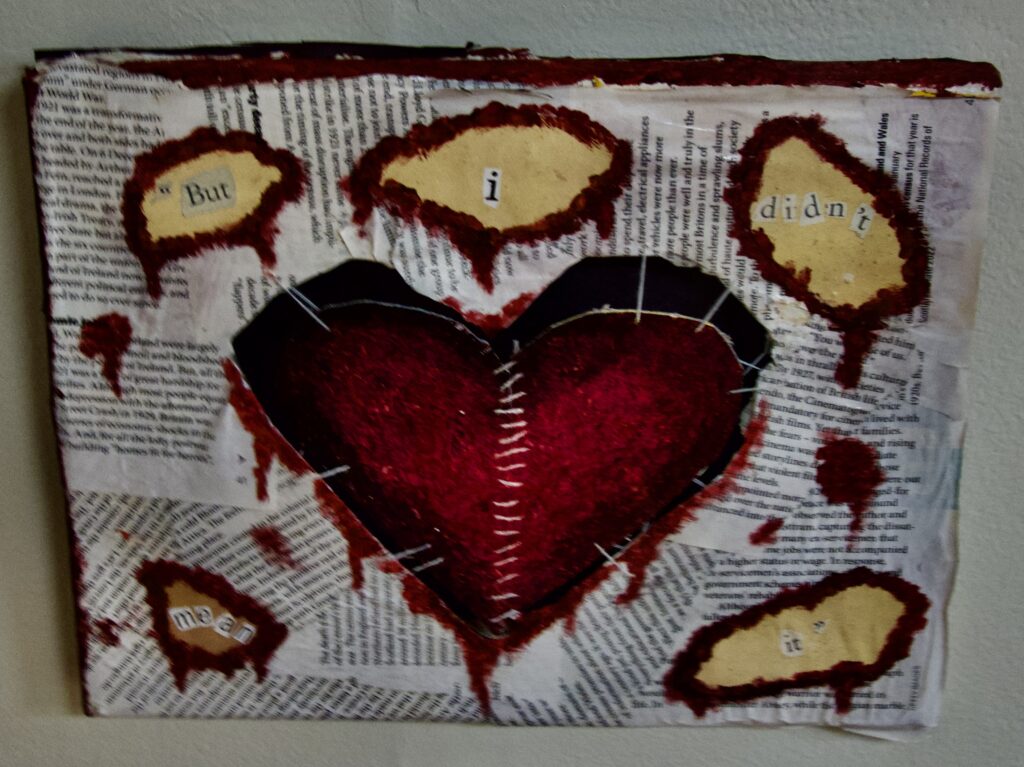
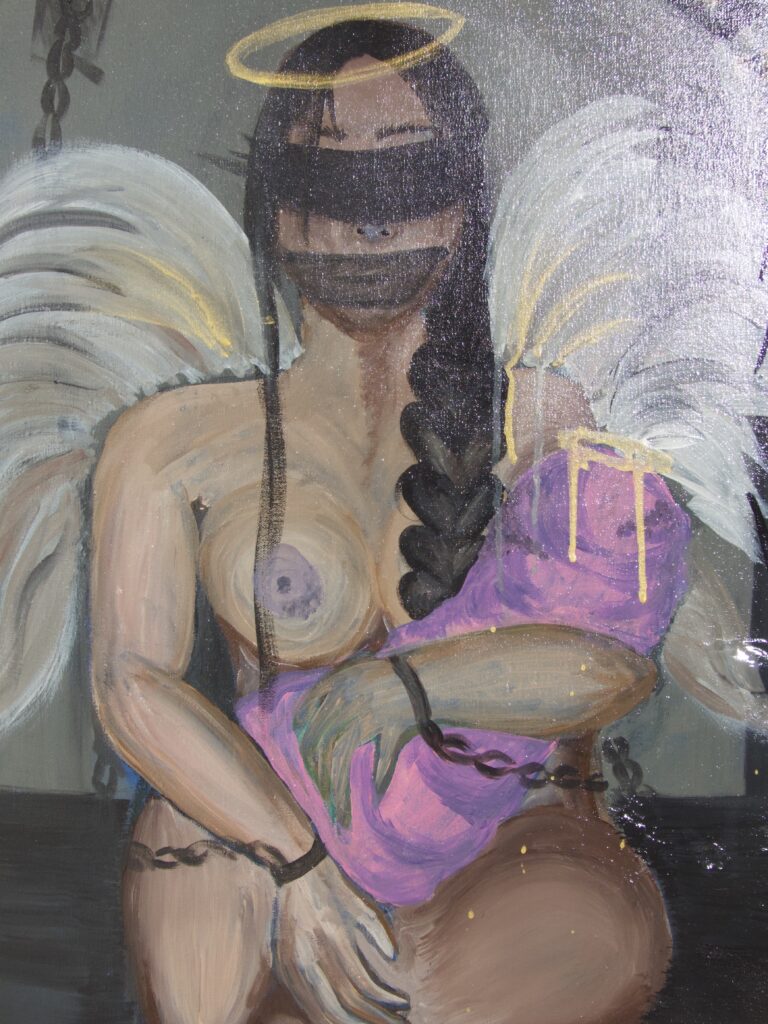
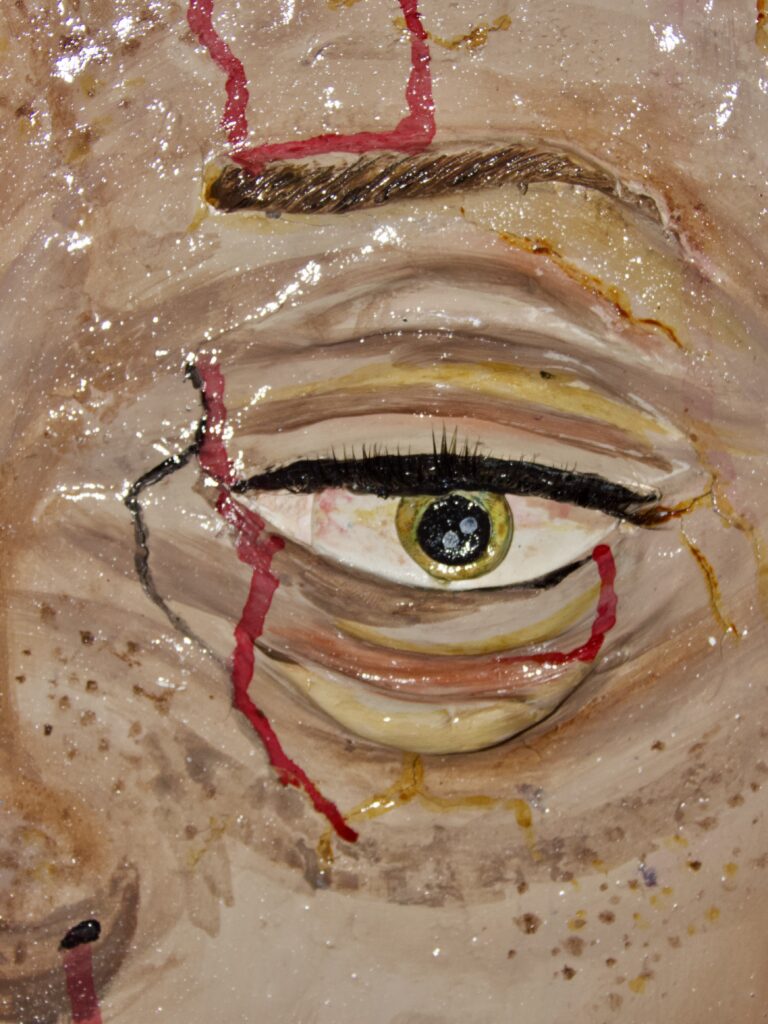
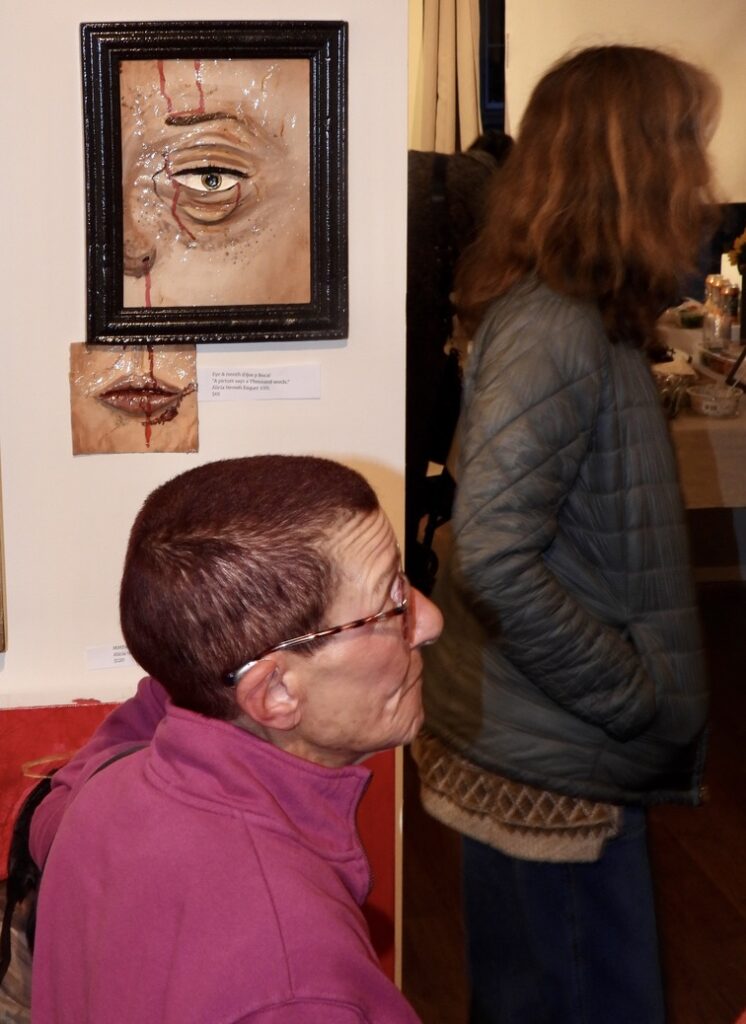
It was inspired by a photo of her mother with the artist as a little child.
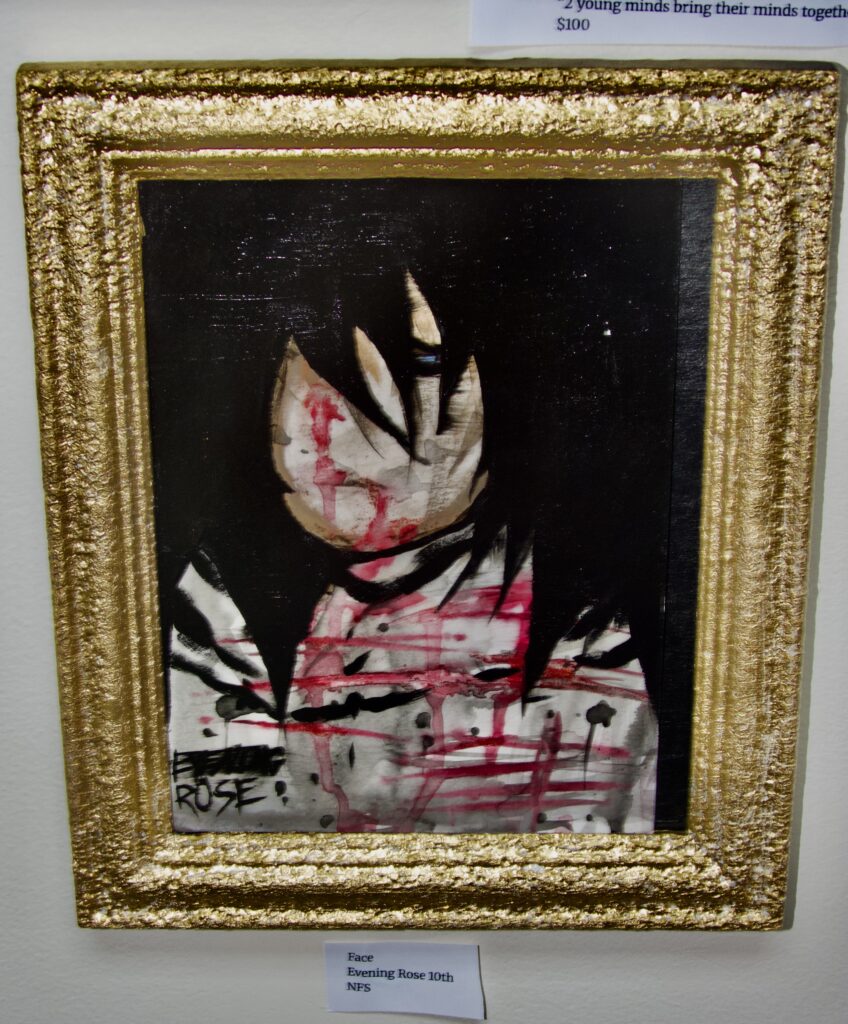
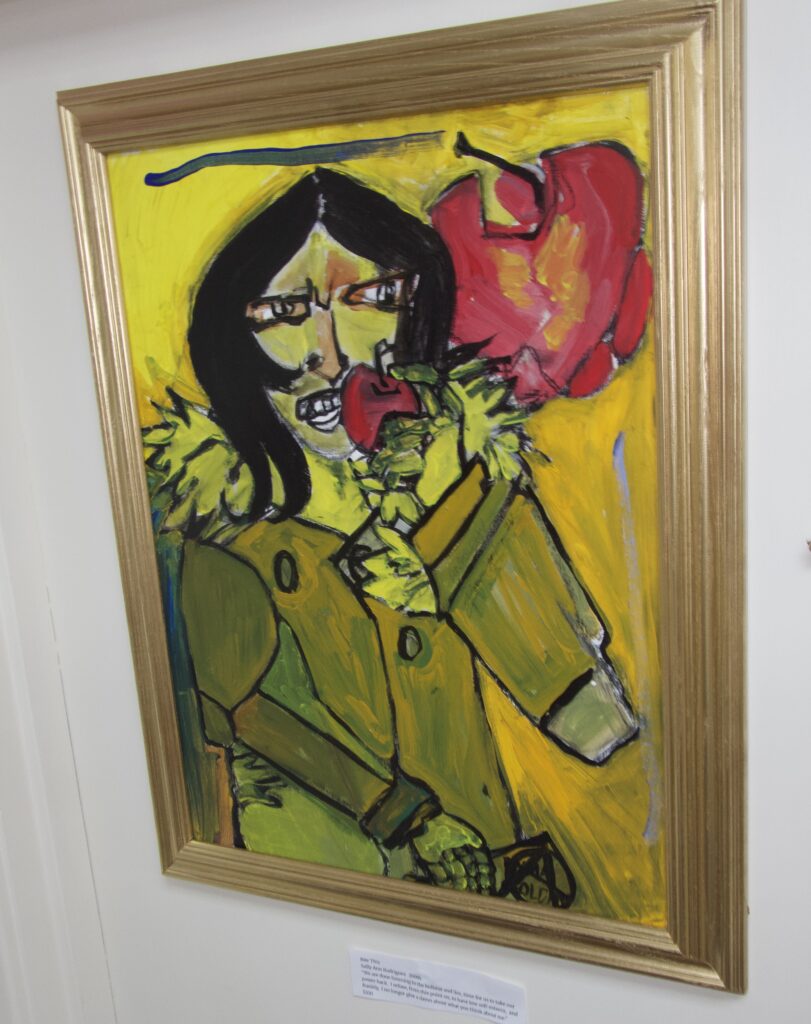
She says the expression has allowed her to truly ignore what others think of her and be herself.
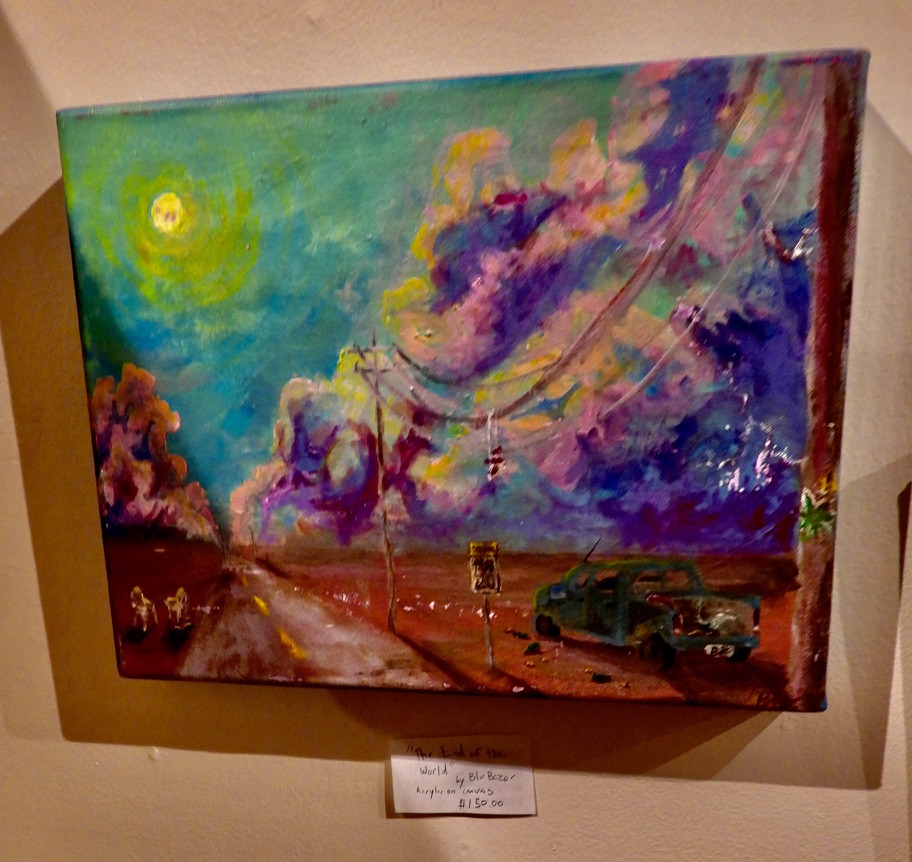
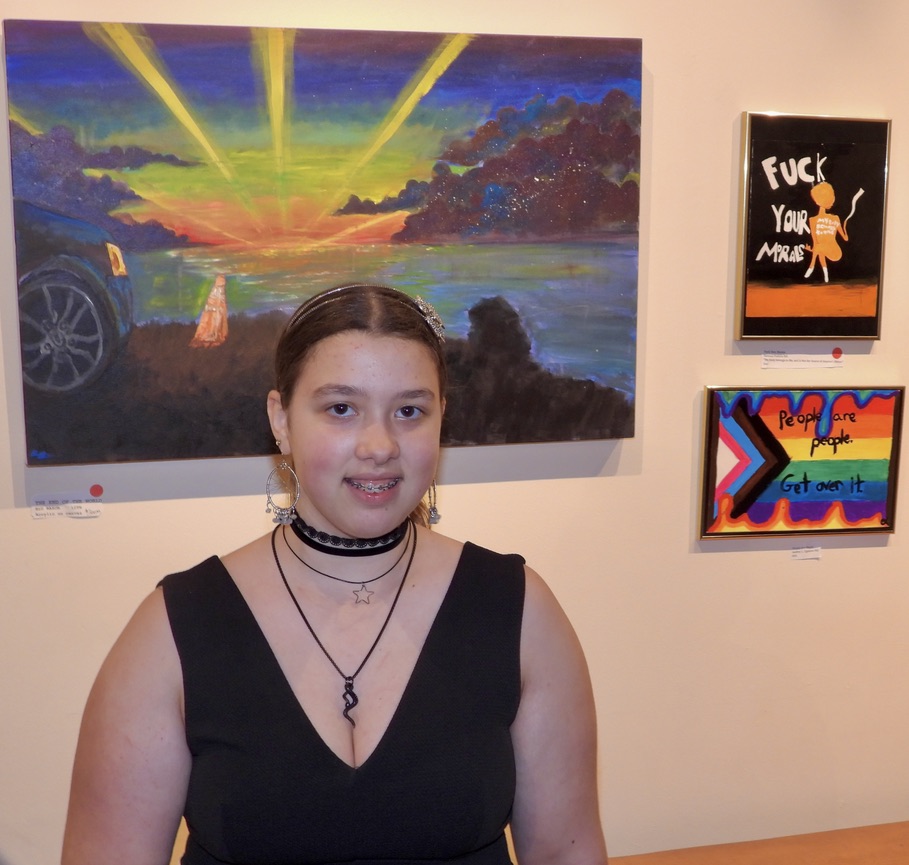
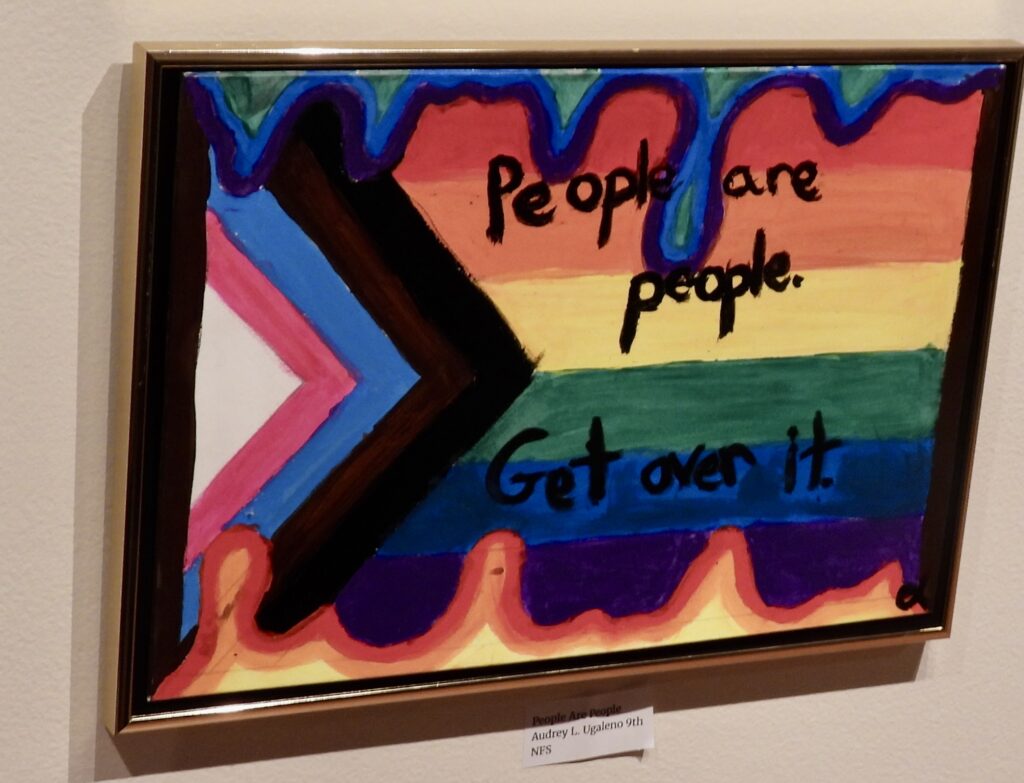
What is art, and why should kids spend valuable education time doing it? This is one of Rodriguez’s favorite questions:
“I tell the students, if you can let yourself go without self judgment, do it! Do art for some creative fun. Now is the time. It may transpire into something channeling and bubbling through you that needs to come out. And once you start following that muse, you know your own hearts bump. It is happening and you’re like trying to breathe, and you’re on fire, and you can’t stop. I tell these kids, look, I don’t expect any of them to become a professional artist, at least anytime soon. I didn’t do it that way and its not a place to seek purely as a career. I tell them, once you show to yourself that you can do this your heart will rise up and get you to stick with it. And when you do you will realize you can do anything, you will become more resourceful in everything and find joy within.
The Cobalt Gallery building has been around for more than a century and delights in its role as a mystery, starting with the symbol of the nation’s most important secret society on top. The Masonic Lodge Symbol and the all-blue coloring are just the start of the fun at the Cobalt Gallery. Cobalt was a contemporary art gallery until being acquired by the non-profit Flockworks. Before that, it was a printer repair business, skateboard shop, and Mandi Liberty’s beloved Paws for Cats and Dogs. We looked back and found this building one of the hardest working and most challenging of local buildings. In 1932 it was the home to the Fort Bragg Cemetery Company, After that Tucker’s Florist shop. In 1910 it was listed as Chapman’s Funeral Home. The lot is 8070 square feet, smallish for Fort Bragg, but would be large compared to commercial buildings in big cities. The property to the South, which used to be the hospital (prior to 1915) is owned by Silver Canul and is Mayan Fusion. The property to the north is a city parking lot.