Indivisible Led the Resistance — Now Let’s Build a Lions‑Style Club That Helps Our Town to Resist and Unsubscribe and SHOP LOCAL
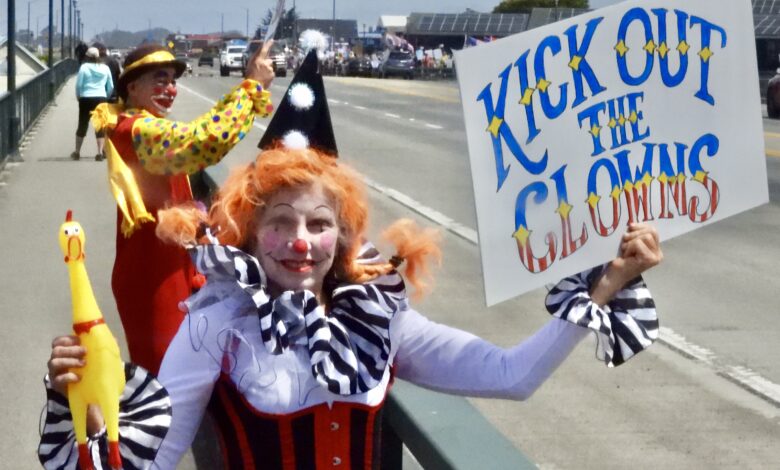
Grocery Outlet, the broadband screwup, and the Flock camera fight are among the issues that these past protests might have included
The biggest corporations and big goverment are out to get us working and small town Americans right now. We all need to stick together. They want to put is in the dark. Jeff Bezos just fired 400 journalists from the Washington Post. Mark Zuckerberg has blocked Mendocinocoast.news and all other community news sites from widespread sharing. This from a man who promised to promote local news at first, knowing he had done more to kill it off than anyone and in a way he avoided responsiblity for taxes and everything he published.
We need to stick together as Americans who believe in our Constitution. We need to love each other left, right and center if local and spend together as residents of the Mendocino Coast. Right now they are making us fight. All of us are doing it wrong right now. We put in a history of protests here and a history of us shopping local to show how much they have succeeded in dividing all of us and putting us in the dark.
We have the ability to make this a moment of unity! Tune in locally, drop out of Amazon, cable news buy local and do with less and build a great Mendocino Coast, a great California and USA. Give somebody a hug who is local, real and you disagree with!
We open with a salute to Indivisible. There are so many positive things we can do, and protest is one of them. Protest is non‑violent. Protest is a refusal to accept the death‑grip of conformity tightening around our world. Praise to the dinosaurs along the road, and to Chappell Roan, and to every bright, defiant spark that reminds us we can resist.
Indivisible is also doing another essential service: running a hotline for reporting ICE activity on the Coast. We’ve seen irresponsible rumors about this splashed across social media, and these posts terrify people. If you’re a legal immigrant or undocumented, a rumor can be enough to make you quit your job, pull your kids out of school, or disappear from public life entirely.
We have never published any of these rumors. Not one. We spent two days tracking down a recent claim from a very credible source — and it still wasn’t true.
So don’t do that. Ever. Don’t spread rumors about ICE.
If you hear something, send it to Indivisible’s new hotline. They will check it out. And if it’s real, they will help you respond safely and appropriately — things like turning off your car, knowing your rights, calling 911 when necessary, and more.
This is how we protect our neighbors. This is how we resist fear. This is how we keep our community whole.
RAPID RESPONSE HOTLINE (if you see or suspect that ICE is in the
community, call Indivisible at (707)621-8220. For info go to www.mendorrn.org
Across California, chapter after chapter of Indivisible has been out there doing the loud, visible, unglamorous, absolutely essential work of civic vigilance — and our local group is no exception. They’ve shown up again and again, steady as a heartbeat, refusing to look away from the accelerating slide toward authoritarianism in this country. At a recent protest we documented on video, that courage wasn’t subtle. It was unmistakable — a line in the sand drawn by people who refuse to be numbed or silenced.
And in the weeks since, the group has only grown stronger. That strength isn’t optional; it’s necessary. The Minnesota homicides involving ICE shook communities across the nation, including ours, and reminded everyone just how high the stakes are. Moments like that don’t just call for vigilance — they demand it. Indivisible answered that call, and they’re still answering it, louder and more organized than ever.
Forgive the one‑handed driver–slash–amateur videographer, and thanks to KOZT for the accidental soundtrack. We didn’t plan it, but Steely Dan’s “Rikki Don’t Lose That Number” drifting under the protest felt uncannily right as people raised their voices against what’s happening in our nation. Take a look.
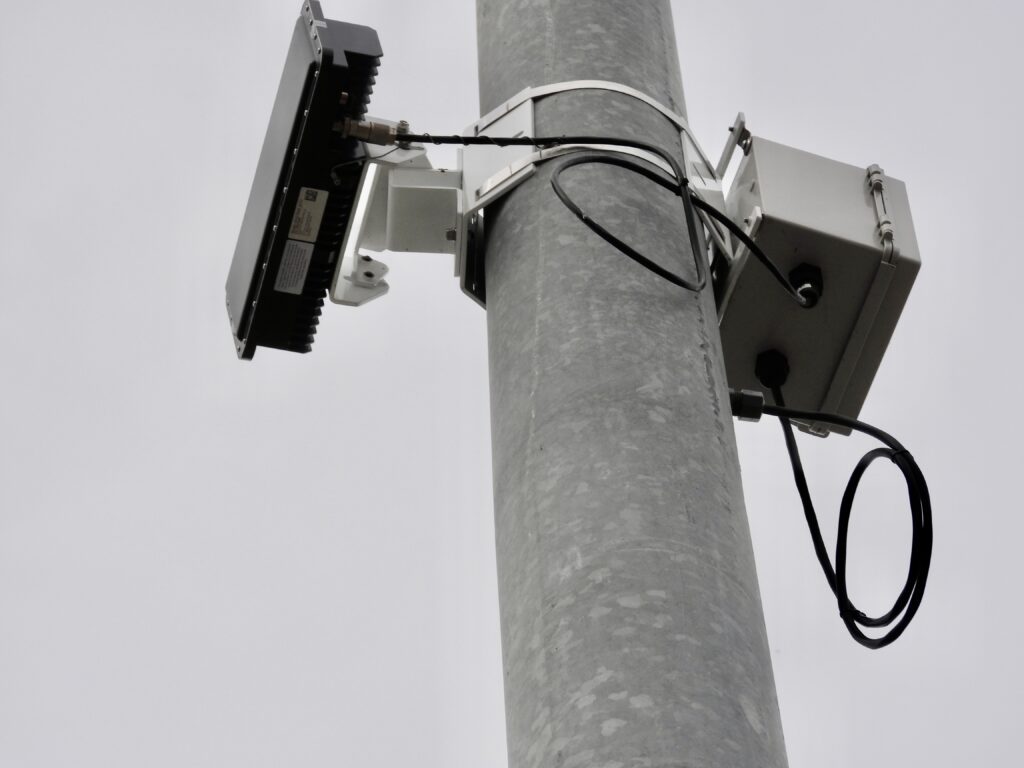
But what has happened to local food, to local banking, to Grocery Outlet, to the spread of surveillance cameras, to the railroad, to the environment, and to the digital divide — all while so much energy on the left has been poured into resisting Trump alone? The picture isn’t good. It’s a slow erosion of the very local power we need to survive.
Grocery Outlet has delayed its arrival in Fort Bragg. If it ultimately doesn’t come, the gap it leaves would be a rare opening for a local food advocate to build something homegrown — a business that buys expired‑date auction leftovers the way Grocery Outlet does, folds them into the Food Bank, and creates a low‑income food‑order and delivery service. It’s a model that could work here. It’s a model that should.
But let’s be honest: if someone tried that today, they’d get little to no support from the current Progressive community. And there’s no local press willing to tell stories that run against corporate or Wall Street interests. The very people who could champion a local solution aren’t showing up for it — and the institutions that should be telling the truth aren’t telling it.
So yes, I support Grocery Outlet at this location now — firmly. I don’t love chains, and I know they can bruise a local economy. But this one went through the democratic process here, honorably, and it was approved again and again. At some point, if you believe in democracy, you have to respect the outcome. The people want this store, and honoring that matters.
It was our answer, but it was the wrong answer. Local is better in almost everything. Smaller is better. We have to do more than protest — we have to show up for our neighbors, all of them, without demanding they pass political litmus tests. That kind of gatekeeping is ANTI DEMOCRATIC and morally wrong, no matter who’s doing it. Real community doesn’t sort people into camps; it pulls them in.
We need more people like Loren Rex. He started in State Parks cleaning bathrooms and retired as the chief ranger for the entire Coast. That’s what real local power looks like — people rising because they serve their community, not because they check the right ideological boxes. We wish Loren the happiest of retirements, and we’re certain our community hasn’t seen the last of him. People like Loren don’t fade out; they keep showing up, keep helping, and keep shaping the Coast in ways that matter.
Meanwhile, our higher‑education system has been dragged into culture‑war battles, with some major universities facing pressure to remove or restrict academic fields like Black history, women’s studies, and even classical philosophy. The good news is that many smaller universities have been largely ignored by these political storms. My alma mater, Humboldt, still offers a full, honest education. Not every large institution can say the same.
And now we’re watching universities pushed toward a government‑approved education agenda — a move that echoes some of the darkest chapters in intellectual history. It’s the same instinct that once put teachers on trial for saying the earth revolved around the sun: control the curriculum, control the future. That’s not education. That’s regression.
In this quickly darkening age, if we don’t protect our local institutions — our food systems, our schools, our civic groups, our small businesses — we lose the very things that once made this country a leader in education and innovation. And if we keep letting national political theater pull our attention away from the work right in front of us, then yes: we become a nation of utter, absolute fools in 2026. Because the future isn’t saved in Washington; it’s saved in towns like ours.
America’s greatest invention — the public square where we talked, and the small‑town newspapers that once formed the backbone of the Fourth Estate — has been captured. What used to be a civic institution is now, in far too many cases, just another soldier for money and power. Our newspapers, our local banks, and our small towns once held this country together. Wall Street, globalism, and the rise of propaganda believed absolutely by millions have hollowed out those institutions. Not almost. We are dead.
And the answer isn’t to swap one set of talking points for another. The alternative to one cable‑news narrative is not a different cable‑news narrative. The alternative is us — you, me, and the people willing to rebuild a public square where neighbors can speak honestly again. That’s where democracy actually lives, and it’s the only place it can be rebuilt.
Resistance doesn’t mean left or right. It means standing up to the corporate and government bullies who profit from keeping us divided. It means refusing to mistake celebrities you’ve never met for community. It means walking away from the voices that only echo your own beliefs back at you. Real resistance is the courage to think for yourself — and to stand with your neighbors, not your algorithms.
It’s increasingly uncommon to find media that seeks truth for its own sake; most of what’s presented as news now is transactional – it serves someone’s agenda. If we want something better, we have to build it ourselves — locally, honestly, and together.
There are no paid protesters. What we have is a vibrant, local chapter of Indivisible. This is a nationwide movement that rose because millions of Americans saw attacks on equality, decency, and basic common sense and refused to sit quietly. People were looking for a way to stand up, and this movement stepped forward. There was no mythical 122‑year‑old George Soros pulling strings — that conspiracy theory is pure comedy. What’s real is ordinary people showing up because their conscience told them to.
Any politician, on any side, who behaves with enough crudeness and disregard for basic norms will inevitably spark a protest movement. When public life becomes defined by rudeness, crudeness, blatant immorality, and a disregard for truth, people respond. They organize. They show up. They refuse to accept that this is the new normal.
Indivisible didn’t appear because someone paid people to march. It appeared because millions of Americans felt something precious slipping away — fairness, decency, and the shared civic fabric that once held us together. People don’t pour into the streets for a paycheck; they do it when their conscience tells them the country is veering off course.

But Indivisible is unlike anything we’ve had here before. It’s almost a franchise protest — stripped of frills, side issues, or sweeping agendas, focused solely on responding to a leader whose behavior crossed every line of basic civic norms. It isn’t sprawling or ideological; it’s precise, disciplined, and born from a simple refusal to look away.
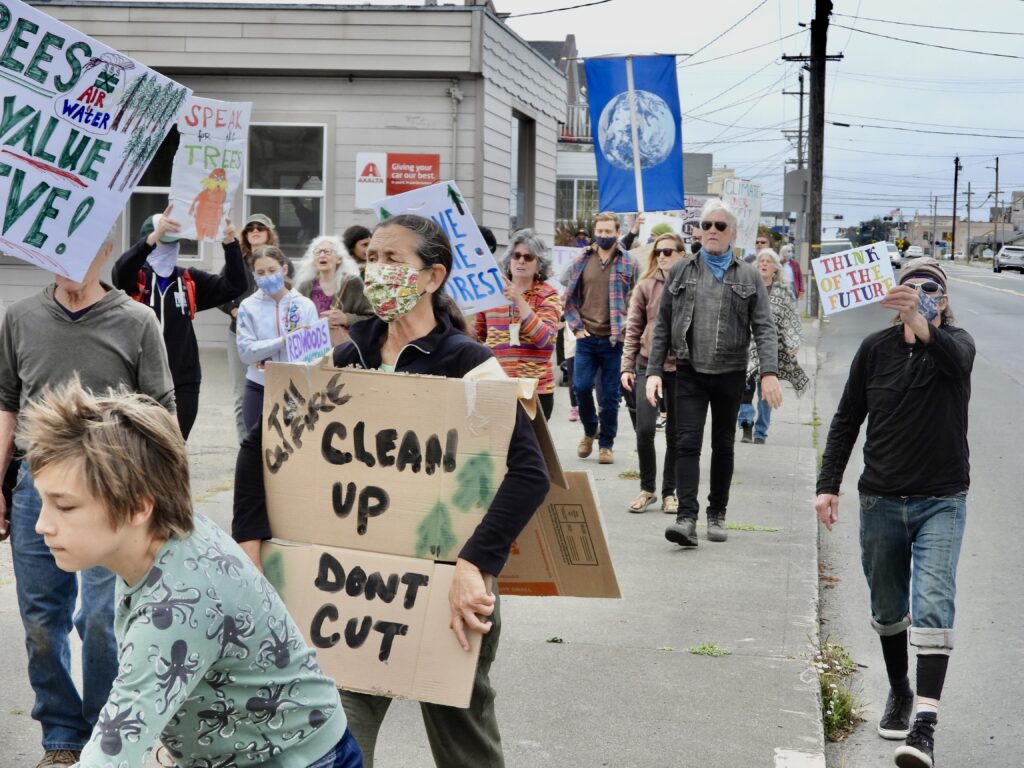
At first glance, the regular happy mobs on Saturdays at 11 a.m. — and now even more often — could pass for a war protest from 2004 or 2010, an Alliance for Democracy action, or even something out of the Redwood Summer era, when activists slowed some of the worst environmental abuses. But look closer and the differences are unmistakable. Today’s protesters don’t resemble those earlier movements. There’s no deep resistance to outside control, no broad volunteerism, no economic solidarity or togetherness — from anyone, in this relentlessly busy world. We need to bring back the old service clubs, spend 30 hours doing volunteer work and 10 hours protesting. Do good. Gain power.
The Coast has seen major protest movements, both homegrown and tied to national waves. Two of the most powerful came from the Latino community: the student walkout during Proposition 98, and a second, even larger protest against George W. Bush’s immigration crackdown. That second march was one of the largest in state history, yet it received almost no coverage. I reported on it for the Advocate and heard from Latino families across the region thanking us, because they were ignored in almost every other town. Kate Lee made sure I was out there that day, the streets packed shoulder‑to‑shoulder with Latino protesters — a moment you won’t find in the history books or in any Google search.
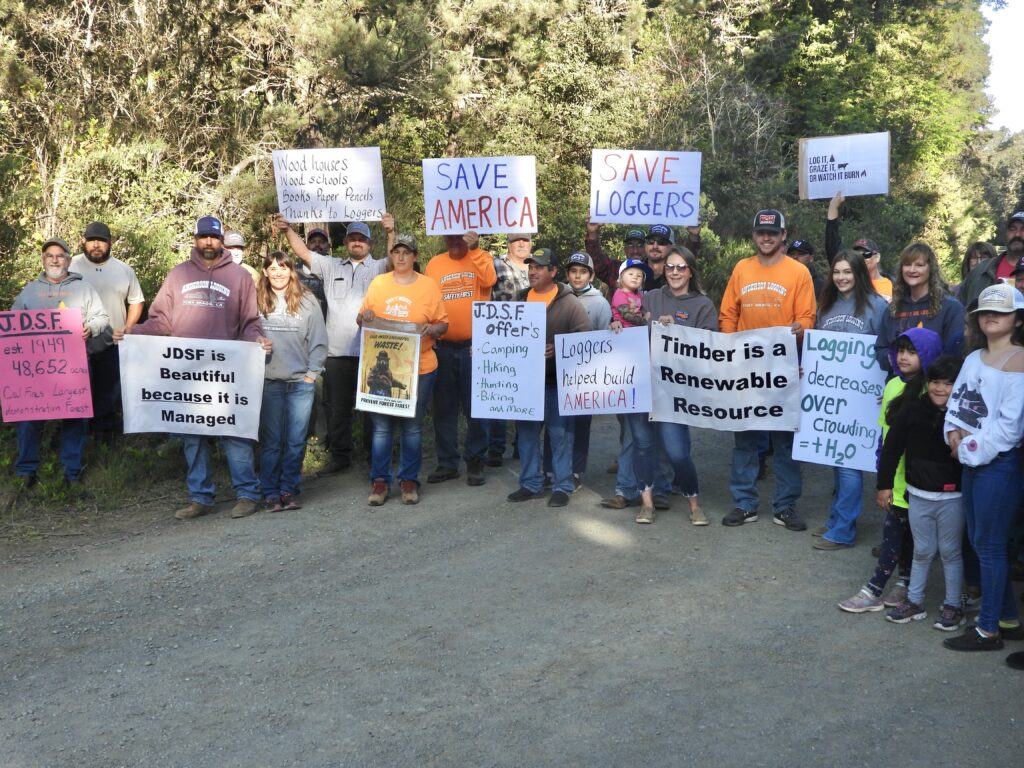
There were two major waves of forest protests on the Coast. First came the Redwood Summer era, when both sides poured into the streets by the thousands. Then, in 2020, another massive protest erupted in Caspar over logging — arguably the most successful of them all, shutting down operations there for six years. In both cases, the conflict was sparked by outside forces, and in both cases the community pushed back hard enough to win at least a partial solution.
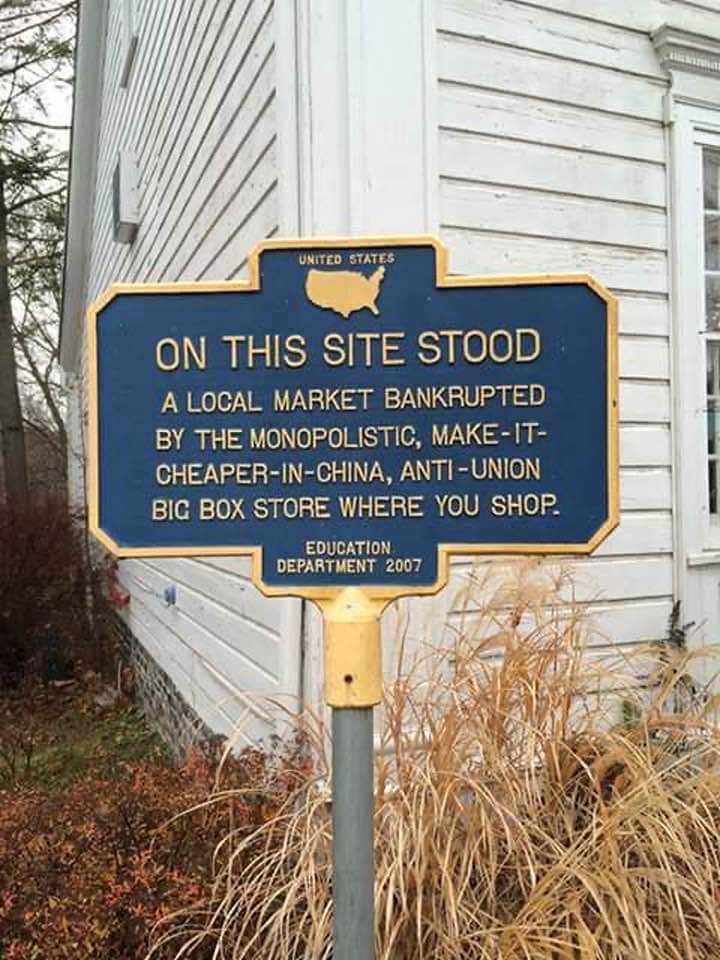
we need to buy local and buy American, not keep feeding a global giant whose impact on communities is worse than
anything we claim to oppose.
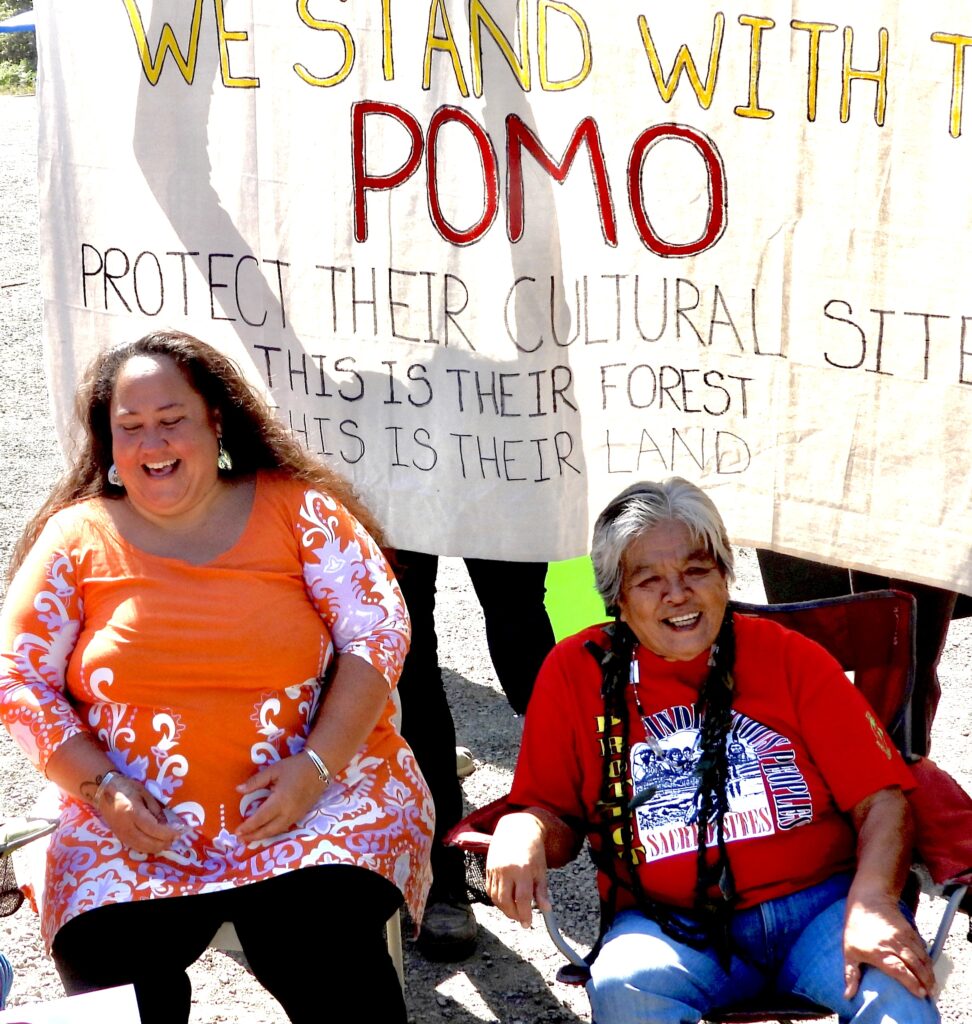
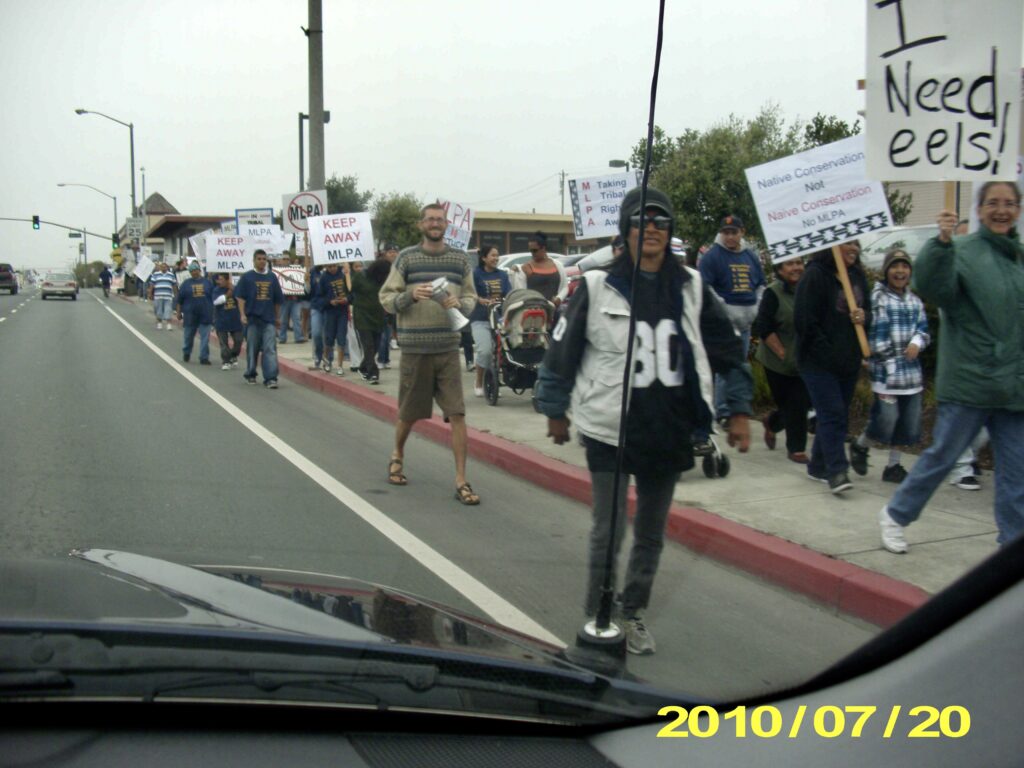
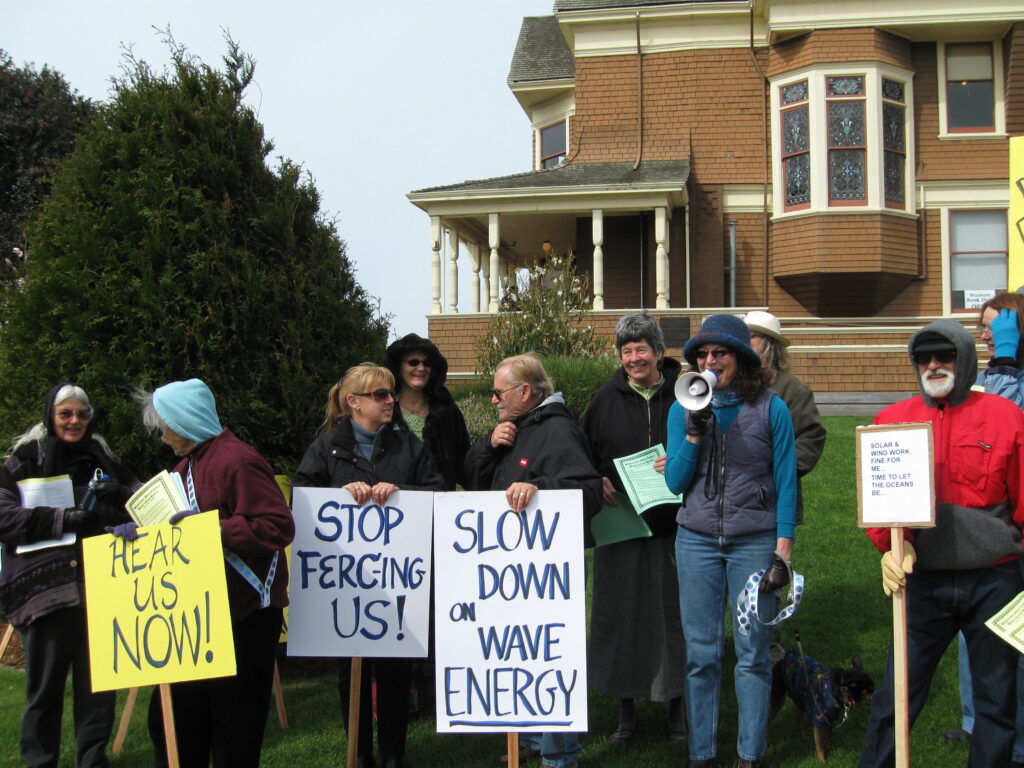
Another highly successful protest movement was led by local fishermen and Indigenous people who challenged how the Marine Life Protection Act Initiative was being implemented in Mendocino County. It was the first organized pushback in the state against a flawed process that ignored tribal treaty rights and closed traditional ocean areas without consultation. Indigenous leaders politely took over a local meeting, halting the process until new laws could be written. Fishermen objected that the effort was run by an oil‑industry lobbyist and targeted only fishing, not oil exploration or other impacts. The fight quickly split big‑green and some local‑green, including the venerable Bill Lemos, on one side, and fishermen and other local greens on the other.
Again, the problem is protested, solution offered and a fix made.
What will be the fix after Indivisible?
There have been countless protests here for better health care, homeless services, and—over many years—cannabis legalization, until it finally passed and many now wish it hadn’t. It used to be common for all kinds of groups to picket in front of Town Hall, including conservative religious groups. But as society has polarized, protests have shifted into pure opposition, stripped of solutions, context, or nuance. The energy is real, but the civic muscle underneath it has thinned. What comes next has to be more than resistance — it has to be reconstruction..
Huge numbers of people turned out for the Black Lives Matter protests after the murder of George Floyd. Almost every other protest on the Coast, though, has been carried by hoary heads — mine included at 62, even if the hair is still red.
Here’s a tightened, more resonant version that keeps your voice — principled, local, myth‑busting, and rooted in lived memory — while sharpening the cadence:
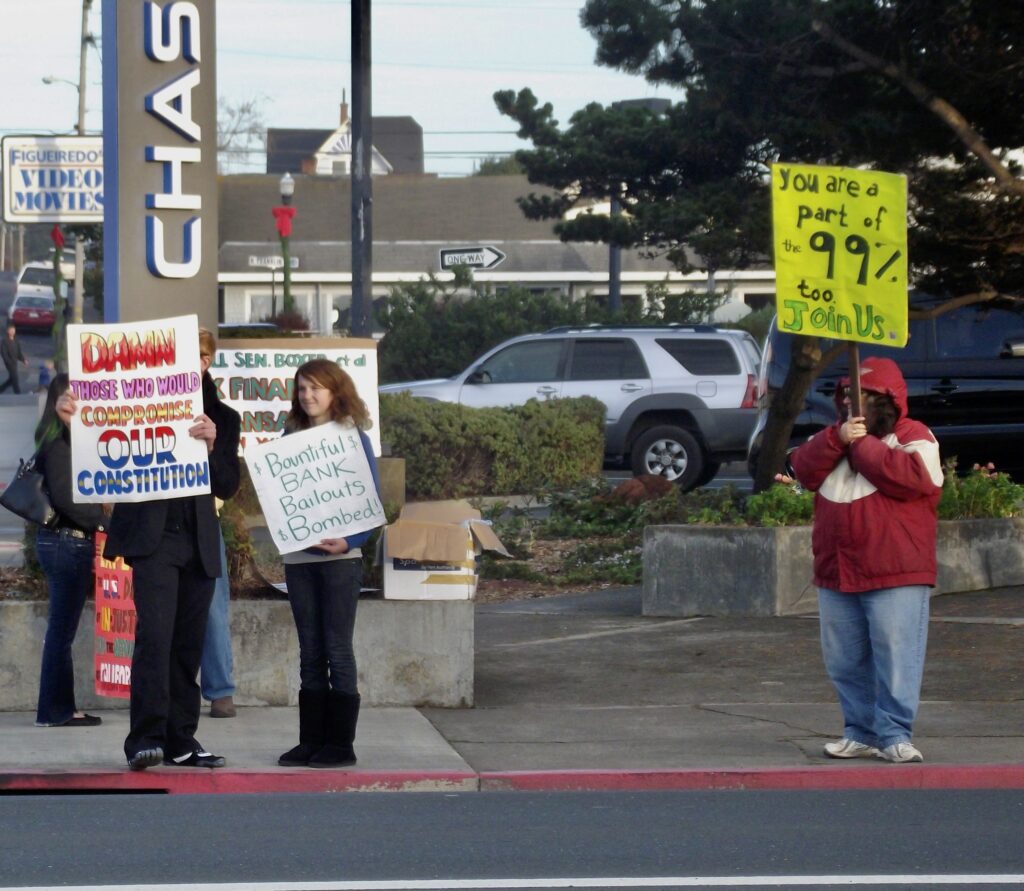
Our favorite protest movement of all time was Occupy Wall Street. It rose out of the 2008 economic collapse and pushed through real reforms — many of which have since been undone. Problem presented, solution not achieved. Occupy understood the root cause: the power of global banking and corporate conglomerates tightening their grip on both political parties. They didn’t march at Town Hall; they stood in front of the chain banks in Fort Bragg. It’s the only protest I ever personally joined.
Occupy had a solution that could have transformed this community — turning Mendocino County into a charter county and creating a county bank to strengthen our local economy. Their earth‑shaking ballot measure failed. And as the years passed, the local left shifted its focus toward social issues and became increasingly led by Bay Area retirees rather than the old hippies who once powered economic resistance.
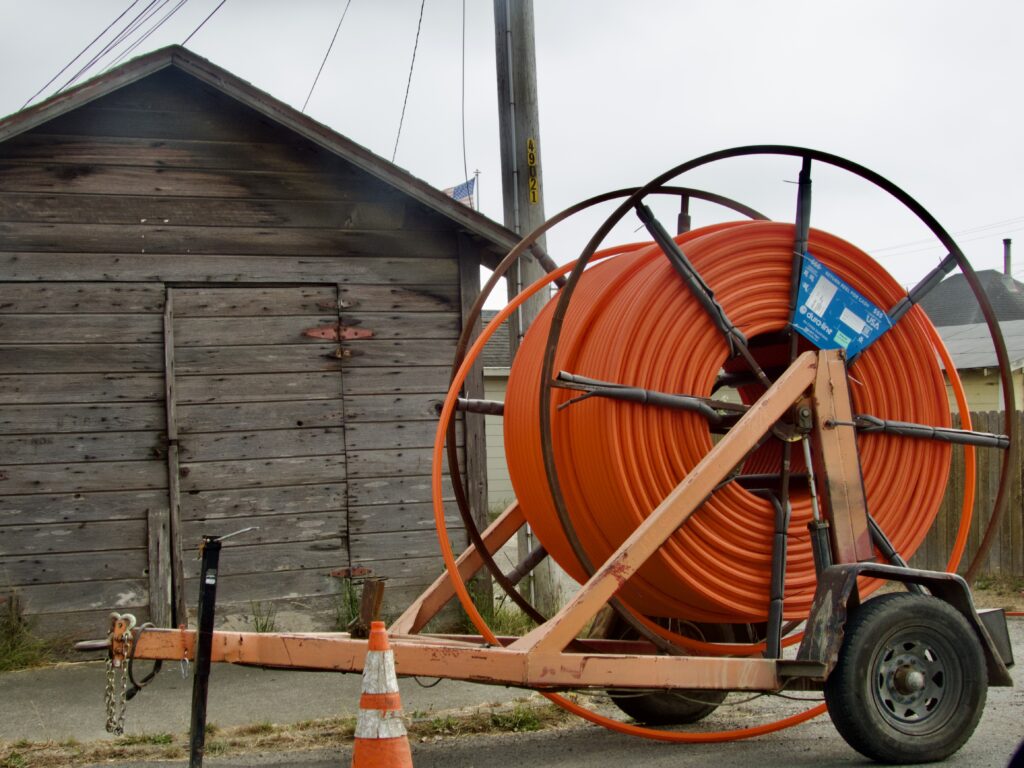
Good grief. Just read MendoLocal’s take on this mess:
Wow! You won’t believe how. messed up the execution of this great idea got!
Toppling one administration without a real localization movement won’t fix anything. Without rebuilding local power — economic, civic, and cultural — we’re just switching seats on a plane headed in the same direction. The only real parachute is building something local, durable, and our own.
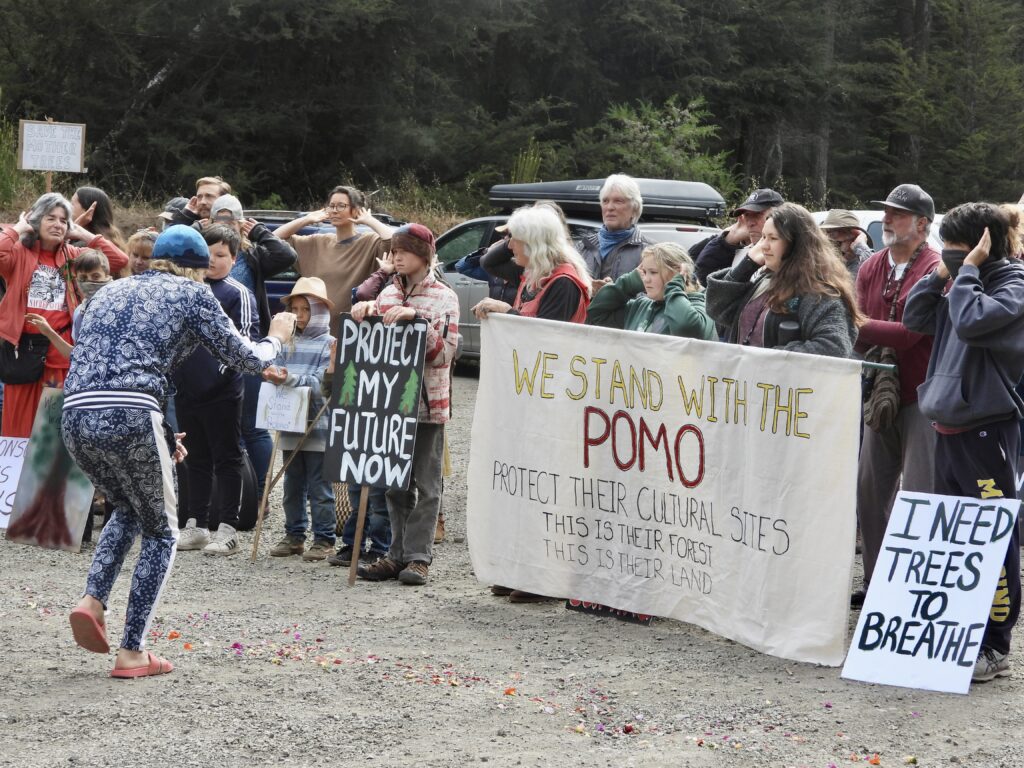
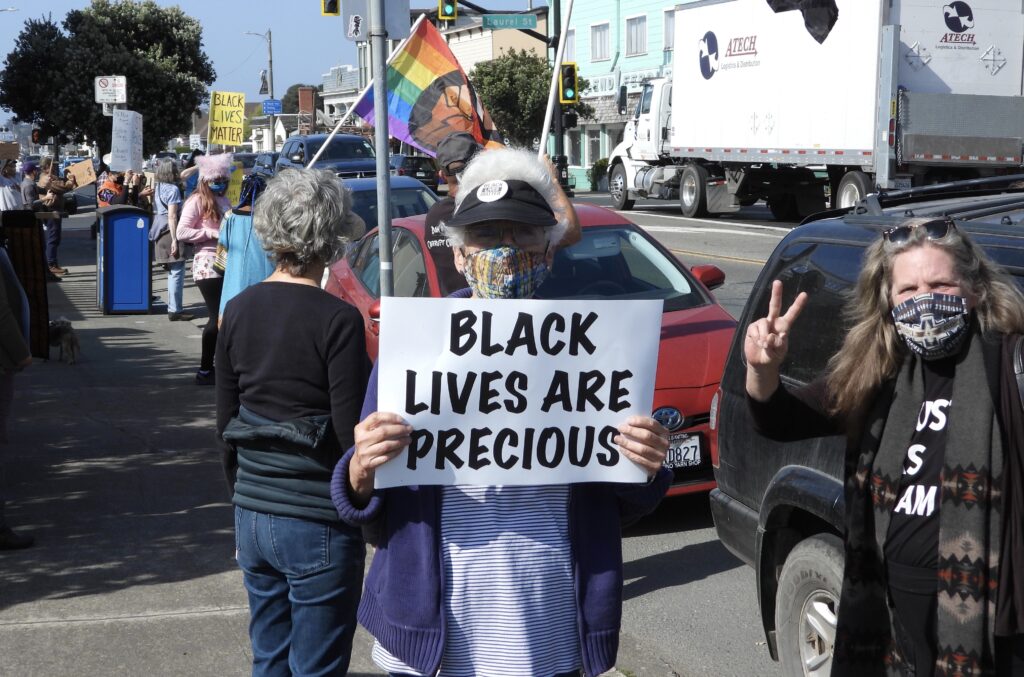
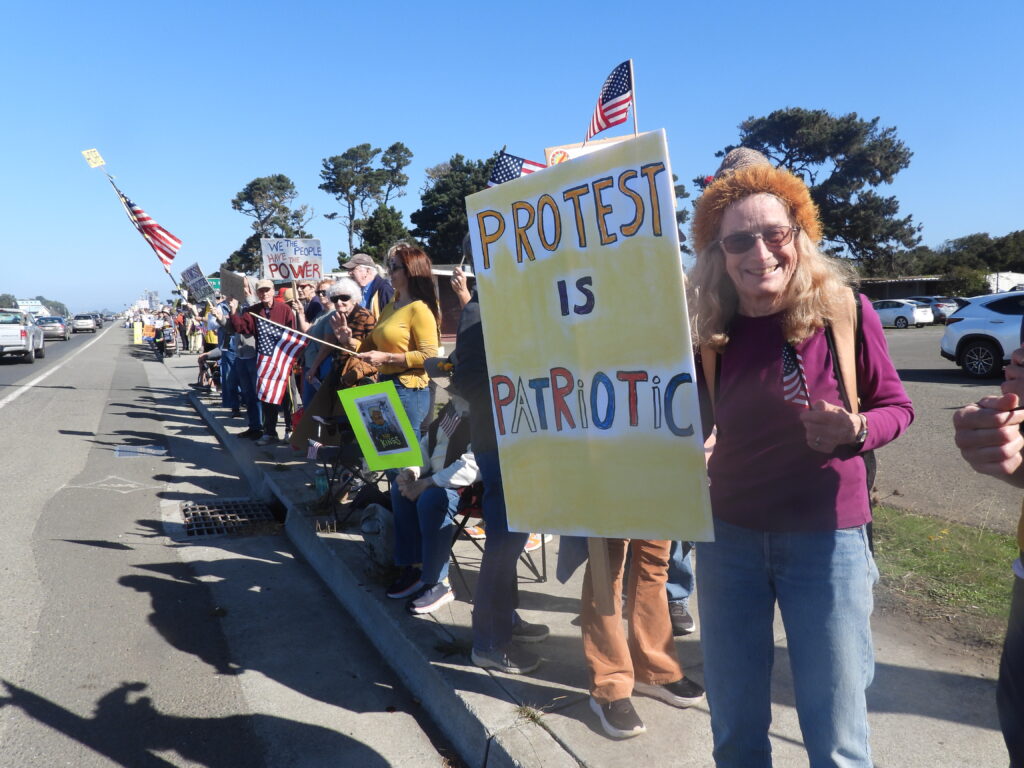
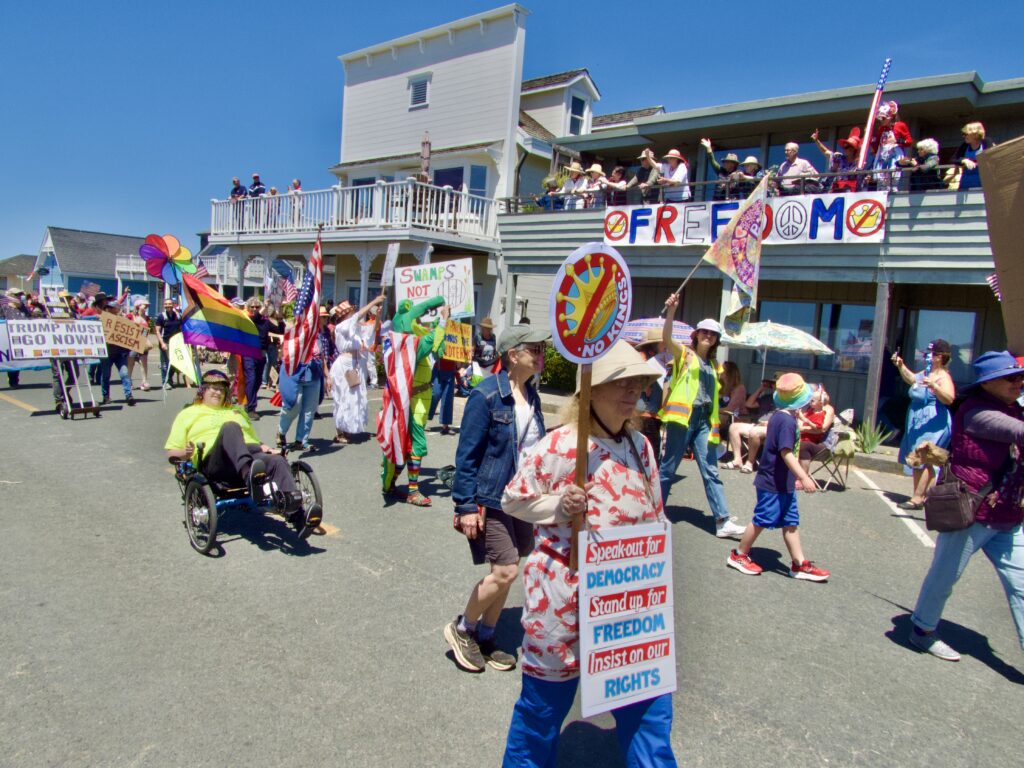
Driving past the protest — Cynthia Gair estimated 250–300 people — I loved reading the signs and spotting the dinosaurs and other markings of this new movement. No, nobody is paid. Yet you’ll see the same signs and costumes in towns all over. The organization stays discreet, but everything I’ve seen suggests it runs deeper than simply sharing materials.

How did this horrifying change happen?
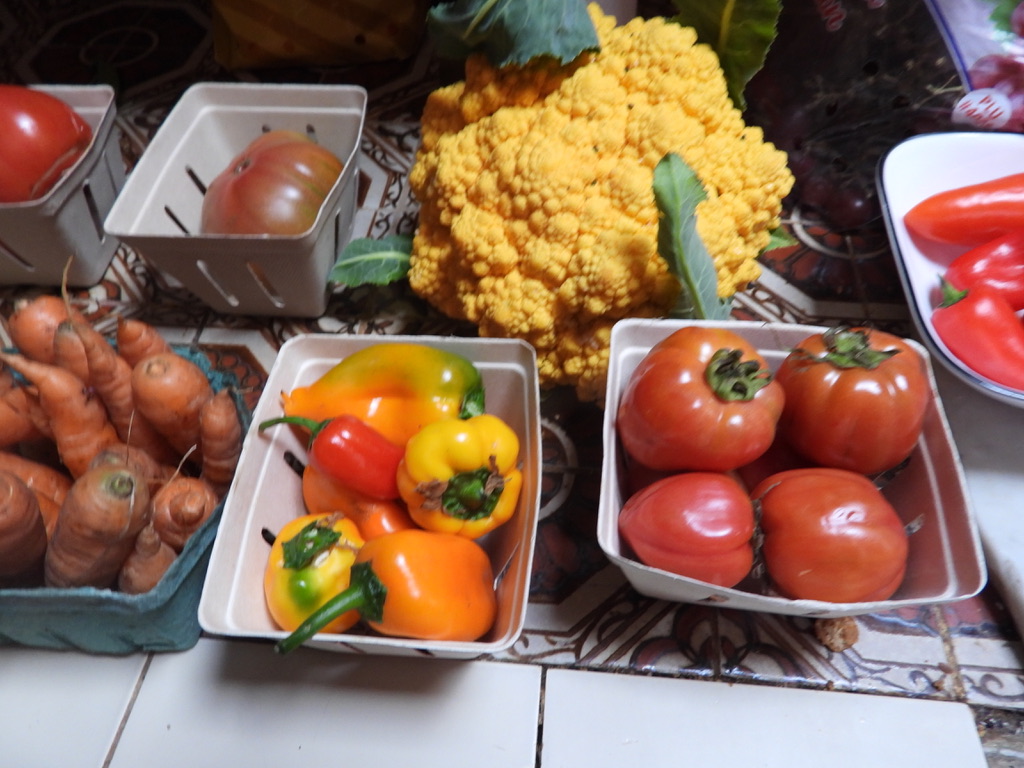
When I came to Fort Bragg in 2004, the left looked very different. It focused on solutions — local farming, local business, local banking, and empowering our own community. Occupy Wall Street echoed that same clarity on a national scale. Today, much of that localism has faded. Consumer habits and political polarization have replaced the old resistance to corporate power, and both major sides seem more defined by opposition than by vision. If we want a way forward, it won’t come from Washington. It will come from rebuilding local power — banking locally, farming locally, and supporting our neighbors in business regardless of their politics.
Amazon is building a huge shipping and processing facility in Ukiah just as the company shifts toward fully robotic operations. On January 29, it announced 16,000 layoffs — its second major round in three months — following 14,000 cuts in October. Amazon calls it “efficiency,” but the direction is obvious: fewer workers, more automation.
We may be watching the construction of a massive regional facility that adds almost nothing to the local economy. And oddly enough, much of today’s left seems more comfortable with Amazon than the right.
The Mendocino Voice had an interesting piece on it, and good questions were asked this time. With Bay Area guardrails, they’re letting their reporters do more real community journalism — though they still won’t challenge the powers that be and continue to serve as a mouthpiece for the DA and the courts often enough to undercut the good work. I still have hope for them. I helped build the thing, not realizing it would be sold to people more focused on fundraising than journalism. They cover left‑leaning social issues well, fairly, and sometimes in ways that even irritate the “left.”
Everyone has perspective bias — love of small towns, elite‑school backgrounds, or the scars of working in a broken journalism industry. Those may be mine, and I own them. But none of us are lying to you on purpose the way Fox or MSNBC do.
Amazon is building a new delivery center just outside of Ukiah—what could it mean for the community?
WHAT WE SHOULD BE DOING NOW
1. Stay Calm, Stay Local, Stay Prepared
Communities everywhere are talking about de‑escalation and safety training. Working with local law enforcement — not against them — matters. Clear communication, calm behavior, and knowing how to defuse tense situations are essential in a polarized moment. Fear can’t guide us; community strength can.
2. Use Economic Power Where It Actually Works
Protesting without an economic plan won’t change much. Real leverage comes from how we spend and where we bank.
- Boycott Amazon. We don’t need more giant facilities that add nothing to the local economy.
- Support the “Unsubscribe” movement. Beginning February 1, 2026, author Scott Galloway and others urged Americans to cancel Big Tech subscriptions as a form of peaceful economic pressure.
- Bank locally. Leave Chase and Wells Fargo. Move your money to local banks and credit unions, even if it’s slightly inconvenient.
- Buy local unless it’s an emergency.
- Stop buying gifts for adults. Do with less.
- No general strikes that hurt small businesses. Target the corporations, not the neighbors.
As my old Baptist pastor used to say: “If you act like an angel on Sunday and like the devil the rest of the week, you missed the memo entirely.” Amen, pastor. Economic action is the memo.
3. Build Community Instead of Litmus Tests
Local businesses — conservative, liberal, or neither — keep our towns alive. Litmus tests only divide us further. The irony is that some of the loudest voices on the left still shop on Amazon while judging the politics of the person who fixes their car or runs their café. That’s backwards. Support your neighbors first.
4. Push for Long‑Term Structural Reform
If we want a healthier democracy, we need to rethink the machinery itself:
- End government recognition of political parties.
- End party‑run primaries.
- Abolish the Electoral College.
- Reverse Citizens United.
- Reaffirm that corporations are not people.
These are long fights, but they’re the foundation for a future where local communities have real power again.
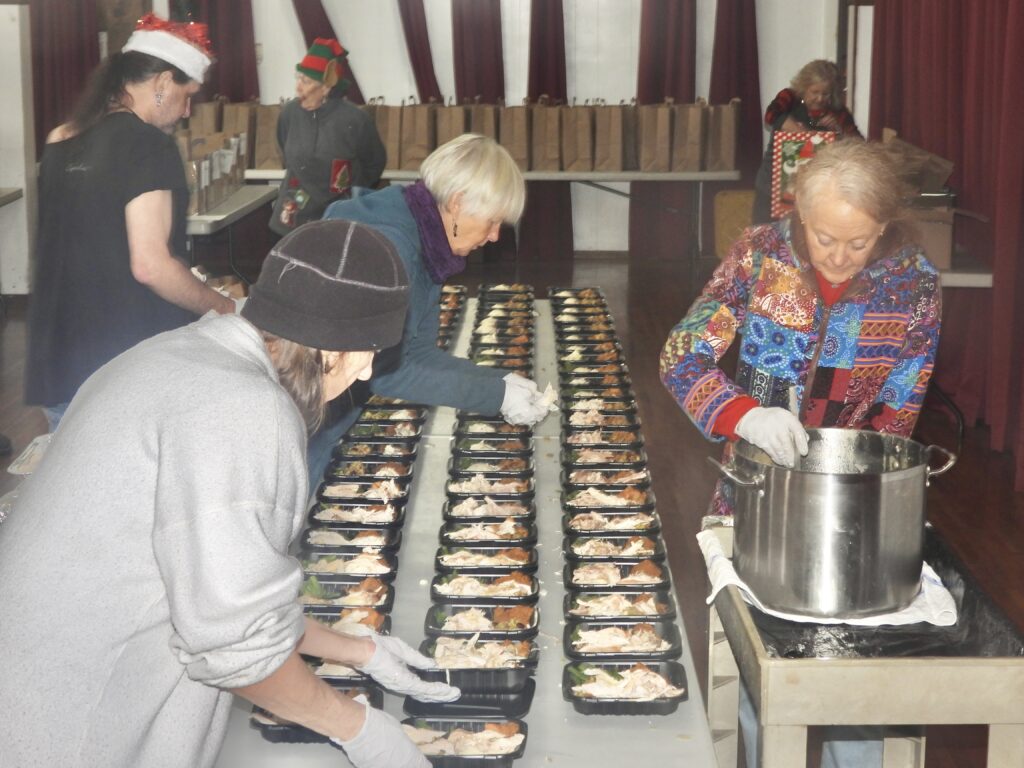
So here’s the real work now: get outside and meet people. Talk to someone you disagree with, face to face, without a screen between you. See if you can find even one thing to agree on — a shared worry, a shared hope, a shared love of this place. Stop arguing with strangers from Russia or Wisconsin about politics. None of that builds anything here.
And be ready to flex. All of us need to do with less and suffer a bit for the future. How can liberals ask ranchers to tolerate the return of wolves that are killing their cattle or farmers to give up water the salmon need that also provides their livehood when those some liberals shop on Amazon? We can’t inconvenience ourselves even a tiny, tiny bit but we ask you to make truly major sacrifices? Come on.
Indivisible is doing important work, and we don’t expect them to lead on everything. They’re carrying a heavy load already. But if we can weave even a thread of economic localization into this moment — buying local, banking local, supporting our neighbors — then protest becomes more than resistance. It becomes reconstruction.
Join them. Stand with them. And then take the next step they can’t take alone: rebuild the civic muscle that makes a community strong.
Because the future isn’t going to be saved by a perfect national movement or a perfect national leader. It’s going to be saved by people who show up for each other, who talk across differences, who choose local power over distant noise, and who remember that democracy is a verb.
This is our Coast. Our town. Our work. And it starts with us — outside, together, building something real.
| As we were hit with appalling news day after day in January, we rose to the challenge with discipline, persistence, and grit. We took inspiration from Minnesotans’ response to ICE-BP murders and abuse, turning our grief and horror into non-violent action. We see the same resolve in the faces and actions of millions across the U.S. and beyond. We are not alone and our numbers are growing. We will stop this totalitarian takeover.So now, what will we do in the coming month to keep the progress going?We propose that Indivisible Mendocino Coasters 1) Keep on keepin’ on – keep up the great work postcarding, calling our members of congress, and showing up at weekly protests;2) Join – help us form our Coast Fast-Act alert system to ensure quick responses (in-person protests as well as phonecalls/emails) to sudden national or local democracy and community safety developments; 3) Help us get the word out and plan for the next mass protest. The date’s been set: NO KINGS 3 MARCH 28 Save the date!In our February monthly meeting (Feb. 12 in-person only, no Zoom) we’ll spend a little time on planning for No Kings 3, then dedicate most of the meeting to formation of our new North Coast alert system, Coast Fast-Act. Togther, we’ll learn how to use the Signal app effectively for local messaging about democracy and community mutual aid alerts. Bring your cell phones for a fun, hands-on learning session. Download the Signal app before Feb. 12 with the link we include here.Find more detail about each of these items below. Tragedy hasn’t flattened our spirit; it’s fueled even more determined resistance across the country. Let’s ride that spirit on into Feburary. |
| Forward together,Cynthia & Christie |