Without recent data, Cal Fish & Game Commission Extends Abalone Ban to 2036 (Probably!) — Crab Season Opens in Fort Bragg; No California challenge to salmon rules
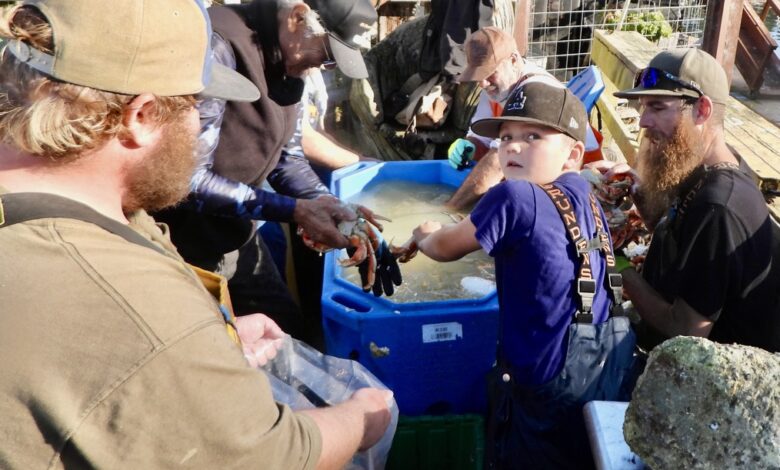
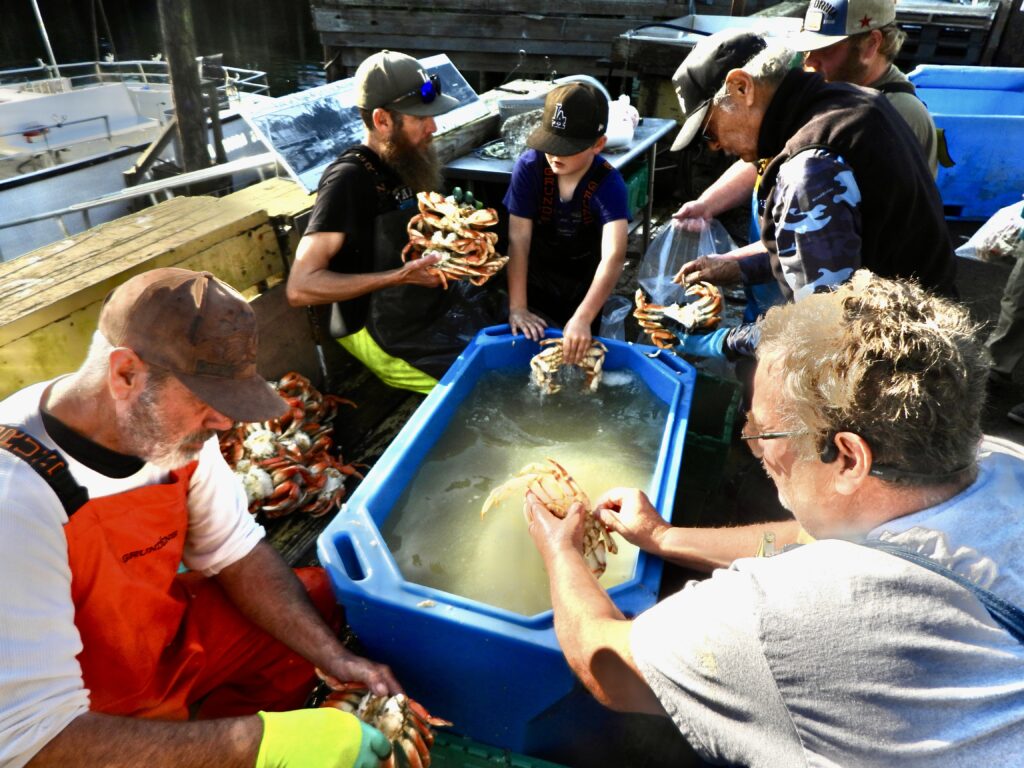
Felix Savedra, 8, digs into cleaning his crab after a successful first day of the recreational season in Fort Bragg in December. His dad, Nick Savedra, sits at his right, while Seahawk deckhand Josh McBride works at his left.
Third grader Felix Savedra was king of the Fort Bragg fishermen on Saturday, and it came as no surprise to those who know the veteran fisherboy,
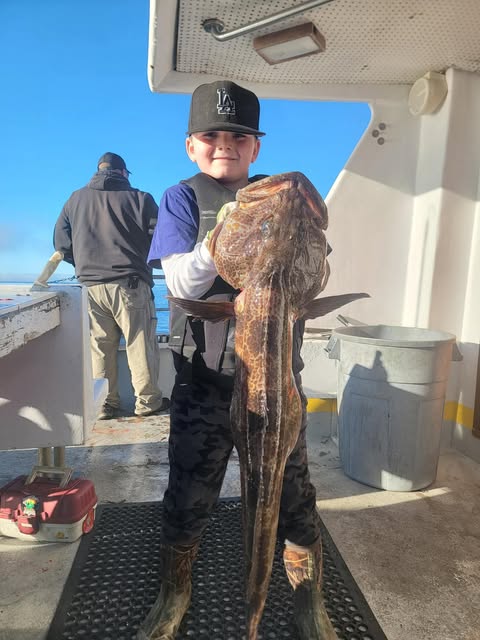
Felix, 8, was among the first to haul in a full limit of crab off Fort Bragg since last spring. He also landed the day’s biggest catch aboard the Royal Sea Hawk, a hefty ling cod weighing in at 15 pounds.
Felix has been deep sea fishing more than 100 times since he was 4, day tripping with his dad, Nick Savedra, who works as a deckhand on the Royal Sea Hawk and the Sea Hawk. Give him some encouragement in the comments!
Saturday marked the first full day of recreational dungenous crab fishing since spring, and Fort Bragg’s party boats wasted no time. The Royal Sea Hawk was the first to go out with customers, and everybody returned with a limit of 10 crabs.
“Everybody calls him Captain Felix,” dad Nick said
Felix Savedra once again landed the biggest fish on the boat. Determined, he reeled it in entirely on his own even though it’s nearly as big as he is. Sport rockfishing, bigger and better than ever this year, comes to a close on the last day of the year, while the crabbing is just getting started.
Felix’s big day of whomping the adults at fishing was made possible by a fortuitous turn in Sacramento. At last week’s two‑day California Fish and Game Commission meetings, officials reviewed new test results showing domoic acid levels had dropped below the legal limit. The season had been closed preemptively at the end of October, cancelling the Nov. 1 start, but with the Commission already in session, the improved mid‑week results allowed them to open crab season on Friday. Fort Bragg business leader Scott Hockett drove to the testing facility in the Bay Area and saw the results come in and then the season opening being announced shortly thereafter.
Nick Savedra noted that the Telestar was the first boat out, taking its crew, while the Royal Sea Hawk was the first to carry customers. The Telestar took customers out Sunday and everybody came back with a limit. They were planning a trip on Monday and offer their “Cruise with Santa” evening voyage on Saturday. The Sea Hawk was hoping for another trip this week but was only planning for sure on the weekend. There are also pelagic trips planned for bird watching and whale watching. Two reports of orcas being spotted by party boats have come in recently. The Orcas belong to the Southern Resident pod, a scientifically controversial and interesting family group that broke off from the Puget Sound killer whale population. Prior to the first decade of the 21st century, there were no orcas off Fort Bragg, now the Southern Resident group is seen regularly. Their status was also a topic of the Fish and Game Commission meeting and will be featured in a subsequent article
The season is only open for recreational crab fishing. Commercial crab fishing may start at the first of the year. Commercial boats cannot bring in crab until the domoic acid levels are even lower.
Following the rules is difficult. The season is open, but if you weren’t at the commission meeting or don’t know a party boat captain, its hard to find that out. The DFW website still said the season was closed on Monday morning, three days after it opened. Further, the number of pots one can have has changed, but there is no information right now published on what the new rules are.
A generation ago, Felix could have also enjoyed salmon fishing and abalone diving. Nobody would have guessd in 2010 that the abalone, which flooded Fort Bragg with visitors, would be lost entirely due to the sudden, total collapse of the bull kelp forest offshore. Guessing is what everybody has done, and mostly wrong, both scientists and fishermen. Scientists gave up on sending their salmon return forecasts to the media after being ridiculously off base seven years in a row. Old salt fisherman prognosticators were also way off base much of the time, claiming the abalone were still present when they weren’t and attributing the decline of salmon fishing to “environmentalists” rather than the simple fact that there were drastically lower numbers of salmon due to abuse of their habitat by development, farming, especially timber harvesting, but also wrongheaded environnmental regulation of timber harvesting. But the two sides have needed each other. Nothing happens without the commercial and sport fishermen and they have often proved science wrong. This is especially true on rockfish, where much of the science was proved wrong by fishermen who shrieked so loud that claims about the disappearing quillback were false that the scientists went out and redid the science and found, lo and behold the fishermen were right. Rockfishing, both commercial and recreational, had long ago quietly eclipsed the sexier samon and crab industries, at least out of Noyo Harbor. Now, a rich and full rockfish season is coming to a glorious end on Dec. 31, with no more until April at the earliest. If there is one absolute fact that everybody has finally learned it is that fishermen need the scientists and the scientists need the fishermen and together, they can sometimes get it right—sometimes. Mother Nature still guards her secrets.
Back to the crabbing, there are more boats than customers to fill them right now. While crab season is open, it comes with a warning that may give some pause. The California Department of Fish and Wildlife has deemed the meat of crabs caught off Mendocino County safe to eat, but advises consumers not to eat the innards. Cooking crabs whole is also discouraged.
Please read the official CDFW advisory below before heading out to crab. On Dec 15, DFW added rock crab to this warning, advising people not to eat the internal organs of either rock crab or dungenous crab caught north of the Sonoma/Mendocino county line.
The California Department of Public Health (CDPH) is advising consumers not to eat the internal organs (viscera) of Dungeness crab harvested from the coastal areas identified above. Testing has found dangerous levels of domoic acid — also known as Amnesic Shellfish Poisoning — in crab viscera from these waters, though the toxin has not been detected in the crab meat itself.
Most Astonishing Of All, the decision to close abalone season for 10 years was made in the dark without any new data from the past two years.
This is an update to CDPH’s Whole Dungeness Crab Advisory dated October 24, 2025, which warned the public not to consume any sport‑harvested whole Dungeness crab (meat or viscera) from the affected areas. Domoic acid is a naturally occurring biotoxin, and cooking does not reduce or eliminate it. Consumers are advised to always discard crab viscera and cooking liquids to avoid inadvertent exposure to domoic acid, which may be present in the internal organs. The safest practice is to remove the viscera and rinse the body cavity before cooking (boiling, steaming, or frying). When whole crabs are cooked in liquid, domoic acid can leach into the broth. That cooking water or broth should be discarded and never used to prepare sauces, soups, stews (such as cioppino or gumbo), stocks, roux, dressings, or dips
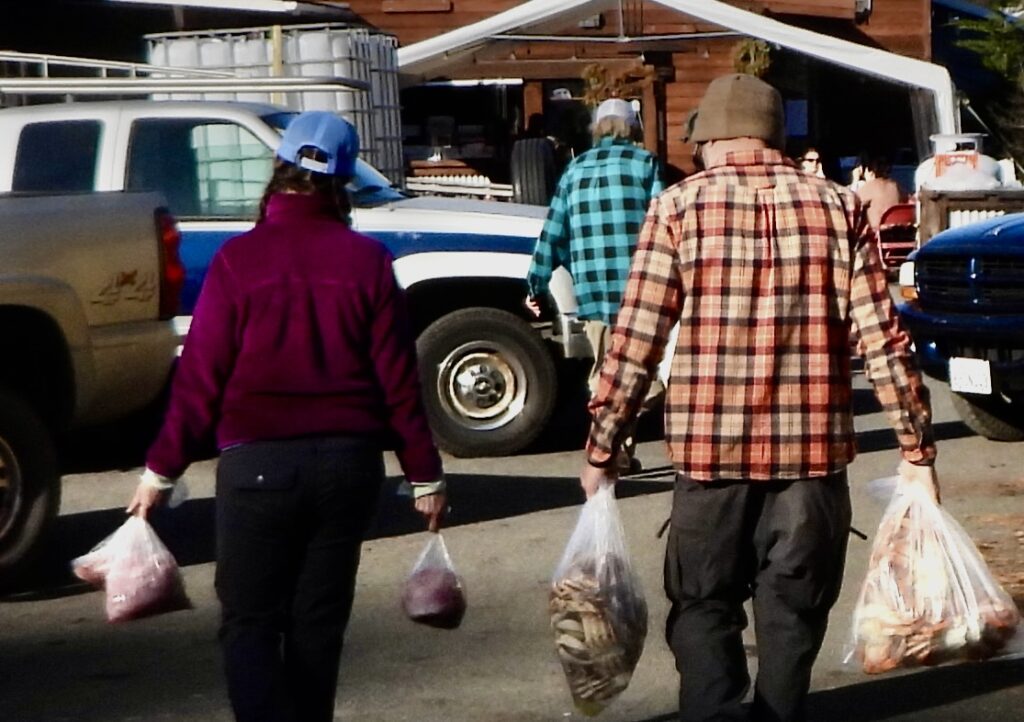
Whew! Enough about the business of warnings spoiling a fun fishing story. The crabs hauled in by customers of the Royal Sea Hawk — and all the other local party boats — were thoroughly cleaned of viscera and washed, before cooked crabs were sent home bagged with customers. There has not been a case of someone being sickened by crabs caught aboard a party boat locally that we could find (If you know of anyone who has ever gotten sick from this, please drop us a line) When we talk to people who know more than we do, we are often told these warnings are an overreach, but we can’t say that and we think you should err on the side of caution and listen to the science.
Still, the toxin has become a growing problem in California’s warming oceans. It thrives in massive algae blooms, which have surged since 2013. In April, a dozen dolphins died in a single day in San Diego after eating contaminated prey, and a humpback whale also washed up killed by the toxin. Today, domoic acid claims the lives of thousands of sea lions each year.
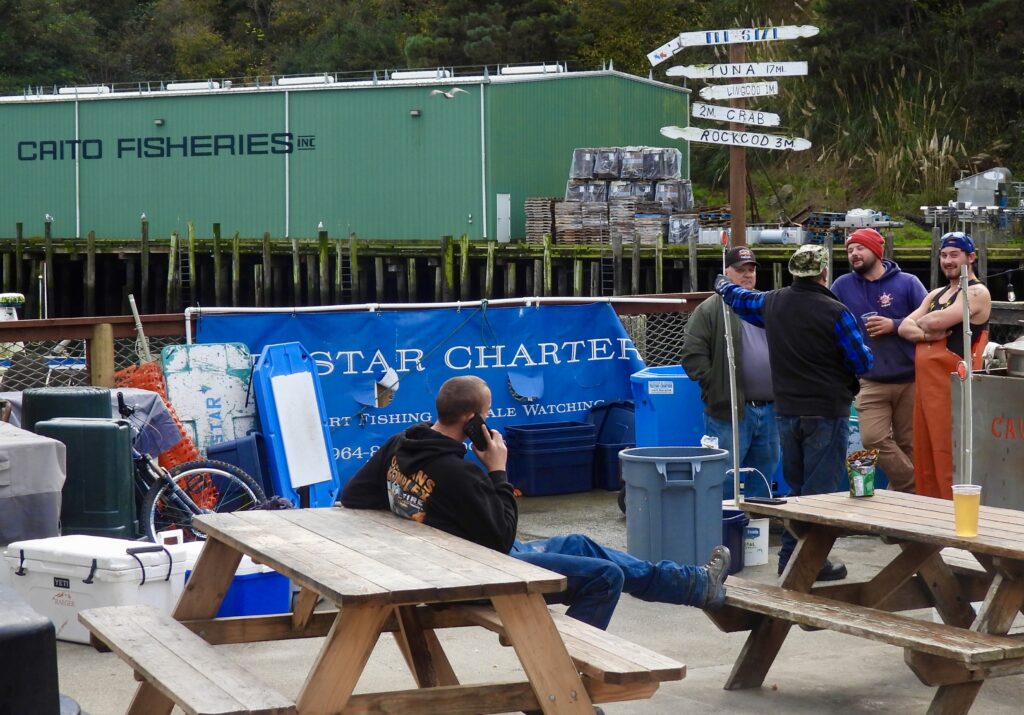
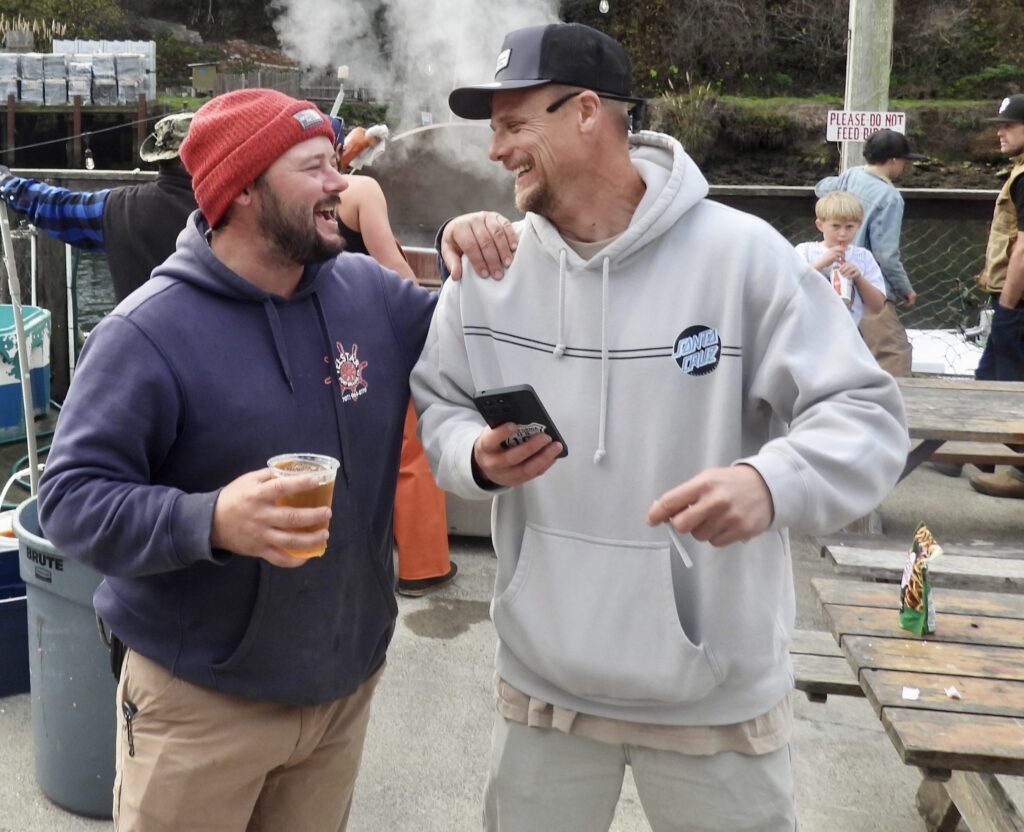
The crew of the Telestar celebrated a successul trip in front of a pot of cooking crab on Sunday.Capt. Sean Thornton of the Telestar (left) said everybody had a fun trip. The water is very, very flat for December, or was on Sunday at least. Clean your crabs before cooking — that’s the best practice, the health authorities say .Capt, Tim Gillespie i shown on the , right. He nd the Sea Hawk crew clean all crabs caught, as do the other boats. This photo was taken two years ago on the first day of commercial crab season. This year’s season is expected to begin in early January. Whale entanglements remain a serious concern — recreational crabbers faced gear restrictions which are so far not announced anywhere formally, as whales can become fatally trapped in the ropes of traditional pots. New technologies for safer crab gear are on the horizon.
We started out by watching the full 12 hours of the California Fish and Game Commission’s December meeting. Our plan had been to cover the abalone closure issue, but the December session is always worth following for anyone interested in fishing, hunting, or the broader plight of species — both hunted and non‑hunted.
December is when the Commission forecasts probable fishing and hunting seasons for a wide range of critters. Its recommendations draw on what scientists are learning about plants, animals, and ecosystems, even when not directly tied to fishing or hunting. Last week’s meeting included an hour‑long discussion of an endangered buckwheat species threatened by development. There was also science presented on black bears, pronghorn, bighorn sheep, and halibut — material we’ll include in a second story.
The Fish and Game Commission gives advice to the Department of Fish and Wildlife and and hears reports about what the department has been doing, but is not involved in the day to day operation of the DFW. The Commission digests science for the department and passes on guidance about priorities handed down from Gov. Gavin Newsom, to the California Resource Agency, which also oversees other land and environment-based agencies.
Perhaps the most fascinating change at the Commission meeting over years past was the involvement of Indigenous voices in every agenda item, through an individual and a tribal advisory group that was actively listened to. While Governor Gavin Newsom has called for tribal involvement in all matters involving forests, the environment, and more, that demand has often gone unmet. Tribal groups, not surprisingly, remain wary of government partnerships and “treaties.” At the same time, the opposite problem has emerged: one tribal representative described how tribes are now bombarded with requests to participate, leaving them cautious about where they truly wish to engage. A woman speaking for tribal interests usually provided a brief summary of tribal input into different fish and game resources. But after providing a history of her tribes take on bighorn sheep, she commented frankly that while tribal people had different views on many of the issues, indigenous people find trophy hunting- when the animal is killed and left behind and not used for meat, revolting. One of the Fish and Game Commissioners chimed in and said he, too, found trophy hunting offensive, or at least worthy of being regulated differently. Some more conservative Western states actually do this already.
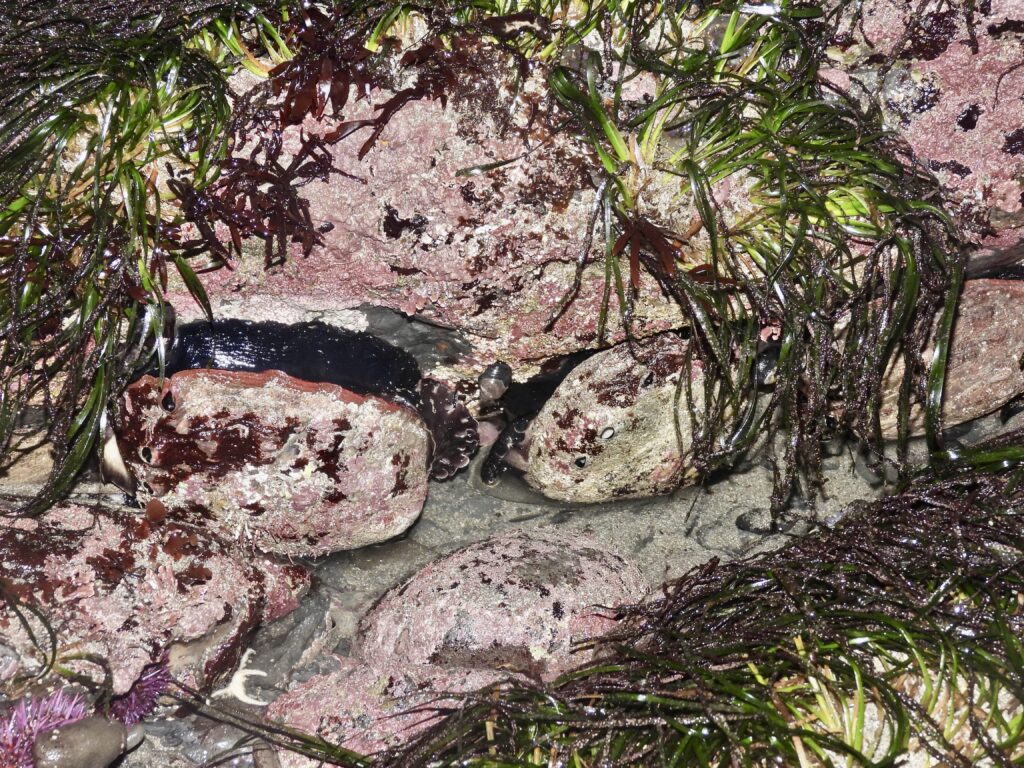
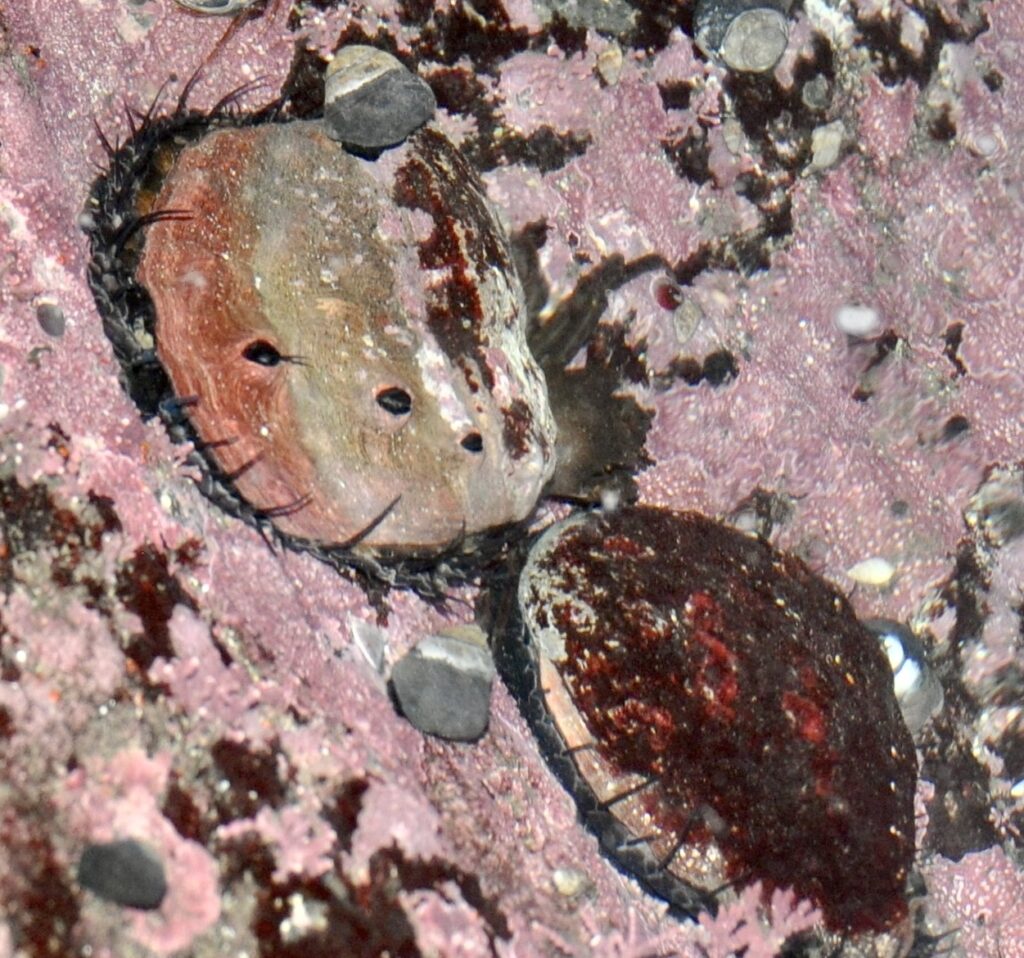
Some fat abalone spotted by Frank at super low tide earlier this month, in a stretch where purple urchins have been partly cleared. Other spots Frank used to see lots of abalone still have zero.
Frank was astonished to learn that no media outlet covers this major meeting anymore. In the 1990s, more than a dozen reporters competed to get the news out from the December session. The San Francisco Chronicle did publish a fine story on the abalone closure, interviewing many fishers and sensibly framing the issue within the terrifying decline of the kelp forest. But the story itself made clear they hadn’t actually covered the meeting. You can read the Chronicle using your Mendocino County library card. But MUCH is missing from the coverage now, such as what adaptations to gear were made and the fact tha
Yes, the Commission voted to close abalone fishing for 10 years, until 2036, but they also said the issue could be revisited in five years. Most astonishing of all, the decision was made largely in the dark: virtually no new information has been gathered about abalone in the past two years due to funding shortages.
This is deeply unfortunate. While internet screamers insist the ocean is “jammed with abalone,” that’s simply not true — and none of the reputable fishing groups or fishermen presenting at the meeting presented that popular social media view. In fact, most supported the closure but pressed for more data. Local diver and Noyo Harbor Commissioner Grant Downie, respected by both fishermen and environmentalists, posted a video blending anecdotal evidence with science to fill the gap.
The video is available only on Facebook and shows a large number of abalone scattered across a sparse bottom, with very little kelp in sight.
Downie added a statement alongside the video:
“With the recent extension of the red abalone fishery closure on the Northern California coast until 2036 I thought it was a great opportunity to share footage of our long-lost loves.
Healthy hungry red abalone still survive. I’m seeing babies and juveniles. They just need our help to restore their habitat.”
Downie has become deeply involved in the science, while continuing to fish and dive himself. He often speaks about the contradictions and the gaps in knowledge that remain.
Frank is a daily ocean watcher, though he hasn’t dived in years. At king low tides, however, I had one of my best views of abalone in years. In one area I counted 100 — as many as ever — while in another spot, once just as full, there were none. I even know where an 11‑inch abalone lives, slipping in and out of the visible tidepools. Where? The ocean.
I don’t reveal or post abalone photos, since poaching by rockpickers remains a serious problem, but I believe these images can’t be tied to a specific location. The Fish and Game Commission heard a report from the DFW law enforcement division promising a stronger crackdown on abalone poaching.
The extension of the abalone closure passed without argument. Although the Chronicle described the meeting as contentious, I saw none of that. The vote was unanimous. After mostly supportive public comment, the discussion lasted less than five minutes.
Frank will never reveal where he photographs abalone — and hopefully poachers can’t recognize spots like this
Another issue the Fish and Game Commission addressed was salmon regulation. Commissioners were unanimous — though they did not take a formal vote — in supporting the continuation of California’s current system, which leaves decisions on salmon seasons to the Pacific Fishery Management Council (PFMC), as has been the case for the past decade.
Some in California have argued for a return to state‑level control, as was done prior to PFMC oversight. But under the present system, all the science is presented and debated during a full week of PFMC meetings each spring, providing a comprehensive basis for setting the seasons.
At mendocinocoast.news, we will share more from the Fish and Game Commission meeting in a future story — with a focus on the role of Native American voices and the upcoming hunting forecasts.y.
From the Commission’s long‑range rulings on abalone and bear to the sudden green light for crab, Mendocino’s coast is once again a stage where science, regulation, and community collide. Felix’s big fish, the first boatloads of crab, and the surprise visit of Southern Resident orcas all remind us that the ocean is never just a backdrop — it is actor, witness, and judge.
For those of us who have watched the regulators at work while sharing in the ocean’s bounty, the deeper story remains untold.
The warnings about domoic acid are sobering, a reminder that nature’s bounty demands vigilance. Yet the return of crab season, the whales off Fort Bragg, and the laughter of a boy hauling in his limit all signal renewal.
Here on the edge of California, the tides carry both caution and celebration. The Commission’s rulings ripple through our lives, yet the sea itself tells the larger story: resilience, risk, and reward. As boats push off and families gather around steaming pots, the Mendocino Coast stands in gratitude — for the harvest, for the guardians, and for the wild mysteries that keep us humble.
But wait — there’s more. The California Fish & Game Commission’s recent meetings didn’t just reopen crab season; they also set the stage for upcoming hunting and fishing seasons across the state. From black bear to pronghorn to rockfish, the outlooks show how wildlife management decisions ripple through Mendocino and far beyond.
For Mendocino, the message is clear: the reopening of crab season brought instant celebration, yet the broader outlooks remind hunters and anglers that each season is a negotiation — between abundance, caution, and stewardship.
And so the coast carries its paradox forward: joy in the first pots of crab, reverence for the whales that pass, and vigilance for the unseen toxins that ride the tide. Here, every decision — from regulators in Sacramento to families gathered around kitchen tables — is part of a larger covenant with the sea.
The ocean does not promise permanence. It offers bounty, it demands respect, and it humbles us with risk. On this edge of California, we celebrate, we guard, and we remember: stewardship is not a choice, it is the price of living with the wild.
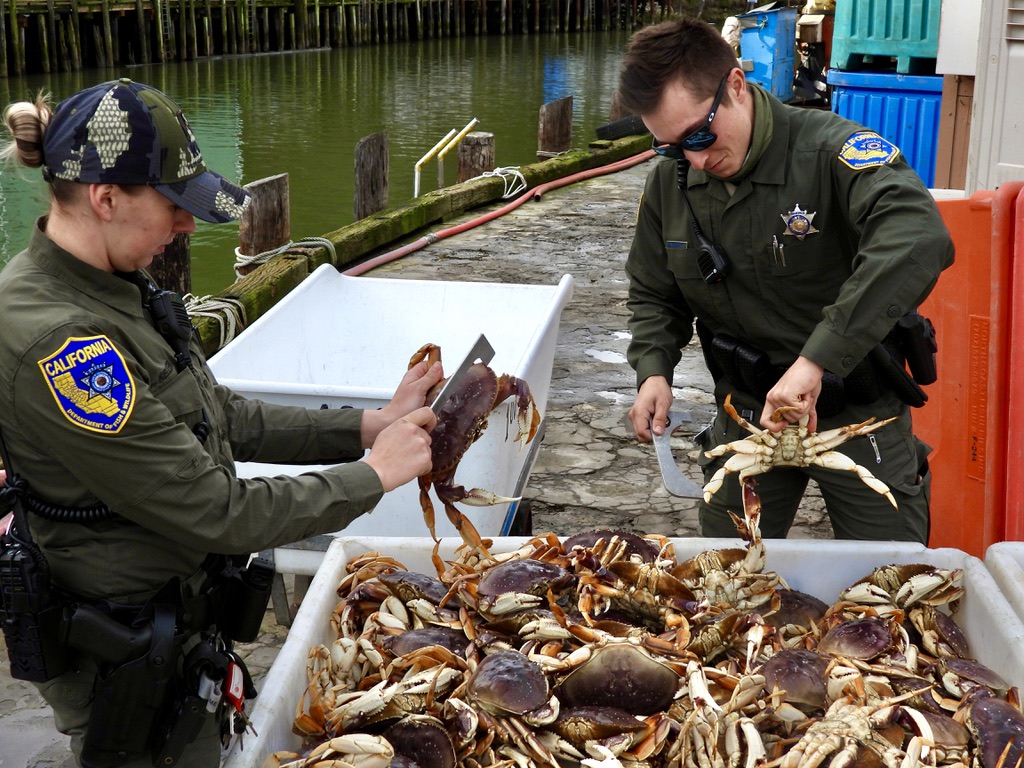
Customers leave the Royal Sea Hawk with fish fillets and crabs. When we went the catch we got pretty much paid for the fishing boat ride.
Public Health Advisory: Domoic Acid Poisoning
Onset: Symptoms may appear within 30 minutes to 24 hours after eating contaminated seafood.
Mild cases: vomiting, diarrhea, abdominal cramps, headache, dizziness — usually resolve within several days
Severe cases: difficulty breathing, confusion, cardiovascular instability, seizures, excessive bronchial secretions, permanent short‑term memory loss, coma, or even death
If you experience any symptoms after eating seafood, seek immediate medical attention.
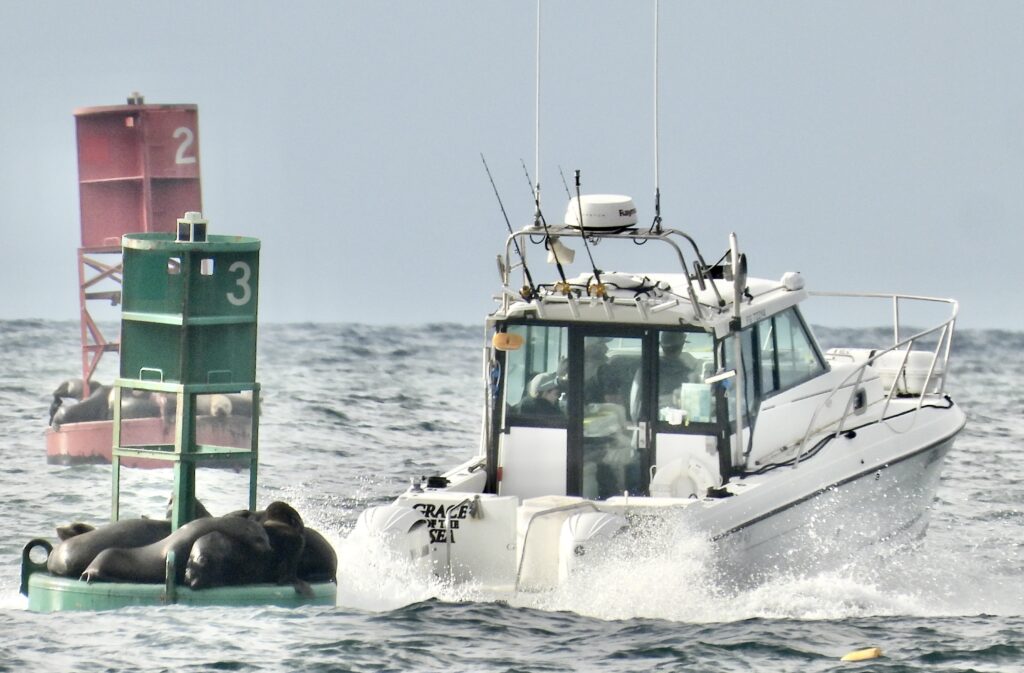
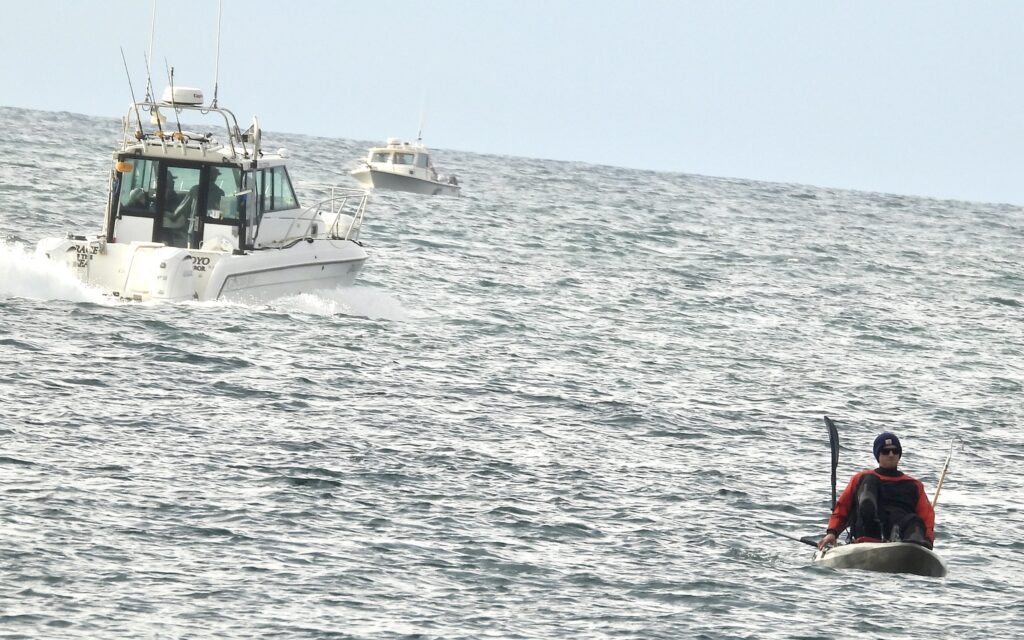
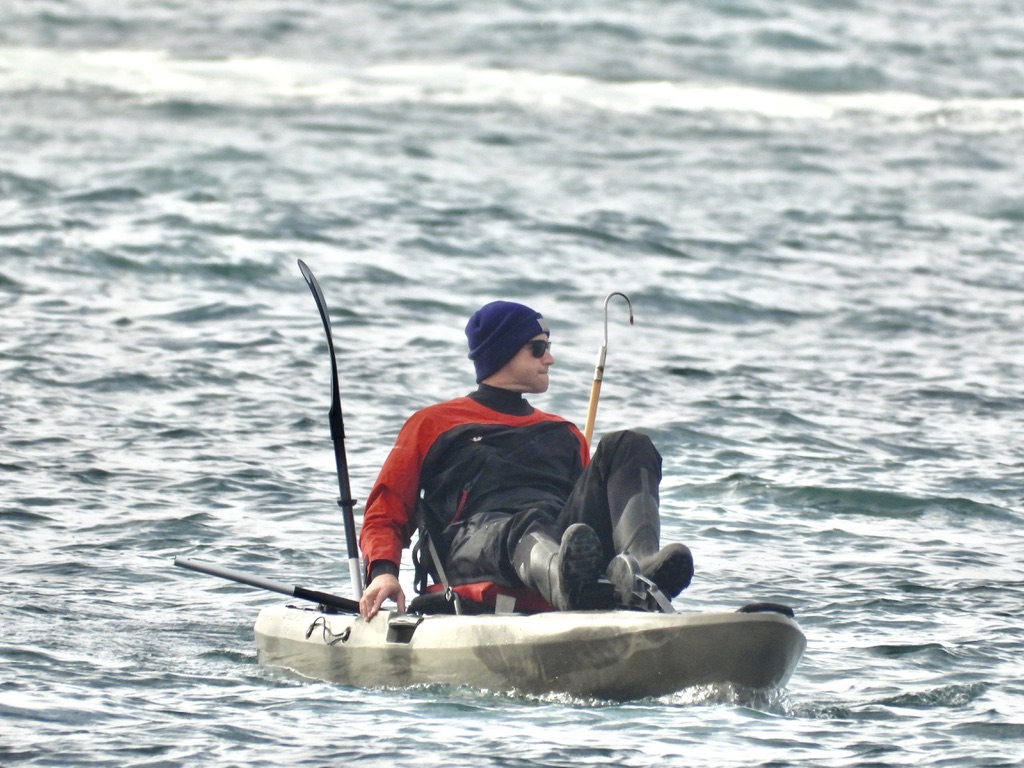
Sea lions jam the buoys, while one guy goes a hair on the wrong side of the buoy. Sea lions are poisoned by the thousands by domoic acid in sea life. There has been a population explosion in sea lions, spreading many diseases.Lots and lots of boats going out, but some were sure NOT crabbing.This is the kind of money I want to spend on a boat, king of the world on a fair December day with near zero seas.
Fishing in ocean waters off Fort Bragg hits a low at the end of the year, both due to the end of recreational rockfishing and the fact the ocean grows wild and opaque and unfriendly to boats or people with poles in winter. Crabbing is at its best in the winter months. Crabs scramble further and further away from shore as the winter goes on. Groundfish- those that live on the bottom can still be fished, such as sole, halibut and other sandy beach fish. Surf perch can also be legally retained, but not rockfish.
Frank Hartzell has spent his lifetime as a curious anthropologist in a reporter's fedora. His first news job was chasing news on the streets of Houston with high school buddy and photographer James Mason, back in 1986. Then Frank graduated from Humboldt State and went to Great Gridley as a reporter, where he bonded with 1000 people and told about 3000 of their stories. In Marysville at the Appeal Democrat, the sheltered Frank got to see both the chilling depths and amazing heights of humanity. From there, he worked at the Sacramento Bee covering Yuba-Sutter and then owned the Business Journal in Yuba City, which sold 5000 subscriptions to a free newspaper. Frank then got a prestigious Kiplinger Investigative Reporting fellowship and was city editor of the Newark Ohio, Advocate and then came back to California for 4 years as managing editor of the Napa Valley Register before working as a Dominican University professor, then coming to Fort Bragg to be with his aging mom, Betty Lou Hartzell, and working for the Fort Bragg Advocate News. Frank paid the bills during that decade + with a successful book business. He has worked for over 50 publications as a freelance writer, including the Mendocino Voice and Anderson Valley Advertiser, along with construction and engineering publications. He has had the thrill of learning every day while writing. Frank is now living his dream running MendocinoCoast.News with wife, Linda Hartzell, and web developer, Marty McGee, reporting from Fort Bragg, California.