Avian Flu Reaches Point Reyes; Virus May Be Moving North as Trump‑Era Budget Cuts Weaken CDC/FDA Warning Network

A common murre washed up recently at a beach across from Point Reyes (a peninsula -island) . Officials say the bird is PRESUMED to be contaminated with avian flu and initial tests indicate that, but final lab results are not yet in. There is an elephant colony across the water from where it happened, which can number 4000 individuals. No flu cases have arisen so far in that colony. Many seals and seal lions could be threatened here on the Mendocino Coast but so far, officials are just asking people to be on the lookout and avoid all stranded sea mammals. Avian flu decimated a large seal colony in South America (all sea lions and such are types of seals). Livestock could also be threatened.
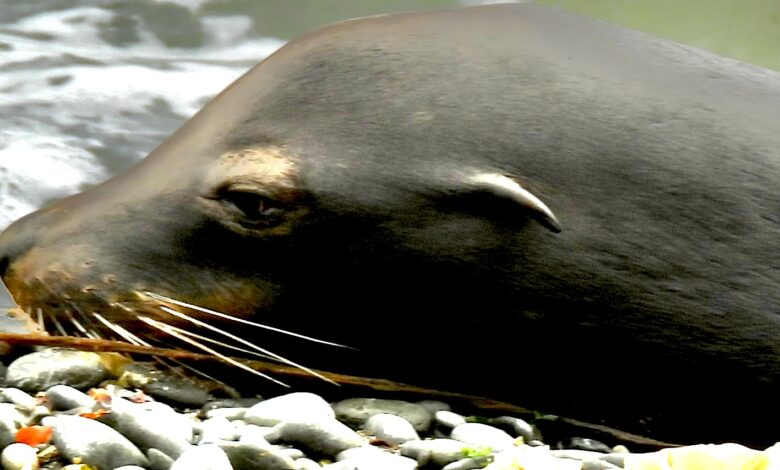
More than 100 elephant seals have been killed by avian flu at a reserve in the Bay Area. The Marine Mammal Center, which responds to marine mammal strandings in Mendocino County as well as others, has stopped responding to elephant seal and harbor seal strandings out of an abundance of caution for volunteers. However, staff members are still responding to other species, including California sea lions, fur seals and sea otters, and beachgoers can report sick or dead animals to their hotline by calling 415-289-SEAL.
Right now, millions of birds are flying north for the summer to nest, to feed and to rest on our beaches. Migratory birds never used to actually die from avian flu, but now, with a new, more virulent version having been created by big meat and spread to the world.
This species‑jumping strain of avian flu, which evolved in the crowded, high‑risk conditions of industrial poultry and livestock operations, can now infect a wide range of mammals. More than 50 mammal species have tested positive so far, including rare human cases. Dairy cattle have been affected at significantly higher rates in recent months, making the virus’s arrival in Point Reyes — the center of Marin’s dairy and beef country — especially concerning. Marine mammals are also vulnerable; whales, seals, and sea lions can contract the virus and, in some cases, die from it.
Since the rise of industrial agriculture, many of the influenza strains and respiratory viruses that eventually reach humans have emerged from large‑scale poultry and swine operations, where dense, genetically uniform animal populations create ideal conditions for pathogens to evolve and spill over.e human population.
The Marine Mammal Center is monitoring the situation in our county, among many organizations, now that the federal government has cut back on its role. See their website and contact them if you see sick marine mammals, do not approach.
https://www.marinemammalcenter.org
At the same time, a major die‑off of harbor seals and California sea lions is unfolding along the coast, driven largely by disease outbreaks unrelated to avian flu. Wildlife veterinarians say the same crowding pressures that accelerate viral evolution in industrial livestock systems can also amplify disease in wild marine mammals. Seal and sea lion populations have surged for decades under the protections of the Marine Mammal Protection Act, and dense colonies are now seeing spikes in illnesses such as leptospirosis.
The booming marine‑mammal population has also fueled a rebound in great white sharks. South of San Francisco, shark numbers are now high enough that one scientific study found they have effectively halted the northward expansion of sea otters. In a grim twist, sharks often abandon otters after a single exploratory bite — otters aren’t their preferred prey — but the injury is usually fatal.
For the latest news from California Food and Agriculture, visit Avian Influenza Updates.
Read this story:
Avian Flu Reaches New Northern California Beach, Threatening Marine Life
Many domestic dogs and cats have died in recent outbreaks, and birds of nearly every species — once mostly asymptomatic carriers — are now falling ill as this strain becomes more virulent.
More than 3 million chickens were euthanized in Sonoma County in 2023 after an outbreak of this same strain of avian flu, which has repeatedly emerged and intensified in the crowded, high‑stress conditions of industrial poultry operations. Some, though not all, Sonoma County producers use more resilient, pasture‑based methods, and a minority of scientists — along with many small‑scale growers — argue that healthier, outdoor birds are better able to withstand infection. I saw this firsthand: a hen in my own flock once tested positive and recovered, likely because she was robust and not bred for the fragile traits common in industrial lines. The USDA later suggested the test result might have been an error, though nothing in her condition supported that. Time and again, when hardy, outdoor birds survive, officials tend to dismiss the result — a pattern that frustrates small growers who feel their experience is overshadowed by the priorities of large‑scale meat and poultry systems.
The strain that first jumped from birds into mammals is believed to have emerged in a large‑scale poultry operation in Asia, where dense, stressed flocks create ideal conditions for rapid viral mutation. But scientists warn this is part of a broader pattern: industrial chicken and pig operations around the world continually generate opportunities for new, more virulent pathogens to evolve. When animals are crowded, genetically uniform, and weakened by intensive production, they become living incubators for fast‑moving viruses and bacteria — and the system has been producing them at a steady clip.
Many experts say the next major pandemic is most likely to arise from these high‑density poultry or swine operations, where pigs and chickens — omnivores like humans — share a far wider range of pathogens with us than cattle or other hoofed livestock. Spillover from those systems has shaped human disease for more than a century, and the risks are only increasing as industrial production intensifies.
Avian flu also threatens dairy cattle, which are concentrated along the Sonoma and Marin County coasts far more than in Mendocino. And for Sonoma County’s thriving poultry sector — one of the region’s most valuable agricultural industries — the virus represents an even larger risk. A single introduction into a commercial flock can trigger mass culling and long‑term economic fallout, as the county saw during the 2023 outbreak.
At the same time, severe budget cuts at key federal agencies have hollowed out the nation’s early‑warning system. Many CDC and FDA avian‑flu information pages have not been updated since 2024 or early 2025, leaving states, counties, and producers with fewer timely alerts as the virus spreads north.
The CDC, last update in July
https://www.cdc.gov/bird-flu/situation-summary/mammals.html
The FDA, last update more than a year ago
The veterinary associations’ website was updated in December on this fast changing issue
Read additional reporting on this here ….
https://www.sfgate.com/local/article/virus-bay-area-county-22084262.php
In the end, this isn’t just a story about a virus. It’s about the world we built — the crowded barns, the stressed animals, the thinning safety nets — and the wild coast now absorbing the consequences. From Point Reyes to the Mendocino Headlands, the line between domestic and wild has never been thinner. This outbreak didn’t appear out of nowhere; it rose from the systems we tolerate, the warnings we underfund, and the industries we keep insisting are safer than they are. Now the virus is here, moving north, testing every gap in our defenses. The birds are already telling us what’s coming. Whether we answer with honesty and action — or with the same denial that helped set the stage — will determine how far it goes.