Our Biggest Photo of 2025 was Joel Hartzell’s Shooting Stars — Check out the New Video Showing How and seeing even more stars

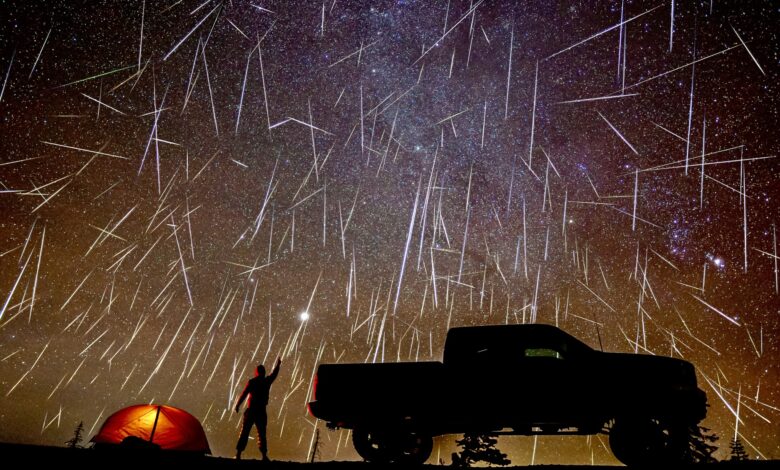
The shooting star image that Joel Hartzell created has been one of the most popular features of the calendar year 2025. We got a lot of interest and a lot of questions about how Joel, nephew of Frank and Linda Hartzell, created this accurate composite of the most dramatic meteor shower of every year, which mostly flows out of the constellation Gemini in mid-December. So we bring you a video he made that explains how he made the photo, recreating the path of 413 meteors over 12 hours of dark.
Joel didn’t just point his camera at the sky and get lucky. He planned. He hauled his gear up to the ridgeline above Round Valley, where the air thins, the cold bites, and the sky opens wider than anywhere else in Mendocino County. Up there, at nearly 7,000 feet, the Geminids don’t streak across the sky — they streak through you.
He set up in the dark, long before midnight, with nothing but a tripod, a thermos, and the stubborn patience that runs in the Hartzell bloodline. The Geminids are fast — blink and you miss them — so Joel didn’t blink. He took 4,807 photos through the night, each one a tiny gamble against the cold and the clock.
When he finally came down from the mountain, the real work began. Joel spent hours combing through every frame, isolating 413 individual comet streaks — each one crisp enough to stand alone. Then he did what only someone who truly loves the craft would do: he blended all 413 into a single, breathtaking composite image. A portrait of the night sky not as the human eye sees it, but as time itself remembers it.
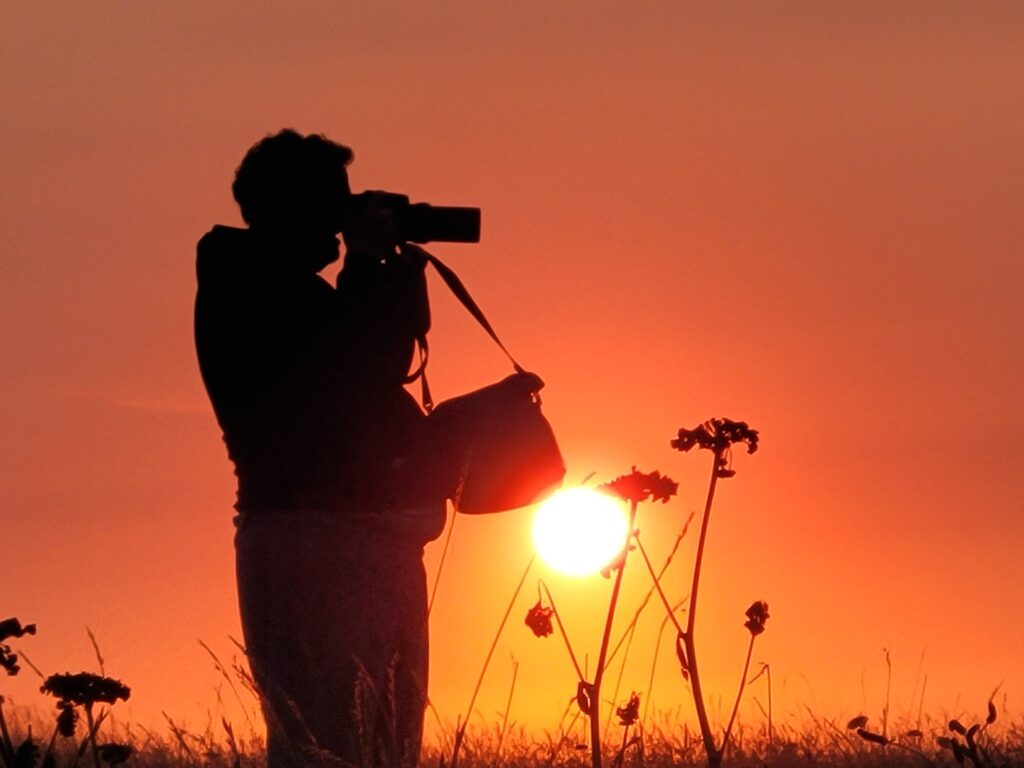
Joel may love the Mendocino Coast now, but he grew up in Illinois, where the skies are wide and the wanderlust runs deep. That wanderer’s instinct has never left him — he’s happiest when he’s roaming the earth, camera in hand, collecting the kinds of moments most people never notice.
And somewhere in the middle of those thousands of frames, something extraordinary revealed itself.
Not one meteor, but a chorus of them — bright white Geminid streaks arcing across the heavens in different moments, different directions, different intensities. When Joel layered the 413 comet frames together, the sky bloomed into a radiant map of motion, a time‑woven tapestry of light that no single exposure could ever capture.
He didn’t see the full magic until the composite came alive on his screen — the sky suddenly crowded with brilliance, every streak a tiny miracle he’d frozen while the rest of the county slept.
And still, he wasn’t done.
It took many hours to finish the composite, and then four more days to create a video showing how he made it — a step‑by‑step reveal of the patience, precision, and sheer devotion behind the final image.
Only then did he send it to the family group chat. Phones lit up instantly. Within hours, it was on MendocinoCoast.news. . Within a day, it had become our most‑clicked story of the year.
A shooting‑star mosaic captured by a wanderer from Illinois who now calls this coast home — created from the highest point in Mendocino County, no less. Cosmic luck, yes. But also grit, planning, and a willingness to freeze, edit, and edit some more for the shot.
One reason the Geminid meteor shower is the biggest and longest of the year is its timing: mid‑December, when the nights are at their deepest and longest. Another gift is its schedule — it begins shortly after dusk and runs all night, making it one of the few major showers that kids can actually enjoy without a 3 a.m. wake‑up call (clouds permitting). Most other famous meteor showers don’t peak until late at night or near sunrise.
Joel had more than 12 hours of darkness to work with, even if the rising moon washed out some of the fainter streaks.
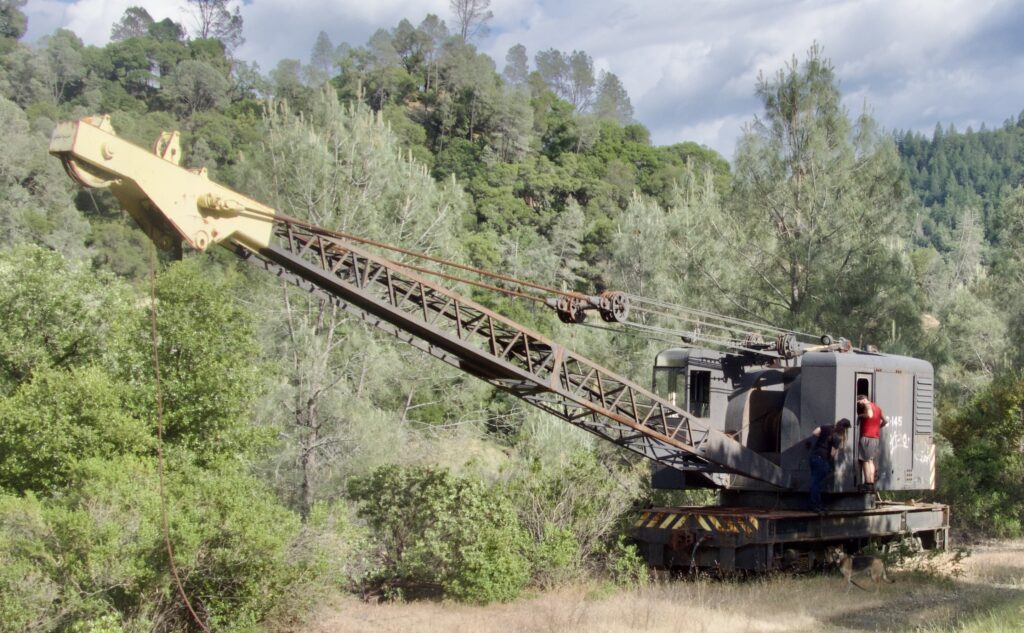
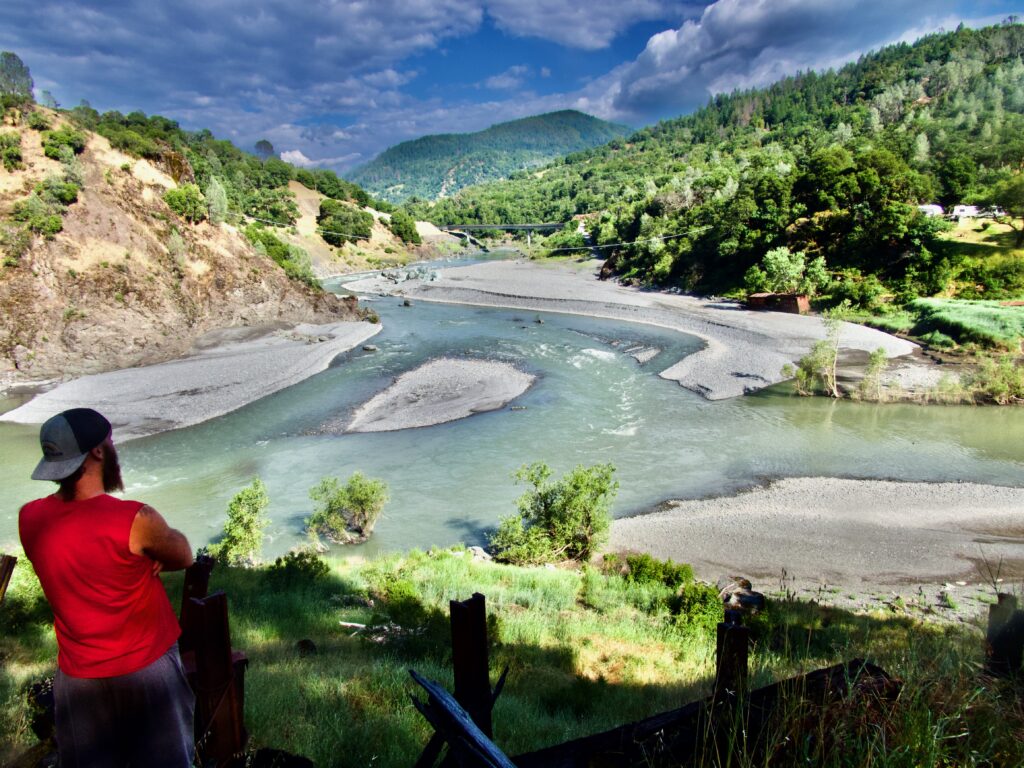
In 2023, Joel became—so far as anyone can tell—the first person to through‑hike the entire Great Redwood Trail. We documented the journey obsessively, taking tens of thousands of photos of abandoned trains, collapsed tunnels, and spectacular stretches of country that frankly should never be hiked by anyone.
The Great Redwood Trail Authority wasn’t especially interested in a film unless they could control the script, so that collaboration went nowhere. Along the way, we met dozens of property owners and came to the same conclusion: the trail is a good idea, but the execution has been anything but.
We had planned to feature Joel’s hike in the Mendocino Voice, but the local owners were in the middle of selling the outlet to a Bay Area group, and the story slipped through the cracks. Joel did finish a video of the adventure, which began in Marin County and ended just past the Samoa Cookhouse in Humboldt.
Another fascinating aspect of the Geminids is their source: 3200 Phaethon, a strange hybrid object that behaves like both an asteroid and a comet — the only known body of its kind. Phaethon makes the closest approach to the Sun of any named asteroid, and that intense heat bakes its rocky surface until it sheds material, creating a comet‑like tail.
The Geminid meteor shower is relatively young. It wasn’t seen in ancient times; the first recorded observations date to the 1800s, when only a handful of meteors appeared each year and the event was mostly of interest to astronomers. Over the past century, the shower has intensified dramatically. Phaethon itself wasn’t identified as the source until 1983.
The scientific world is already enthralled by a spacecraft called Destiny, which Japan plans to launch in 2028. The mission will take the craft close to the asteroid‑comet Phaethon, giving scientists their first up‑close look at the strange body whose shedding rock creates the Geminid meteor shower.
Joel saw were arriving at roughly 40–50 per hour, each one hitting the atmosphere at about 75,000 miles per hour. And unlike many astronomical phenomena that endure for millennia, meteor showers don’t last forever — eventually, their parent bodies run out of material.
The constellation Gemini, home to the bright twin stars Castor and Pollux, gives the Geminids their name. While the shower appears strongest in that part of the sky, the meteors themselves streak in from all directions, a true all‑sky display.
Joel’s Geminid composite isn’t just a photograph — it’s a record of devotion, a map of the night stitched together by someone who refuses to rush wonder. It reminds us that the biggest stories of the year aren’t always the loudest. Sometimes they’re made by a single person on a cold mountain, waiting for the sky to reveal itself.
What Joel captured on that mountain wasn’t just a meteor shower — it was a reminder of how much wonder is still left in this world, even now, even here. While most of us were wrapped in the ordinary rhythms of a winter night, he was out there tracing the quiet machinery of the cosmos, gathering proof that the universe is still making art whether we’re watching or not.
And as scientists prepare Japan’s Destiny mission to chase Phaethon in 2028, we’re on the edge of learning even more about the strange little world that seeds our December skies. But Joel didn’t need a spacecraft to find meaning. He found it the old‑fashioned way: by standing still, looking up, and letting the night reveal what it was willing to share.
Maybe that’s why this story rose above the rest. Not because it was grand, but because it was grounded — one person, one camera, one cold ridge, and a sky generous enough to answer. In a year that asked so much of all of us, Joel reminded us that wonder isn’t gone. It’s just waiting for someone patient enough to meet it halfway..